

Vintage Double Chest
A vintage double chest offers monumental presence and towering storage, bringing architectural balance and rich timber grain to a room.
Vintage Double Chest
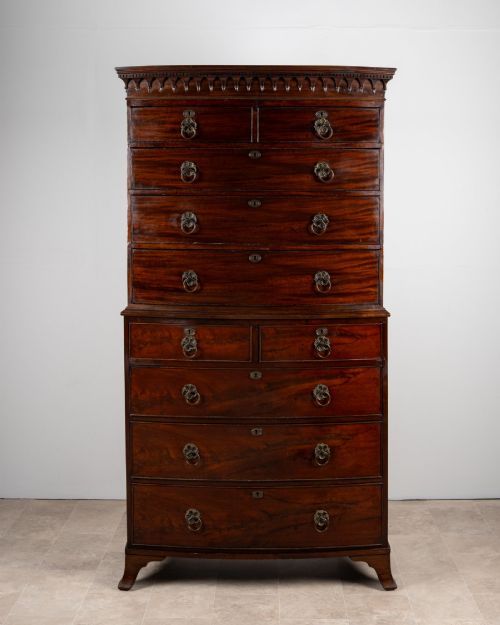
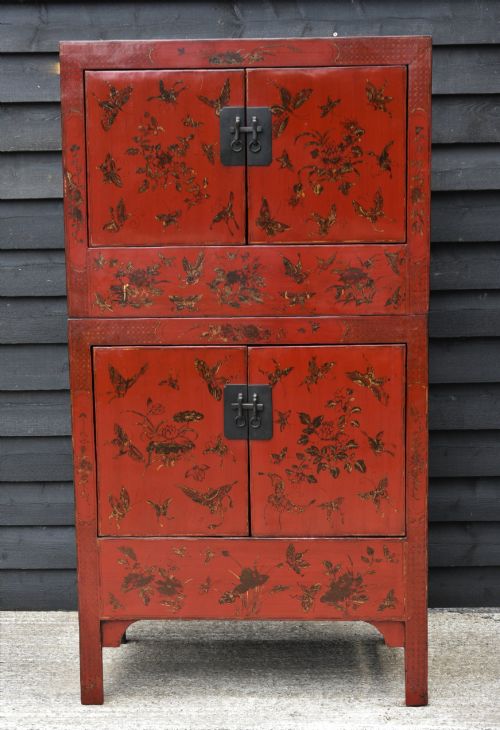
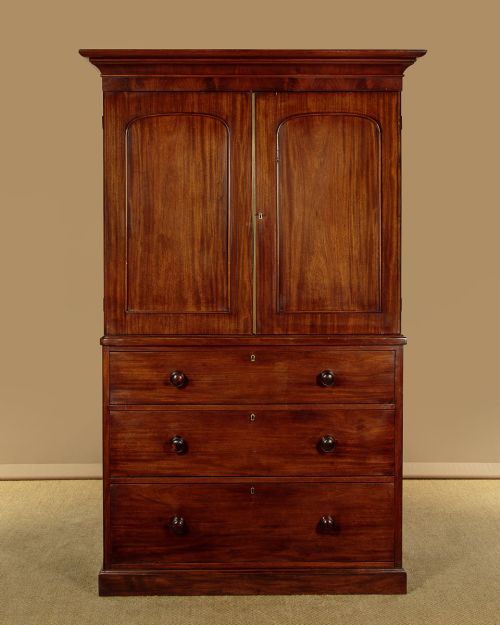
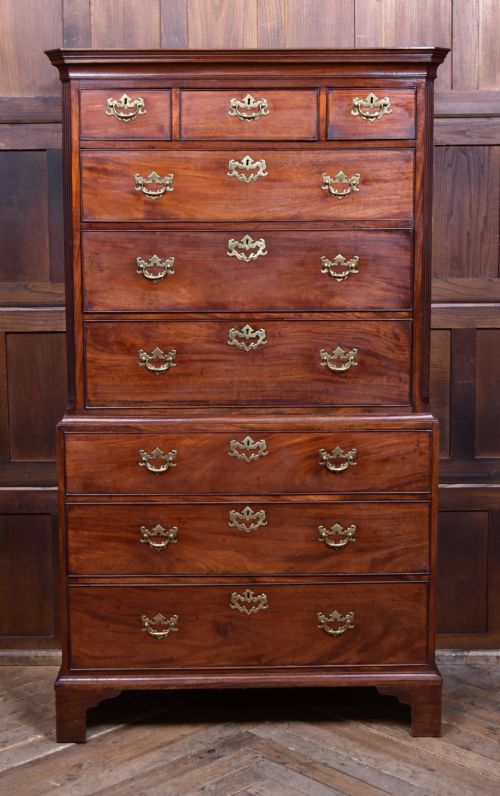
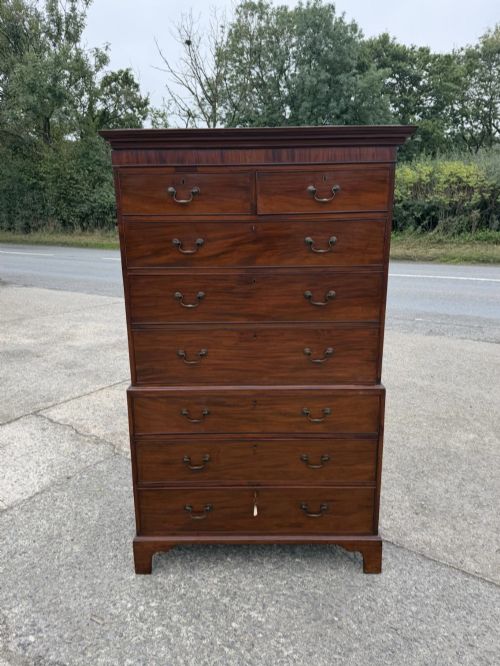
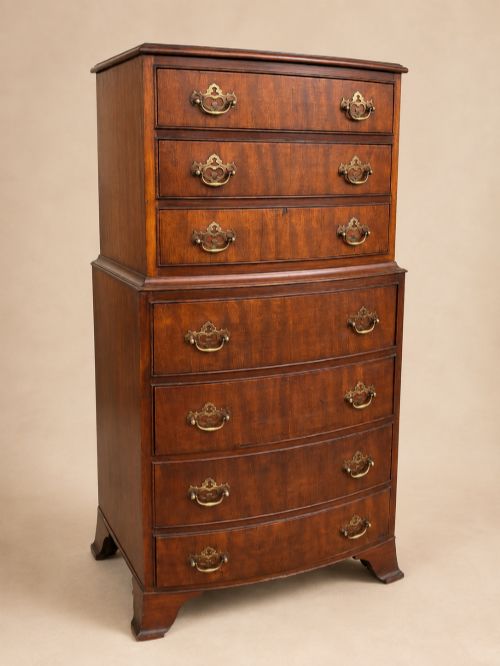
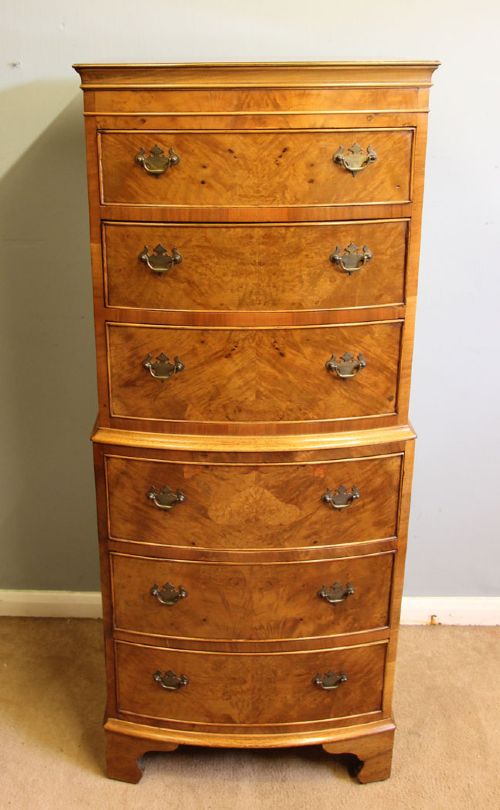
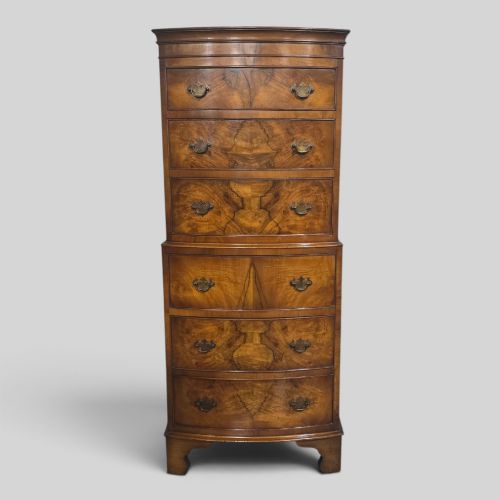
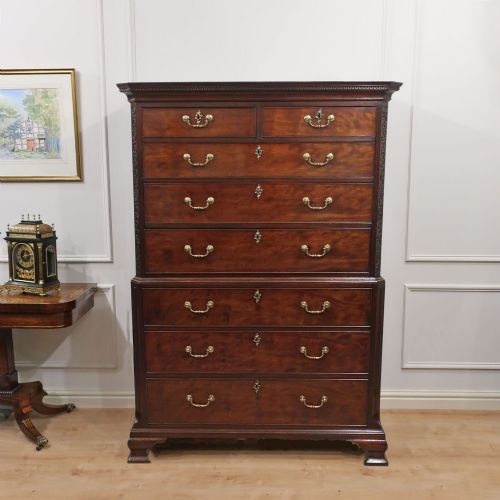
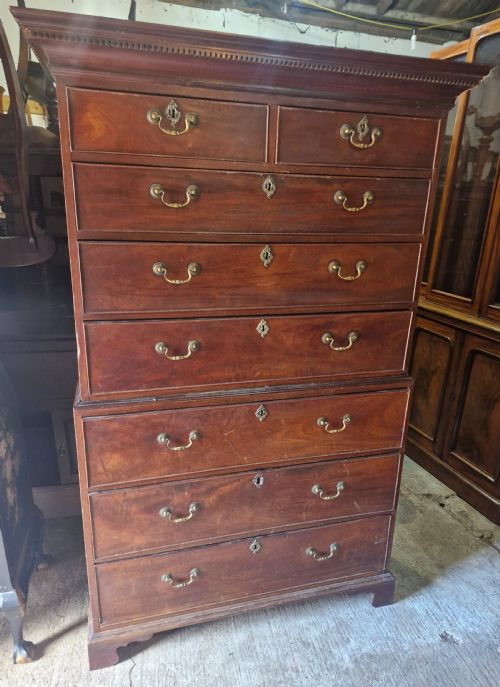
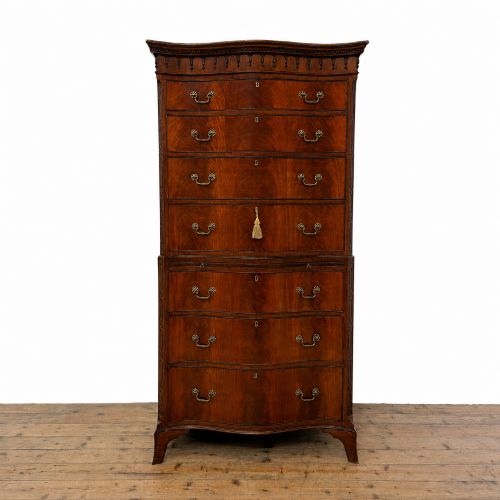
A vintage double chest, commonly known in the evidence as a chest on chest, tallboy, or linen press, stacks one set of drawers directly upon another to maximise vertical storage. These pieces combine substantial capacity with a commanding architectural presence, making them a focal point in any traditional interior.
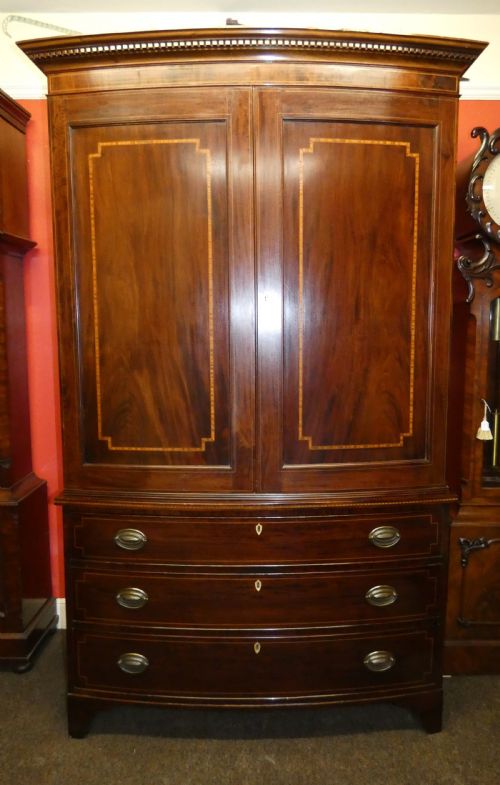
Most examples encountered on this page date from the Georgian and 18th century periods through to the 1920s and 1930s. Buyers will regularly find configurations featuring two short drawers over six long drawers, alongside linen presses equipped with upper cabinet doors enclosing sliding trays or additional shelving.
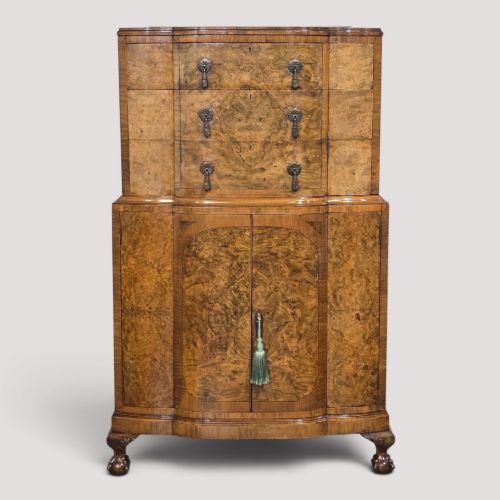
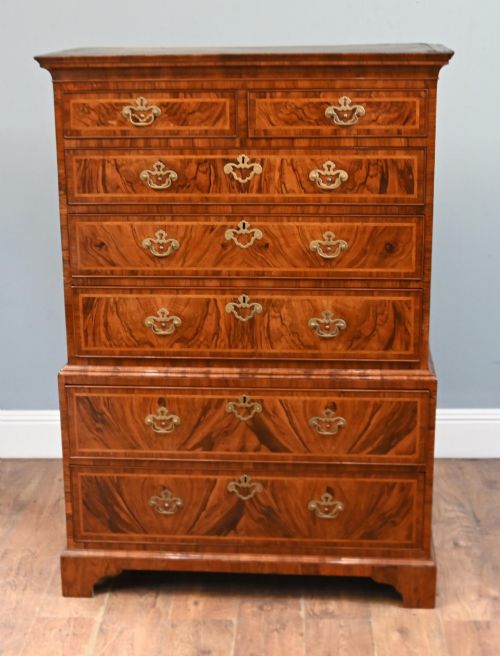
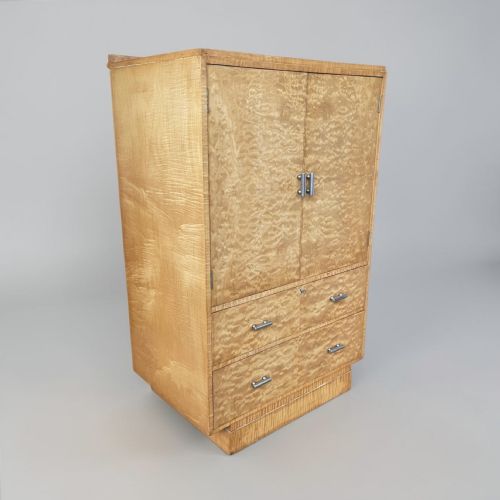
Makers utilised primary timbers such as mahogany, walnut, and burr walnut, frequently embellished with boxwood inlay, brass handles, and key escutcheons. Regional variations span classic Georgian proportions, Queen Anne style curves, serpentine fronts, and occasional Art Deco interpretations.
Materials and construction methods
Cabinet makers constructed these stacked chests using solid and veneered hardwoods, selecting figured mahogany, burr walnut, and oak for their distinct grain patterns. Drawer linings and secondary carcase structures often incorporate pine or oak, joined with traditional hand-cut joints.
Surface ornamentation relied on sophisticated techniques including book-matched burr walnut veneers, subtle boxwood stringing, and applied mouldings. Brass hardware, from drop handles to keyplates, was cast and hand-finished to complement the rich tones of the polished timber.
Vintage Double Chest Retail Price Guide 2026
Typical asking prices for vintage double chest among the pieces listed under this phrase on Sellingantiques today, from the lower quarter to the upper quarter. They describe what is for sale here now, not the wider market.
Listings span multiple centuries, incorporating 17th century, 18th century, Georgian, Regency, Victorian, and 1920s periods.
Distinguishing quality across pieces
Quality reveals itself in the selection and matching of timber veneers, where superior examples exhibit symmetrical burr walnut or deeply figured mahogany across the entire facade. The crispness of the mouldings and the precision of the boxwood inlay further separate standard production from exceptional cabinet work.
Internal execution dictates longevity and day-to-day utility, noticeable in the smooth sliding of drawers and the survival of original brass hardware and working locks. The integrity of the upper and lower carcase jointing ensures the stacked structure remains stable and true over centuries of use.
The Vintage Double Chest Glossary
- Chest on chest
- A tall case furniture form consisting of an upper chest of drawers stacked directly upon a slightly larger lower chest of drawers. This configuration provides extensive vertical storage while maintaining a manageable footprint.
- Linen press
- A tall cabinet featuring upper doors that enclose sliding wooden trays or shelves, positioned above a base chest of drawers. Originally designed for storing household linens flat, they function as substantial wardrobes.
- Tallboy
- A tall chest of drawers or chest on chest. The term encompasses both multi-drawer stacking units and tall single-carcase variations.
- Secrétaire
- A desk fitted into the upper section of a chest on chest or tallboy, featuring a drop-front writing flap and small interior pigeonholes. It combines the utility of a bureau with the storage of a chest.
- Serpentine
- A furniture front or edge shaped with a central convex curve flanked by two concave curves. This undulating contour requires advanced woodworking skill to execute properly.
- Boxwood inlay
- Narrow strips of pale boxwood set flush into the darker primary timber to create geometric lines and decorative borders. It provides sharp visual contrast on Georgian and Regency pieces.
Vintage Double Chest: Frequently Asked Questions
What is a double chest?
A double chest refers to a tall storage unit formed by stacking one smaller chest of drawers directly on top of a larger base chest. This vertical format delivers maximum drawer capacity while taking up minimal floor space.
Such pieces are frequently called chests on chests or tallboys in historical records. They provide deep storage for clothing and household goods.
How do I style a tallboy?
Position your tallboy against a substantial wall where its height can anchor the room without overwhelming the surrounding furniture. Keep the top surface uncluttered, perhaps placing only a single decorative box or a modest tray.
Allow enough clearance around the piece for doors and drawers to open fully. Balance the room by pairing its dark timber tones with softer textiles and neutral wall colours.
Are these chests modular?
These chests are built in two distinct sections, with an upper carcase that rests securely upon a lower base unit. While they separate into two parts for transport and installation, they are designed to function strictly as a single stacked piece.
The separation seam often falls just below chest height, making it easier to move the heavy furniture through doorways and up staircases.
How do I care for antique timber?
Maintain antique mahogany and walnut by keeping the wood away from direct sunlight and sudden temperature shifts. Dust regularly with a soft, dry cloth and apply a quality beeswax sparingly to nourish the grain.
Avoid liquid polishes containing silicone, which can build up and damage the historic polish over time. Ensure room humidity remains stable to prevent the timber from warping.