

Vintage Double Arm Sconces
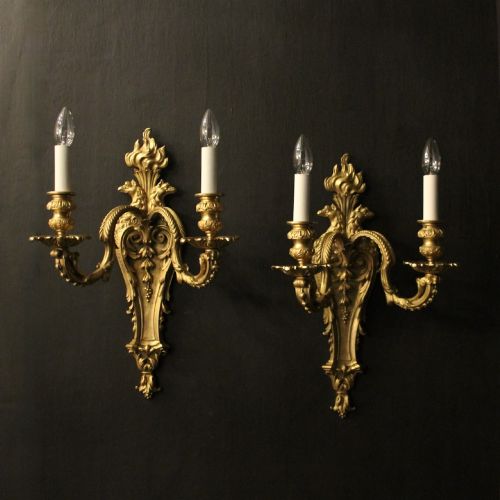
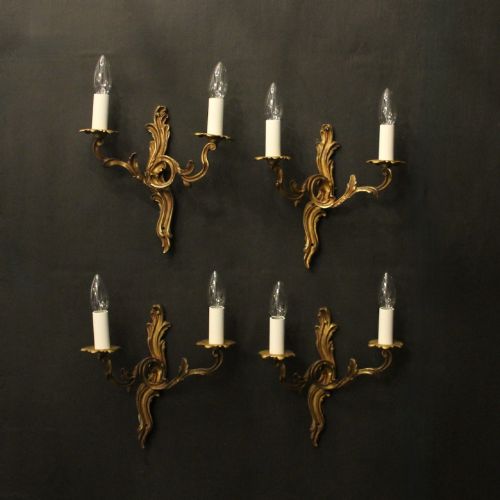
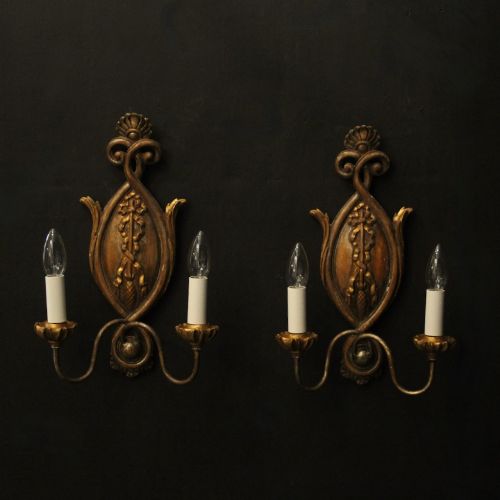
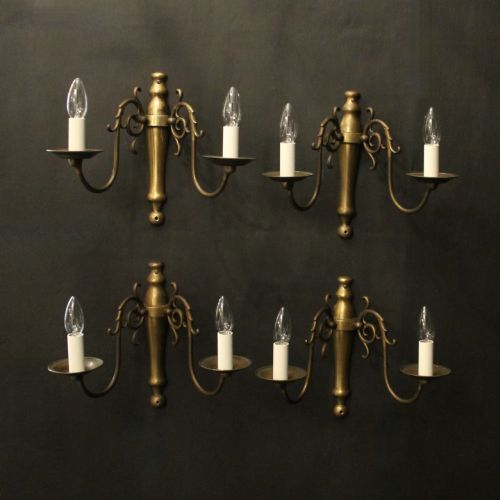
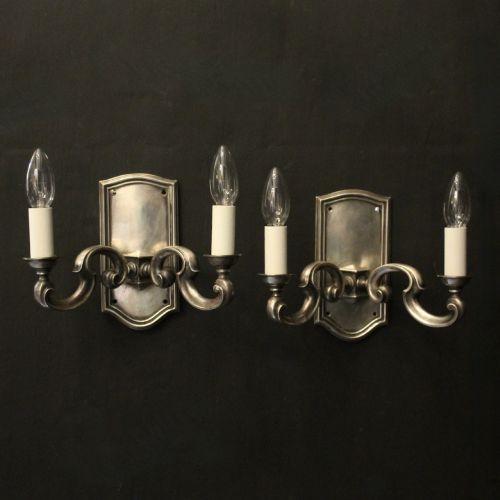
Vintage double arm sconces bring paired branches of candlelight or wired glow to a wall, offering balanced illumination with period character.
Vintage Double Arm Sconces
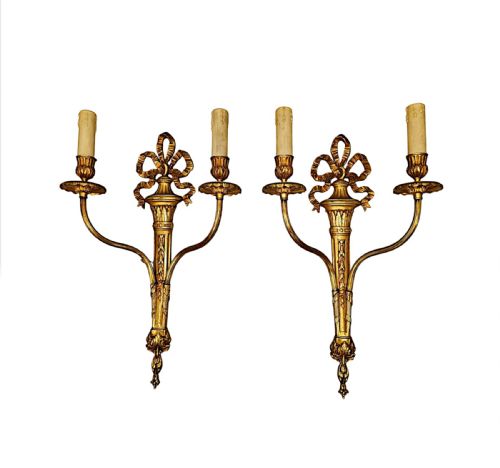
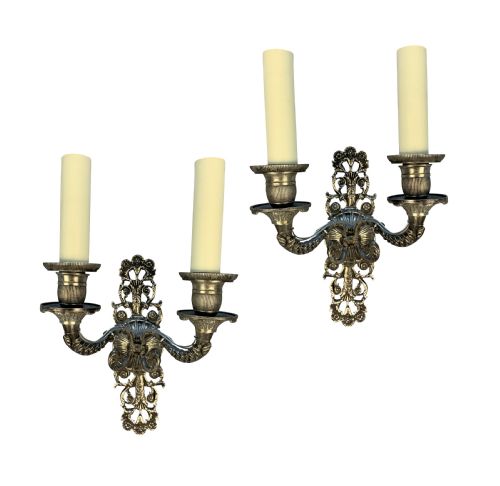
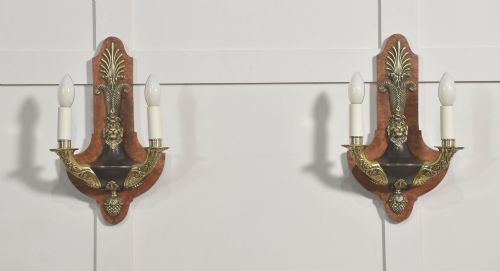
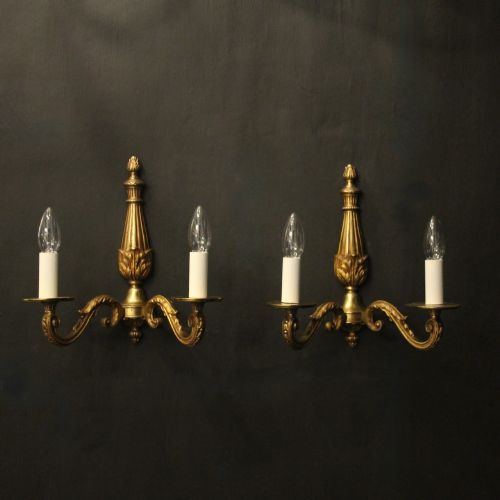
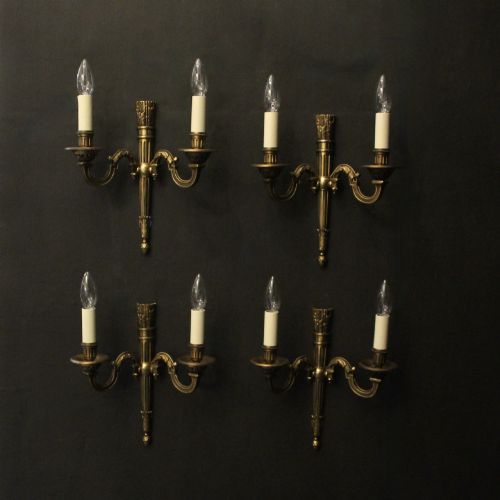
The selection centres on designs spanning the Victorian, Edwardian and early twentieth-century periods, drawing heavily on French Rococo, Neoclassical and Empire styles. Alongside dedicated wall lights, the category encompasses twin-branch table candelabra adapted for wall use or standing display from circa 1930.
Materials and Techniques
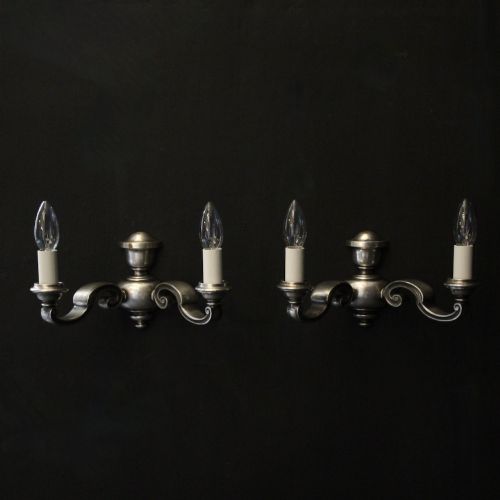
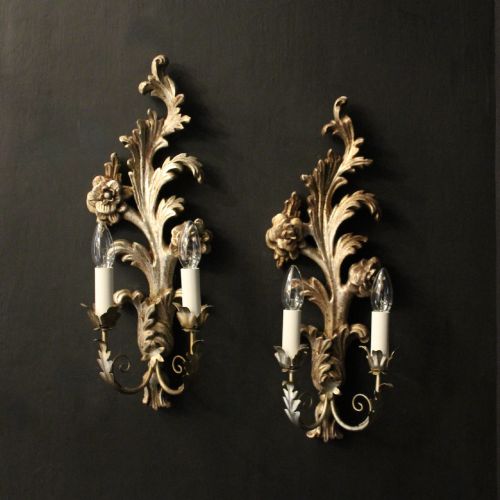
Construction relies heavily on cast metals including brass, bronze, ormolu and gilt bronze, often finished with fire-gilding or silver plating to achieve a lustrous metallic surface. Artisans also utilised carved wood, specifically giltwood and silver giltwood, particularly in Florentine workshops where decorative frames formed the primary wall plate.
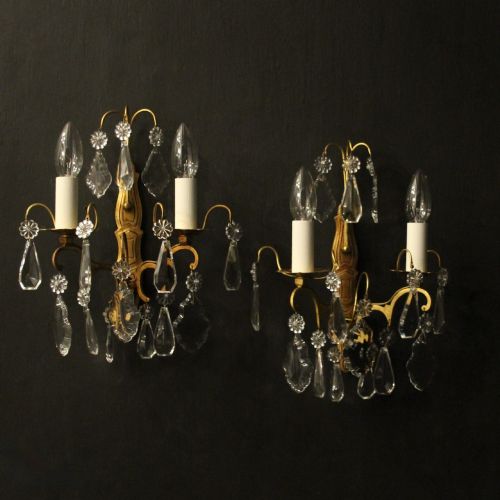
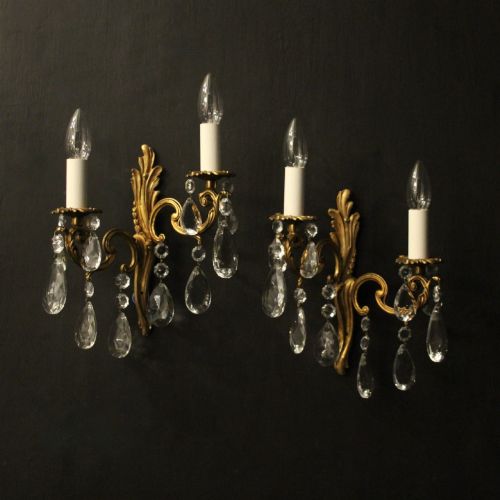
Casting methods allowed makers to incorporate elaborate scrollwork, acanthus leaves and asymmetrical Rococo motifs into the twin arms and backplates. Crystal elements occasionally supplement the metalwork, catching and refracting the light projected from the dual branches.
Vintage Double Arm Sconces Retail Price Guide 2026
Typical asking prices for vintage double arm sconces among the pieces listed under this phrase on Sellingantiques today, from the lower quarter to the upper quarter. They describe what is for sale here now, not the wider market.
Listings feature items spanning the 19th Century, Victorian, Edwardian, and 1900 to 1930 decades, executed in brass, bronze, ormolu, and silver plate.
Quality Variations
Quality rests upon the crispness of the metal casting or wood carving, where superior examples exhibit sharp relief, clean undercutting and deeply defined botanical or scroll ornament. Secondary casting often shows soft details and blurred junctions where chasing work was omitted or hurried.
The integrity of the surface finish further distinguishes the tiers of manufacture, with genuine fire-gilding and heavy silver plating retaining their depth and adherence over decades. Thinner electroplating or applied paints tend to wear unevenly, exposing the base metal beneath through handling and time.
Casier·F. & C. Osler
The Vintage Double Arm Sconces Glossary
- Ormolu
- A technique of applying finely ground high-carat gold amalgam to a bronze object, followed by firing to drive off the mercury. This leaves a durable, rich golden surface characteristic of fine French metalwork.
- Giltwood
- Timber, usually carved gesso-coated wood, covered with very thin gold leaf. It appears frequently on Florentine wall lights from the early twentieth century.
- Twin Arm
- A configuration featuring two distinct branching arms extending from a central backplate to hold candles or lamp holders. This symmetry defines the standard layout for this group of lighting.
- Rococo
- A decorative style characterised by asymmetrical curves, C-scrolls, shell motifs and organic plant forms. It dominates many of the French bronze and gilt brass pieces recorded here.
- Silver Plate
- A thin layer of silver bonded to a base metal such as brass or copper. English and French workshops utilised this finish to provide the appearance of solid silver wall fixtures.
Vintage Double Arm Sconces: Frequently Asked Questions
How were double arm sconces originally lit?
These fixtures originally held wax or tallow candles in sockets positioned at the end of each branch, requiring regular trimming of the wicks.
Many surviving examples have subsequently been wired for electricity to serve as permanent wall lighting while retaining their decorative candle-form drip pans.
How do I identify French styles?
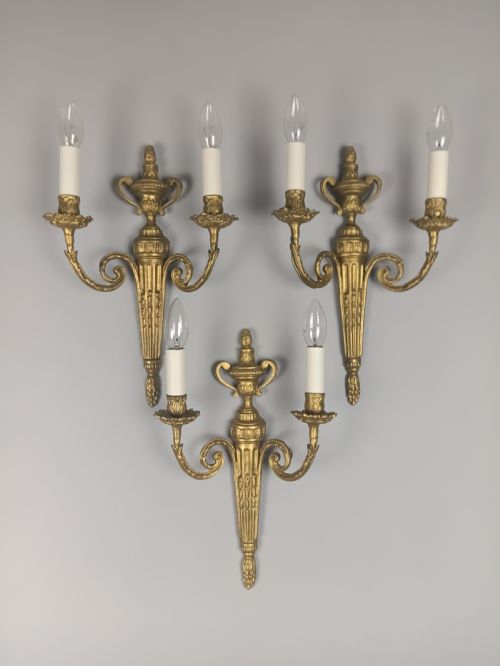
French pieces often display distinct period characteristics such as the flowing asymmetrical scrolls of Rococo or the strict symmetry and classical urn motifs of the Empire style.
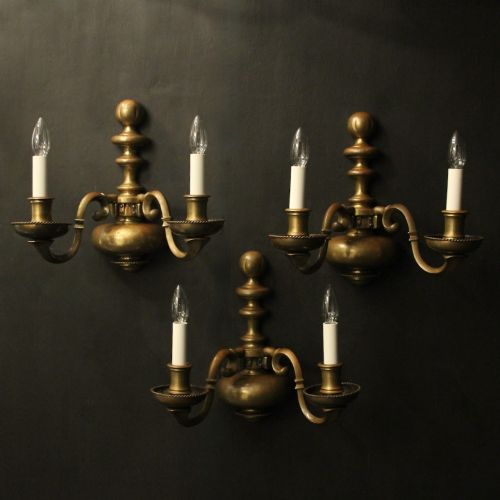
Heavier use of cast bronze, ormolu, and detailed chasing work further points to French manufacture compared to simpler English brass alternatives.
Can these lights be rewired safely?
Most vintage sconces accommodate modern electrical wiring through the central backplate and down the hollow arms, provided a qualified electrician checks the internal channels.
Original sockets can often be replaced with modern safety-standard fittings while preserving the exterior historic appearance.