



Vintage Door Hardware
Vintage door hardware gathers brass, bronze and cast iron knockers, handles and locks that give period character to a house.
Vintage Door Hardware
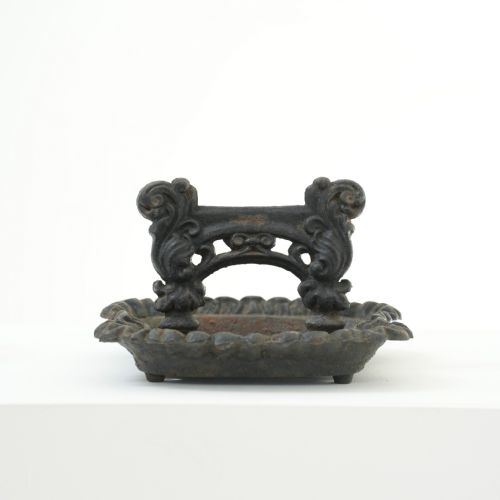
Vintage door hardware encompasses architectural elements like brass knockers, cast iron boot scrapers, rim locks and crystal door handles that survive from previous centuries. A buyer searching for vintage door hardware seeks functional fittings that impart historical weight and tactile quality to interior and exterior doors.
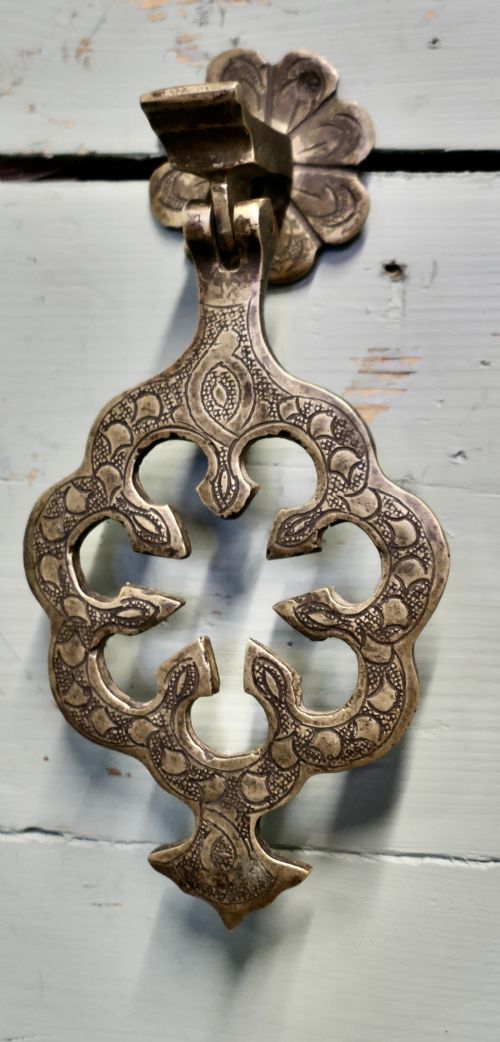
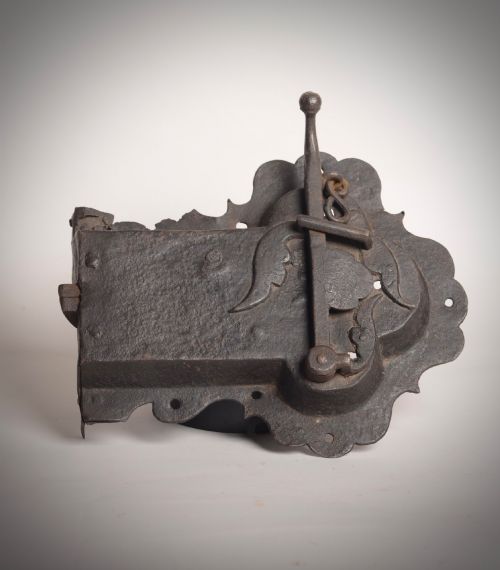
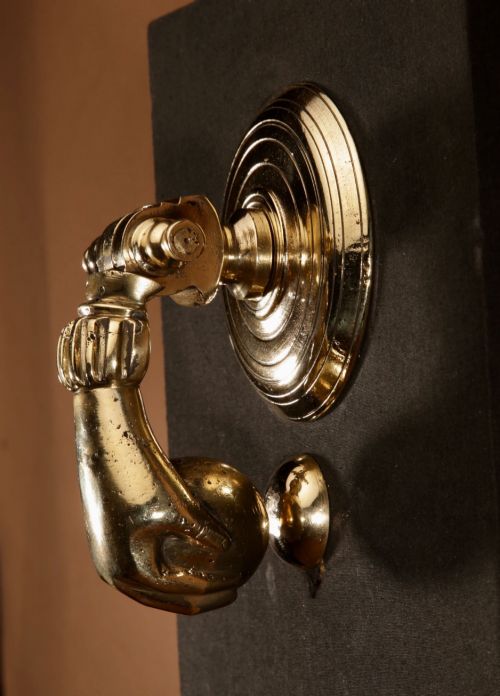
The selections span distinct periods including Georgian, Victorian, Edwardian and Art Deco, alongside earlier seventeenth-century rim locks and spring bolt latches. Forms range from utilitarian iron hinges and shop door handles to figurative brass knockers depicting hands, lions, imps and sea serpents.
Most items appearing here are made of brass, bronze or cast iron, frequently paired with secondary materials such as porcelain, china, blue glass or crystal. These elements survive from houses, public buildings and ships, preserving the functional metalwork of past trades and domestic routines.
Materials and methods of construction
Makers utilised casting techniques to shape brass, bronze and cast iron into elaborate knockers, handles and finger plates. Molten metal poured into sand or metal moulds created the heavy gauge structures seen in anchors, caryatids and figural knockers.
Wrought iron and steel formed functional components like decorative rim locks, hinges and spring bolt latches through hand-forging and filing. Subsidiary materials such as lead crystal, china and blue glass were turned or moulded then mounted into metal collars to create door pulls.
Vintage Door Hardware Retail Price Guide 2026
Typical asking prices for vintage door hardware among the pieces listed under this phrase on Sellingantiques today, from the lower quarter to the upper quarter. They describe what is for sale here now, not the wider market.
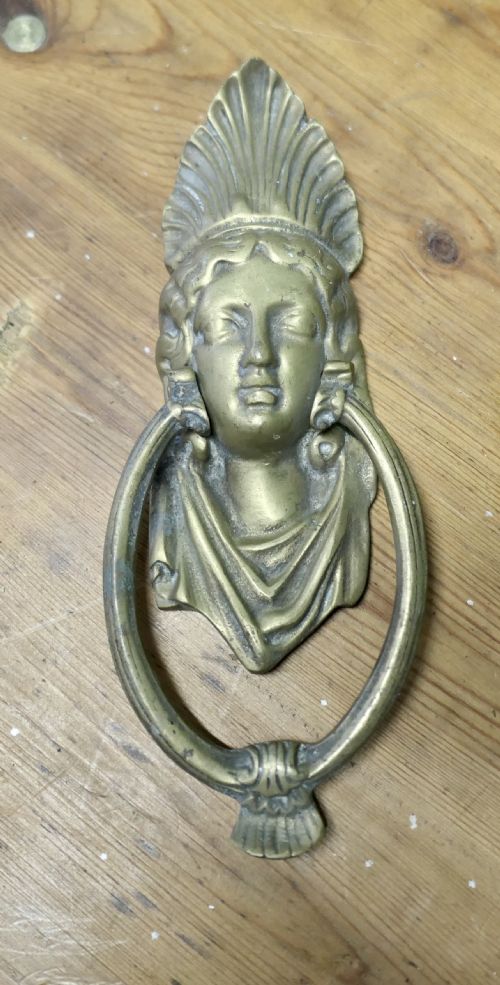
Several brass knockers take whimsical animal and mythical forms, depicting an imp with a lantern, an elf, a sea serpent and a lion mask.
Assessing quality and craftsmanship
Quality in these architectural pieces rests on the crispness of the cast detail and the weight of the metal gauge. Heavier castings retain sharper facial expressions on figural knockers and cleaner lines on geometric finger plates.
The integrity of the working mechanism distinguishes superior locks and latches from simpler decorative pieces. Smooth spring action in seventeenth-century latches and precise alignment in box locks indicate high-grade domestic ironmongery.
Gerwin & Co Birmingham·Kenrick & Sons
The Vintage Door Hardware Glossary
- Rim lock
- A mechanical lock housed in a metal box fastened to the surface of a door rather than mortised into its edge. These surface-mounted units often feature decorative brass or iron cases dating from the seventeenth century onwards.
- Push plate
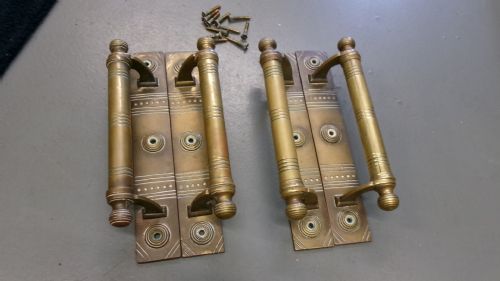
- A protective metal, porcelain or glass plate fitted to a door around the handle to prevent finger marks on the wood. Sets of brass or enamel plates frequently match adjacent door pulls.
- Door butler
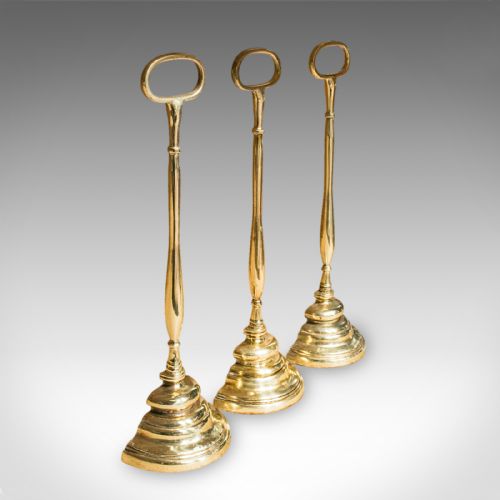
- A heavy metal stop placed on the floor to hold a door open. These figures often take cast iron or brass forms.
- Caryatid
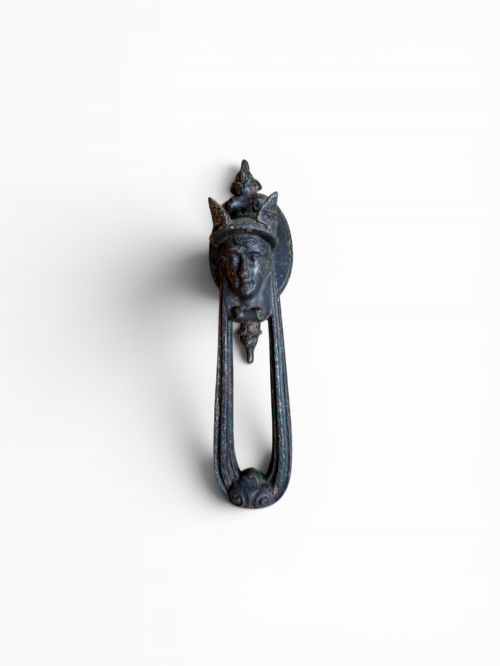
- A sculpted female figure serving as an architectural support. In door hardware, this motif appears on brass knockers where the figure forms the striking handle.
- Spring bolt latch
- A self-latching door mechanism operated by a spring-loaded bolt. Early examples utilise internal springs to maintain tension against the strike plate.
Vintage Door Hardware: Frequently Asked Questions
How do I clean antique brass hardware?
Historic brass pieces accumulate tarnish and dark patination over centuries of exposure. Gentle washing with warm water and a soft brush preserves the underlying metal surface without removing age character.
Harsh chemical polishes strip away the historical oxidation that collectors value. Most dealers prefer to leave the original surface untouched.
Will old door handles fit modern doors?
Period handles and spindles often follow dimensions different from contemporary metric standards. Spindles may require adjustment or sleeve adapters to engage with modern latch mechanisms.
Checking the square spindle size and backset measurements ensures the hardware integrates with existing joinery.
What is a rim lock?
A rim lock is a self-contained locking mechanism mounted onto the interior face of a door. These units became common in earlier centuries before internal mortice locks gained popularity.
They operate with a skeleton key and usually include a matching brass or iron drop handle.
How do I date a brass door knocker?
Dating relies on the casting technique, the fixing method and stylistic motifs. Georgian and Victorian pieces often display hand-filed finishing marks and heavier brass gauges compared to later reproductions.
Makers' stamps and registration marks can narrow the production period to specific decades.