



Vintage Dog Portrait Canvas
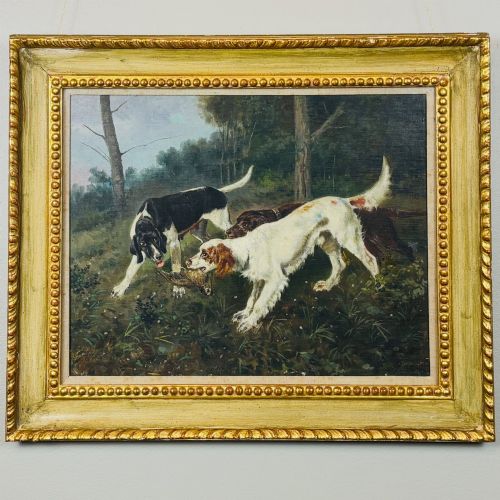
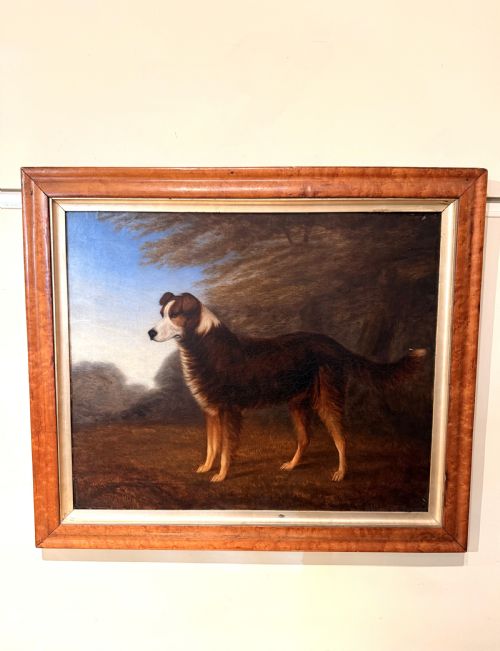
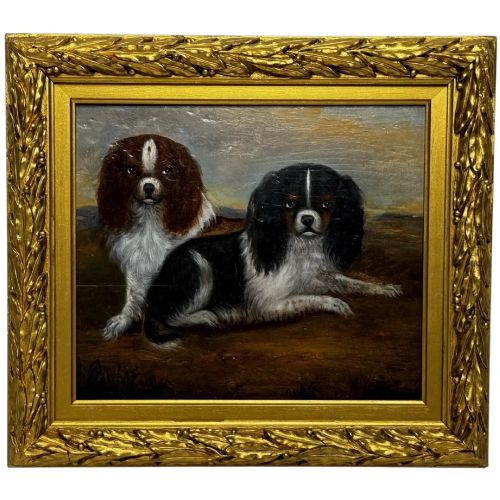
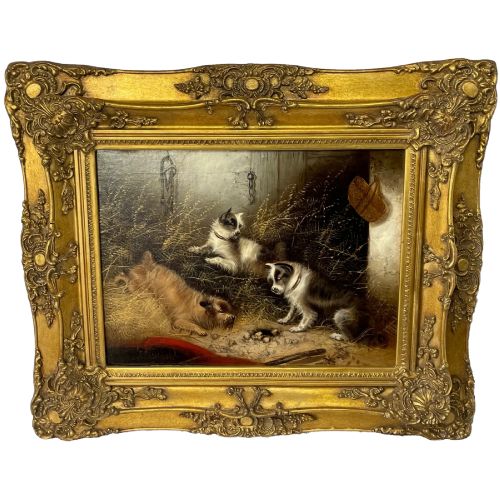
A vintage dog portrait canvas captures the character of working terriers, hounds, and spaniels in oil paint.
Vintage Dog Portrait Canvas
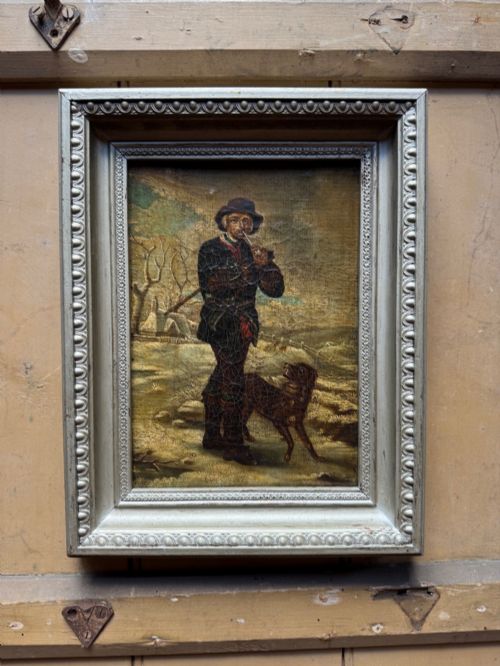
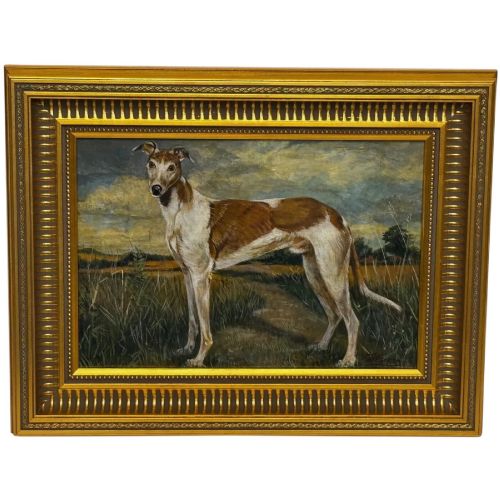
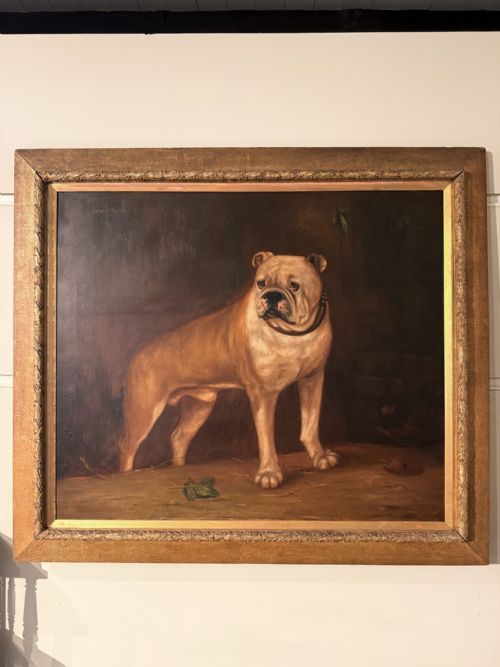
When you search for a vintage dog portrait canvas, you are looking at oil paintings on canvas depicting individual animals and sporting breeds from the nineteenth and twentieth centuries. These works range from formal Victorian studies of spaniels and terriers to Edwardian and mid-century canvases showing hounds and companion dogs in landscapes or interiors.
The version you are most likely to meet on this page is a nineteenth-century or early twentieth-century oil painting framed in wood or giltwood. Many of these pieces record specific animals belonging to identifiable owners, captured by artists working within British and European sporting art traditions.
Materials and construction
These works are executed in oil paint applied to woven canvas supports, utilising traditional pigments layered over preparatory grounds. The canvases are typically stretched over wooden strainer frames and secured with historical fixings.
Many of these paintings are housed in their original or period-appropriate wood and giltwood frames, which provide structural support and complement the tonal palette of the oil composition.
Vintage Dog Portrait Canvas Retail Price Guide 2026
Typical asking prices for vintage dog portrait canvas among the pieces listed under this phrase on Sellingantiques today, from the lower quarter to the upper quarter. They describe what is for sale here now, not the wider market.
Framing materials recorded in the inventory include both carved wood and reflective giltwood constructions.
Distinguishing quality in canine portraiture
Quality in a vintage dog portrait canvas rests upon the artist's ability to render the anatomy, coat texture, and distinct expression of the animal with anatomical conviction. Works by accomplished painters display confident brushwork in the rendering of fur and lively engagement in the animal's posture, whereas lesser examples rely on stiff repetition and static composition.
The integration of the subject within its setting also separates standard decorative canvases from superior fine art pieces. Stronger paintings handle light and shadow across the landscape or interior to give depth, while simpler works place the animal against a flat, unconvincing backdrop.
Henry Barraud·John Emms·Thomas Hicks·LM Webb·William Barraud·George E Sharpe·Sir Edwin Landseer·J Cecil Bradshaw·Jules Chardigny·Henri Schouten·M E Hankinson·Valentine Thomas Garland·Florence Mabel Hollams·Richard Waitt·Henry Frederick Lucas-Lucas·Samuel John Carter
The Vintage Dog Portrait Canvas Glossary
- Oil on Canvas
- A painting medium where pigments are suspended in a drying oil, applied to a stretched woven fabric support. This combination allows for rich colour blending and textured brushwork.
- Giltwood
- Wood that has been decorated with a thin layer of gold leaf or metallic powder. Frames made from this material often accompany nineteenth-century fine art.
- Victorian Sporting Art
- A genre of painting from the nineteenth century focusing on horses, dogs, hunting, and rural pursuits. These works emphasise anatomical accuracy and the relationships between animals and handlers.
- Strainer Frame
- A rigid wooden frame used to keep a canvas taut. Historical frames help date the physical assembly of the artwork.
Vintage Dog Portrait Canvas: Frequently Asked Questions
How should I hang a dog portrait canvas?
Mount the painting securely on a wall away from direct sunlight and heat sources to protect the oil pigments and canvas support.
Ensure the hanging wire and wooden frame are stable before mounting at eye level for optimal viewing.
What periods do these canvases cover?
The listings span from the eighteenth century through the Victorian and Edwardian eras up to the mid-twentieth century.
Nineteenth-century examples form a significant portion of the selection, reflecting the popularity of animal painting during that period.
Are these paintings signed by artists?
Some canvases feature visible artist signatures or inscriptions, while others remain attributed to specific schools or followers of known painters.
Documentation and stylistic comparison help identify the hands behind unsigned works.
How do I clean an oil painting?
Dust the canvas and frame gently with a soft, dry brush to remove surface particles without pressing into the paint layer.
Avoid using water or cleaning solvents, and consult a professional conservator for deeper cleaning needs.