
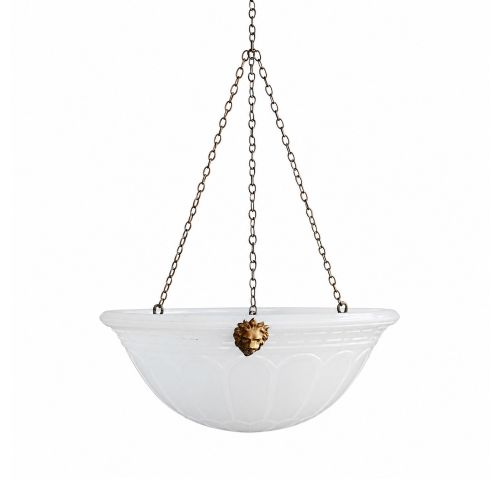


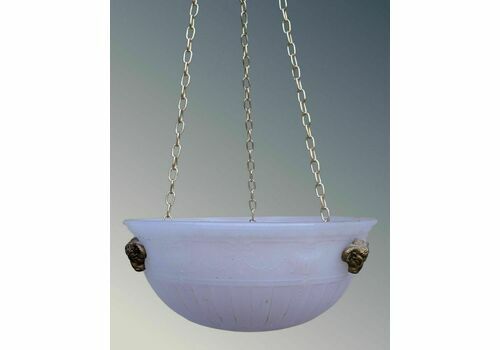


Vintage Dish Pendant Shade
These vintage dish pendant shade designs bring ceiling lighting from the 19th Century, Victorian, Edwardian, and Art Deco periods into modern spaces with classic materials.
Vintage Dish Pendant Shade
When you search for a vintage dish pendant shade, you are looking at ceiling lights and pendant lighting formed from suspended bowls and dishes. The pieces on this page span the 19th Century, Victorian, Edwardian, 1910, 1920, and 1930 periods.
You will most commonly meet ceiling light shades styled in Art Deco, Edwardian, French Neoclassical, Arts and Crafts, and Neoclassical designs. These hanging dish lights serve as central ceiling illumination for rooms.
The physical forms include ceiling lights, pendant lights, and ceiling light shades. Origin descriptions in the evidence point to English and Swedish makers.
How they were made
Makers shaped glass into moonstone, cut glass, opalescent glass, and opaline dish forms. Metal components utilise brass, bronze, and general metalwork alongside fabric cord suspensions.
The listings on this page span the 19th Century, Victorian, Edwardian, and 1930 periods, utilising brass, bronze, alabaster, and various art glass types.
What varies in quality
Quality rests on the depth and clarity of the glasswork, separating simple pressed forms from finely cut crystal and opalescent or moonstone glass. The weight and carving definition of alabaster bowls also differentiate standard items from superior examples.
Metal mounts in brass and bronze show distinction through crisply cast details, such as figurative rams heads, compared to simpler utility fittings. The integrity of period fixings and matching suspension cords completes the assessment.
The Vintage Dish Pendant Shade Glossary
- Plafonnier
- A ceiling light fixture that sits close to the ceiling or hangs by short cords, often featuring a bowl or dish shade. This French term is frequently used for mid-to-late period bowl lights.
- Moonstone glass
- A type of semi-translucent art glass with a milky, iridescent appearance that diffuses soft light. It creates a glowing effect when illuminated from within.
- Opalescent glass
- Glass containing ingredients that cause it to diffuse a milky or coloured sheen, shifting in tone between transmitted and reflected light. It was widely favored during the Art Deco period.
- Cut glass
- Glass decorated by grinding and polishing facets onto the surface to catch and refract light. This technique defines many Edwardian and Victorian ceiling fittings.
Vintage Dish Pendant Shade: Frequently Asked Questions
How do I hang a dish pendant?
These ceiling lights suspend from chains, rods, or fabric cords attached to a ceiling rose. Professional installation ensures the electrical wiring and ceiling anchors securely support the weight of glass and stone bowls.
Ensure the hanging height matches your ceiling clearance, keeping the bottom of the dish safely above head height in walkways.
What rooms suit a dish pendant shade?
Dish pendant lights work well in hallways, dining rooms, and bedrooms where ambient, downward illumination is preferred. The shallow bowl design spreads gentle light across the ceiling while casting a direct glow below.
Matching the style, such as Art Deco opalescent glass or Edwardian cut glass, to your interior architecture helps the fixture look integrated.
How do I clean alabaster shades?
Alabaster is a soft, porous stone that requires dry dusting or gentle wiping with a barely damp cloth. Avoid harsh chemical cleaners or soaking the stone, as moisture can stain or damage the porous surface.
Regular maintenance prevents dust accumulation in the carved details of French Neoclassical and Art Deco bowls.
Are these lights compatible with modern bulbs?
Most vintage fittings accommodate standard modern LED bulbs, provided the wattage matches the historical wiring capacity. It is wise to have an electrician check older metal and fabric cord fittings before use.
Warm white LED bulbs replicate the soft glow originally produced by early 20th-century carbon filament lighting.