
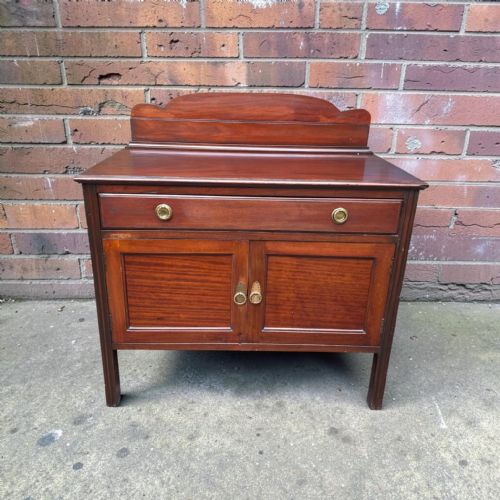
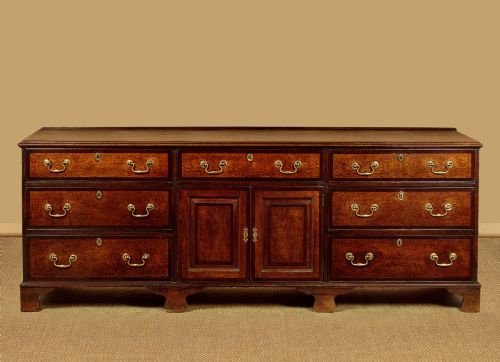
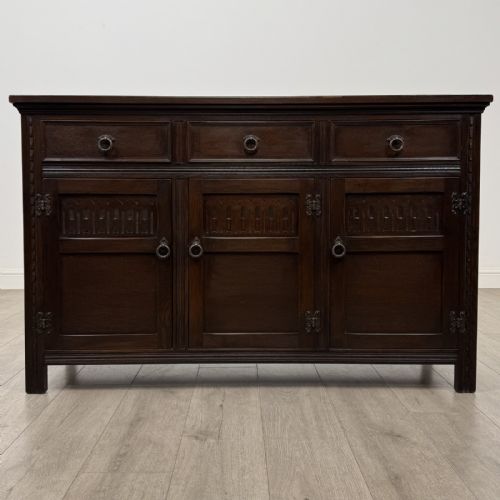
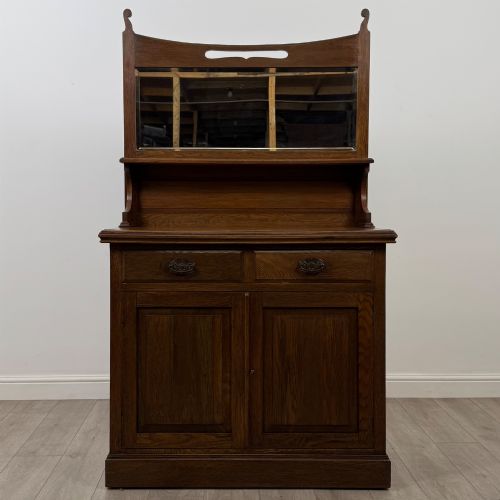
Vintage Dining Room Storage
Vintage dining room storage brings together sideboards, dressers and chiffoniers designed to hold china, silver and linen.
Vintage Dining Room Storage
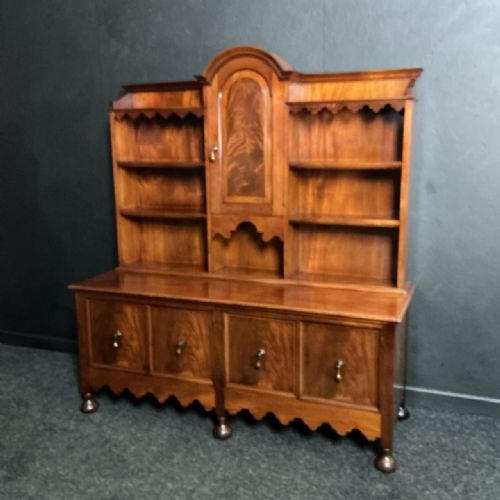
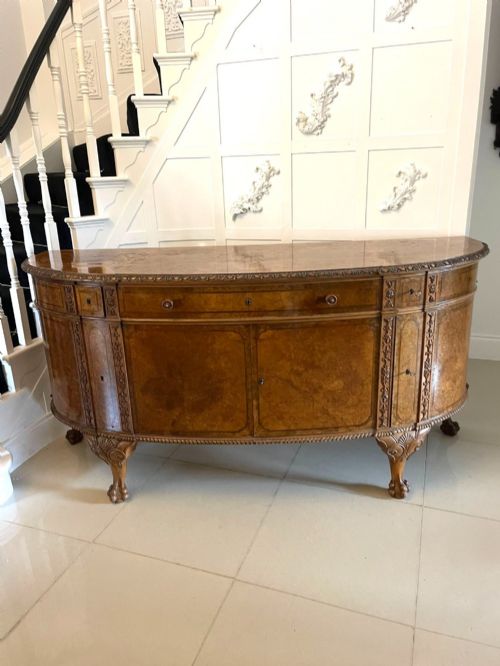
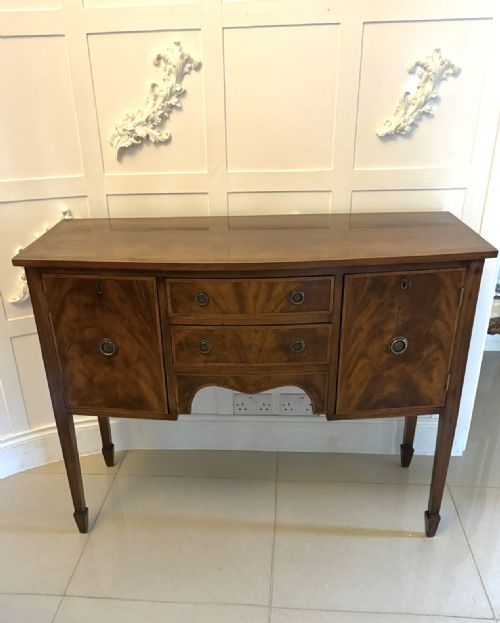
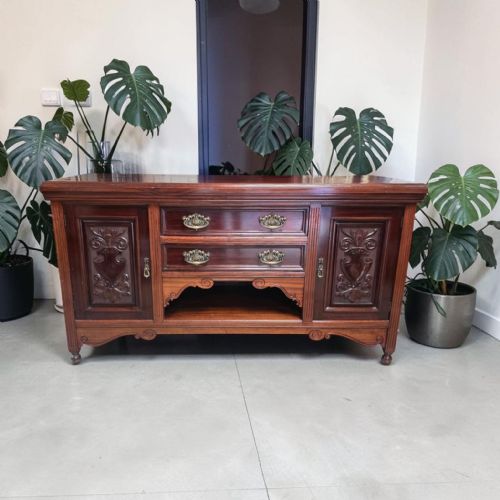
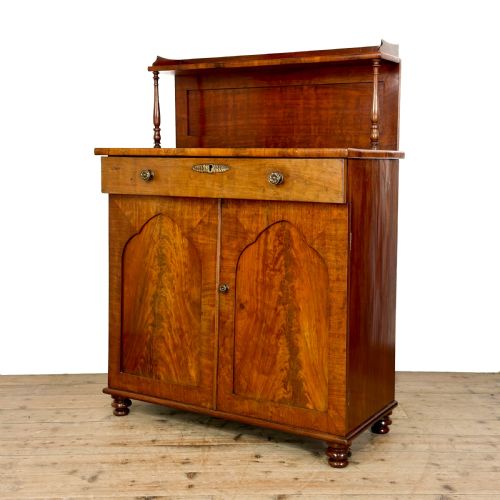
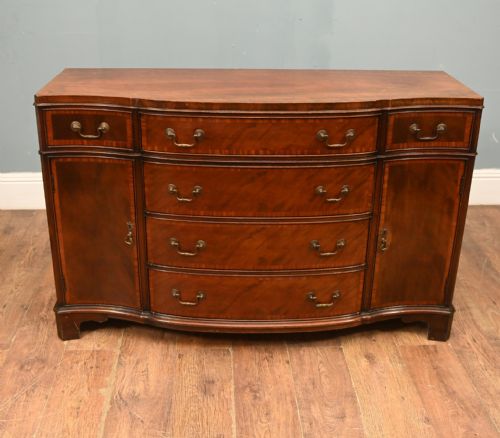
Vintage dining room storage covers a broad sweep of utilitarian and display furniture spanning from the Georgian period through to the Art Deco era. The selection centres heavily on sideboards, chiffoniers, dresser bases and side cabinets that furnished domestic dining spaces across the nineteenth and early twentieth centuries.
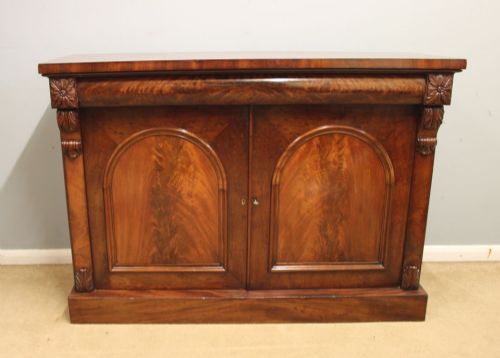
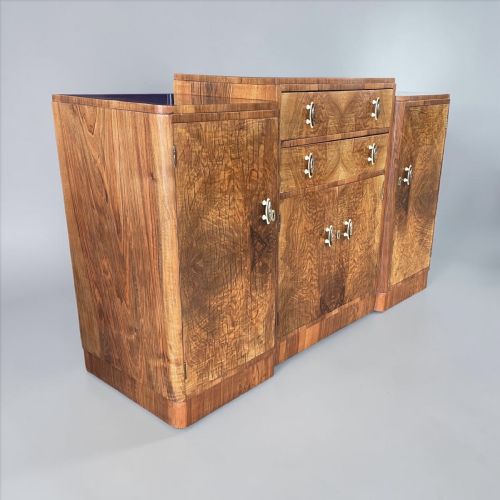
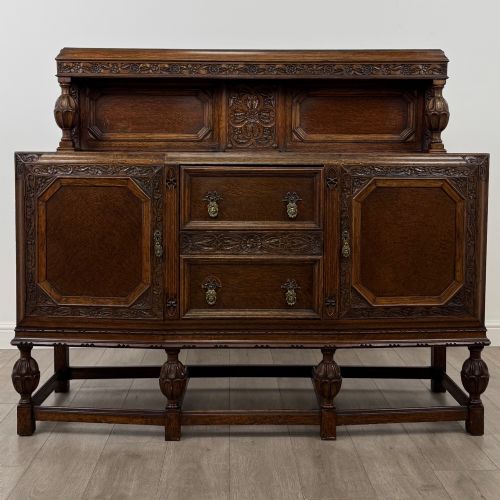
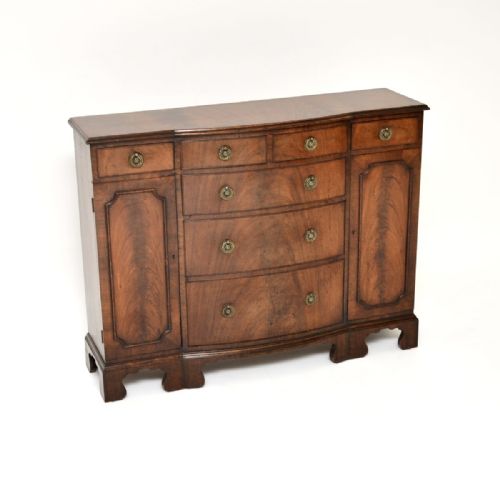
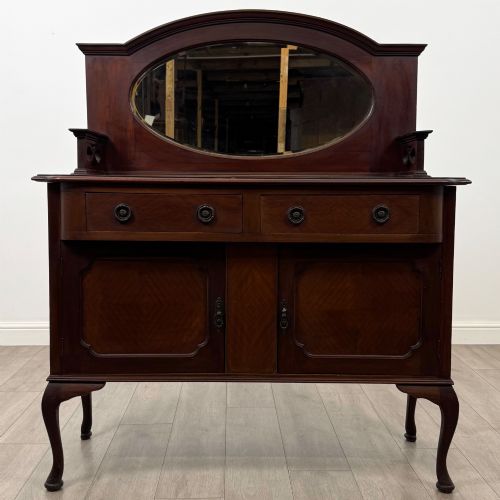
Mahogany and oak dominate the forms, appearing in substantial pieces built to house glassware, cutlery and table linen. Buyers will regularly encounter Edwardian mirror-back sideboards, Victorian chiffoniers, and streamlined Art Deco server units alongside earlier vernacular dresser bases.
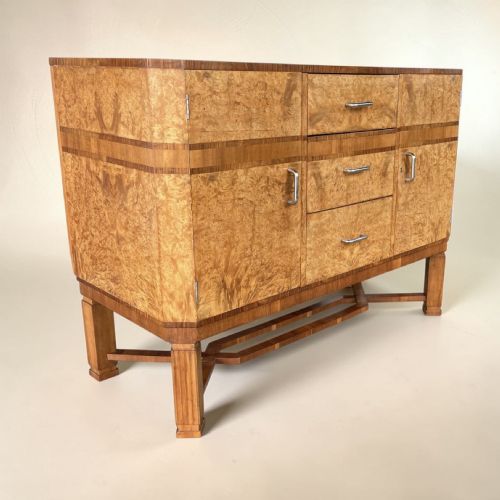
The assortment moves between formal revival styles, such as Jacobean and Gothic interpretations, and cleaner modernist lines from the 1930s. Each object reflects the changing demands of domestic dining, shifting from closed service areas to prominent dining room focal points.
Materials and Construction
Cabinet makers relied primarily on solid oak and mahogany as the structural backbone for these storage pieces, often applying figured veneers like flame mahogany, burr walnut and palisander to display surfaces. These timbers were selected for both durability and decorative grain pattern, providing a stable carcase for heavy drawers and panelled doors.
Joinery techniques combined traditional frame and panel construction with dovetailed drawer boxes and applied mouldings. Brass handles, glass doors and occasionally marquetry or carved detailing completed the pieces, showing a clear continuity of craftsmanship across the 19th Century and Edwardian periods.
Several sideboards include fitted cellar drawers originally designed to keep your claret cool and secure from passing footmen.
Assessing Standard and Execution
Quality rests heavily on the selection of timber and the precision of the cabinet work, particularly where figured veneers meet solid frames. Superior examples display thoughtful grain matching across drawer fronts and doors, whereas lesser pieces rely on uniform surfaces with minimal character.
The integration of secondary elements such as original brass hardware, bevelled mirror glass and smoothly operating panelled doors distinguishes finer workshops from mass production. Well-executed carving and robust interior shelving demonstrate a higher tier of workmanship.
Maple and Co·Edwards and Roberts·Hamptons of Pall Mall London·M. D. Miller and Sons
The Vintage Dining Room Storage Glossary
- Chiffonier
- A compact sideboard or low cabinet typically fitted with shelves enclosed by doors, originating in the Regency and Victorian periods.
- Dresser base
- A low, heavy table with drawers, often featuring cupboards beneath, designed for kitchen or dining room storage.
- Cellarette
- A lockable container or cabinet used to hold bottles of wine within the dining room.
- Breakfront
- A piece of furniture where the central section projects forward from the flanking outer sections.
- Marquetry
- Decorative patterns formed by inserting small pieces of contrasting veneer into a wood foundation.
Vintage Dining Room Storage: Frequently Asked Questions
What is a chiffonier?
A chiffonier is a low dining room cabinet that gained popularity during the Regency and Victorian periods, often featuring a raised back with shelves or a mirrored panel.
These pieces were typically used to store glassware, small silver items and dining accessories within easy reach of the table.
How do I date a sideboard?
Dating relies on observing the primary timbers, hardware styles and construction methods used in the cabinetwork. Georgian and Regency examples favour solid mahogany and simpler linear forms, while Edwardian pieces frequently incorporate mirrors and lighter inlays.
Later 1930s Art Deco models introduce geometric veneers and streamlined handles that strip away traditional ornamentation.
Where were these pieces used?
These storage items were built specifically for the dining room or parlour to assist with the service of meals and the safekeeping of table settings. Cupboards housed heavy ceramics while specialised drawers kept cutlery organised.
Larger dresser bases and mirror-back sideboards also served as surfaces to display silver platters and decorative ceramics.
How do I care for antique wood?
Maintaining vintage wood involves keeping pieces away from direct heat sources and sudden humidity changes to prevent timber movement and veneer lifting. Regular dusting with a soft, dry cloth preserves the finish.
Applying appropriate wax polishes occasionally helps to nourish the surface of mahogany and oak without building up heavy residues.