

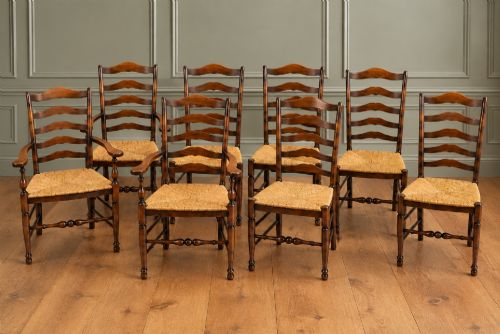
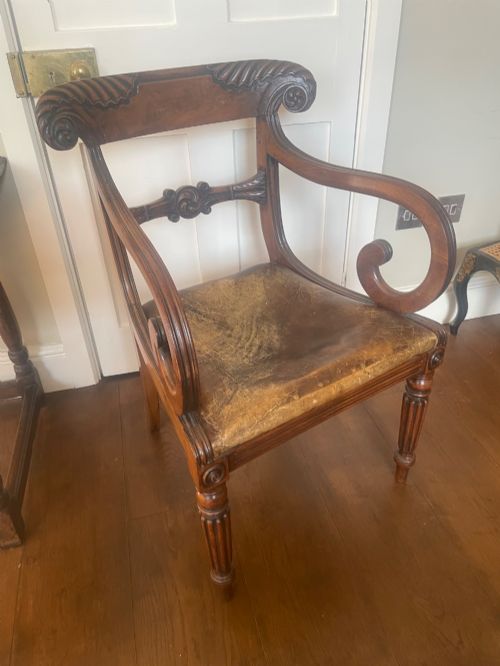
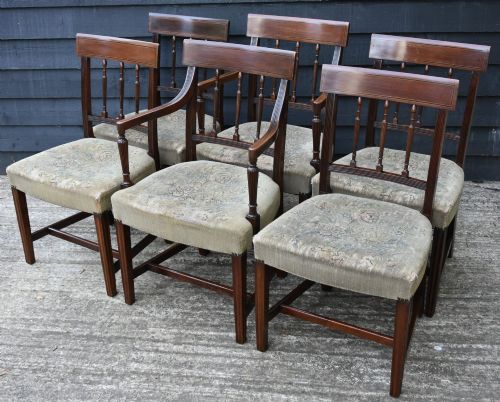
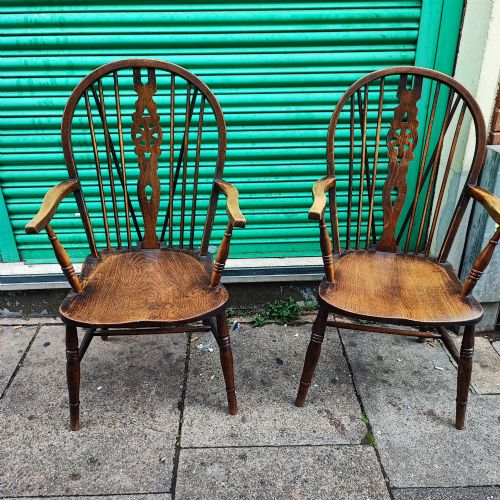
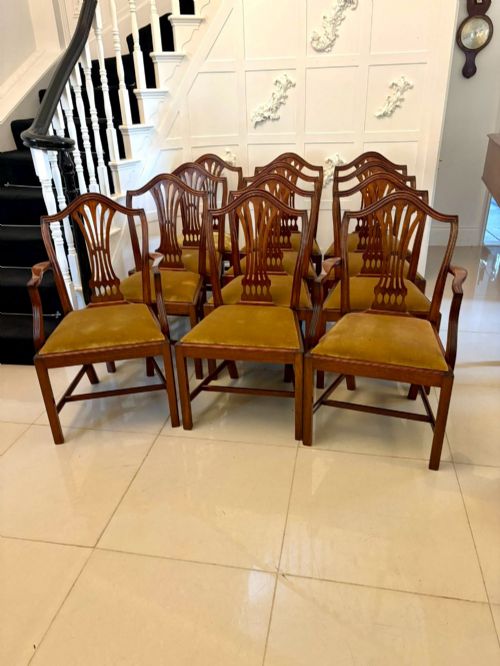
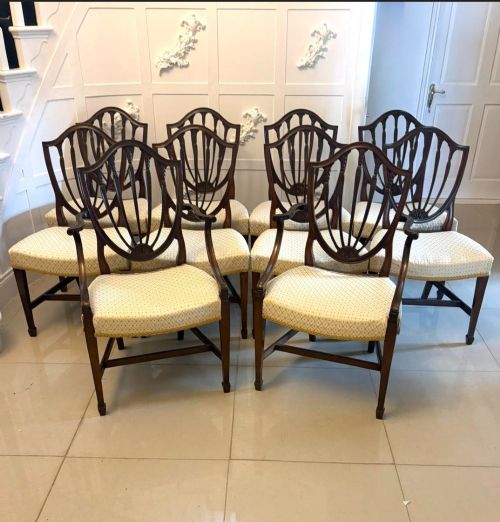
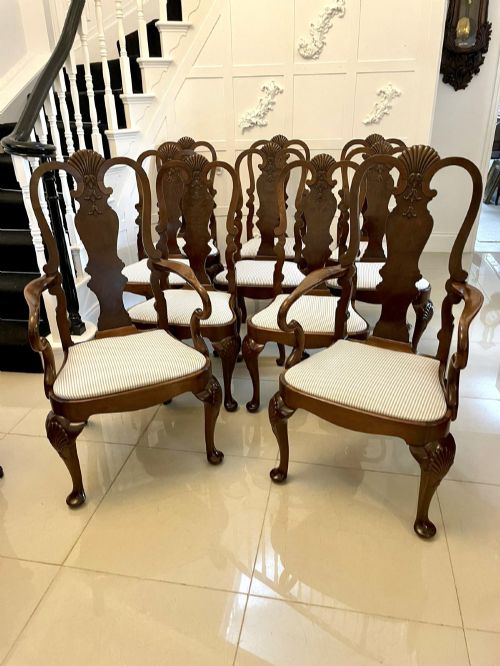
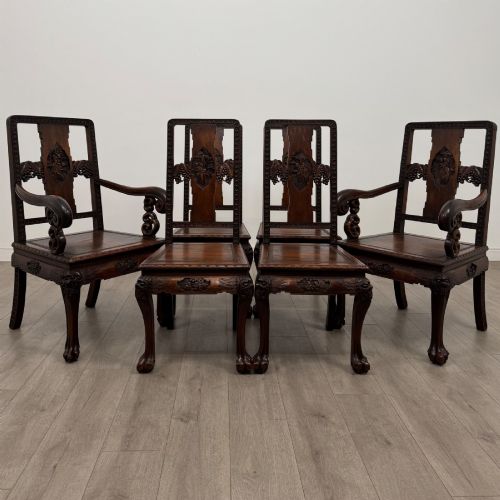
Vintage Dining Carvers
Vintage dining carvers offer substantial arm support at the table, combining period timber work with comfortable upholstered seating.
Vintage Dining Carvers
When searching for vintage dining carvers, buyers encounter robust armchairs designed to sit at the head of a dining table alongside matching side chairs. These pieces originate from periods spanning the eighteenth century through to the 1930s, reflecting changing domestic fashions across generations.
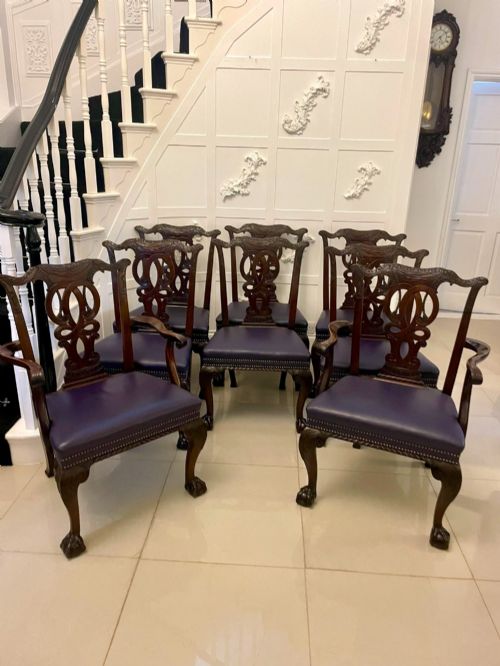
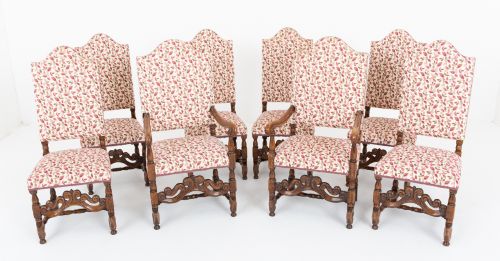
The most common examples on this page date from the Edwardian era and the early twentieth century, often drawing on earlier Georgian, Regency, or Victorian design vocabularies. Makers frequently employed revival styles such as Chippendale, Hepplewhite, and Jacobean, giving these functional seats a formal architectural presence.
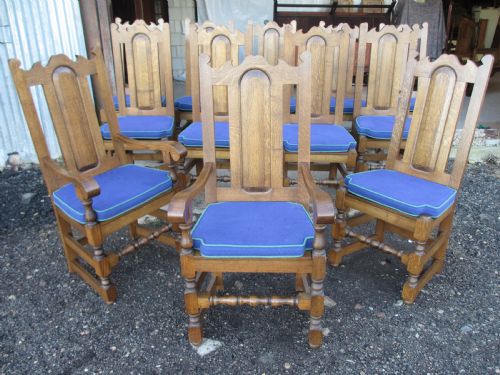
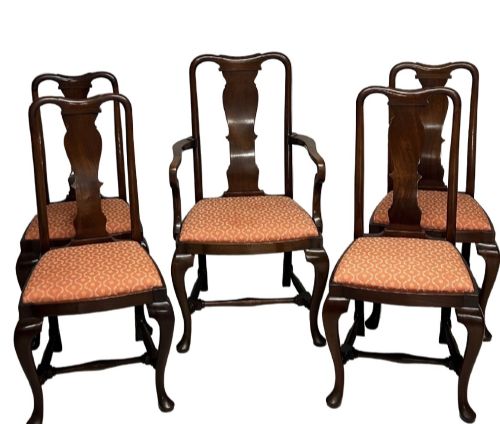
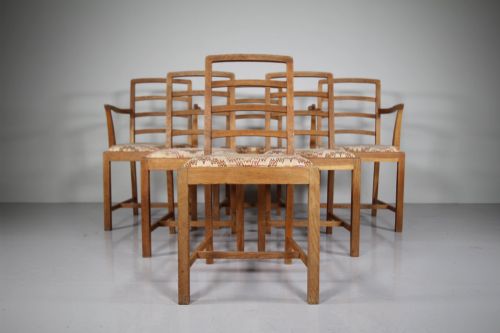
Forms range from solid oak Arts and Crafts seating to refined mahogany elbow chairs with pierced splat backs. Buyers will find both individual armchairs and matched pairs intended to complete existing dining sets or serve as standalone desk chairs.
Materials and construction methods
Cabinetmakers relied heavily on durable timbers such as mahogany, oak, and walnut to build these frames, ensuring the structural integrity needed for daily use at the dining table. Grain selection and timber density dictated how well arms and legs resisted the stresses of regular pulling and leaning.
Joinery techniques combined traditional mortise and tenon joints with careful hand carving on splats, rails, and arm terminals. Upholstered elements utilised traditional webbing and stuffing finished with materials like leather, velvet, fabric, or brass studwork.
Vintage Dining Carvers Retail Price Guide 2026
Typical asking prices for vintage dining carvers among the pieces listed under this phrase on Sellingantiques today, from the lower quarter to the upper quarter. They describe what is for sale here now, not the wider market.
Some nineteenth-century carvers feature subtle arm wear where generations of elbows rested during lengthy Victorian dinners.
Distinctions in craftsmanship
The standard of a vintage dining carver rests on the crispness of its carved detailing and the weight of its timber frame. Superior examples demonstrate fluid joinery where arms integrate seamlessly into the uprights, while lesser pieces rely on heavier, unrefined timber sections.
Original upholstery methods and high-grade covering materials elevate the finish, whereas later re-coverings can obscure the underlying integrity of the frame. The sharpness of pierced splats and the symmetry of turned or reeded legs separate standard production from exceptional workshop output.
Maple and Co·Heals of London·Goodyers London·Howard and Sons·Alfred Allen of Birmingham
The Vintage Dining Carvers Glossary
- Carver
- An armchair designed specifically for use at the head of a dining table, featuring wider proportions and armrests to accommodate the host.
- Splater
- The upright central slat within the back of a dining chair, frequently shaped, pierced, or carved in styles associated with eighteenth-century designers.
- Elbow chair
- A traditional term for an armchair with shorter arms that fit neatly beneath the table apron when not in use.
- Shield back
- A chair back design shaped in the outline of a heraldic shield, popularised during the late eighteenth century and revived in later decades.
- Barback
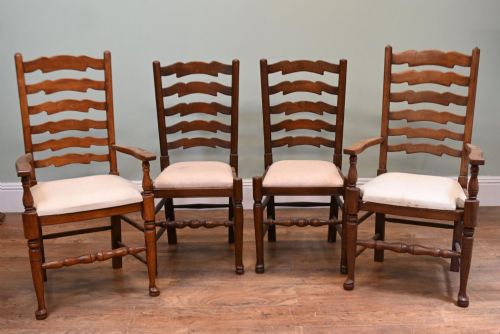
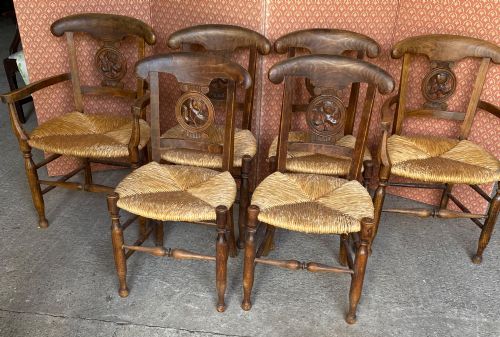
- A chair back featuring horizontal wooden rails crossing the uprights, often seen in nineteenth-century vernacular seating.
Vintage Dining Carvers: Frequently Asked Questions
What is a vintage dining carver?
A vintage dining carver is an armchair traditionally placed at the head of a dining table to provide extra comfort and distinction for the host.
These pieces match standard dining chairs in height and stylistic detail while offering supportive armrests.
How do I match carvers with dining chairs?
Matching carvers to side chairs involves looking at timber species, leg styles, and back designs within the same period or revival style.
Many listings provide pairs or individual armchairs that complement existing sets of nineteenth and twentieth-century dining seating.
What timbers were used for these armchairs?
Cabinetmakers primarily utilised dense hardwoods such as mahogany, oak, walnut, and beech to construct durable chair frames.
These timbers were often polished to highlight natural grain patterns or carved with period motifs.