

Vintage Dining Benches
These vintage dining benches bring communal seating into modern rooms, grounding long tables with practical character and sturdy timber construction.
Vintage Dining Benches
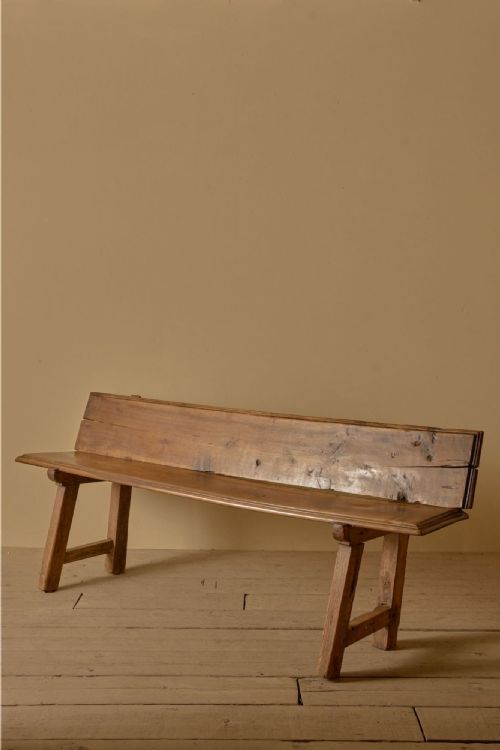
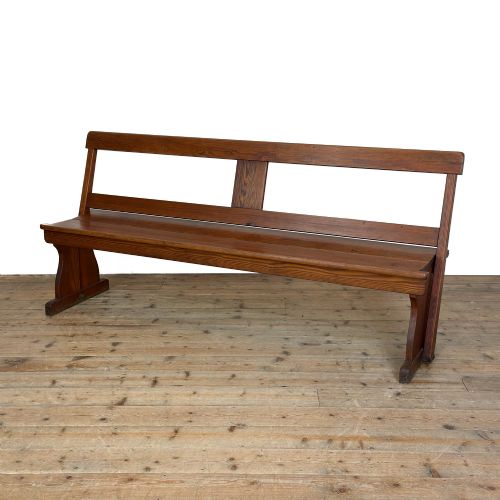
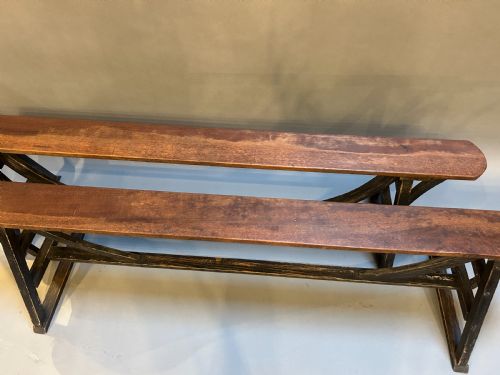
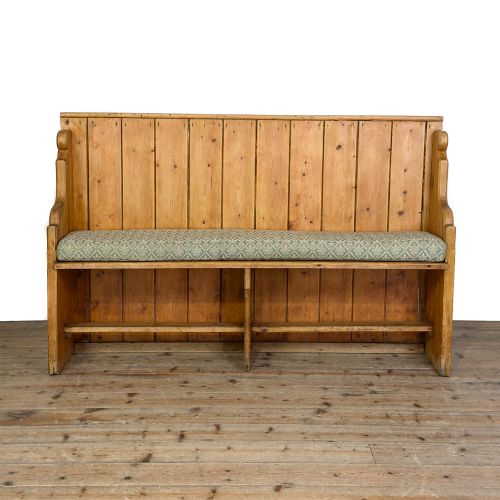
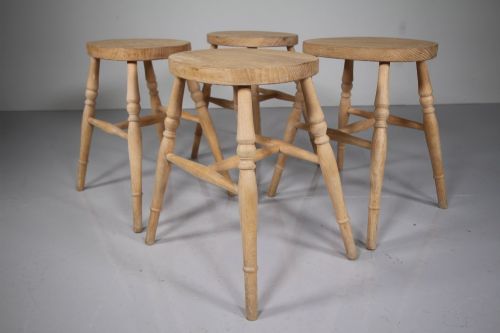
Vintage dining benches encompass functional seating adapted from various historical contexts, including school rooms, churches, railway carriages, and rural farmhouses. Buyers seeking vintage dining benches will frequently encounter long pine, oak, and elm examples originating from British, French, and Scandinavian workshops.
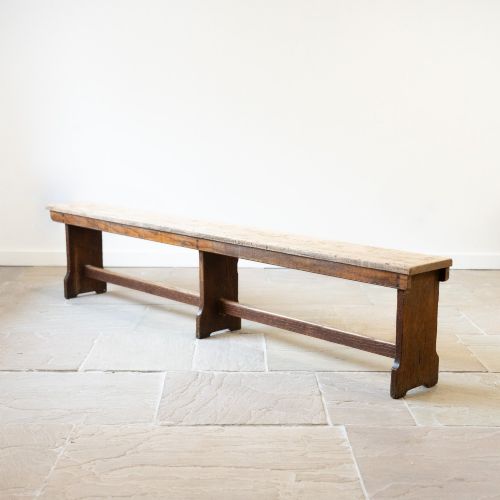
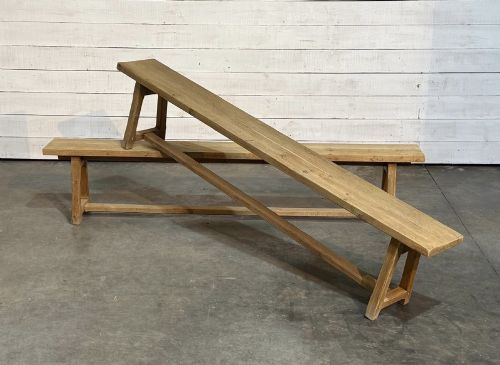
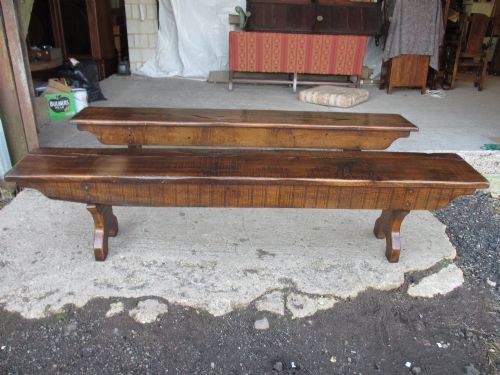
The selections range from simple plank constructions to structured refectory and trestle designs with shaped ends. Many pieces derive their practical length from institutional or communal origins, making them suited for pairing with large dining tables.
Materials and construction
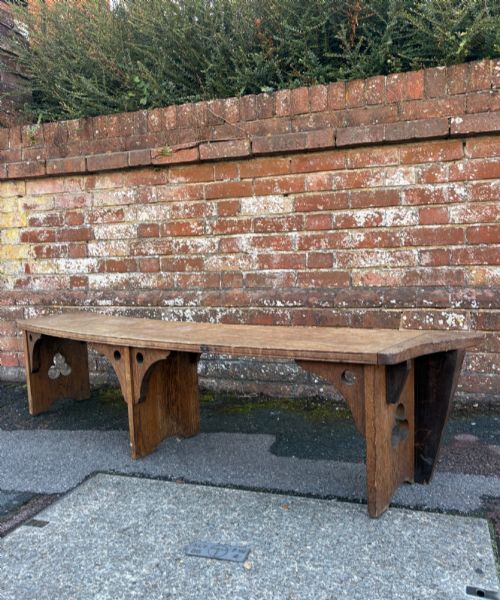
Makers relied primarily on solid timbers such as pine, oak, elm, cherrywood, and beech, selecting woods for density and straight grain. Joinery often involved sturdy pegged joints, trestle supports, and heavy plank tops designed to withstand constant daily use.
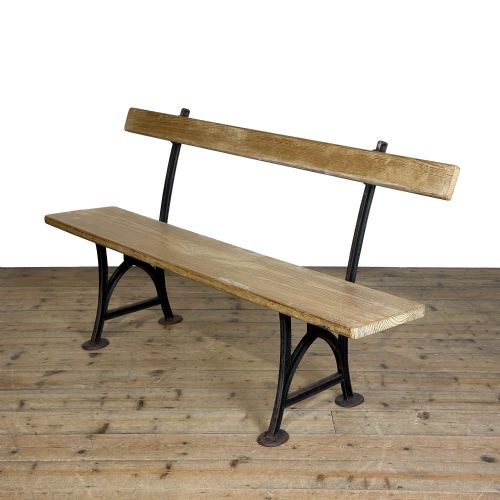
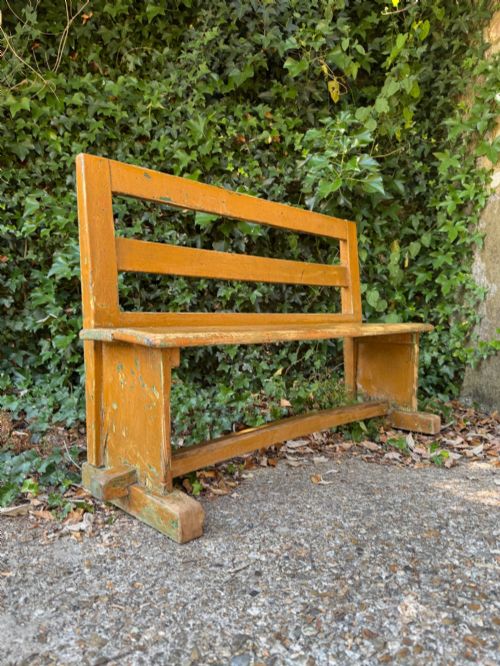
Surface treatments vary from natural waxed finishes highlighting the grain to painted or distressed layers in shades like green. Occasional pieces incorporate cast iron bases or leather and velvet trim for added support and texture.
Vintage Dining Benches Retail Price Guide 2026
Typical asking prices for vintage dining benches among the pieces listed under this phrase on Sellingantiques today, from the lower quarter to the upper quarter. They describe what is for sale here now, not the wider market.
Pine, oak, elm, and cherrywood appear frequently across 19th-century and early 20th-century listings.
Distinctions in craftsmanship
Quality rests in the integrity of the timber selection and the rigidity of the frame construction, where heavier oak or elm assemblies outlast lighter softwoods. The balance between the length of the bench and the stability of its trestle or four-legged support dictates how firmly the seat bears weight.
Fine craftsmanship shows in the subtlety of shaped supports, such as Gothic tracery or trefoil carvings, and the careful retention of original surface patination. Pieces retaining matched timber pairs demonstrate greater harmony when placed alongside a dining table.
The Vintage Dining Benches Glossary
- Refectory
- A long dining table or bench traditionally used in communal monastic or institutional dining halls. These forms provide extended seating capacity along the length of a table.
- Trestle
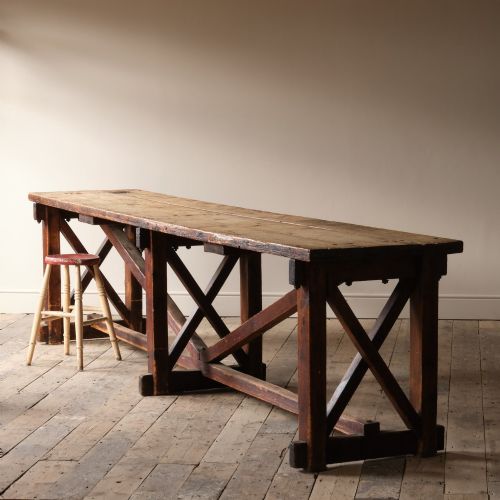
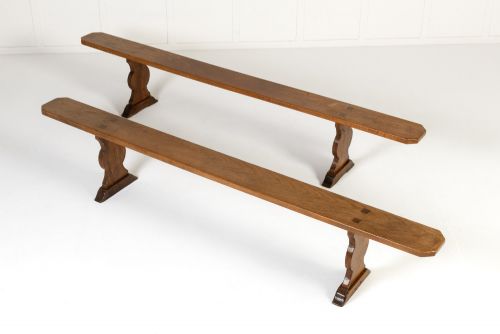
- A structural support consisting of a horizontal beam fixed to two framed uprights or legs. This design allows maximum legroom underneath long benches and tables.
- Pew
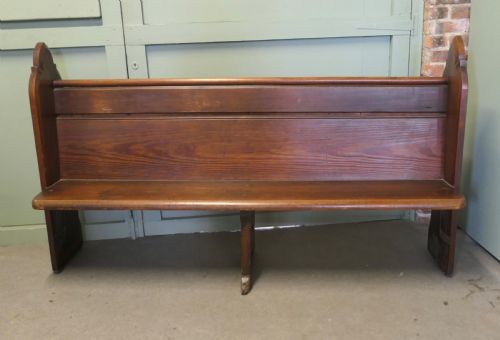
- A long wooden bench with a backrest historically found in churches, chapels, or school halls. Examples often feature solid ends and deep plank seats.
- Banquette
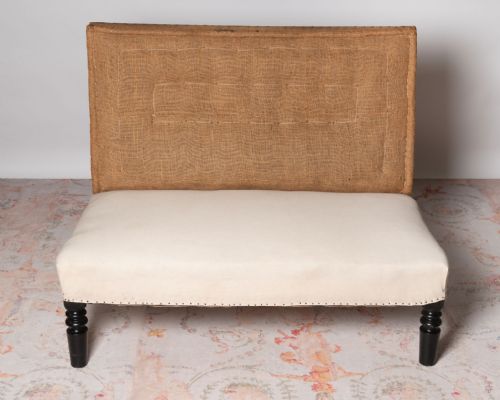
- An upholstered bench seat traditionally built or placed against a wall. Versions may include velvet trim or leather upholstery.
- Patina
- The surface sheen and colour developed on timber through age, handling, and regular waxing. This quality indicates years of exposure and use.
Vintage Dining Benches: Frequently Asked Questions
How do I choose the right length?
Match the length of the bench to the span of your dining table, leaving sufficient clearance at each end for tucking the seating neatly away.
Consider how many people need to sit comfortably along one side without crowding the table legs.
Are these benches sturdy enough for daily dining?
Solid timber construction in oak, elm, and pine provides the inherent strength required for regular family use around a busy dining table.
Inspect the underframe and leg joints to ensure the timber remains rigid and stable under movement.
Can I mix different wood tones?
Combining pine, oak, or cherry benches with varied tables creates an eclectic look rooted in traditional farmhouse and country interiors.
Matching the approximate height and scale matters more than matching the exact timber species across your dining furniture.
How do I care for wooden bench surfaces?
Apply natural beeswax periodically to nourish the dry timber and maintain a soft protective sheen against everyday spills and marks.
Avoid excessive moisture and place hot dishes on mats to preserve the historic finish of the wood.