







Vintage Dessert Glass
These vintage dessert glass pieces bring period charm to the table, offering everything from finger bowls to custard cups for modern serving.
Vintage Dessert Glass
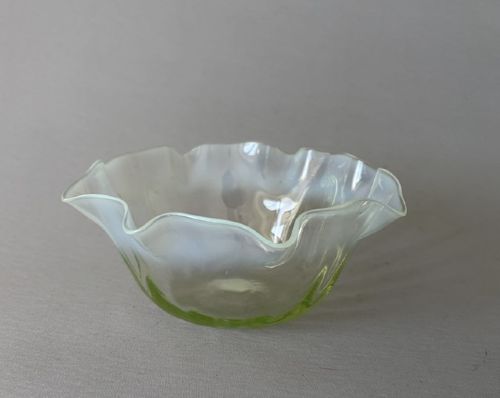
When you search for vintage dessert glass, you enter a diverse field of nineteenth-century and early twentieth-century tableware designed for serving sweets and post-dinner courses. The selection spans distinct forms including finger bowls, custard cups, jelly glasses, ice plates, and champagne coupes.
You are most likely to meet Victorian glass items on this page, alongside French Art Deco drinking glasses and English pieces from the mid-nineteenth century. These objects reflect the changing dining customs of the Victorian, Georgian, and Art Deco periods.
Functional serving pieces range from single decorative bowls to large suites of drinking glasses and tiered display stands. Each vessel serves a specific role in the historic dining ritual, from holding finger-rinsing water to presenting individual portions of custard or fruit.
How they were made
Makers utilised free blown methods, cut crystal techniques, and moulded processes to shape clear glass, coloured glass, lead crystal, and uranium glass. Artisans also incorporated silver plate and brass mounts to finish serving ewers, stands, and bowls.
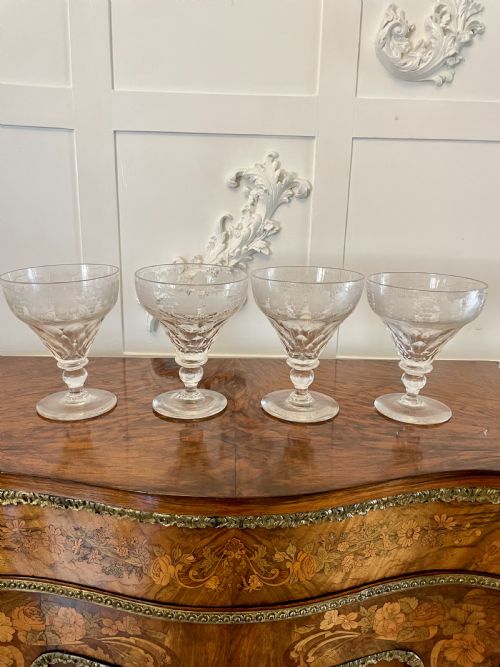
Decoration relied on skilled hand engraving, wheel cutting, and etching to apply motifs such as fruiting vines onto the surface of the glass. Some items combine glass bodies with brass frameworks, polished brass, and goatskin details.
Specialised production methods created distinct visual effects, notably in vaseline and uranium glass pieces that react under ultraviolet light. Coloured glass variants, including cranberry glass and red over crystal, required precise thermal control during shaping and cooling.
Vintage Dessert Glass Retail Price Guide 2026
Typical asking prices for vintage dessert glass among the pieces listed under this phrase on Sellingantiques today, from the lower quarter to the upper quarter. They describe what is for sale here now, not the wider market.
What varies in quality
The degree of clarity and purity in the material sets the foundation of the piece, distinguishing heavy lead crystal from standard utilitarian glass. Superior examples display crisp definition in cut facets and smooth, polished rims without distortion.
The execution of surface decoration marks the difference between standard production and finer work, particularly in hand-engraved motifs and wheel-cut patterns. Finely rendered details, such as delicate fruiting vines on champagne coupes, demand advanced dexterity from the cutter.
Completeness within a set influences the character of the grouping, whether dealing with a matched pair of dessert wine glasses or a large suite of drinking vessels. Original associated elements, such as pierced spoons or matched silver plate mounts, add context to the complete ensemble.
Whitefriars·Aldo Tura
The Vintage Dessert Glass Glossary
- Finger bowl
- A small bowl used at the end of a meal for rinsing the fingers. These vessels typically sit on a matching plate and appear in clear or cut crystal.
- Custard cup
- A small vessel designed for serving individual portions of custard or cream. They often feature handled or handled-free forms dating from the Victorian era.
- Champagne coupe
- A shallow saucer-shaped glass on a stem used for sparkling wines and desserts. Engraved decoration frequently adorns the bowl and foot.
- Uranium glass
- Glass containing trace amounts of uranium oxide added as a colouring agent. It produces a distinct yellow-green hue that fluoresces brightly under ultraviolet light.
- Jelly glass
- A small, sturdy glass vessel used historically for setting and serving jellies. Georgian examples often feature simple dish tops and thick walls.
Vintage Dessert Glass: Frequently Asked Questions
What is a vintage dessert glass?
A vintage dessert glass is a historic piece of tableware intended for serving sweets, wine, or fruit at the conclusion of a meal. These items include finger bowls, custard cups, and coupes made across various historical periods.
Such vessels reflect the refined dining practices of past centuries, offering both decorative presence and practical utility for modern collectors.
How were finger bowls used?
Finger bowls were placed before diners at the end of a multi-course meal, filled with warm water and sometimes a scented blossom or slice of lemon. Guests dipped their fingertips into the water to refresh before the dessert or fruit course.
They frequently rested upon a matching ice plate or underplate, often accompanied by specialised glassware and silver plate accessories.
Can I use these glasses daily?
Many collectors choose to integrate these durable glass and crystal pieces into contemporary dining, handling them with appropriate care. Hand washing is essential to preserve delicate engraved decorations and historic metal components.
Avoiding sudden temperature changes protects fragile lead crystal and nineteenth-century glass from thermal shock during use.