



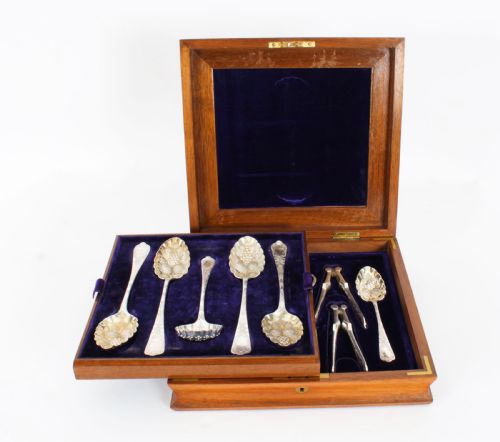

Vintage Cutlery Service
A vintage cutlery service brings proper weight and silver shine to the dining table, offering complete sets from grand canteens to boxed fruit services.
Vintage Cutlery Service
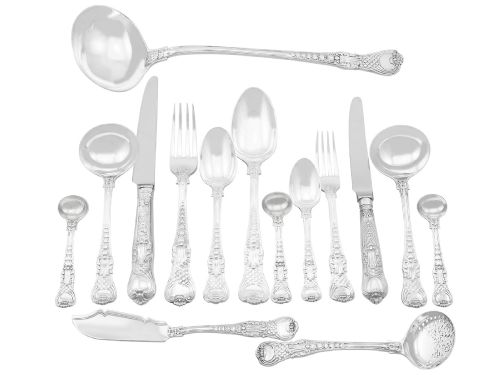
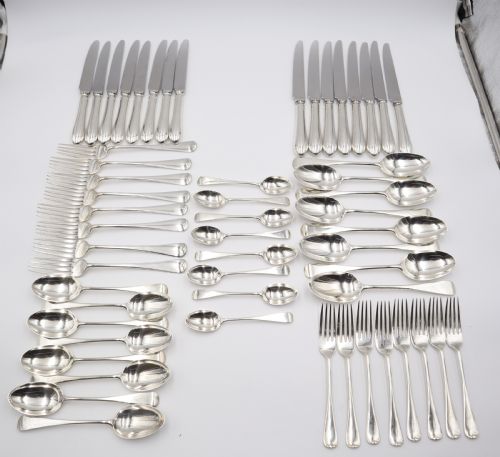
A vintage cutlery service covers everything from large sterling silver canteens for thirty persons down to compact Edwardian fish sets and boxed fruit services. These collections span the nineteenth century, the Victorian and Edwardian eras, and into the nineteen-twenties and nineteen-thirties with Art Deco influences.
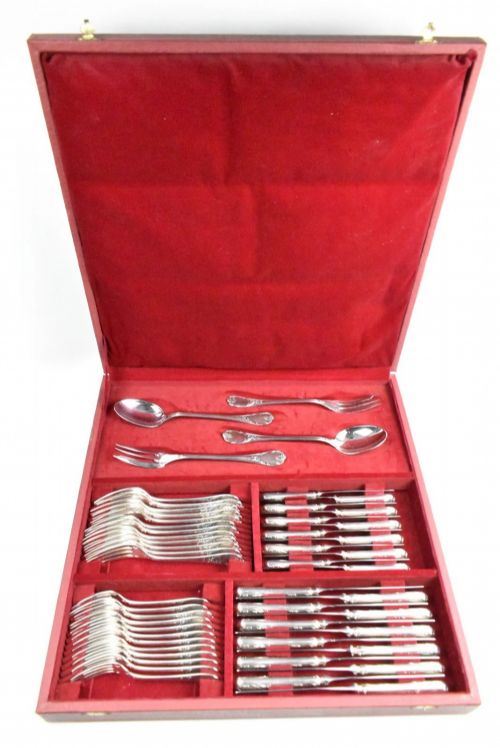
The forms on offer range widely, including complete cutlery sets, dedicated serveware, sugar tongs, nutcrackers, and grape scissors. Many arrive housed in their original fitted oak cases or velvet-lined boxes designed to protect the pieces.
Buyers will encounter traditional styles alongside George V, Georgian, and Rococo Revival patterns, as well as French silver-plated flatware by makers such as Christofle. Each service reflects the dining habits and social scale of its original period.
Materials and construction
The core materials recorded across these sets are sterling silver and silver plate, paired with steel blades for knives and robust wood for fitted canteens. Makers utilised quality metals to ensure daily utility and lasting brilliance over generations of use.
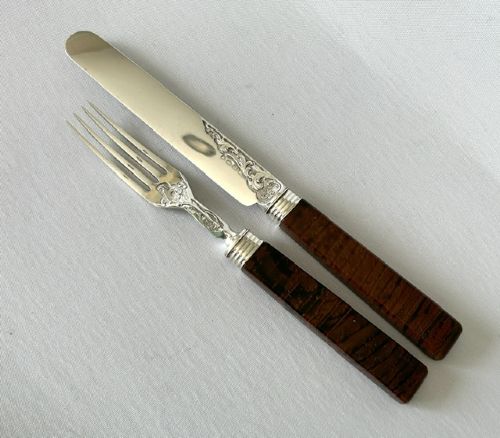
Handle construction often incorporates organic and decorative elements, most notably mother of pearl and agate alongside traditional silver and wood. These materials are shaped and fixed to the metal components with careful craftsmanship appropriate to each era.
Vintage Cutlery Service Retail Price Guide 2026
Typical asking prices for vintage cutlery service among the pieces listed under this phrase on Sellingantiques today, from the lower quarter to the upper quarter. They describe what is for sale here now, not the wider market.
Grape scissors and dedicated nutcrackers ensure that even the most stubborn Victorian dessert poses no challenge to the dining table.
Distinguishing quality across sets
Quality in a vintage cutlery service rests on the consistency of the matched components and the integrity of the housing. A complete canteen with every original utensil intact holds greater coherence than a set assembled from various dates.
The finesse of the metalwork, whether solid sterling silver or heavy silver plate, dictates the tactile feel and visual depth of the service. Superior sets also feature finer handle materials such as well-matched mother of pearl or polished agate.
Christofle·Waring & Gillows·Hukin & Heath
The Vintage Cutlery Service Glossary
- Sterling silver
- A silver alloy containing 92.5 percent pure silver by mass, prized for its durability and bright finish. This metal forms the primary material for the finer canteens and flatware sets.
- Silver plate
- A layer of pure silver applied to a base metal core, offering the appearance of solid silver at a different scale. Makers utilised this technique extensively for large service sets.
- Canteen
- A fitted box or cabinet designed to store a full service of cutlery in dedicated slots or compartments. These wooden cases often feature velvet or satin linings to protect the contents.
- Mother of pearl
- The iridescent inner layer of pearl oyster shells, shaped into smooth handle scales for knives and dessert sets. It provides a tactile and luminous contrast to the metal blades.
- Agate
- A decorative chalcedony stone used for ornamental knife and fork handles. Its natural banding gives each piece a distinct visual character.
Vintage Cutlery Service: Frequently Asked Questions
What is a vintage cutlery service?
A vintage cutlery service is a collection of dining utensils, ranging from small dessert sets to large canteens meant for dozens of guests. They include forks, knives, spoons, and specialist serveware housed together.
These sets date from various periods including the Victorian era, the Edwardian period, and the early twentieth century. They provide all the necessary implements for formal or everyday dining in matched styles.
How were silver canteens stored?
Silver canteens were typically housed in custom oak boxes or fitted wooden cases lined with velvet. These interiors kept the individual pieces separated to prevent scratching and tarnishing.
Many of these original cases survive with the cutlery, preserving the complete set as it was intended to be kept. The boxes often feature compartments or slotted trays for each specific utensil type.
What materials are used for handles?
Handles on these sets are fashioned from sterling silver, silver plate, or wood, as well as decorative materials like mother of pearl and agate. Each material was chosen to suit the specific function of the piece, from fish knives to fruit spoons.
Organic materials like mother of pearl and agate add distinct texture and visual variety to dessert and fruit sets. Metal handles often display period-specific engraving or cast patterns.
How do I identify the period?
Periods are identified through stylistic cues such as Rococo Revival curves, Edwardian elegance, or Art Deco geometric lines. Maker marks and silver hallmarks stamped onto the metal also provide precise dating.
Examining the construction of the case and the materials used offers further clues to the era of manufacture. Comparative examination of the pattern and form aligns each set with its historical context.