

Vintage Cut Glass Light
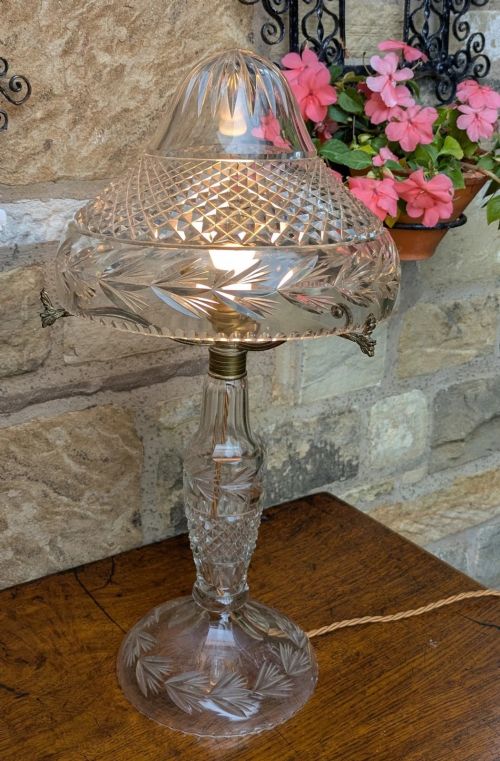
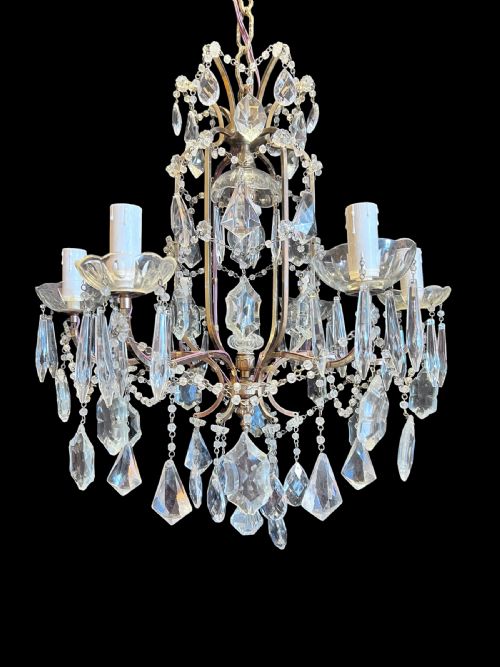
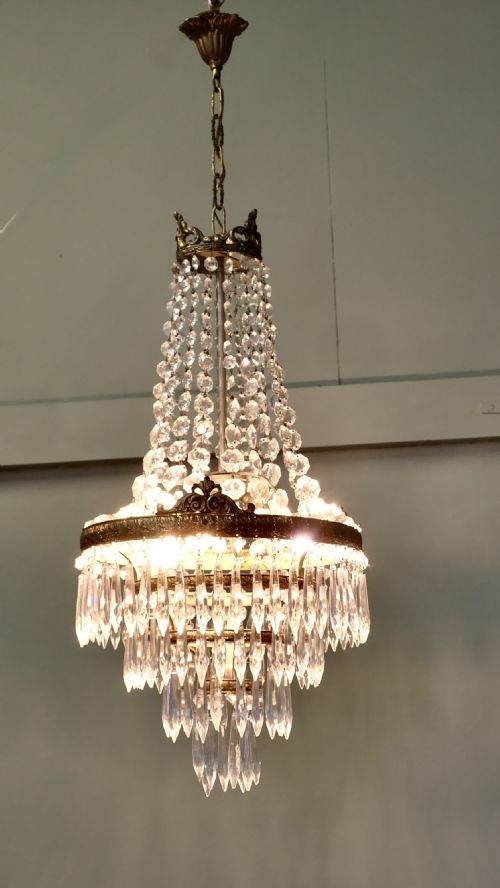
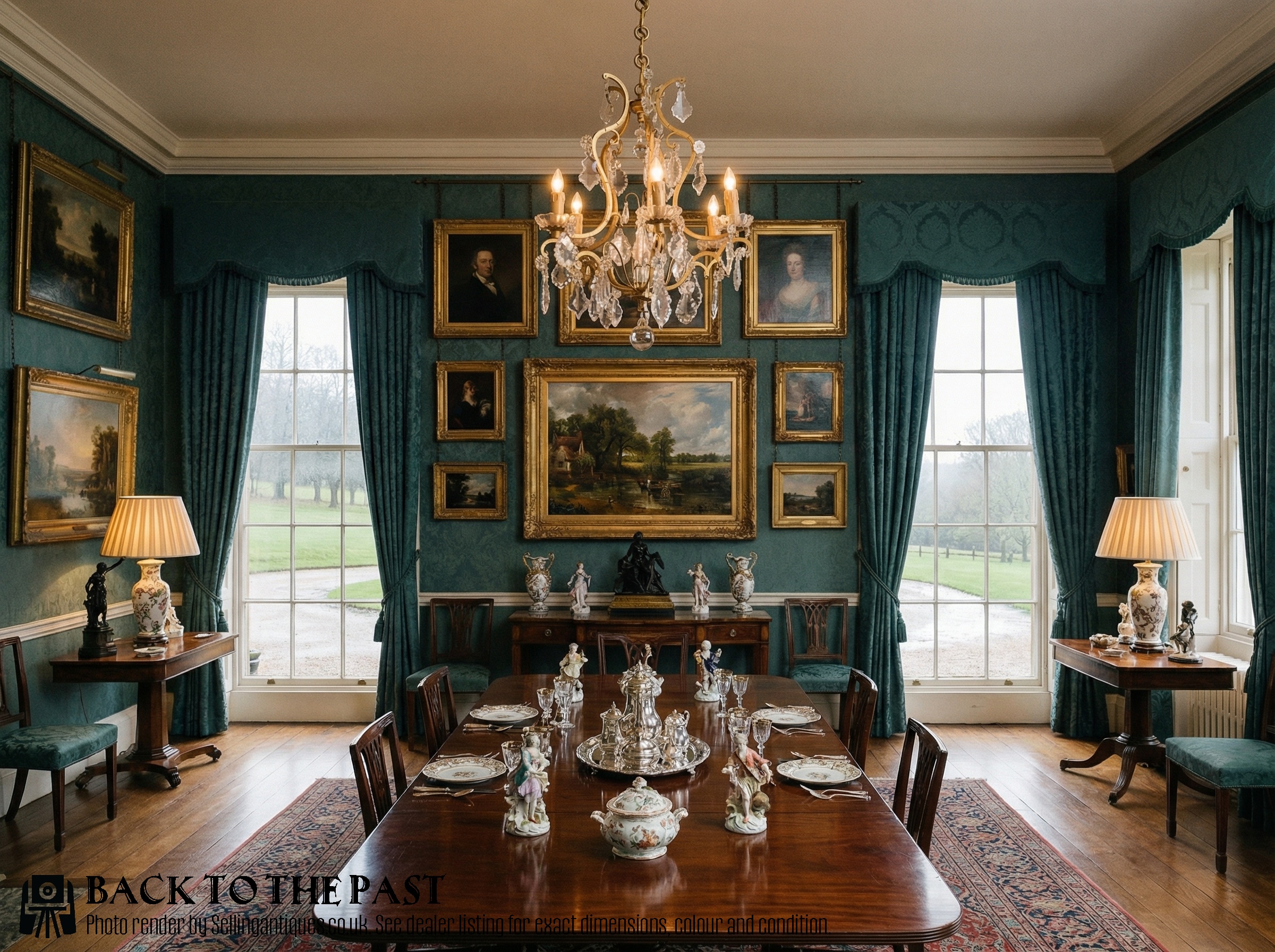
A vintage cut glass light catches the daylight and holds the room, bringing brilliant refraction and period weight to high ceilings.
Vintage Cut Glass Light
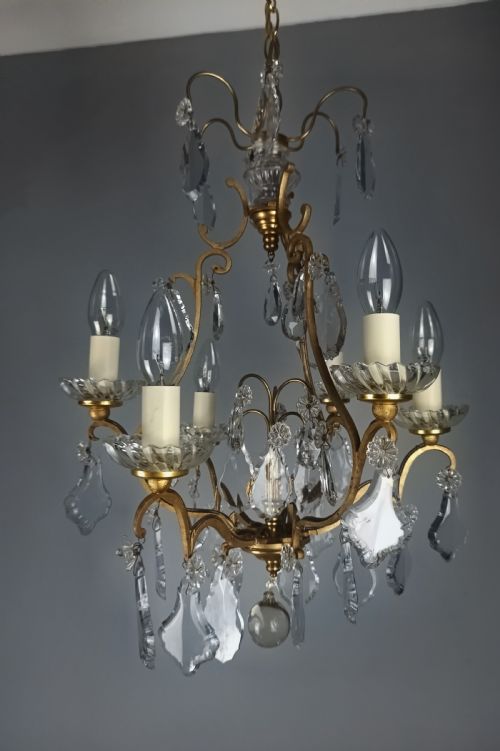
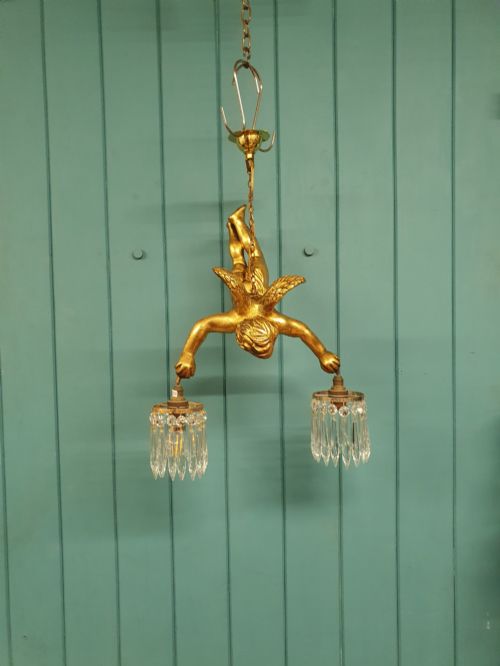
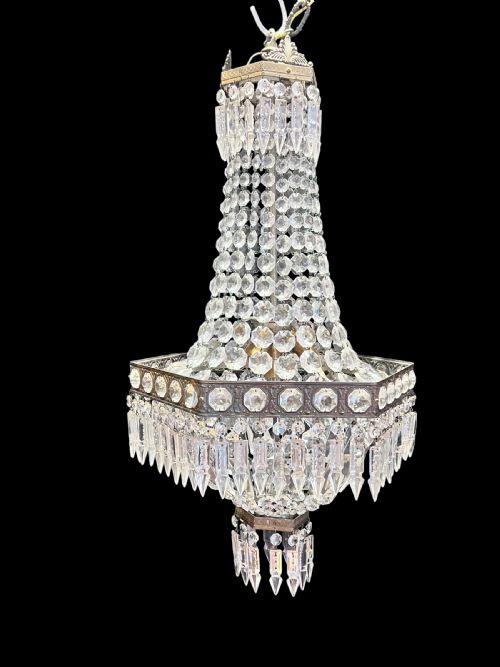
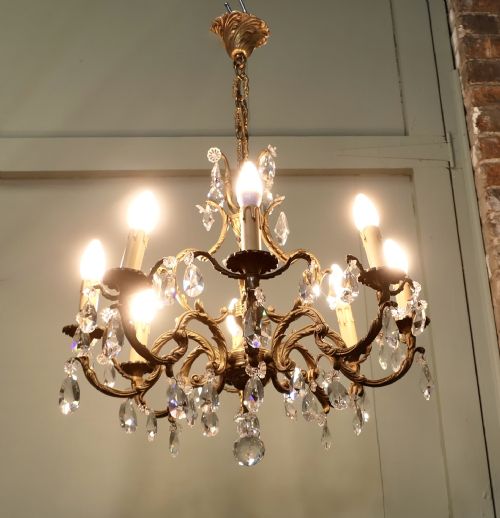
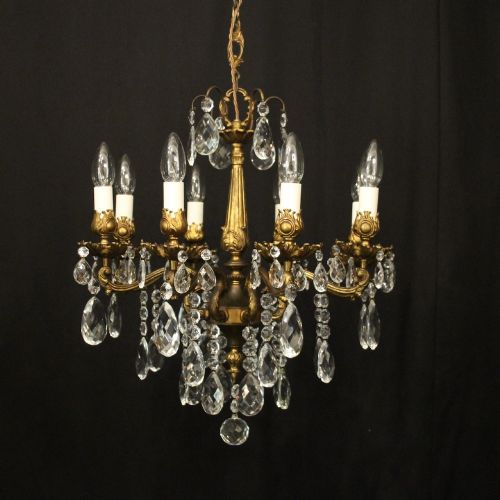
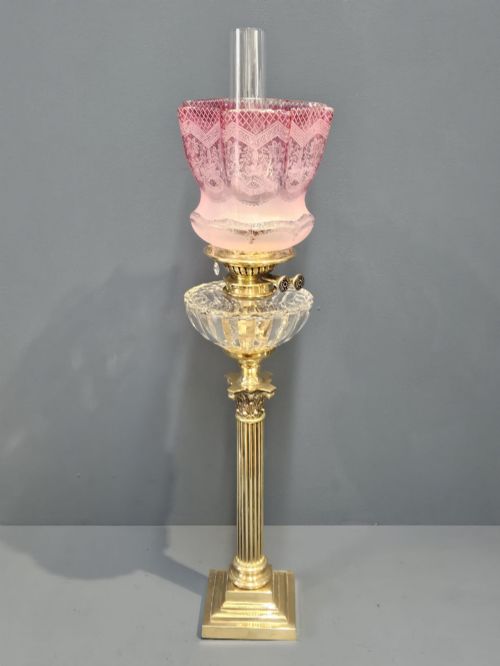
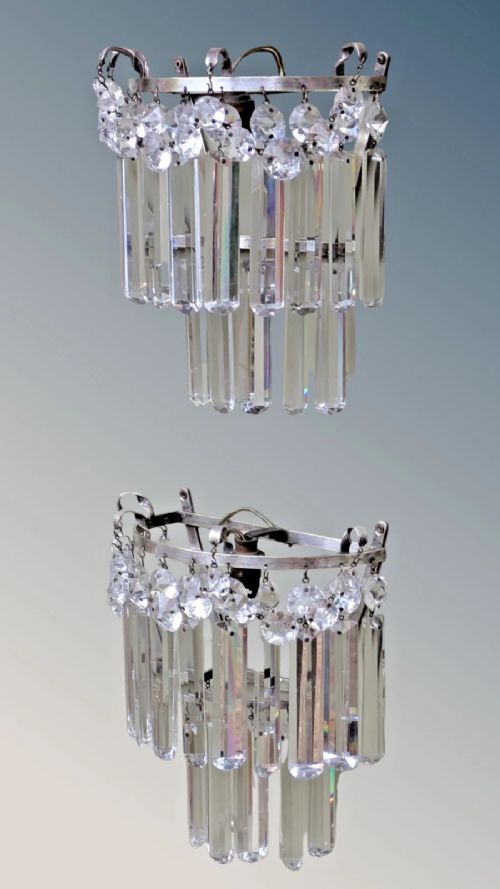
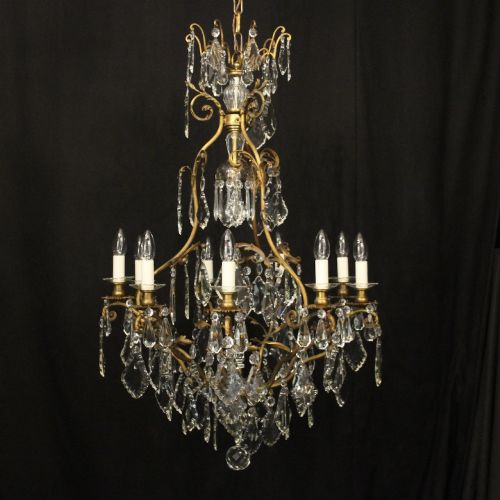
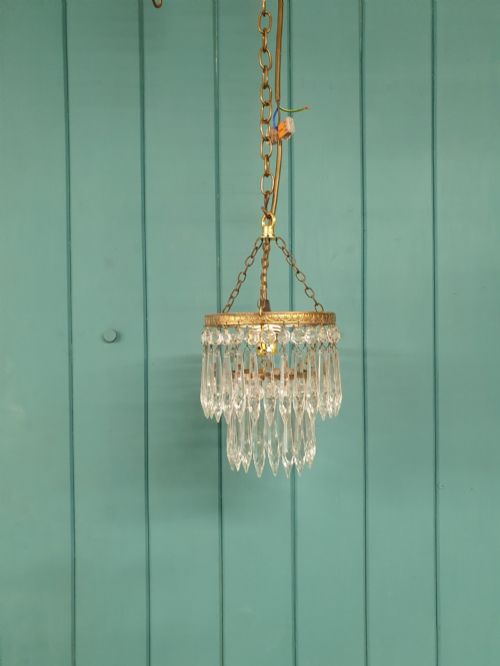
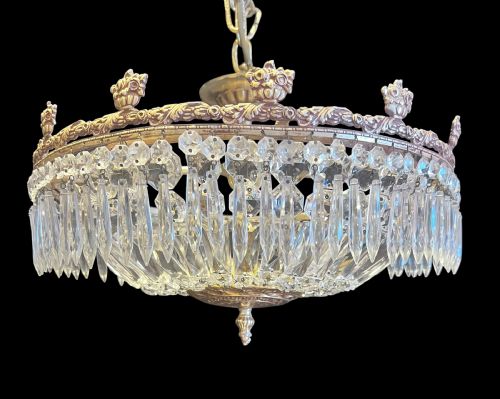
When you search for a vintage cut glass light, you encounter a diverse array of illumination forms spanning ceiling fixtures, wall sconces, and lamps. The selection ranges from grand multi-armed chandeliers and basket fixtures to compact dome plafonniers and table lamps.
The objects appearing on this page originate across distinct periods, drawing heavily from Edwardian workshops, Victorian parlours, and the diverse 1920s French and Italian design revivals. You meet everything from single-bulb hall lanterns to massive ballroom tent chandeliers hung with numerous crystal drops.
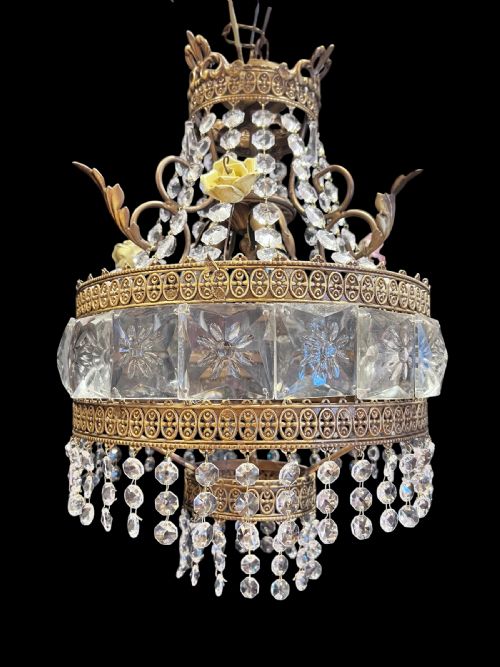
Many pieces combine glass components with structural metalwork, bringing together brass, gilt bronze, and gilt metal frames. Others introduce coloured glass elements, porcelain flowers, or onyx columns to complement the refractive qualities of the cut crystal components.
Materials and construction methods
The primary material identity rests upon heavy lead glass and crystal, shaped through deep wheel-cutting to create sharp facets that scatter ambient illumination. These glass elements hang from or encase rigid frameworks built from cast brass, bronze, and gilt metal components.
Assembly relies on skilled metal casting, wire binding, and pin fastening to secure individual crystal drops, spikes, and lustres to the supporting metallic cage. Frames often incorporate decorative motifs such as lion masks, leaf scrollwork, or cornices reflecting French Empire and Rococo revival tastes.
Listings feature brass, gilt metal, and bronze frameworks supporting cut glass and crystal across Victorian, Edwardian, and 1920s periods.
Distinctions in quality
Quality separates along the depth and crispness of the glass cutting, where sharper, deeper facets produce superior prismatic reflection compared to soft or moulded surfaces. The weight and density of the metal armature also dictate overall structural integrity, separating solid cast brass and gilt bronze from lighter stamped alternatives.
The completeness and originality of the hanging crystal configuration drive the standard of the piece, as matching lustres and intact spike or tent arrangements maintain the visual rhythm intended by the maker. Master assemblies show meticulous wirework and harmonious proportions across every arm, tier, and droplet.
The Vintage Cut Glass Light Glossary
- Plafonnier
- A ceiling-mounted light fixture that sits flush or very close to the plaster, directing illumination downward through a glass bowl or dome. These forms suit rooms with restricted vertical clearance.
- Lustre
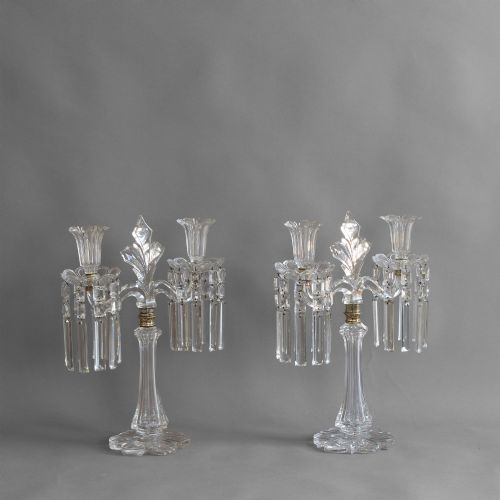
- A decorative tabletop ornament featuring a central vase or stem hung with cut crystal pendants. They originate from the nineteenth century and sit on mantelpieces to catch the flicker of candles.
- Tent chandelier
- A lighting form defined by an upper tiered canopy of cascading crystal strands that drop outward to a wider circular band. This construction style creates a triangular silhouette common in ballroom settings.
- Spike chandelier
- A compact hanging light featuring upward-pointing crystal spikes radiating around the central frame. They project a bristling, prismatic outline typical of Edwardian interior schemes.
- Gilt bronze
- An alloy of copper and zinc treated with a gold amalgam coating to produce a rich, non-tarnishing metallic surface. Found on high-status French frames and decorative mounts.
Vintage Cut Glass Light: Frequently Asked Questions
How do I clean a crystal chandelier?
Maintenance requires wiping each crystal element individually using a mild solution of warm water and methylated spirits. Support fragile glass drops from beneath while cleaning to prevent strain on the wire fasteners.
Allow every component to air dry completely before restoring power to the fitting. Avoid harsh chemical sprays that might damage the underlying brass or gilt metal finishes.
Are these lights wired for modern UK mains?
Many surviving fixtures retain older internal wiring that requires professional rewiring to meet current electrical standards. A qualified electrician can adapt the lamp holders while preserving the original structural metalwork.
Check the ceiling load capacity before hanging heavier multi-arm fixtures, as substantial cast brass and crystal designs demand secure joist fixing.
What defines an Edwardian cut glass light?
Edwardian examples typically favour brighter brass frames, compact dimensions, and sharp-cut glass spikes or dome profiles. Their design language leans toward refined domestic scale rather than grand palace proportions.
You often encounter these fixtures in modest entrance halls or period bedrooms where lower ceiling heights require a tighter vertical profile.
How do I spot a marriage of parts?
Examine the consistency of the metal patination and the exact match of the crystal glass shade or drops across the entire object. Discrepancies in wear patterns or differing facet styles suggest components were joined together at a later date.
Original fixtures display uniform oxidation on the brass structure and matching clarity within the glass elements.