



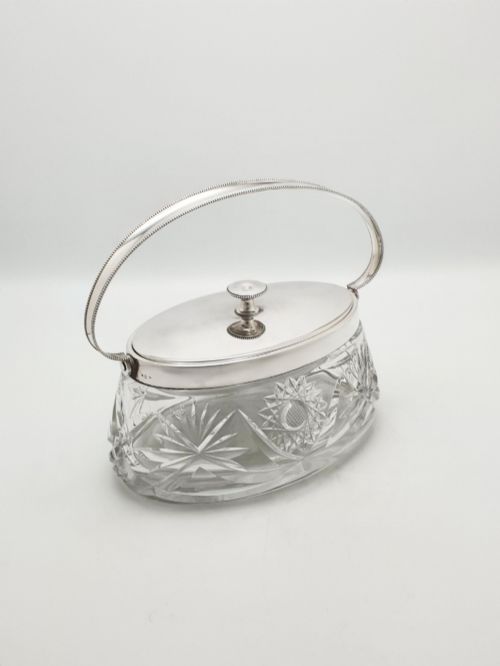


Vintage Crystal Jar
A vintage crystal jar brings heavy lead glass and precious metal mounts together on the dressing table or sideboard.
Vintage Crystal Jar
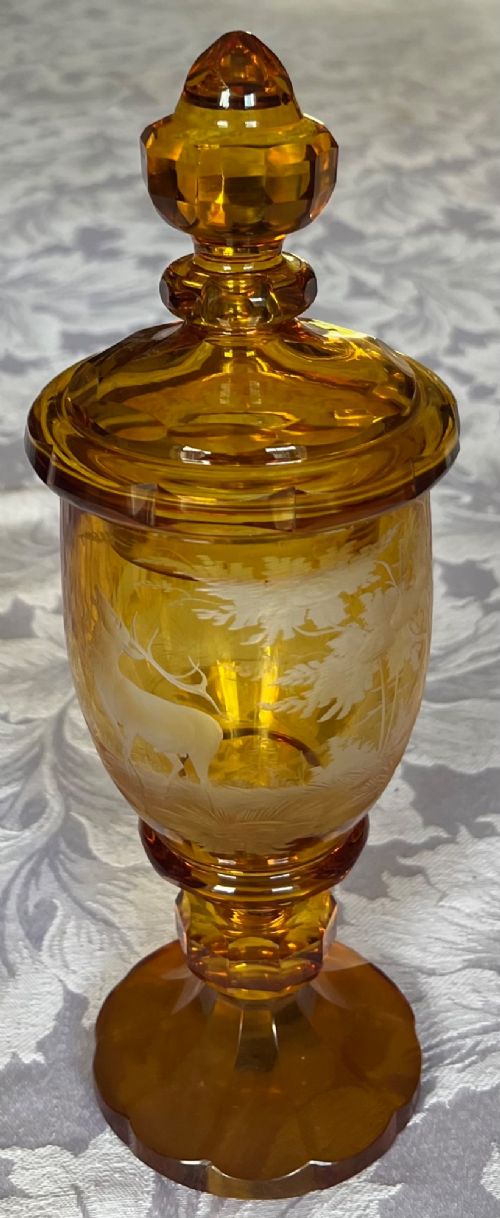
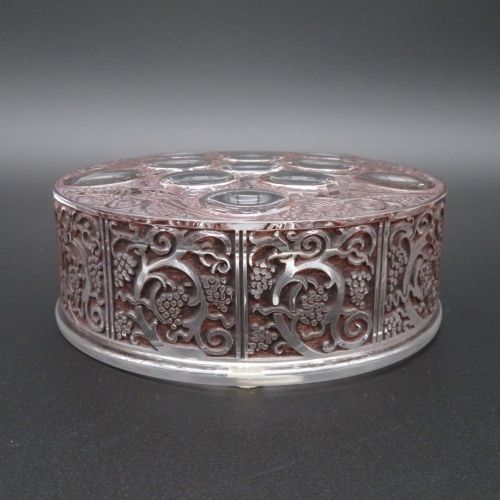
When searching for a vintage crystal jar, buyers encounter vessels fashioned for the dressing table, the dining room and the parlour. These utilitarian yet decorative objects encompass biscuit barrels, scent bottles, vanity jars, powder boxes, trinket boxes and preserve pots.
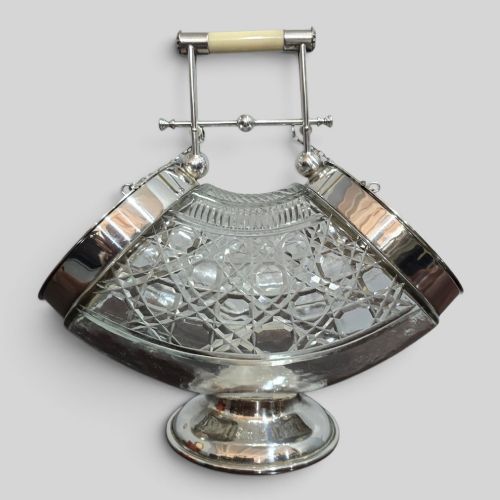
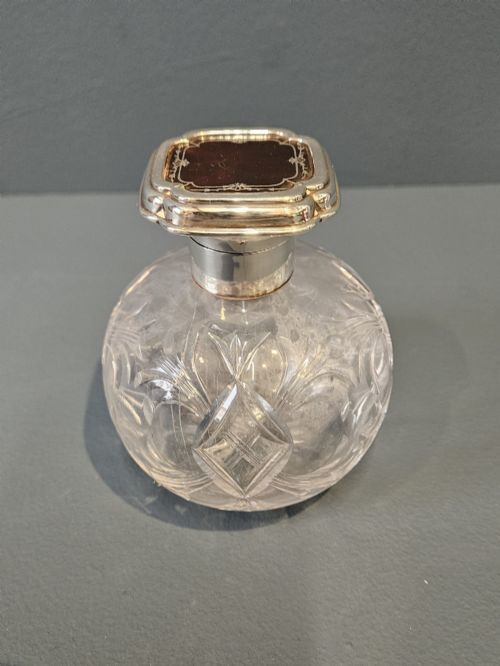
The assortment on this page draws heavily from the Edwardian period and the Art Deco era, alongside Victorian, Georgian and mid-century examples. Forms range from petite scent bottles with silver screw caps to substantial hobnail-cut biscuit barrels equipped with swing handles.
Makers and manufacturers paired heavy cut crystal or lead glass bodies with sterling silver, silver plate, tortoiseshell and enamel mounts. These receptacles served daily domestic rituals, holding perfumes, powders, preserves and biscuits in homes of the nineteenth and twentieth centuries.
How they were made
The bodies of these jars rely on hand-blown or moulded glass and lead crystal, shaped into bowls, jars and bottles before undergoing deep cutting, engraving or etching. Craftsmen applied geometric diamond cuts, hobnail patterns and floral motifs to scatter light across the vessel walls.
Metal mounts, lids and collars in sterling silver, silver plate and German silver were fabricated separately, often bearing hallmarks that record the assay office and year of production. Artisans incorporated organic materials such as tortoiseshell and vitreous enamel into the metal lids, securing them to the crystal collars with tight hinges or threaded necks.
Vintage Crystal Jar Retail Price Guide 2026
Typical asking prices for vintage crystal jar among the pieces listed under this phrase on Sellingantiques today, from the lower quarter to the upper quarter. They describe what is for sale here now, not the wider market.
Current listings feature items spanning the Georgian, Victorian, Edwardian and Art Deco periods, incorporating cut glass, sterling silver, tortoiseshell and enamel.
What varies in quality
Quality rests upon the depth and crispness of the glass cutting, where sharp facets and clear, heavy lead crystal elevate a piece above simple moulded wares. Superior examples feature thick-walled glass with a resonant ring and precise symmetry across every facet.
The secondary materials dictate the tier of the object, distinguishing standard silver plate or base metal from heavy sterling silver mounts, hand-turned tortoiseshell and polychrome enamel. Maker marks from established silversmiths and recognised glass houses further elevate the standing of an individual jar.
Asprey and Co·Barnsley and Co·Posen of Frankfurt and Berlin·Lalique·WMF
The Vintage Crystal Jar Glossary
- Hobnail cut
- A raised, faceted glass pattern resembling the hobnails used on heavy boots. It creates intense light refraction across the surface of biscuit barrels and heavy jars.
- Biscuit barrel
- A covered ceramic or glass container designed for storing dry biscuits on the dining table or sideboard. These lidded vessels frequently feature swing handles and silver-plated or sterling silver rims.
- Sterling silver mount
- A collar, rim or lid forged from silver of ninety-two point five percent purity. These fitted mounts often bear British hallmarks indicating the city of assay and the year of manufacture.
- Vitreous enamel
- A coloured glass paste fused to a metal base through high-temperature firing. This glossy decorative layer appears frequently on Art Deco jar lids in shades of blue and other vibrant hues.
- Tortoiseshell
- The mottled brown and amber keratin shell of the hawksbill turtle, utilised for inlay and veneer on Edwardian and Art Deco jar lids. It provides a rich, translucent contrast against bright silver mounts.
Vintage Crystal Jar: Frequently Asked Questions
What were crystal jars used for?
These lidded vessels served diverse domestic functions across the Victorian and Edwardian eras, holding items ranging from biscuits and preserves to bath powders and perfumes. Dressing table jars kept cosmetics and trinkets protected from dust.
Dining room versions, such as preserve pots and biscuit barrels, sat on sideboards ready for tea or after-dinner hospitality. Their heavy glass construction kept contents fresh while displaying them attractively.
How do I date a silver mounted jar?
British hallmarked silver mounts provide the most precise dating method, featuring specific stamps for the assay office, standard mark and date letter. Birmingham, Chester and London hallmarks appear frequently on these pieces.
Stylistic cues also help narrow the period when hallmarks are absent. Geometric forms and enamel point to the Art Deco nineteen-thirties, while heavy hobnail cutting and swing handles typically indicate Edwardian or Victorian manufacture.
How do I clean antique crystal?
Wash crystal jars by hand in lukewarm water using a mild, non-abrasive detergent. Avoid sudden temperature changes to prevent thermal shock and cracking in heavy lead glass.
Keep silver polish away from the glass body and avoid submerging tortoiseshell or enamel lids in water. Gently wipe metal mounts with a soft cloth to preserve the finish without damaging delicate inserts.
Are all crystal jars made of lead glass?
Not every jar utilises true lead crystal, as many Victorian and Edwardian examples consist of standard pressed or blown soda-lime glass. Lead crystal contains a percentage of lead oxide that increases weight, clarity and light dispersion.
Listings distinguish between standard cut glass and lead crystal based on composition and manufacturer specifications. Both materials received elaborate hand-cutting and polishing by period artisans.