



Vintage Cruet Stand
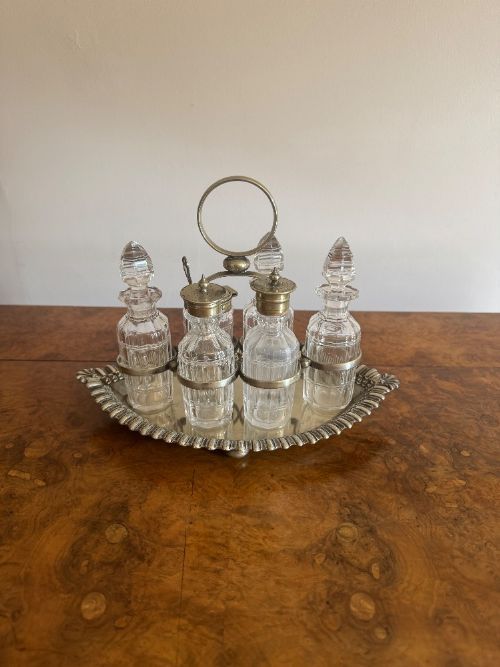
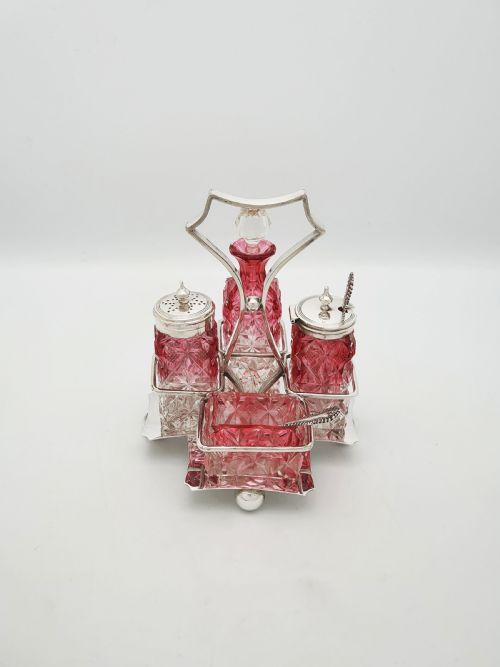
A vintage cruet stand holds condiments and bottles at the table, bringing period character and silver or glass sparkle to dining rooms.
Vintage Cruet Stand
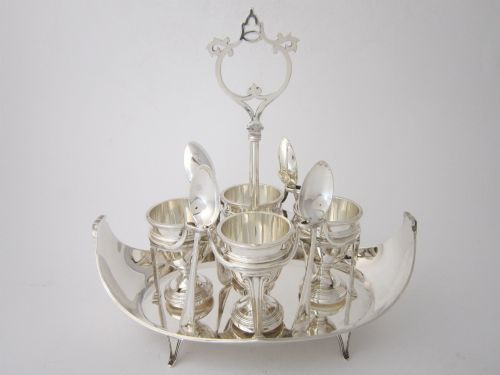
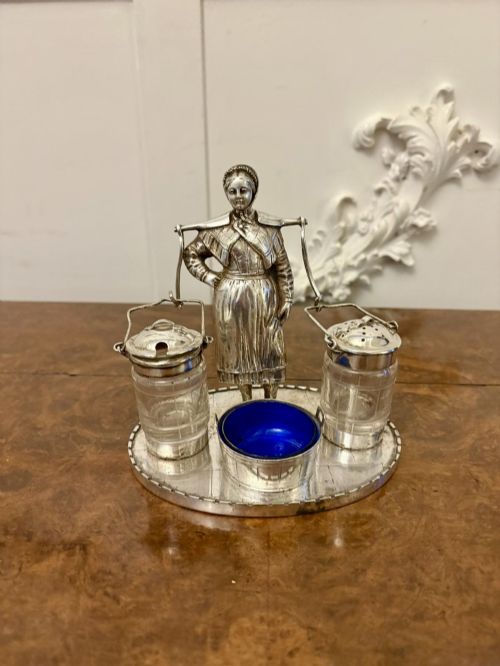
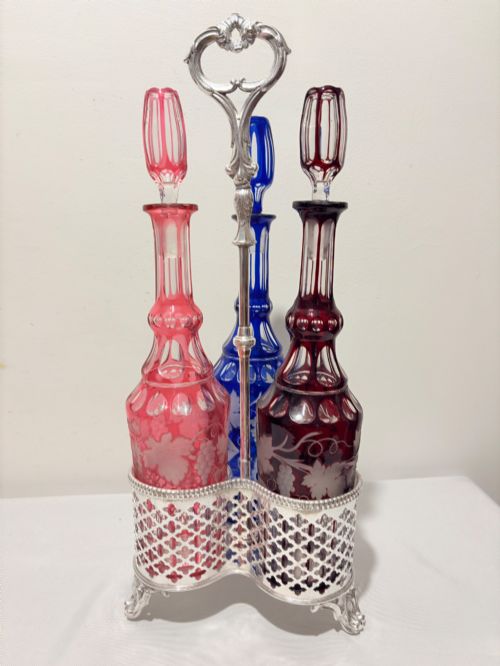
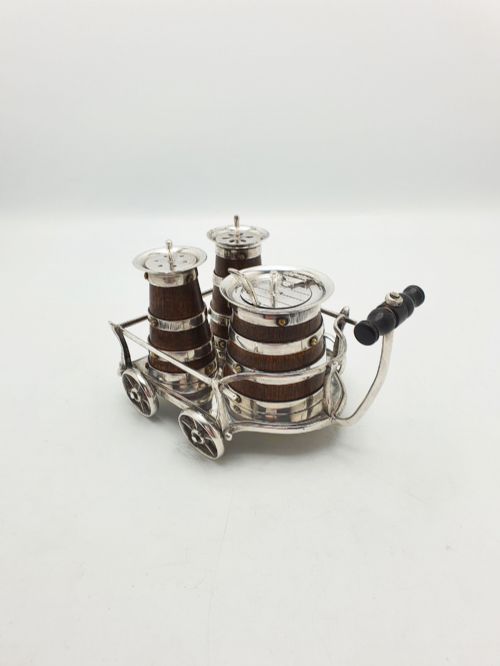
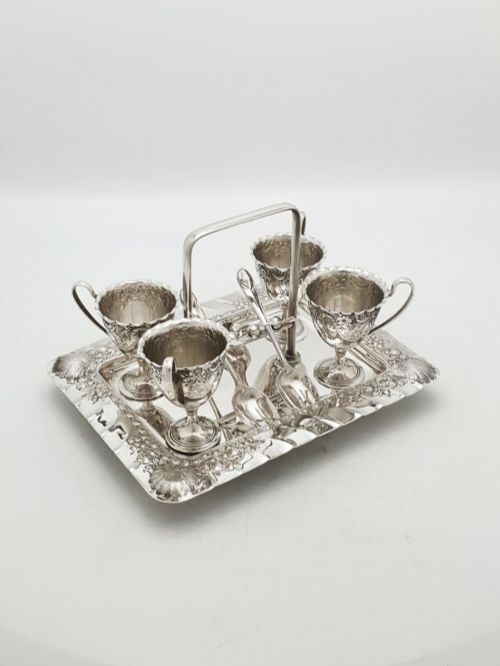
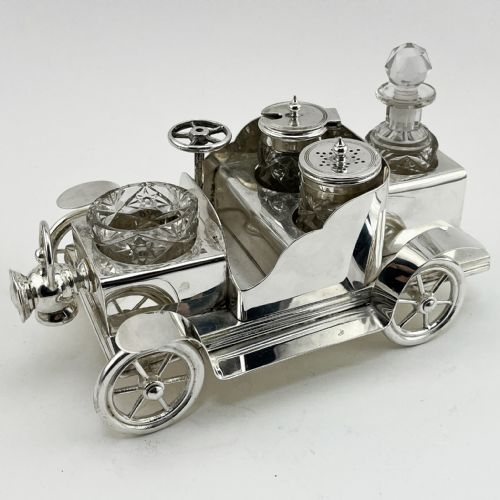
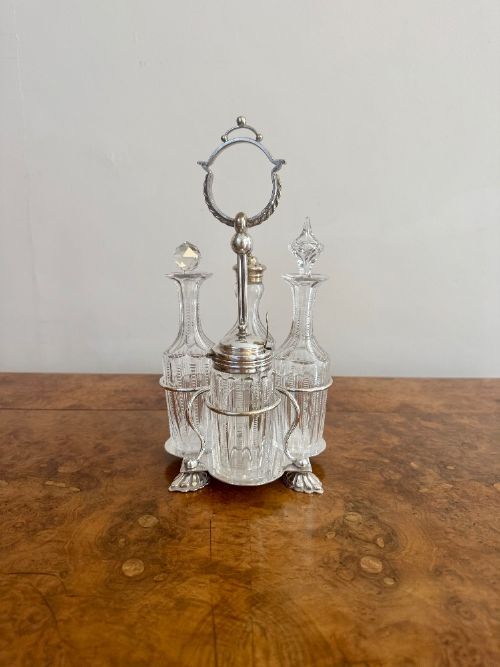
A vintage cruet stand encompasses condiment sets, decanter stands, and egg cruets originating across the Victorian, Edwardian, and Art Deco periods. Buyers looking for this phrase meet everything from multi-bottle silver-plated frames to wooden or oak barrel holders and small bachelor sets.
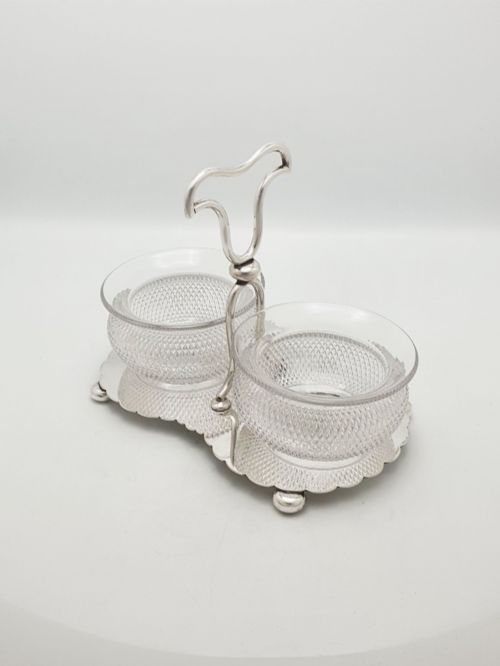
The Edwardian era yields the highest volume of multi-bottle silver-plated examples on this page, often fitted with cut glass bottles or twin glass bowls. Victorian and Georgian pieces appear regularly too, spanning carriage designs, novelty car shapes, and sturdy mahogany or treen four-bottle holders.
Objects range from simple four-piece condiment arrangements to large oval eight-piece sets and heavy lead crystal Art Deco designs. Whether configured for breakfast eggs or dinner table seasonings, each stand serves to group essential table bottles in a unified frame.
Materials and Techniques
Silversmiths and manufacturers built these stands primarily from silver plate, Old Sheffield plate, or solid sterling silver, often shaping frames with embossed detailing or central carrying handles. Frames house hand-cut glass, cranberry flashed glass, or heavy lead crystal bottles secured within metal mounts.
Vintage Cruet Stand Retail Price Guide 2026
Typical asking prices for vintage cruet stand among the pieces listed under this phrase on Sellingantiques today, from the lower quarter to the upper quarter. They describe what is for sale here now, not the wider market.
Listings span the Georgian, Victorian, Edwardian, and Art Deco periods, utilising silver plate, sterling silver, cut glass, oak, and mahogany.
Craftsmanship and Completeness
Quality rests upon the integrity of the frame structure, the matching uniformity of the glass bottles, and the crispness of any metal embossing or silver plating. Stands retaining their original matched set of cut glass bottles command greater appreciation than those assembled with replacement vessels later.
The refinement of the handle design, the weight of the metal framework, and the clarity of the cut glass separate standard utilitarian pieces from exceptional examples bearing recognised maker marks. Superior manufacturing shows in the balanced weight distribution and secure seating of each bottle within the stand.
Walker & Hall·Wade Wingfield Wilkins·Viners
The Vintage Cruet Stand Glossary
- Cruet Set
- A matched collection of small glass bottles or jars designed to hold table condiments such as oil, vinegar, salt, and pepper, held within a dedicated frame.
- Egg Cruet
- A specialised table stand configured specifically to hold breakfast eggs alongside small cups, spoons, and seasoning containers.
- Silver Plate
- A base metal such as copper or Britannia metal coated with a thin layer of silver, widely utilised for durable household tableware.
- Old Sheffield Plate
- An early method of fusing a thin sheet of sterling silver to a thicker copper core before shaping, creating a distinctive layered metal.
- Treen
- Small handmade wooden household objects and utilitarian wares turned on a lathe or carved from timber.
- Cranberry Flashed Glass
- Glass blown with a clear interior and an outer layer of rich red cranberry-coloured glass, often cut back to reveal the clear base beneath.
Vintage Cruet Stand: Frequently Asked Questions
What is a vintage cruet stand used for?
These stands organise and present table condiments, oil, vinegar, and sauces within easy reach of diners. They served a practical function at formal dining tables and breakfast spreads.
Today, collectors use them to display cut glass and silver work on sideboards or dining tables, continuing their traditional role in home hospitality.
How do I clean a silver plated cruet stand?
Clean the metal frame gently using a soft cloth and a specialised silver polish formulated for plated items. Avoid harsh abrasives that might wear away the silver layer over the base metal.
Wash the glass bottles separately in warm soapy water, ensuring they dry completely before placing them back into the metal frame.
Are all the bottles in a set original?
Many older sets have had individual glass bottles replaced over decades of use due to accidental breakage. Examining the cut patterns, glass colour, and fit within the frame helps determine if the bottles belong together.
Matched original bottles significantly enhance the historical interest and integrity of the piece for collectors.
How can I tell an Edwardian cruet from a Victorian one?
Victorian stands often feature heavier, highly ornate embossed metalwork, elaborate handles, and robust oak or silver-plated frames designed for formal Victorian dining. Edwardian pieces frequently display lighter, more refined silver plating with cleaner lines and delicate glass cutting.
Checking hallmarks, registry marks, and overall stylistic motifs helps narrow down the manufacturing decade between the nineteenth and twentieth centuries.