

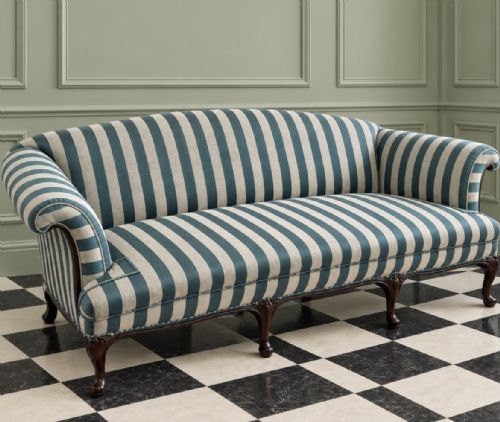
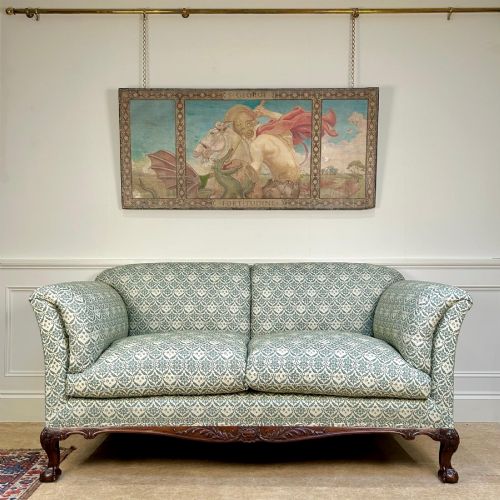
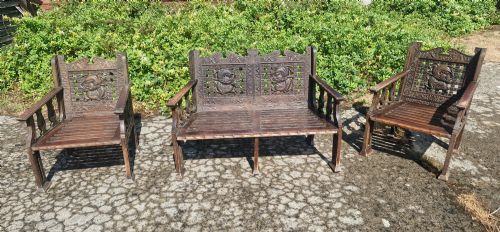
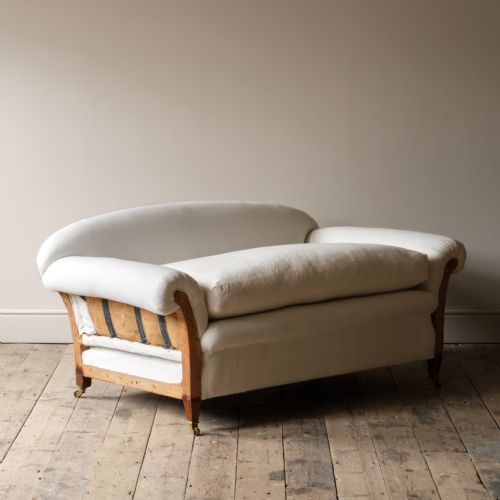


Vintage Country House Settee
A vintage country house settee is a deep, generous seat built for comfort, and choosing one means bringing a storied English interior piece home.
Vintage Country House Settee
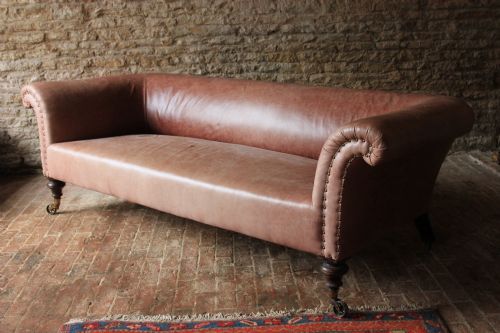
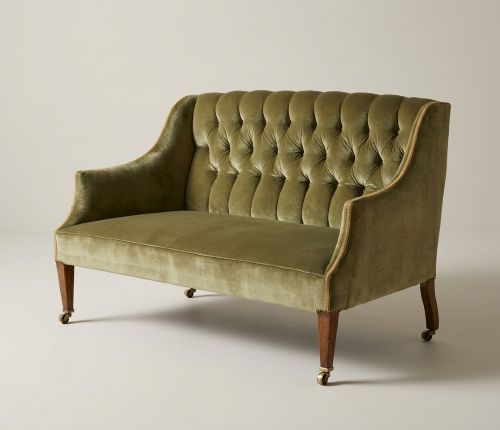
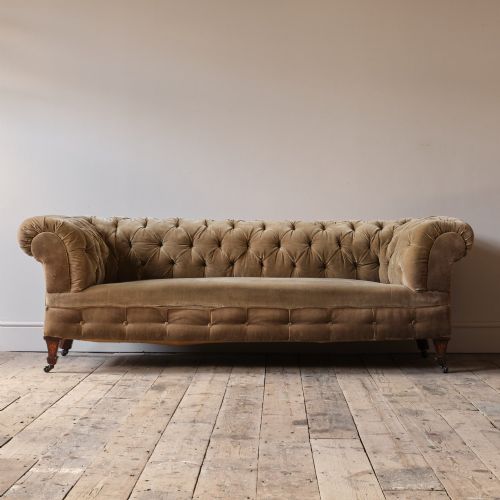
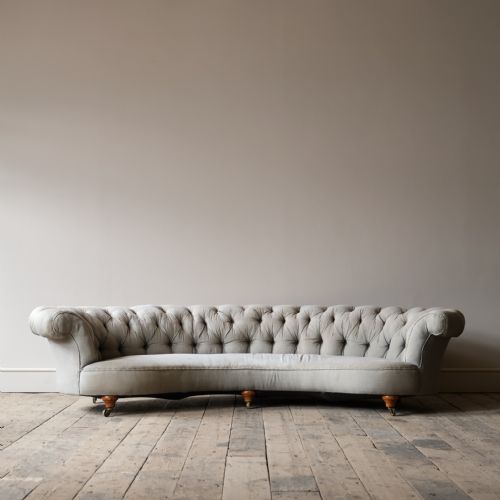
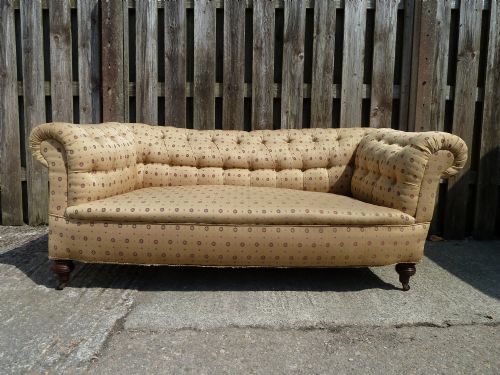
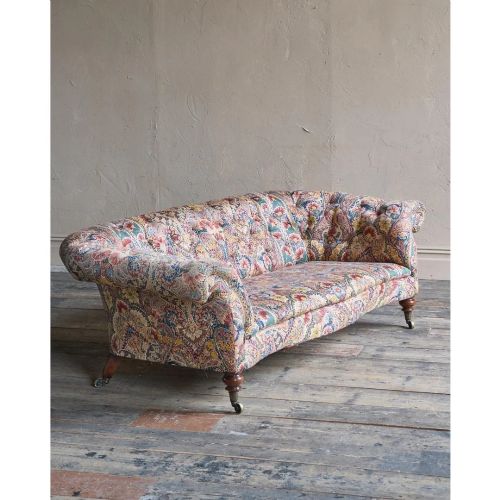
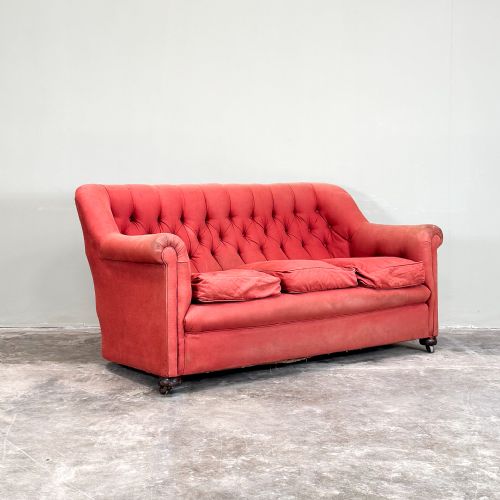
A vintage country house settee encompasses large chesterfields, deep-seated two-seaters and drop-arm sofas designed for relaxed drawing room living. These pieces span from the nineteenth century through the Edwardian era and into the nineteen-thirties, reflecting changing domestic comforts over decades.
The most common examples on this page are nineteenth-century chesterfields and early twentieth-century deep-seated frames. You will frequently encounter upholstered settees alongside wooden-framed models in mahogany, walnut and simulated rosewood.
Originating in grand English estates, these settees range from classic button-backed designs to elaborate conservatory suites. Each piece carries the distinct proportion and scale associated with traditional country house furnishing.
Materials and construction
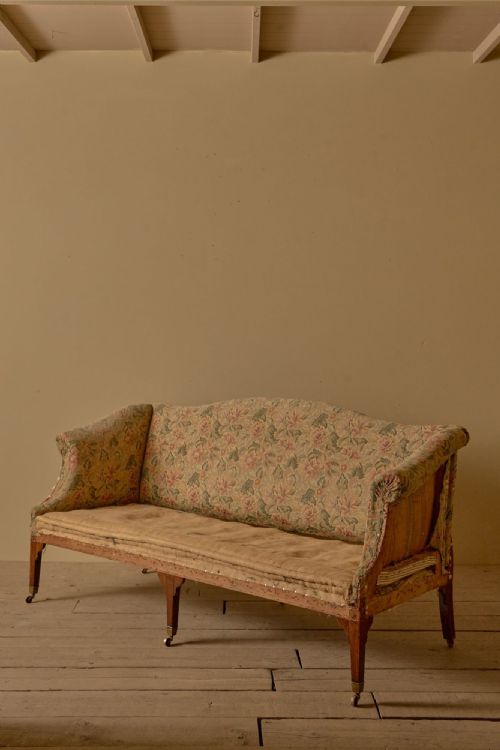
Upholstery forms the core of these deep-seated pieces, utilising traditional foundations of calico, hessian and original ticking. Final coverings vary from floral fabrics and gold damask to velvet, leather and cotton calico.
Metal components such as brass appear in castors and hardware, supporting the mobility of large wooden-framed settees. Hand-dyed brown leather and traditional button-back techniques complete the specialised craftsmanship of the period.
Vintage Country House Settee Retail Price Guide 2026
Typical asking prices for vintage country house settee among the pieces listed under this phrase on Sellingantiques today, from the lower quarter to the upper quarter. They describe what is for sale here now, not the wider market.
Listings feature frames in mahogany, walnut, and brass, spanning the nineteenth century through the nineteen-thirties.
Distinctions in quality and execution
The standard of a settee rests heavily on the integrity of its internal frame and the depth of its seating proportions. Pieces originating from renowned workshops demonstrate superior joinery and enduring structural resilience compared to standard commercial alternatives.
Upholstery materials and execution dictate the refinement of the finished piece, from simple ticking linings to intricate gold damask and hand-dyed leather. Original textile survivals and traditional stuffing methods elevate the authenticity and historical integrity of the seating.
Howard & Sons·Hampton & Sons
The Vintage Country House Settee Glossary
- Chesterfield
- A large upholstered sofa traditionally featuring deep buttoning and rolled arms of equal height to the back. This form is a staple of nineteenth-century English seating.
- Knole Sofa
- An early style of settee characterised by adjustable or hinged drop arms originally designed to keep out draughts. These are frequently upholstered in damask or heavy textiles.
- Calico
- A plain-woven cotton fabric commonly utilised as an initial layer of upholstery beneath decorative top covers. It provides a clean, neutral base for traditional furniture.
- Hessian
- A coarse woven fabric made from jute fibres, traditionally employed for internal webbing and stuffing support in antique upholstery. It ensures durability beneath the outer layers.
- Ticking
- A tightly woven cotton or linen fabric historically used to contain feather or down fillings in cushion pads. Original ticking adds significant provenance to period pieces.
Vintage Country House Settee: Frequently Asked Questions
What defines a country house settee?
A country house settee is characterised by generous proportions, deep seating, and a focus on relaxed domestic comfort rather than formal stiffness. These pieces were built for large English drawing rooms and libraries.
They encompass various styles including chesterfields, camel back frames, and drop-arm settees spanning the nineteenth and early twentieth centuries.
How do I identify a nineteenth-century model?
Nineteenth-century models generally display heavier timber frames, traditional hand-tied spring systems, and classic upholstery foundations like hessian and calico. Stylistic cues include button-backed velvet or deep leather.
Makers' marks, traditional nailing, and dense hardwood frames further distinguish pieces from this period against later reproductions.
Are these settees suitable for daily use?
These settees are built on robust wooden frames made from mahogany, walnut, and sturdy timber, making them structurally sound for modern living. Their deep seats prioritise comfort.
Depending on whether the upholstery is original ticking, leather, or restored fabric, owners often use throws or careful placement to protect delicate vintage textiles.