

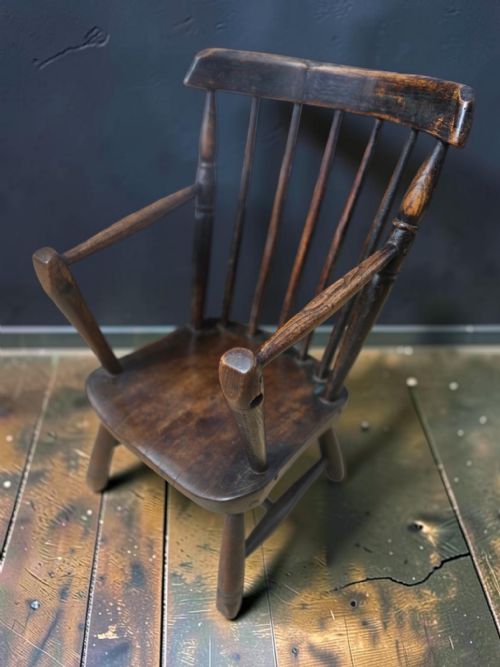
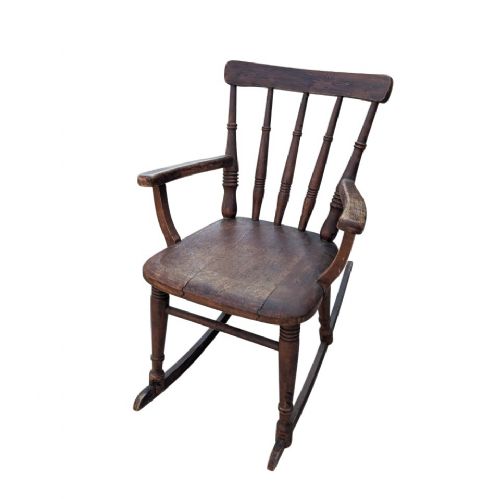


Vintage Country Child Chair
These vintage country child chairs are robust vernacular seats made for the nursery, bringing domestic history directly into modern rooms.
Vintage Country Child Chair
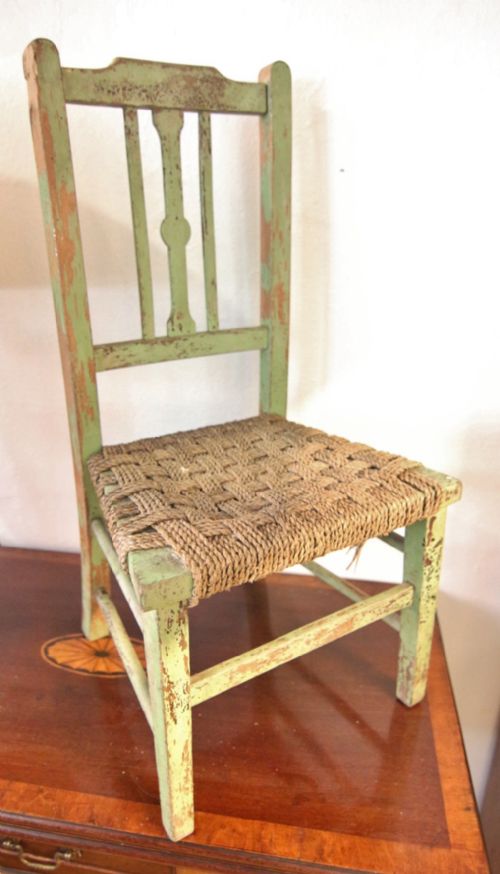
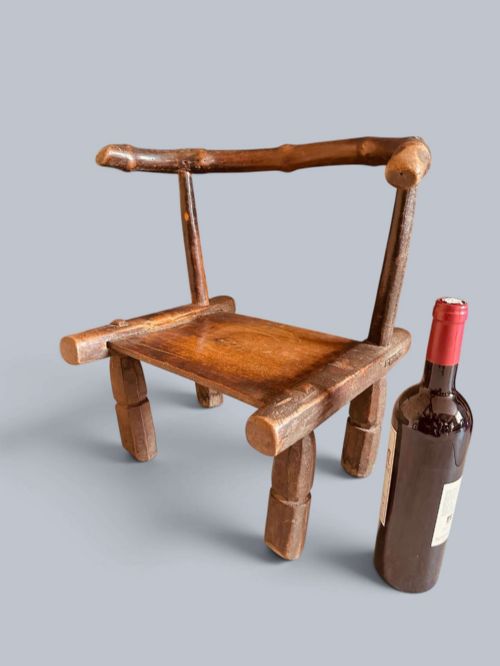
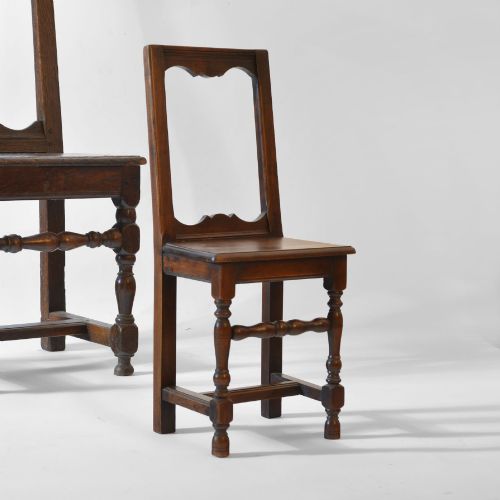
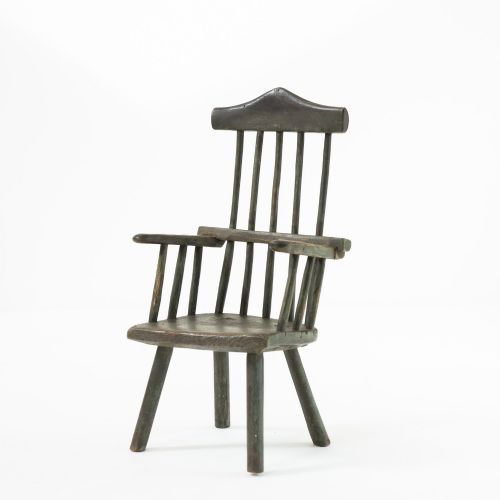
A vintage country child chair encompasses a wide array of domestic seating built for young occupants across the eighteenth, nineteenth, and early twentieth centuries. These diminutive seats range from simple stick backs and ladderbacks to specialised high chairs, potty rockers, and low rocking variants.
The materials and construction lean heavily on regional vernacular traditions, drawing from English, Welsh, French, and Scandinavian workshops. Elm, ash, oak, and fruitwood appear frequently, often shaped by local rural makers who adapted adult furniture designs for domestic household use.
Materials and construction methods
Makers utilised native hardwoods like elm, ash, and oak for structural frames, combining solid timber seats with turned spindles, bentwood hoops, and stick-back supports. Rush seating and painted finishes also appear, showing how rural craftspeople utilised accessible local resources.
Joinery methods rely on traditional techniques such as wedged tenons and pegging, ensuring the small chairs could withstand everyday domestic wear. Natural forms and primitive carving styles demonstrate an unpretentious approach to functional furniture production.
Vintage Country Child Chair Retail Price Guide 2026
Typical asking prices for vintage country child chair among the pieces listed under this phrase on Sellingantiques today, from the lower quarter to the upper quarter. They describe what is for sale here now, not the wider market.
Assessing quality in rural children's seating
Quality rests on the integrity of the timber and the harmony of the proportions when a full-scale form is scaled down for a child. Examples with deep patination, untouched surfaces, and tight original joints stand apart from heavily restored or altered pieces.
The sophistication of the turning on spindles and legs, alongside the retention of original rush seats or early painted finishes, dictates the desirability of a piece. Regional distinctiveness, such as Welsh hoop-backs or Swedish rocking formats, adds further depth to individual examples.
The Vintage Country Child Chair Glossary
- Windsor chair
- A wooden chair constructed with a solid timber seat into which the legs and back spindles are directly inserted. This form appears frequently in nineteenth-century examples.
- Stick back
- A chair design featuring turned or cleft sticks tenoned directly into the seat. These provide sturdy support without elaborate upholstery.
- Potty rocker
- A specialised child's seat incorporating a cutout or compartment within the wooden frame for a chamber pot, often mounted on rockers. These combine nursery utility with domestic rocking function.
- Vernacular furniture
- Domestic items made by local craftspeople using regional styles and readily available native timbers, independent of metropolitan fashion. This category defines the majority of the pieces listed.
Vintage Country Child Chair: Frequently Asked Questions
How were child high chairs used?
These elevated seats kept young children at table height during family meals in domestic kitchens and dining rooms.
They provided a secure seating arrangement before modern nursery furniture standardised infant care.
Are these chairs safe for daily use?
Most antique children's seats serve primarily as decorative objects or stable display pieces due to their age.
Buyers should inspect the structural joints carefully if intending them for regular seating.
What woods were commonly used?
Rural makers selected durable native hardwoods including elm, ash, oak, and fruitwood for daily utility.
These timbers offered the strength needed for small chairs subjected to heavy household wear.
How do I identify a regional style?
Regional pieces often display characteristic turning patterns, specific back designs, and local timber choices.
Welsh, Scandinavian, and English country traditions each developed distinct structural traits over successive generations.