


Vintage Cottage Wall Art
Vintage cottage wall art brings rural charm and quiet country scenes directly into your home through period paintings and watercolours.
Vintage Cottage Wall Art
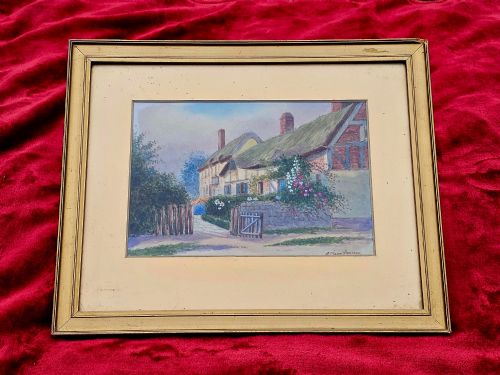
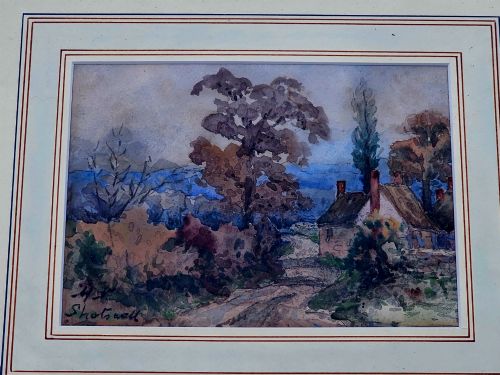
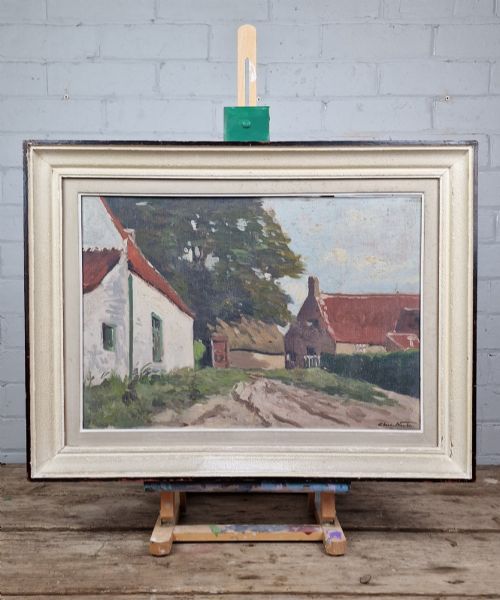
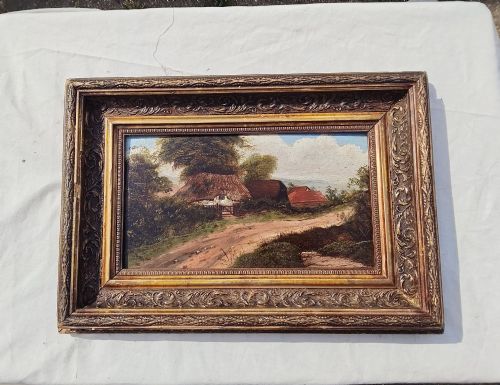
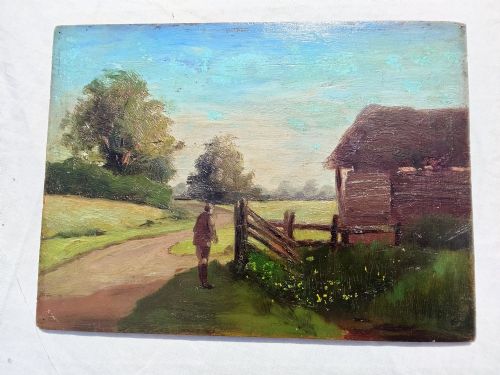
Vintage cottage wall art encompasses paintings and watercolours depicting rural houses, country gardens, and pastoral landscapes. These pieces record rural life primarily through the lens of late nineteenth and twentieth-century movements like British Impressionism, Post-Impressionism, and Folk Art. Buyers seek these works to add historic character and gentle, domestic scenery to their interior spaces.
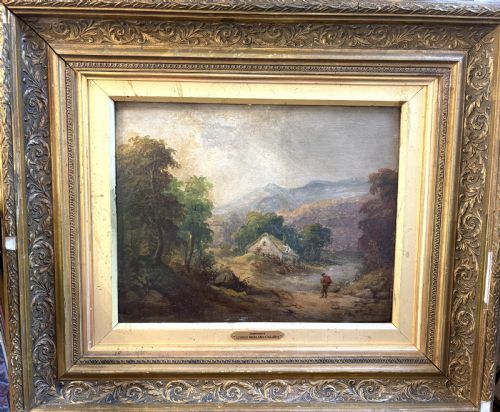
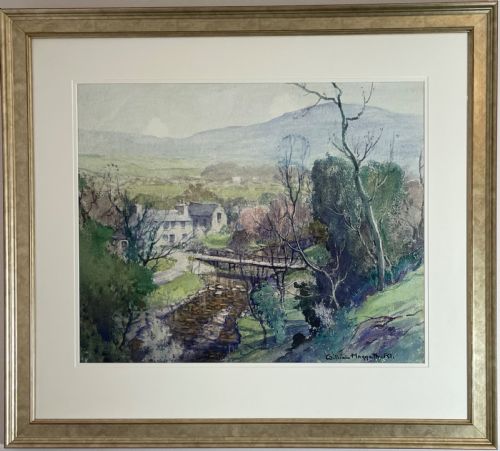
The selections available here lean heavily towards works executed in oil and watercolour on canvas, card, board, and paper. Dating spans from the Victorian and Edwardian eras through the mid-twentieth century, capturing thatched roofs, riverbanks, and garden paths. Subjects often focus on quiet English, Scottish, and continental countryside views rendered by named artists and regional schools.
Materials and methods
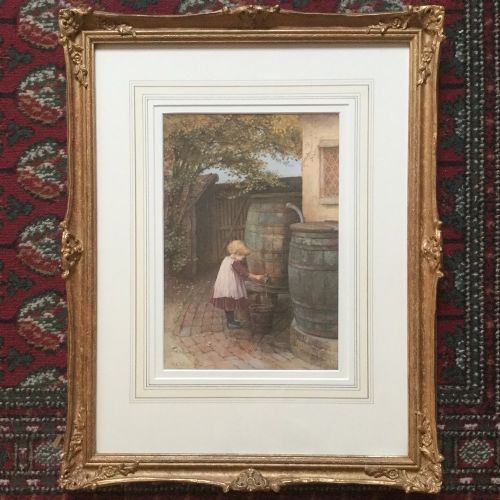
Artists working within this tradition relied on traditional painting mediums, applying oil paint to canvas, wooden board, card, or paper. Oil paint allowed for rich texture and depth, particularly in depicting changing light across rural landscapes and cottage facades. Watercolours offered a lighter, more translucent medium suited to detailed studies of gardens and village scenes.
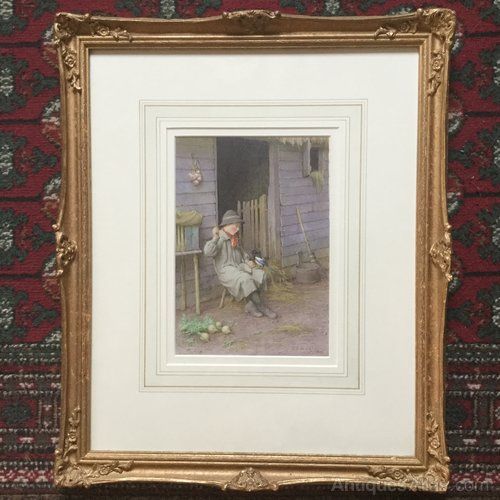
Substrates varied according to the period and the artist's preference, ranging from heavy woven canvas to stiff card and thick watercolour paper. Many works retain their original frames, which frequently utilise gilt wood to complement the painted imagery. Mixed media and lithographic prints also appear, representing alternative methods of capturing these pastoral subjects.
Listings feature works spanning the nineteenth century through the 1960s, executed in oil, watercolour, and mixed media.
Distinctions in quality
Quality in these rural paintings rests primarily upon the skill of the brushwork and the artist's command of light and atmosphere. Superior examples display confident, deliberate application of pigment that brings depth to foliage, weathered stonework, and shifting weather. Weaker pieces often rely on formulaic repetition without capturing the specific character of the location.
The handling of composition and perspective further separates finer works from standard decorative pieces. Stronger paintings integrate figures, structures, and natural surroundings into a balanced view that feels observed rather than assembled. Additionally, the preservation of the original paint surface and the suitability of the framing contribute to the overall standing of the work.
A. Marie Parsons·Charles Houben·George Morland·Charles Edward Wilson·Mario Pinetti·Reginald Grange Brundrit·Fred Lawson·William Hoggatt·Donald McIntyre·Owen Bowen·Ernest Higgins Rigg·Kershaw Schofield·Lilian Stannard·Helmut Reuter·Ralph Hedley·Harry Sylvester Stannard·Robert Gemmell Hutchinson·Abraham Hulk Junior·David Woodlock·Ernest Walbourn·Ernest Cox
The Vintage Cottage Wall Art Glossary
- Oil on Canvas
- Pigment suspended in drying oil applied to a stretched woven fabric support. This combination allows for rich blending and textured impasto work.
- Watercolour
- Paint made with water-soluble pigments applied to paper. It yields transparent washes that capture light and atmosphere.
- Impressionism
- A style focused on accurate depiction of light in its changing qualities. Artists often used visible brushstrokes and ordinary subject matter.
- Gilt Wood
- Wood treated with a thin layer of gold leaf or gilt paint. It is commonly found on traditional frames surrounding period paintings.
Vintage Cottage Wall Art: Frequently Asked Questions
What periods do these paintings come from?
The works span from the late nineteenth century through the Edwardian period and into the mid-twentieth century. Artists recorded rural scenes across decades defined by shifting movements such as Impressionism and Post-Impressionism.
Most pieces reflect the artistic styles prevalent in Britain and Europe between eighteen-ninety and nineteen-sixty. Each era brings distinct framing choices and painting techniques to the subject.
How should I hang vintage wall art?
Hang these pieces away from direct sunlight to protect delicate watercolours and oil pigments from fading. Secure them using appropriate fixings matched to the weight of the frame and your wall type.
Consider eye-level placement in rooms where you want to create a calm, domestic atmosphere. Grouping smaller watercolours together can also create an effective gallery display.
What is the difference between oil and watercolour?
Oil paint uses a drying oil binder that creates a thick, opaque surface capable of holding visible brush texture. Watercolour relies on water-soluble binder on paper, producing lighter, translucent washes.
Oils are typically stretched on canvas or mounted on board, whereas watercolours require protection behind glass. Both mediums capture rural scenes but offer entirely different visual textures.
Are these works signed by the artists?
Many pieces feature visible signatures, monograms, or attribution to specific painters and regional schools. Some listings note indistinct signatures where the exact hand remains unconfirmed.
Signed works often connect directly to known practitioners of British and Scottish Impressionism. Unsigned pieces rely on stylistic evidence and period materials for identification.