






Vintage Cottage Chairs
Vintage cottage chairs bring honest utility and vernacular charm into a room, offering sturdy seating shaped by generations of rural use.
Vintage Cottage Chairs
Vintage cottage chairs encompass vernacular seating built for everyday domestic life in rural homes, farmhouses and kitchens. The selection on this page relies heavily on nineteenth-century examples, alongside pieces dating to the eighteenth century and the early twentieth century.
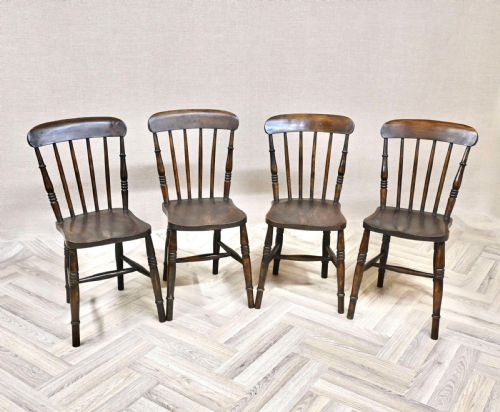
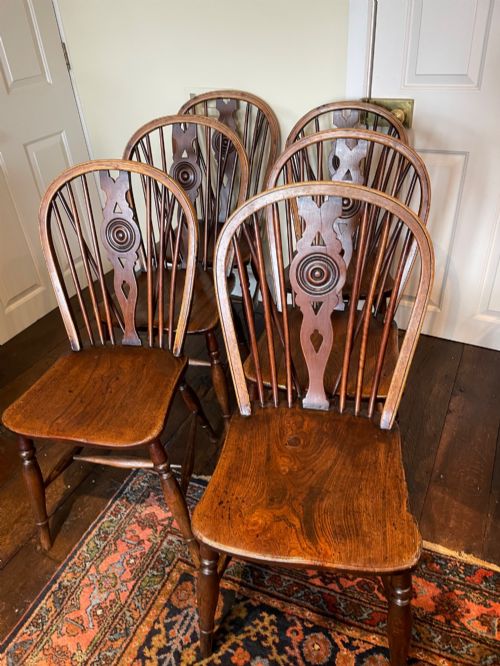
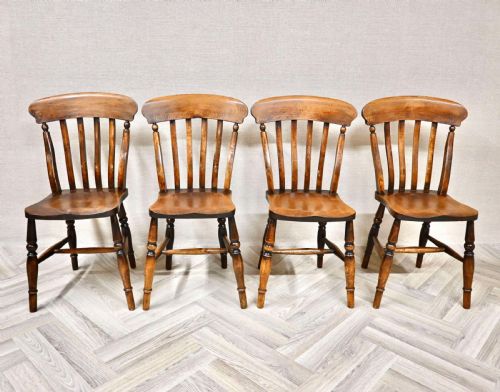
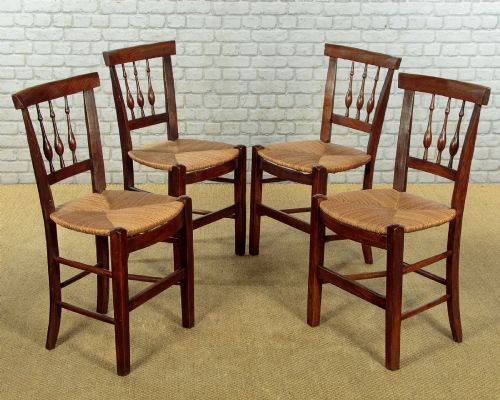
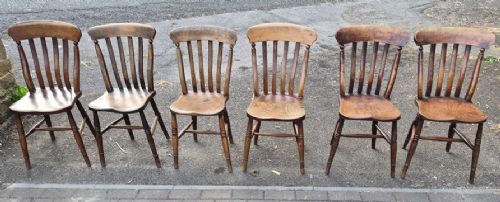
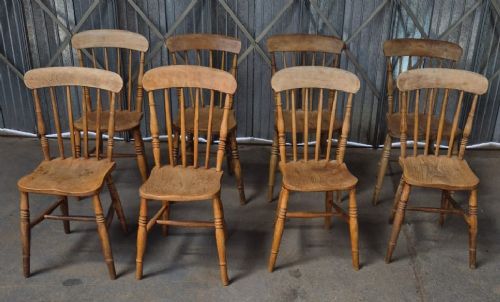
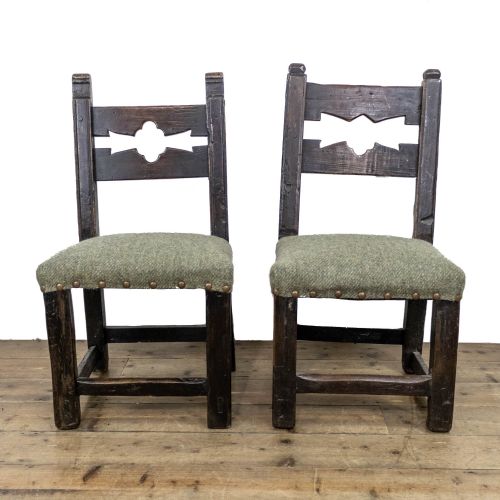
Buyers will frequently encounter regional Windsor forms, wheel backs, stick backs, and lath backs alongside rush seat dining chairs and spindle backs. These objects range from single carvers and pairs to substantial harlequin sets of six or eight.
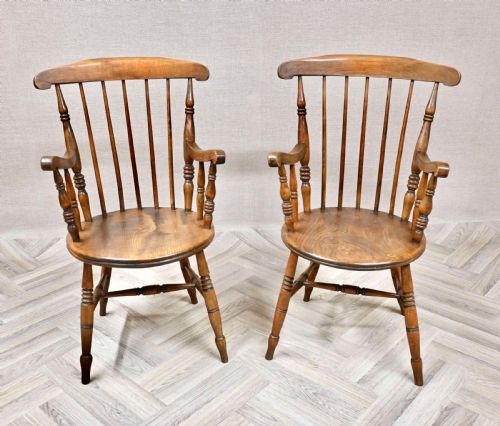
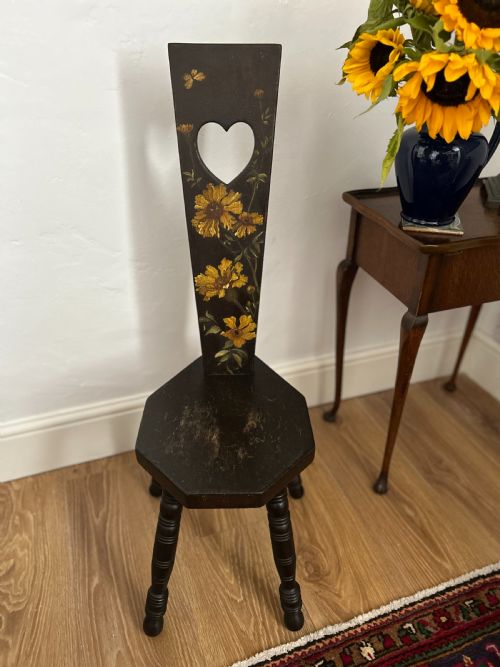
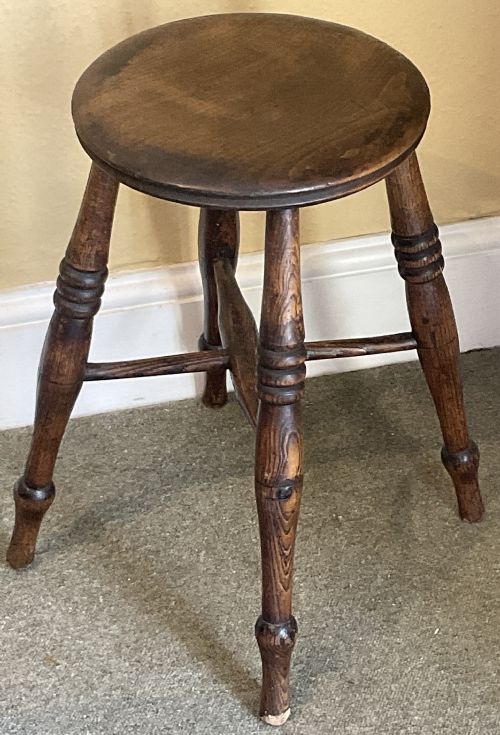
Originating across English country districts, the Thames Valley and Wales, these rustic seats reflect local traditions of carpentry rather than formal court styles. They include armchairs, side chairs, kitchen chairs, stools and low spinning chairs designed for specific domestic tasks.
Materials and construction methods
Maker traditions relied on native timbers selected for their specific mechanical properties, pairing resilient elm for solid saddle seats with flexible ash, beech or oak for spindles, legs and bent-wood hoops.
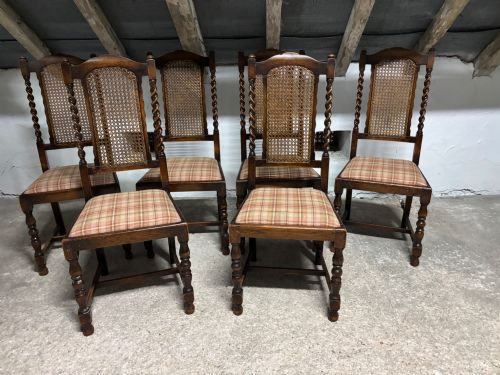
Joinery methods prioritized practical strength through wedged tenons, turned components, and steam-bent parts. Seats often utilise shaped solid wood planks, while lighter variants incorporate woven rush or cane panels.
Vintage Cottage Chairs Retail Price Guide 2026
Typical asking prices for vintage cottage chairs among the pieces listed under this phrase on Sellingantiques today, from the lower quarter to the upper quarter. They describe what is for sale here now, not the wider market.
Object forms span dining chairs, side chairs, armchairs, stools, and low spinning chairs.
Distinctions in quality and execution
Superior examples reveal themselves in the sculptural shaping of solid elm seats and the confident proportions of turned spindles. The integrity of the original joints and the harmonious matching of timber grain across a set define the better tiers of production.
Weaker examples often suffer from unsympathetic replacement parts, poorly matched harlequin groupings, or excessive wear to lower leg structures. Greater regional distinctiveness and refined local turning generally separate ordinary utility pieces from finer vernacular items.
Worksop Allsop
The Vintage Cottage Chairs Glossary
- Windsor chair
- A chair built with a solid wooden saddle seat into which the legs and back spindles are directly tenoned. These regional country seats evolved numerous local variations in their back designs.
- Wheel back
- A Windsor variant featuring a pierced wooden splat carved in the shape of a cartwheel. This decorative motif became popular in nineteenth-century kitchen and dining chairs.
- Rush seat
- A seating surface woven from dried marsh rushes around a wooden frame. This traditional technique creates a textured, supportive pad found on vernacular chairs and stools.
- Harlequin set
- A group of chairs assembled to match in general style and period rather than originating as a single workshop set. Small variations in turning and proportion are typical within these assembled groups.
- Spindle back
- A chair back constructed from a series of slender turned vertical wooden rods. This light and sturdy framework typifies many nineteenth-century country designs.
- Thames Valley chair
- A regional nineteenth-century Windsor chair produced along the Thames Valley, often combining elm seats with yew or beech framing. These pieces are recognised for their warm timber patination and refined turnings.
Vintage Cottage Chairs: Frequently Asked Questions
What defines a vintage cottage chair?
These seats are vernacular wooden chairs made for rural homes, farmhouses, and kitchens using native timbers like elm and beech.
They emphasise robust construction and practical utility over formal decorative styles, often showing regional woodworking traditions.
How do I care for rush and wood seats?
Keep wooden surfaces nourished with appropriate wax and avoid placing rush seats in damp environments or direct sunlight.
Gentle dusting preserves the natural patination built up over decades of domestic use.
Are harlequin sets mismatched?
Harlequin sets are groups of chairs gathered together because they share similar periods, materials, and regional styles.
While individual pieces vary slightly in their turning and proportions, they function visually as a coordinated dining group.
How can I tell a Windsor chair apart?
Windsor chairs are distinguished by a solid wooden saddle seat that anchors the legs below and the back spindles above.
They lack traditional frames, relying instead on individual components fitted directly into bored holes in the seat slab.