






Vintage Corner Shelf Unit
These vintage corner shelf unit pieces turn empty angles into display space, built from timber and brass to hold your books and objects.
Vintage Corner Shelf Unit
A vintage corner shelf unit brings architectural utility to angles in a room, drawing on forms recorded as whatnots, etageres, and corner cupboards. These pieces occupy periods stretching from the eighteenth century through the Georgian, Regency, and Victorian eras into the Edwardian years.
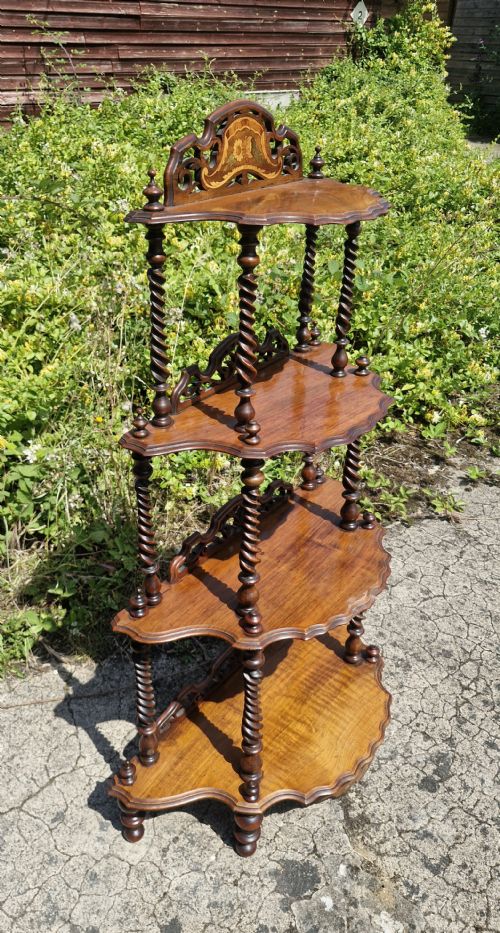
The most frequent version you meet on this page is the multi-tiered freestanding whatnot or hanging corner cupboard, constructed to fit squarely into a room junction. Makers from the Georgian and Victorian periods favoured these shapes for displaying ceramics and books without consuming central floor space.
The materials span native and imported woods, including mahogany, walnut, burr walnut, and ebonised timber, alongside bamboo and painted surfaces. Styles range from plain utility to Italian Rococo, Grand Regency, and Aesthetic Movement designs.
Materials and construction
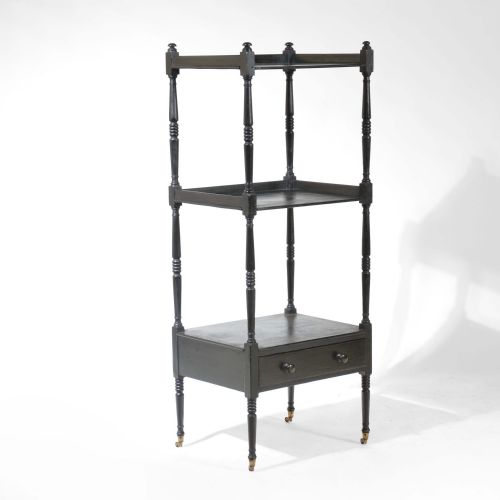
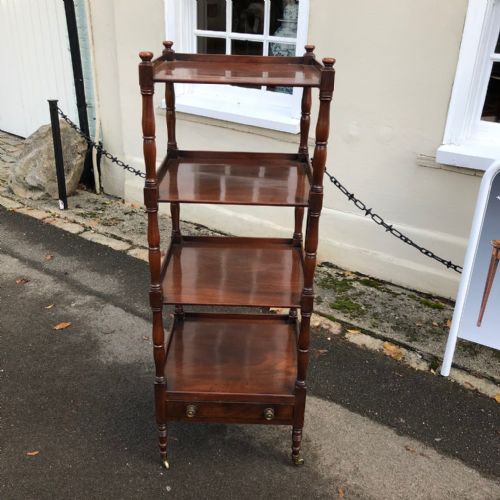
Cabinetmakers built these corner units using solid and veneered timbers, predominantly mahogany and walnut, augmented by brass fittings and ebonised details. Bamboo appears alongside wood in later nineteenth-century pieces influenced by the Aesthetic Movement.
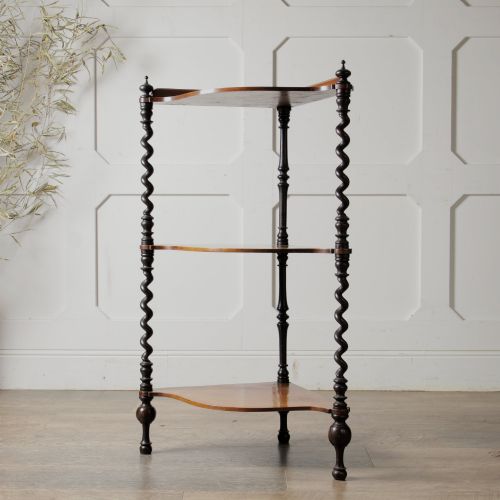
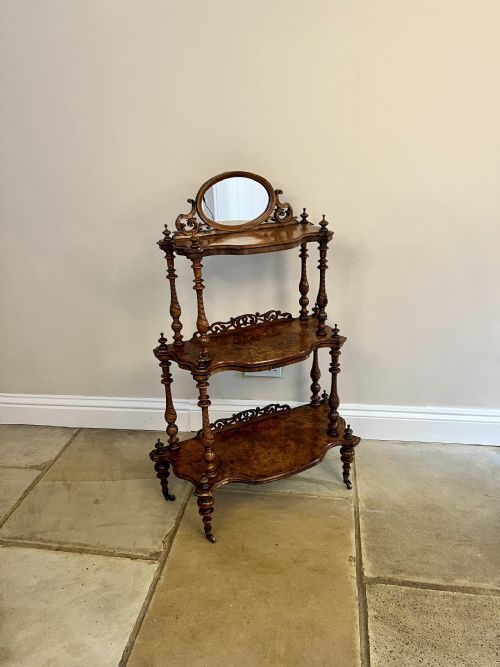
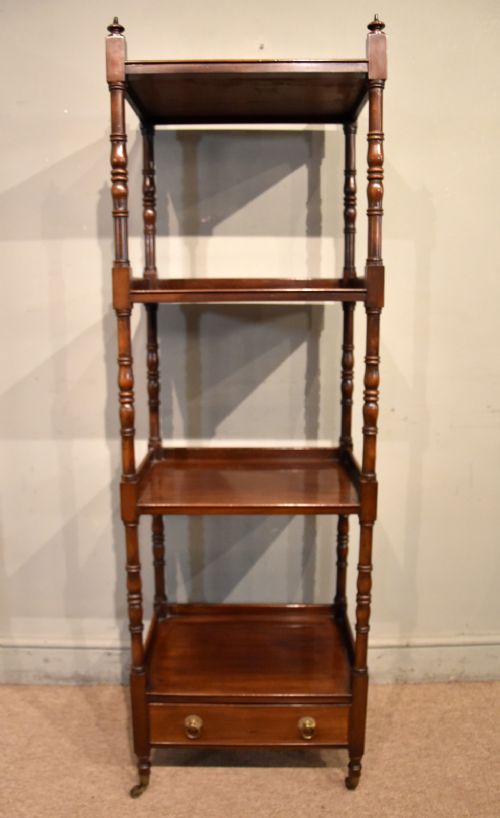
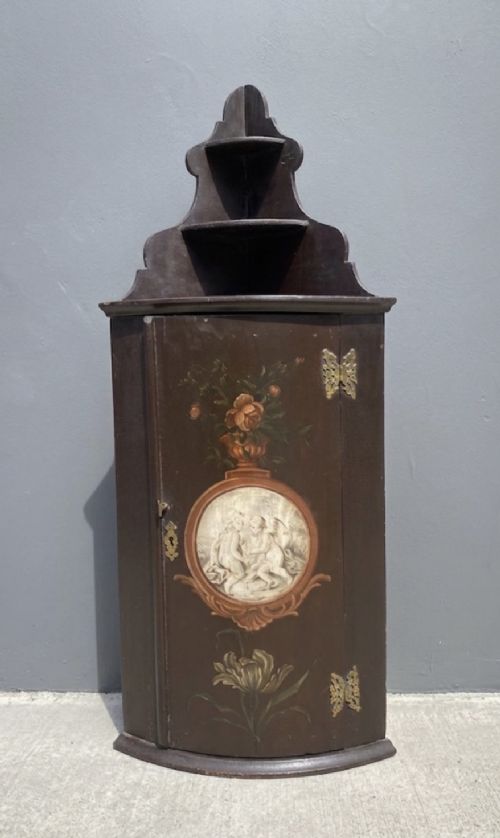
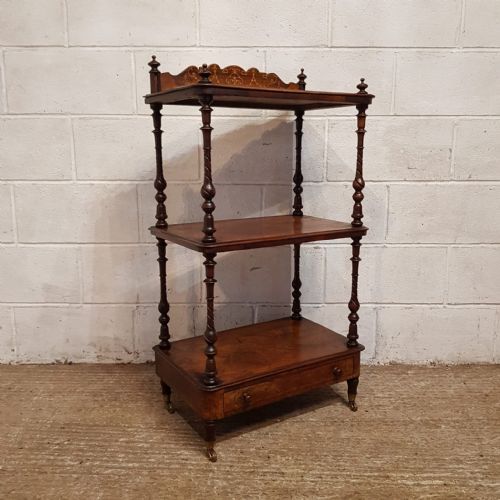
Tiered whatnots employ turned supports, barley twist columns, or A-frame uprights to separate the shelves, while cupboards incorporate panelled doors and hanging fixings. Paint and marquetry inlay provide surface decoration on specific eighteenth and nineteenth-century examples.
Vintage Corner Shelf Unit Retail Price Guide 2026
Typical asking prices for vintage corner shelf unit among the pieces listed under this phrase on Sellingantiques today, from the lower quarter to the upper quarter. They describe what is for sale here now, not the wider market.
Some nineteenth-century makers evidently grew tired of straight lines and twisted the entire support column into a spiral.
The markers of quality
Quality rests on the selection of timber veneers, such as burr walnut or figured mahogany, and the crispness of turned or carved details like barley twists. Superior pieces maintain structural rigidity across multiple tiers without relying on modern fasteners.
Design ambition separates basic utility items from sophisticated examples, seen in delicate inlay work, matched grain patterns, and integrated lower cupboards rather than simple open boards.
The Vintage Corner Shelf Unit Glossary
- Whatnot
- An open set of tiered shelves designed for displaying ornaments and small objects. It typically stands on upright supports and dates heavily to the nineteenth century.
- Etagere
- A piece of furniture consisting of a number of open shelves for displaying articles. The term is often used interchangeably with whatnot in nineteenth-century contexts.
- Barley twist
- A turned wooden column resembling a spiralling rope. This decorative technique appears frequently on nineteenth-century supports.
- Burr walnut
- Wood taken from the warted growths of walnut trees, yielding complex swirling grain patterns. Cabinetmakers used it as a decorative veneer on high-status Victorian pieces.
- Aesthetic Movement
- A late nineteenth-century design style emphasising art for art's sake. Pieces from this period frequently utilise bamboo and orientalising motifs.
Vintage Corner Shelf Unit: Frequently Asked Questions
Where should I place a corner shelf unit?
These units fit directly into unused room angles to maximise floor space.
They work effectively in sitting rooms, studies, and hallways for holding books or decorative items.
How do I identify a Victorian whatnot?
Victorian examples commonly feature multiple tiers supported by turned wooden columns or barley twists.
Dark timbers like mahogany and walnut dominate this period of production.
What is the difference between a cupboard and a whatnot?
A whatnot is an open-tiered shelving structure intended for display.
Corner cupboards incorporate enclosed doors to keep contents hidden and dust-free.
How do I care for antique wood furniture?
Keep wooden pieces away from direct heat sources and sudden humidity changes to prevent timber splitting.
Apply traditional wax polish occasionally to nourish the surface.