






Vintage Corner Bookcase Display
A vintage corner bookcase display solves the eternal puzzle of dead space by turning an empty room angle into a showcase for books and treasures.
Vintage Corner Bookcase Display
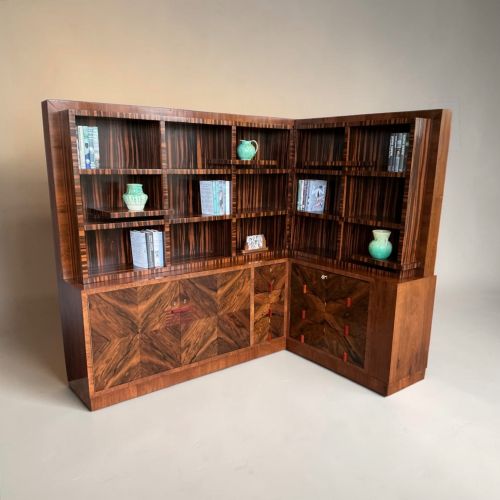
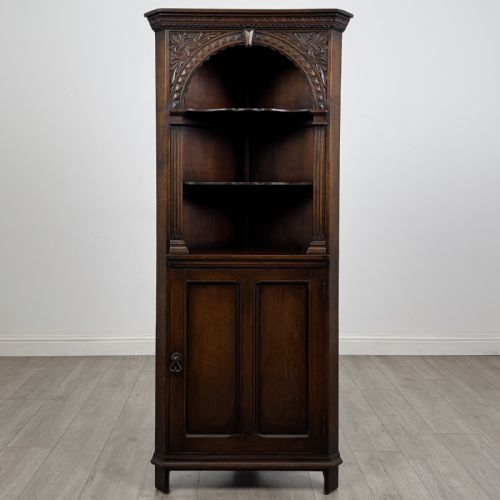
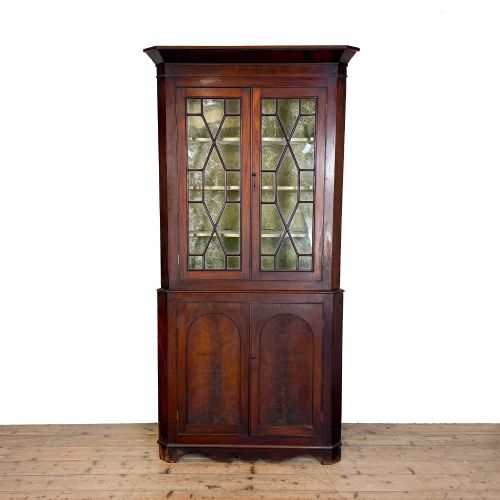
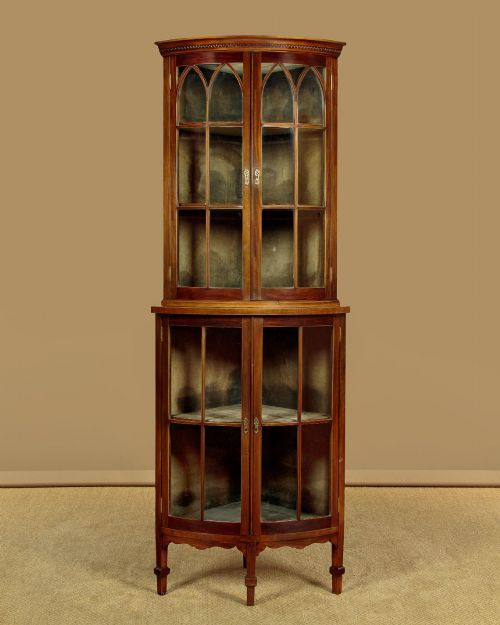
The forms range from single-door mahogany corner cupboards to grand Georgian double-height units and open tiered shelves. Pieces span from the eighteenth century through the Victorian and Edwardian eras into the Art Deco period, offering architectural presence in compact footprints.
Many items combine enclosed cupboard storage at the base with glass-fronted or open shelving above. This structural duality makes them practical for housing both a library and a collection of delicate display pieces.
How they were made
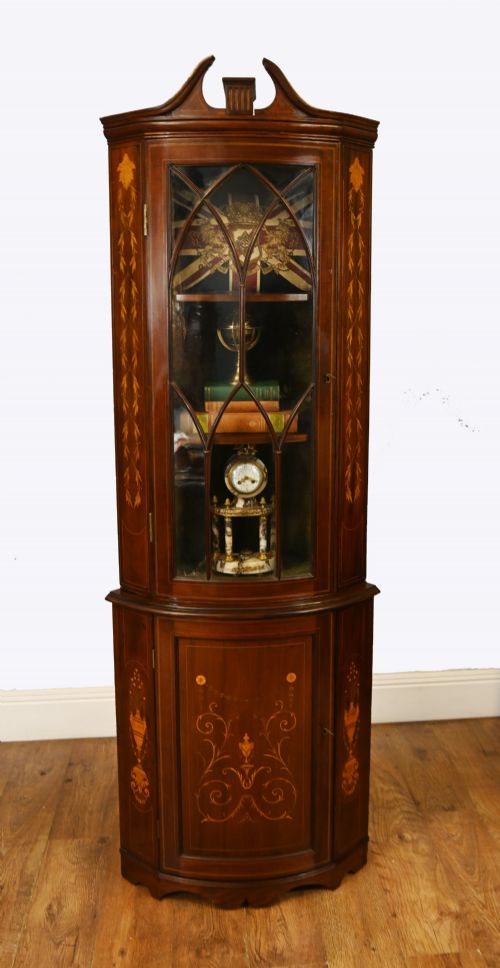
Makers relied heavily on solid and veneered mahogany, oak, and walnut, often accentuating the timber with delicate satinwood inlay or brass mounts. Glass doors, whether pitch glazed or panelled, protect the interior whilst keeping the contents visible.
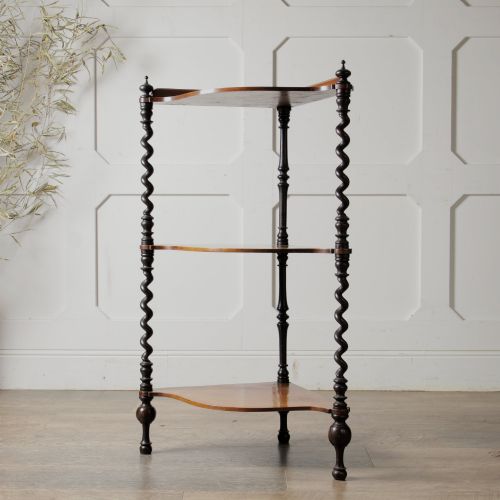
Construction techniques combine sturdy carcase framing with detailed decorative elements such as barley twist supports, marquetry, and painted finishes. Cabinetmakers shaped these timbers to fit precise ninety-degree angles without sacrificing structural integrity.
Vintage Corner Bookcase Display Retail Price Guide 2026
Typical asking prices for vintage corner bookcase display among the pieces listed under this phrase on Sellingantiques today, from the lower quarter to the upper quarter. They describe what is for sale here now, not the wider market.
Periods represented range from the 18th century through the Victorian and Edwardian eras to Art Deco.
What varies in quality
The distinction between standard examples and the finest pieces lies in the crispness of the cabinetwork and the selection of figured timbers. Superior items exhibit meticulous marquetry, seamless door alignment, and thoughtful proportions that elevate a functional corner unit into a focal point.
Edwards And Roberts·Maurice Adams
The Vintage Corner Bookcase Display Glossary
- Whatnot
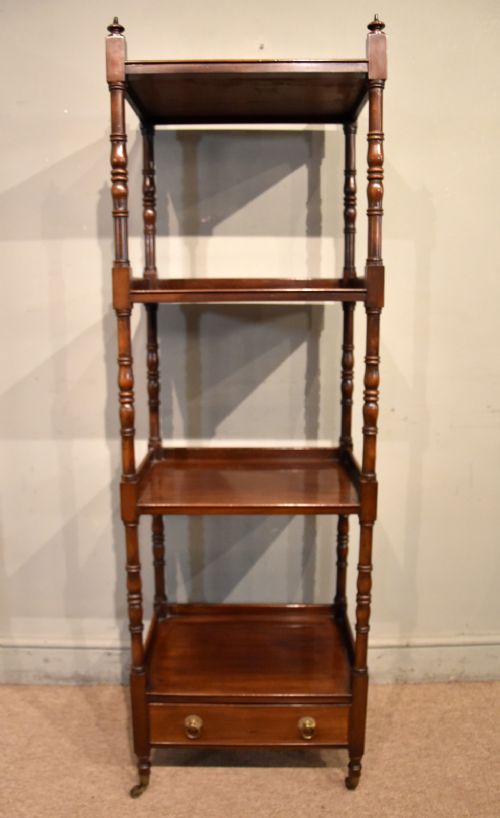
- An open set of standing shelves used for displaying ornaments and books. These multi-tiered units appear in various woods from the Victorian era onwards.
- Vitrine
- A glass-panelled cabinet designed specifically for displaying fine objects and porcelain. This French term usually denotes a more formal display piece.
- Barley Twist
- A turned wooden furniture leg or support resembling a twisted rope. This technique adds tactile texture to Victorian pieces.
- Serpentine
- A gently curved furniture front curving outward in the centre and inward at the sides. It denotes a higher grade of cabinetmaking.
Vintage Corner Bookcase Display: Frequently Asked Questions
How do I choose the right size corner cabinet?
Measure the available wall space extending outward from the room corner to ensure the cabinet depth and door swing do not obstruct traffic. Consider whether you need a single-height unit or a double-height display.
Take note of the ceiling height, particularly if you are considering multi-tiered whatnots or tall standing cupboards that need to fit comfortably beneath cornices.
Are these cabinets suitable for heavy books?
Many solid mahogany and oak corner cupboards feature sturdy fixed shelving capable of supporting substantial library collections. Check the thickness of the timber and the shelf supports before loading heavy volumes.
Display cabinets with glass doors or delicate tiered whatnots are generally better suited to lighter books and decorative objects rather than heavy folios.
How do I care for antique mahogany and walnut?
Keep wooden surfaces away from direct sunlight and heat sources to prevent the timber and veneers from drying out or fading. Apply a quality wax polish sparingly to maintain the natural lustre of the grain.
Dust glass panels with a soft cloth and avoid using harsh chemical sprays near antique brass mounts or inlaid satinwood details.
How can I tell an Edwardian piece from a Victorian one?
Victorian pieces often lean towards heavy timbers, darker finishes, and robust turned elements like barley twists. They prioritise solid, imposing construction and traditional utility.
Edwardian furniture frequently exhibits lighter mahogany frames, delicate marquetry inlay, and influences from the Sheraton Revival style. These later pieces feel airier and more refined.