




Vintage Copper Coal Hod
These vintage copper coal hod examples are practical hearth vessels that bring genuine warmth and metal texture to a fireplace.
Vintage Copper Coal Hod
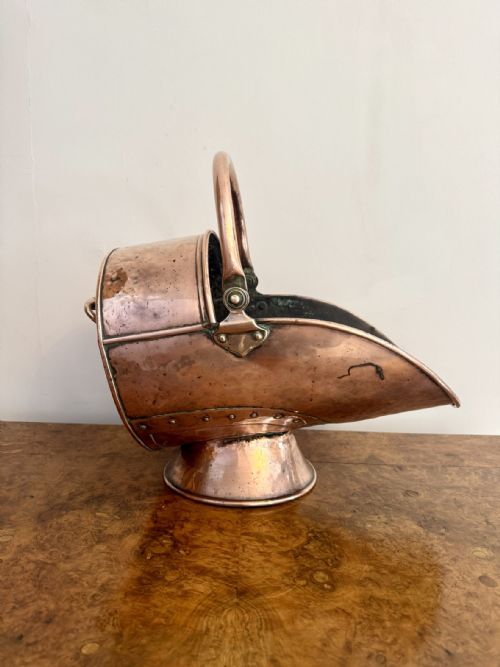
When you search for a vintage copper coal hod, you are looking at functional fireside containers designed to hold solid fuel near an open hearth. These pieces span from the Georgian period through the Victorian and Edwardian eras, encompassing both traditional bucket shapes and helmet scuttles.
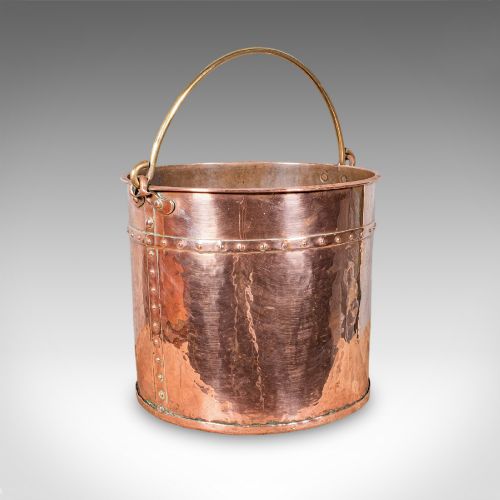
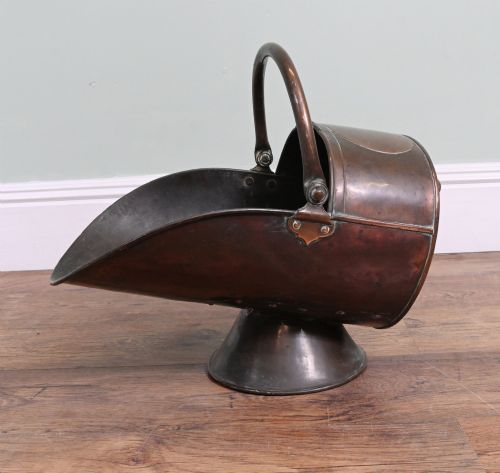
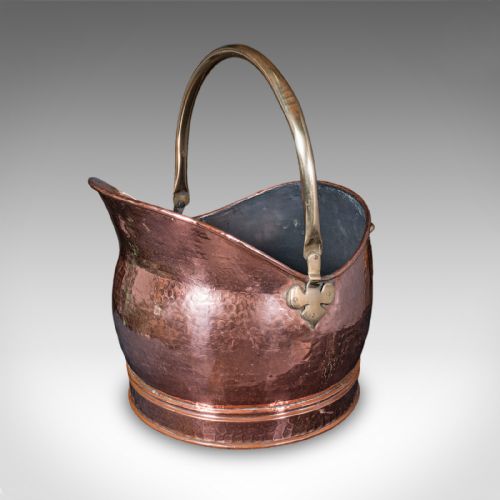
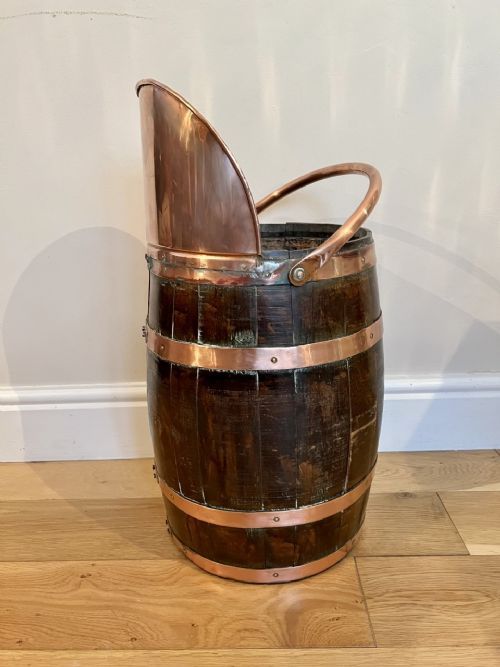
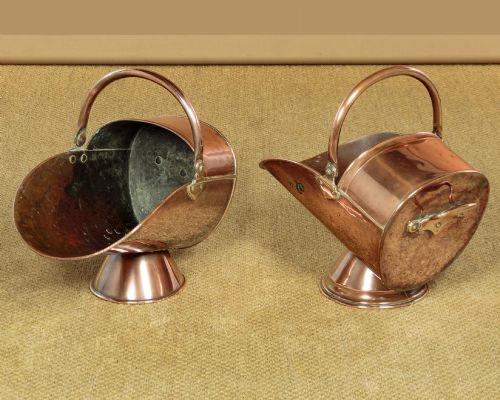
The most common form you will meet on this page is the helmet shaped scuttle in polished copper, frequently paired with brass swing handles and feet. Alongside these, you find cylindrical buckets and receivers built from copper combined with oak, wrought iron or cast brass fittings.
How they were made
The body of a vintage copper coal hod relies on sheet metal joined by hand, often with visible hammering or smooth seams shaped over wooden forms. Brass and iron fixtures are riveted securely to the copper shell to bear the weight of heavy coal.
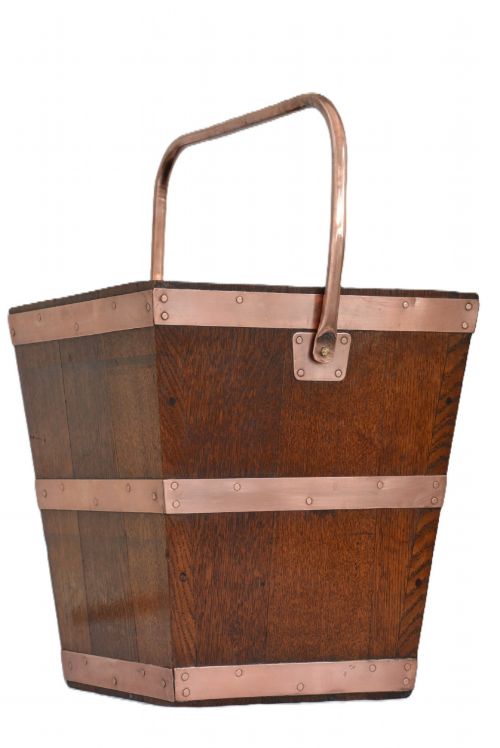
Wood elements such as oak staves and swing handles appear on coopered buckets, bound by heavy metal bands to provide structural strength. Many examples utilise brass fixings and ceramic or wooden grip handles to balance the weight during transport from the coal cellar.
Vintage Copper Coal Hod Retail Price Guide 2026
Typical asking prices for vintage copper coal hod among the pieces listed under this phrase on Sellingantiques today, from the lower quarter to the upper quarter. They describe what is for sale here now, not the wider market.
Many a Victorian coal hod spent decades quietly hauling soot before retiring to a smart drawing room as an umbrella stand.
What varies in quality
The calibre of a vintage copper coal hod rests upon the thickness of the metal sheet and the integrity of the riveted joints. Thicker copper resists dents and holds a deeper lustre through decades of polishing, while lighter metal flexes under load.
Design articulation separates standard vessels from finer workshop pieces, particularly in the shaping of the helmet spout, the heft of the cast brass handle sockets, and the incorporation of hand-beaten Arts and Crafts surface details.
The Vintage Copper Coal Hod Glossary
- Coal hod
- A container designed specifically to store and transport coal to a fireplace grate. These vessels often feature a wide top opening and a narrower base for steady pouring.
- Helmet scuttle
- A fireside bucket with a flared rim and a pointed spout resembling a classic helmet, designed for controlled emptying of fuel onto the fire.
- Coopered
- A method of construction where tapered wooden staves are bound together with metal bands, similar to barrel making.
- Arts and Crafts
- A design movement prioritising visible hand workmanship, hammered metal textures, and simple structural honesty over machine mass production.
Vintage Copper Coal Hod: Frequently Asked Questions
What is a vintage copper coal hod?
A vintage copper coal hod is a traditional fireside container used to store and carry coal for an open fire. These metal vessels combine utilitarian function with decorative metalwork suited to period interiors.
Most examples range from the eighteenth century to the early twentieth century, taking the form of buckets or helmet shaped scuttles made from sheet copper.
How do you clean a copper coal hod?
Cleaning a copper coal hod involves using a dedicated metal polish to maintain its brightness or leaving the aged patina untouched if you prefer a darker, historic surface. Avoid harsh abrasives that scratch the soft copper skin.
Regular dusting and occasional gentle wiping keep the metal stable in modern living spaces.
Where were coal hods kept?
Coal hods sat beside the fireplace hearth for immediate access when tending the fire, or rested in a cellarway until needed. Their design made them suitable for sitting openly in a Victorian or Georgian drawing room.
Today, they find similar placement beside working hearths or serve as decorative umbrella stands.
How do I date a copper coal hod?
Dating relies on examining the construction methods, handle mounts, and styling cues such as Georgian helmet shapes or Arts and Crafts hand beating. Earlier pieces from the eighteenth century often feature hand-forged iron handles and heavier gauge brass banding.
Victorian and Edwardian versions commonly introduce stamped sheet brass components and oak stave construction.