






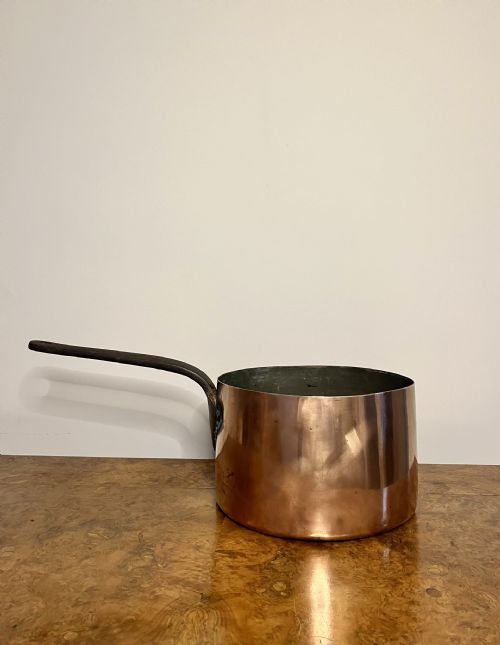


Vintage Cooking Pans
These vintage cooking pans are solid metal vessels that bring genuine hearth history and honest utility into modern kitchens.
Vintage Cooking Pans
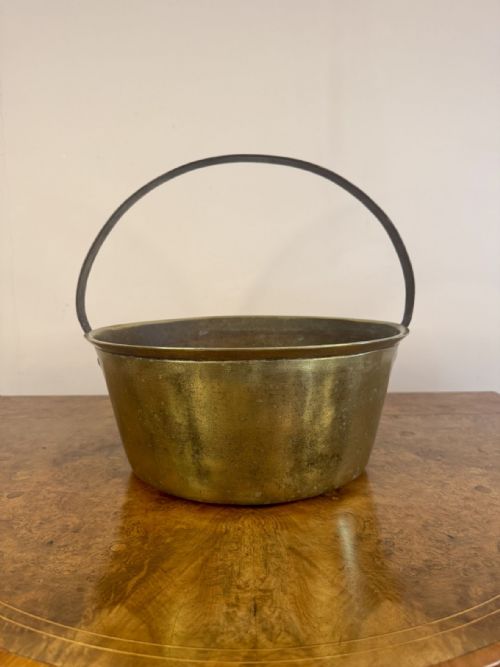
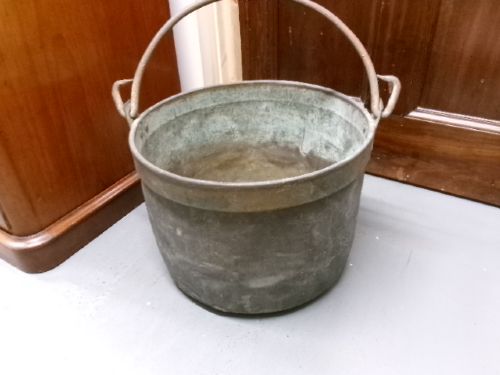
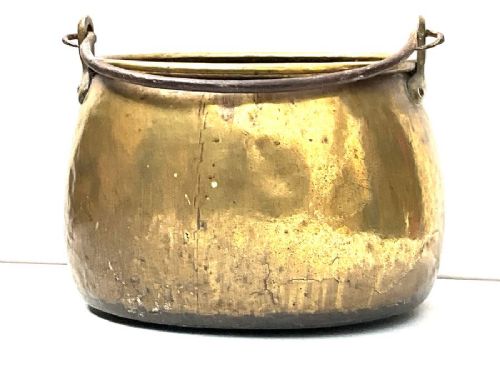
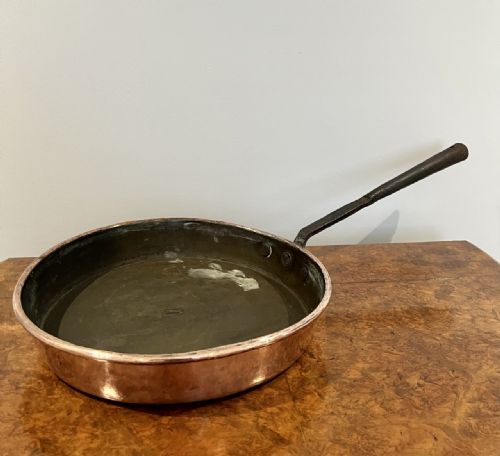
Vintage cooking pans encompass sturdy metal cookware designed for preparation and preserve-making across the Georgian, Victorian, and nineteenth-century periods. These items include heavy brass preserve pans, copper saucepans, cauldrons, and skillets suited for both kitchen work and fireplace display.
How they were made
Maker construction relies on heavy metals such as copper, brass, cast iron, and wrought iron shaped into durable cooking vessels. Many pieces incorporate riveted joints, solid brass handles, and iron attachments designed to withstand intense heat.
Workshops utilised sheet copper and cast brass to form deep preserve pans and saucepans, often pairing different metals for handles and bodies. The fabrication methods reflect practical domestic and hearth requirements of the eighteenth and nineteenth centuries.
Vintage Cooking Pans Retail Price Guide 2026
Typical asking prices for vintage cooking pans among the pieces listed under this phrase on Sellingantiques today, from the lower quarter to the upper quarter. They describe what is for sale here now, not the wider market.
Listings feature items spanning the Georgian, Victorian, and nineteenth-century periods, constructed from copper, brass, cast iron, and wrought iron.
What varies in quality
Substantial weight and material thickness separate standard utility pieces from exceptional examples. Heavygauge copper and thick brass retain heat more evenly and maintain structural integrity under regular use.
Maker marks, such as stamps by firms like Liptons or named makers like Hodges & Sons, distinguish specific workshop outputs. The precision of riveted handles and the proportion of the vessel also indicate superior manufacturing standards.
Hodges & Sons·Liptons
The Vintage Cooking Pans Glossary
- Preserve pan
- A wide, open vessel designed for boiling fruits and sugar. These pans often feature swing handles for easy pouring.
- Cauldron
- A deep rounded pot with a handle intended for suspension or placement over an open hearth. They appear in heavy brass and copper.
- Skillet
- A metal cooking pan with a long handle and short legs or a flat base. Georgian examples combined brass bowls with iron handles.
Vintage Cooking Pans: Frequently Asked Questions
Can I still cook with antique copper pans?
Many of these vessels retain their structural capacity for heat conduction and cooking tasks. Modern users often evaluate the interior lining condition before preparing food.
Traditional copper pans require specific maintenance to keep the metal clean and functioning properly in contemporary kitchens.
How do I identify a Georgian copper saucepan?
Georgian pieces typically date from the eighteenth to early nineteenth century, showing specific hand-beaten construction techniques and early handle attachments. Their weight and joinery differ noticeably from later Victorian manufacture.
Examining the rivets, surface texture, and handle style helps separate these earlier items from later nineteenth-century equivalents.
Why are brass preserve pans so heavy?
Makers cast or hammered thick brass to ensure the pan distributed heat evenly across the base during long jam-making sessions. This substantial metal thickness prevented sugar from burning.
The heavy construction also provided the necessary durability for frequent use over open fires and kitchen stoves.
Where were these French country pans made?
French country cookware originated in regional workshops supplying domestic kitchens with durable copper and brass utensils. These pieces often arrived in sets or specialised forms like daubieres.
Local metalworkers focused on practical utility, resulting in robust vessels designed for hearth cooking.