



Vintage Compact Wardrobe
A vintage compact wardrobe is a practical storage piece built for smaller spaces, offering hanging space and drawer compartments within a streamlined footprint.
Vintage Compact Wardrobe
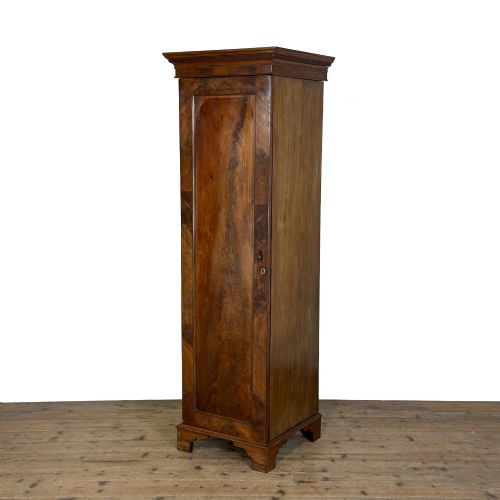
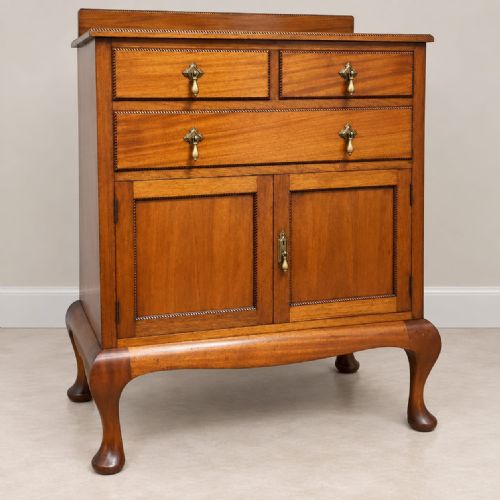
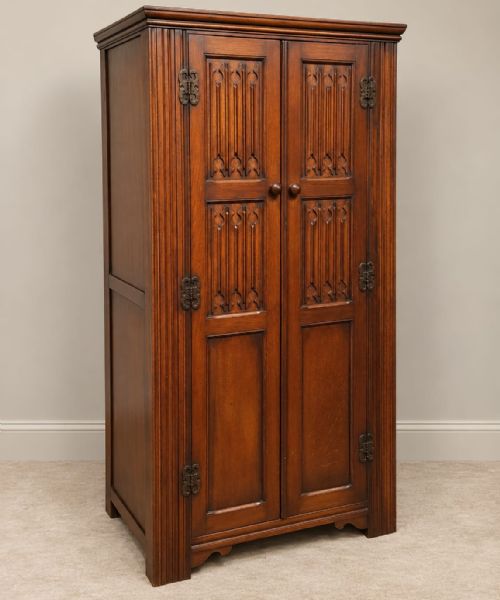
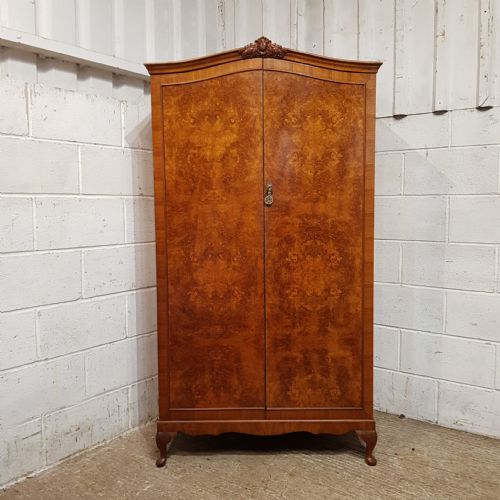
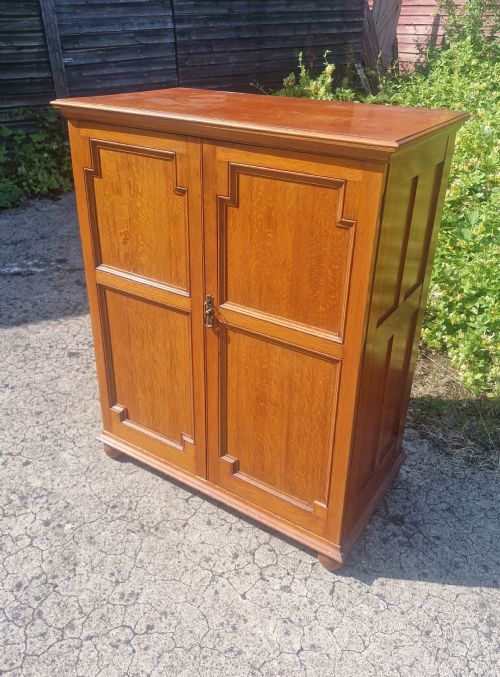
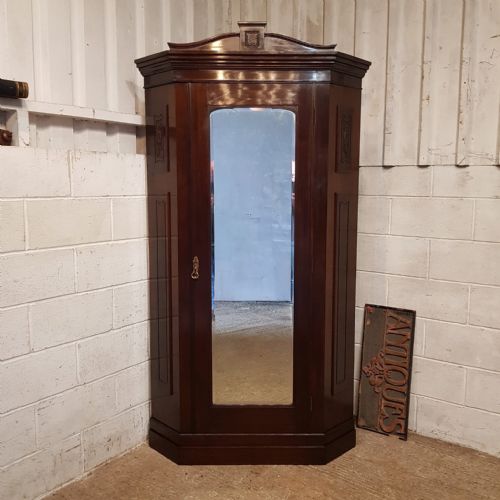
When you search for a vintage compact wardrobe, you are looking at scaled-down furniture designed to maximise storage without dominating a room. The selections here include tallboys, hall robes, and small fitted wardrobes originating from the Victorian, Edwardian, and Art Deco periods.
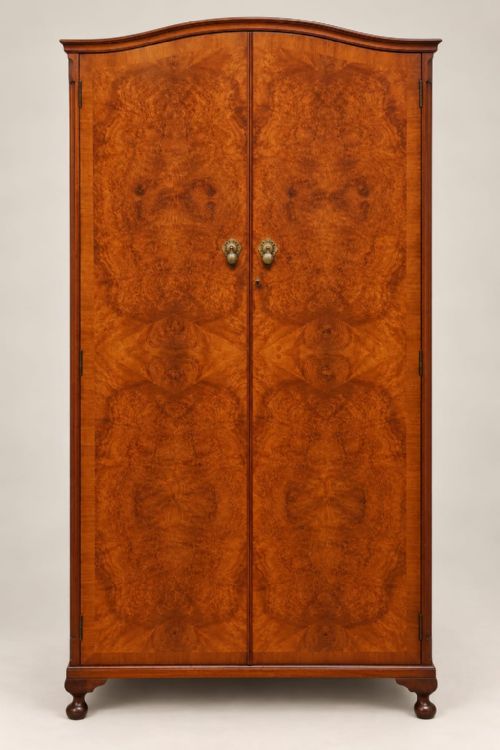
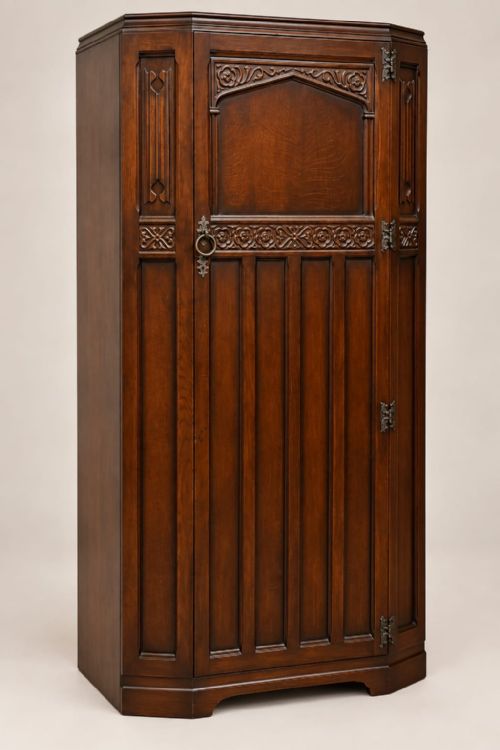
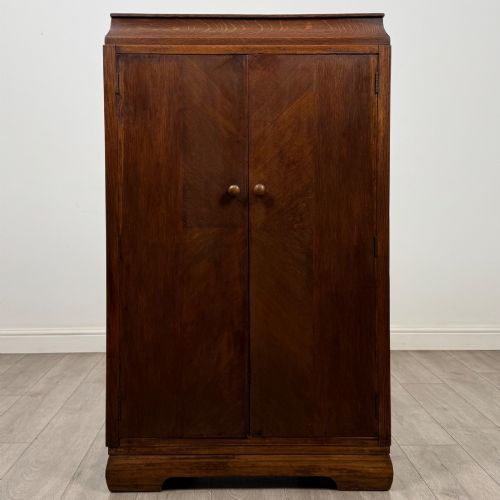
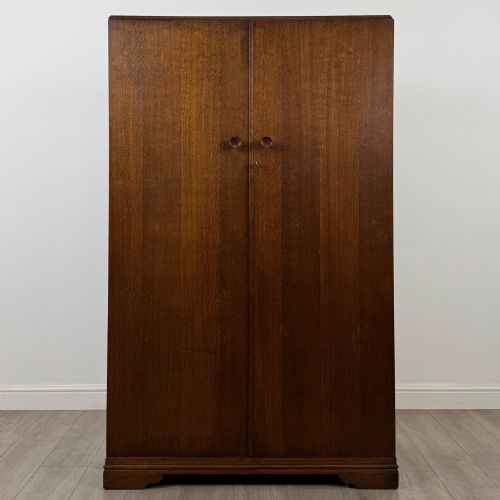
The versions you are most likely to meet on this page date from the nineteen-tens and nineteen-twenties, often taking the form of oak hall robes or burr walnut tallboys. These pieces balance vertical height with narrow footprints, accommodating modern bedroom layouts far better than standard multi-door wardrobes.
How they were made
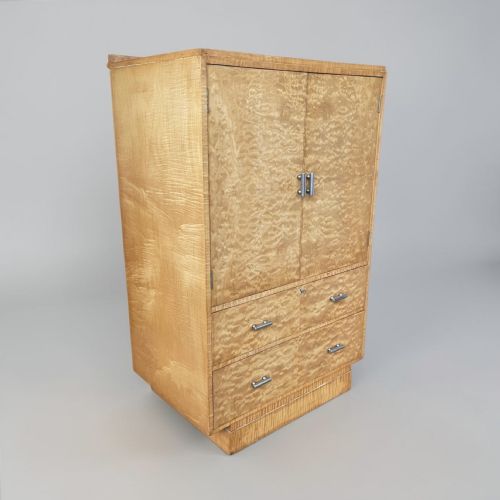
Cabinet makers utilised solid timbers and figured veneers, choosing mahogany, oak, and burr walnut for structural integrity and visual depth. Grain selection played a central role, particularly in Art Deco and Edwardian examples where burr walnut or satinwood surfaces formed the primary decorative feature.
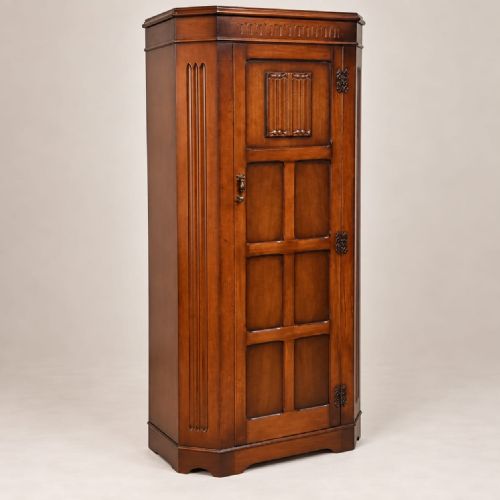
Hardware construction involved brass handles, hinges, and hanging rails fitted to interior compartments, whilelinen fold carving or paneling appeared on specific oak doors. Joinery methods relied on traditional tongue-and-groove and dovetail techniques to assemble tallboy drawers and wardrobe carcases.
Listings feature items from the Victorian, Edwardian, and Art Deco eras, constructed in oak, mahogany, and burr walnut.
What varies in quality
Quality rests upon the choice of timber and the precision of the cabinet work, distinguishing standard utility pieces from fine workshop productions. Uniformity of veneer matching across drawer fronts and door panels separates finer examples from simpler constructions.
Interior configuration also defines the standard of the piece, with fitted drawers, specialised hanging compartments, and original brass fittings indicating higher manufacturing ambition. The integration of period details, such as carved linen fold panels or satinwood construction by named makers, elevates the overall execution.
Waring & Gillow
The Vintage Compact Wardrobe Glossary
- Tallboy
- A tall piece of furniture combining a wardrobe cabinet with clothes drawers, built to provide maximum vertical storage.
- Hall robe
- A narrow wardrobe designed originally for entrance halls to hold coats and hats within a shallow depth.
- Linen press
- A cabinet originally intended for storing household linens, featuring sliding shelves or internal drawers enclosed by doors.
- Burr walnut
- A veneer sliced from the knotty growth of a walnut tree, prized for its swirling, highly figured grain patterns.
- Satinwood
- A durable, yellowish timber imported from tropical regions, used extensively for fine Edwardian cabinet work.
Vintage Compact Wardrobe: Frequently Asked Questions
What is a vintage compact wardrobe?
A vintage compact wardrobe is a space-saving clothing storage unit, often spanning tallboys, hall robes, and small double wardrobes from the late nineteenth to the early twentieth century.
These pieces combine hanging space with internal drawers or shelving, tailored for rooms where full-sized furniture would overwhelm the floor plan.
How do I date a compact wardrobe?
Dating relies on stylistic clues, timber choices, and construction methods characteristic of specific eras like the Edwardian period or the nineteen-thirties Art Deco movement.
Victorian and Edwardian pieces often feature rich mahogany or carved oak, whereas nineteen-twenties and thirties items frequently display burr walnut veneers and geometric lines.
Will a vintage wardrobe fit modern hangers?
Many vintage wardrobes feature shallower interior depths than modern units, meaning standard clothes hangers may need to hang at an angle or require narrower vintage-style hangers.
It is helpful to check the internal depth measurement of hall robes and small wardrobes before planning your daily storage.
How do I care for walnut and mahogany furniture?
Maintenance involves keeping the timber away from direct heat sources and strong sunlight to prevent the veneers from drying out or fading over time.
Applying a traditional beeswax polish occasionally helps nourish the polished wood surfaces and maintain the natural lustre of the grain.