



Vintage Coffee Jug
A vintage coffee jug brings immediate tactile warmth and period elegance to a table, whether cast in gleaming silver plate or shaped from rich porcelain.
Vintage Coffee Jug
When searching for a vintage coffee jug, buyers encounter everything from single serving vessels to complete multi-piece tea and coffee services. These items span periods from the Victorian era through the Edwardian years and into the mid-twentieth century.
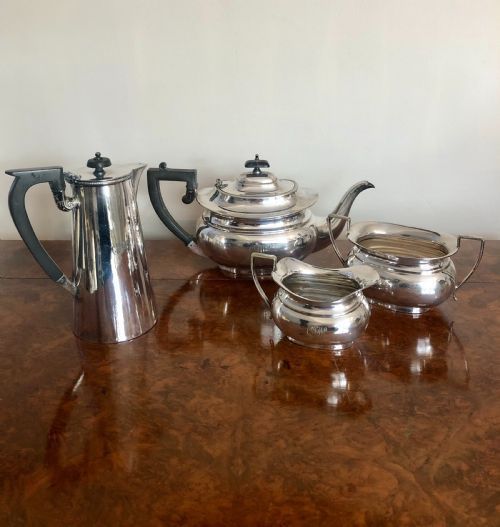
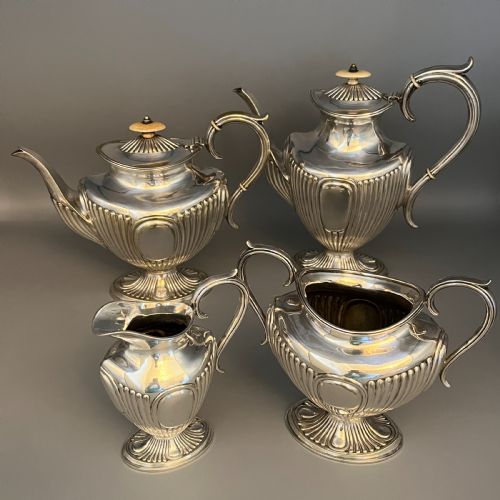
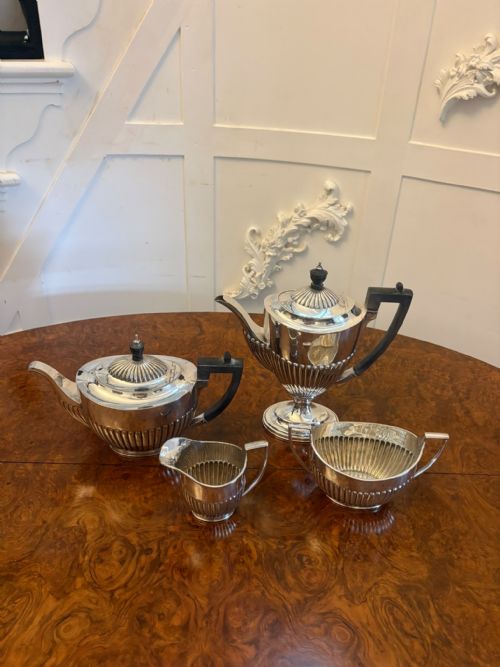
The versions most commonly met on this page are silver plated vessels from the Edwardian period and the late nineteenth century. Alongside these, occasional examples emerge in pewter, copper, sterling silver, and porcelain.
Forms vary considerably, appearing as standalone pots, side-handled vessels, or elements within larger breakfast collections and tea services. Their origins include English workshops, European potteries, and Middle Eastern metalware traditions.
Materials and construction methods
Makers shaped these vessels using traditional metalworking and ceramic techniques suited to each material. Silver plate and sterling silver items often display hand-engraved floral designs or applied crests.
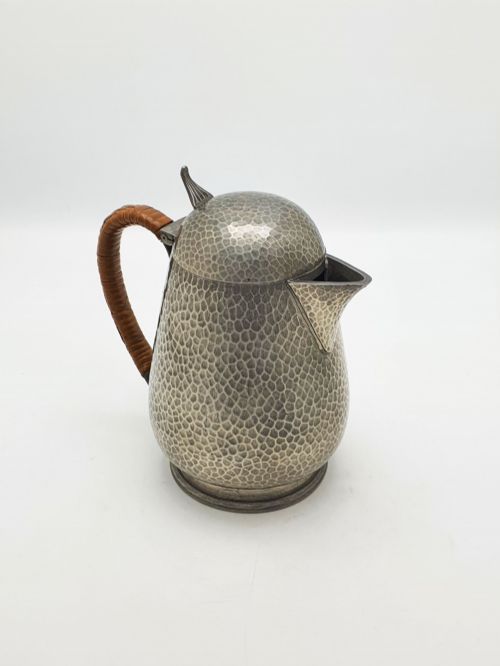
Pewter and copper pieces from the Arts and Crafts and Art Deco periods utilise distinctive elements such as woven cane handles and ebonised wood details. Porcelain examples rely on high-temperature firing and refined glazing to achieve their smooth surfaces.
Vintage Coffee Jug Retail Price Guide 2026
Typical asking prices for vintage coffee jug among the pieces listed under this phrase on Sellingantiques today, from the lower quarter to the upper quarter. They describe what is for sale here now, not the wider market.
Some Arts and Crafts coffee pots feature cane-wrapped handles designed to stay cool to the touch while pouring morning brew.
Distinguishing quality across pieces
The standard of a vintage coffee jug rests upon the crispness of its chasing, the weight of the metal, and the balance of the handle. Superior pieces demonstrate precise craftsmanship in their decorative motifs and secure attachment of spouts and handles.
Simpler production items exhibit less definition in engraved patterns and lighter gauge metal plating. The integration of contrasting materials, such as cane or ebony against polished metal, distinguishes finer artisan production from standard factory output.
Walker and Hall·Armada Pewter·Harrison Brothers and Howson·KPM·Royal Worcester·Birmingham Silversmiths Company
The Vintage Coffee Jug Glossary
- Silver Plate
- A base metal, such as copper or nickel silver, coated with a thin layer of pure silver. This technique provided the appearance of solid silver at a more accessible cost during the nineteenth and twentieth centuries.
- Pewter
- A malleable metal alloy consisting primarily of tin, combined with copper and antimony. It was widely utilised during the Arts and Crafts and Art Deco movements for its dull lustre and suitability for hammering.
- Old Sheffield Plated
- An early form of plating produced by fusing a sheet of silver to a copper ingot before rolling them together. This method creates a distinctive appearance where the underlying copper occasionally shows through with age.
- Ebonised Wood
- Timber treated with a chemical stain or finish to imitate true ebony. It frequently appears on handles and finials to provide a dark, contrasting grip against polished metal surfaces.
- Porcelain
- A ceramic material made by heating raw components, including clay in the form of kaolin, to high temperatures. It yields a dense, non-porous body prized for fine tableware and decorative coffee pots.
Vintage Coffee Jug: Frequently Asked Questions
How do I clean a silver plated coffee jug?
Wash the vessel gently in warm, soapy water using a soft cloth, avoiding abrasive pads that can wear away the thin silver layer. Dry thoroughly with a lint-free cloth to prevent water spots.
Use a specialist silver polish sparingly only when necessary, taking care around engraved details where residue can accumulate.
Can I use a vintage coffee jug for daily service?
Many metal and porcelain jugs remain structurally sound for everyday use, provided they are handled with care and washed by hand rather than placed in a dishwasher. Check interior linings and handles before regular use.
Silver plated and pewter vessels should be filled with warm water first if reheating or serving very hot liquids to avoid thermal shock to older joints.
How do I identify an Edwardian coffee jug?
Edwardian pieces, dating roughly from the start of the twentieth century, often show refined neoclassical influences or simpler proportions compared to ornate Victorian designs. Hallmarks and maker marks stamped on the base provide precise dating clues.
Look for hallmarks indicating specific silversmiths active during the Edwardian reign alongside the characteristic weight and finish of the period.
What is the difference between a tea set and a coffee set?
Coffee pots are typically taller and narrower than teapots, designed to keep brewed coffee hot and to accommodate grounds settling at the base. Tea services often include lower pots paired with wider basins and multiple cups.
Many listings combine tea and coffee items into unified four or five-piece sets sharing matching engraved motifs and handle designs.