
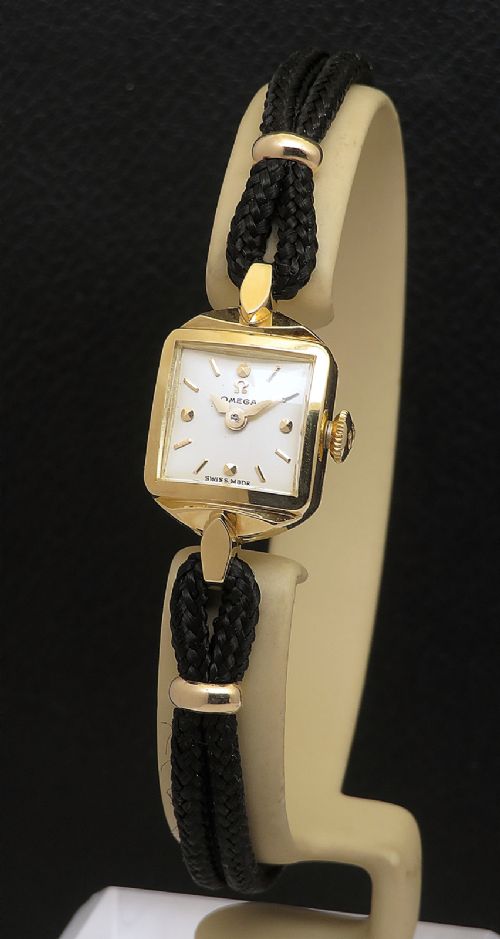
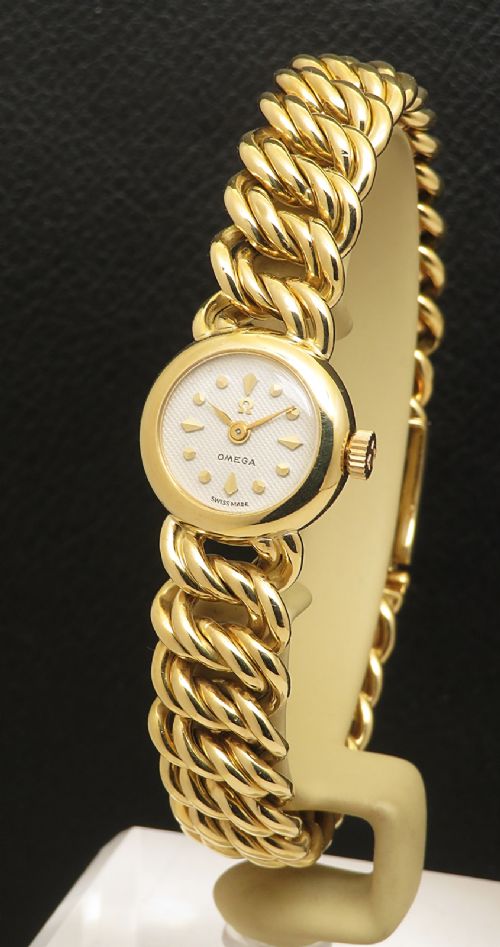
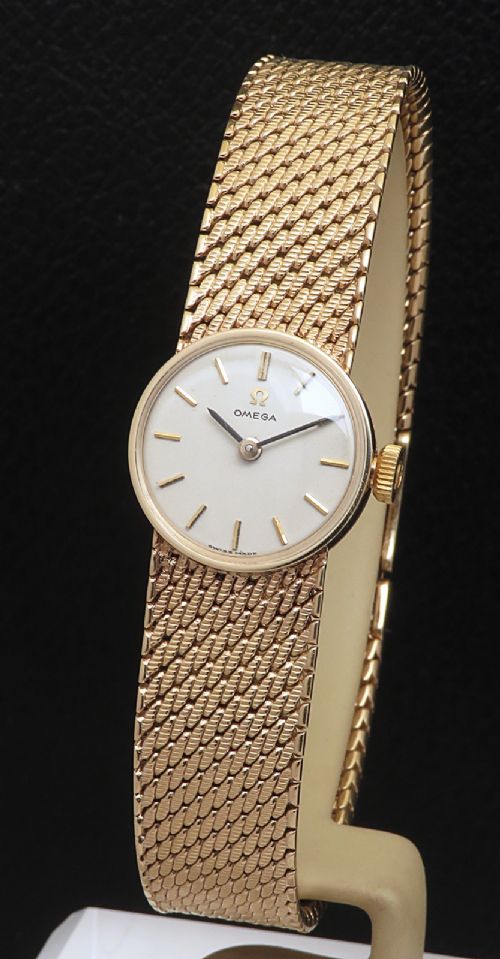

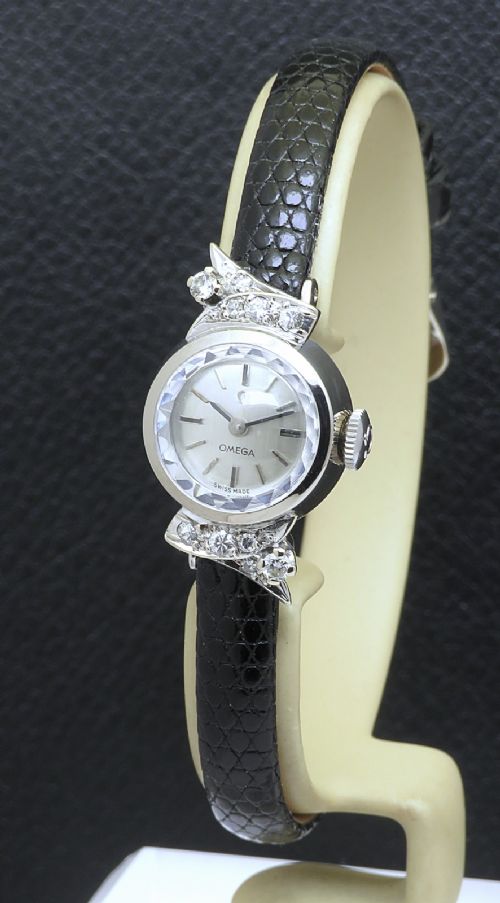

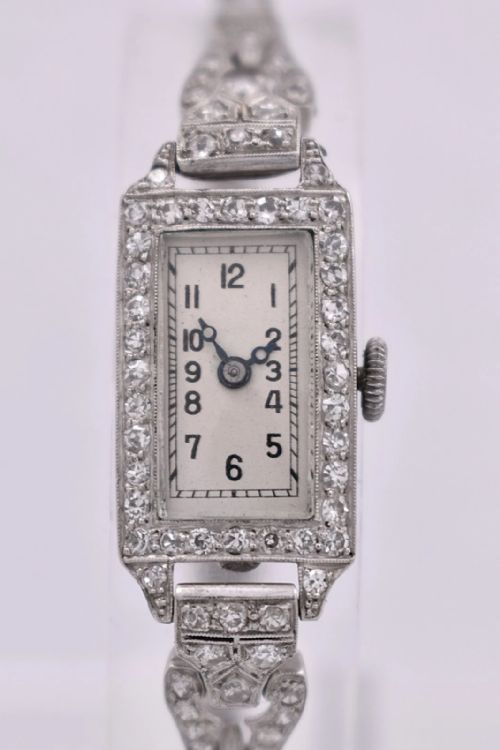


Vintage Cocktail Wristwatch
A vintage cocktail wristwatch brings a flash of period glamour to the wrist, blending fine jewellery with precise timekeeping.
Vintage Cocktail Wristwatch
When you search for a vintage cocktail wristwatch, you are looking at small, decorative timepieces designed primarily for evening wear during the twentieth century. These pieces function as delicate bracelets that happen to tell the time, often hiding the dial behind hinged covers or intricate gem-set motifs.
The versions you are most likely to meet on this page span several distinct decades, stretching from the geometric lines of the 1920s and 1930s into the cleaner, sculptural shapes of the 1950s and 1960s. They appear in forms ranging from simple gold bracelet watches to elaborate platinum creations heavily encrusted with diamonds.
Makers represented here include established watch houses and jewellers from Switzerland, America and Britain, producing wristwatches, watches, cocktail watches and manual wind wristwatches. The overarching style moves from rigid Art Deco symmetry towards varied mid-century expressions.
How they were made
The construction of these pieces relies heavily on precious metals such as platinum, 18ct white gold, 9ct gold and 14ct white gold, often paired with flexible mesh bracelets or fabric and leather straps. Metalsmiths worked these materials into slender, articulated links that wrap smoothly around the wrist.
Diamonds and glass feature prominently for embellishment and crystal faces, set using meticulous pavé, bezel or channel techniques to secure small stones within intricate metal geometry. Inside the cases, Swiss jewelled lever movements and manual wind mechanisms provide the mechanical heartbeat.
Many of these tiny dials were intentionally kept small so guests at a dinner party would not notice the wearer checking the time.
What varies in quality
The calibre of the internal movement largely dictates the standard of the piece, distinguishing mass-produced calibres from finely finished Swiss jewelled movements designed for high-end jewellers. Superior examples maintain precise mechanical integrity alongside robust case construction.
The weight and purity of the precious metal housing, combined with the matching quality and carat weight of the diamond setting, separate standard items from exceptional luxury works. Original boxes and documentation further elevate the standing of a piece.
Omega·Rolex Tudor·Bucherer·Asprey·Elgin·Vertex·Movado·Tissot·Longines·Bulova·Benrus
The Vintage Cocktail Wristwatch Glossary
- Art Deco
- A design style prevalent in the 1920s and 1930s characterised by geometric symmetry, clean lines and stylised motifs. It heavily influences the architecture of early cocktail watches.
- Jewelled lever
- An escapement mechanism utilising synthetic rubies or garnets to reduce friction in the gear train. This improves the accuracy and longevity of the wristwatch.
- Manual wind
- A mechanical movement requiring the wearer to manually turn the crown to tension the mainspring. Most vintage pieces rely on this system rather than automatic winding.
- Mesh bracelet
- A flexible strap woven from fine metal wire, offering a fluid drape against the skin. It is frequently found on mid-century white gold designs.
- Pavé
- A setting technique where small gemstones are closely set together with minimal visible metal. This creates a continuous surface of glittering diamond.
Vintage Cocktail Wristwatch: Frequently Asked Questions
How do I wind a manual wind cocktail watch?
Gently turn the crown between your thumb and forefinger clockwise until you feel slight resistance. Stop immediately to avoid overwinding and damaging the internal mainspring.
Set the time by continuing to turn the crown in the appropriate direction before tucking it back against the case.
How can I tell an Art Deco piece from a mid-century piece?
Art Deco watches from the 1920s and 1930s typically feature sharp geometric angles, stepped cases and strong symmetrical patterns. Platinum and diamond combinations dominate this era.
Mid-century examples from the 1950s and 1960s lean towards softer organic contours, integrated mesh bracelets and minimalist dials influenced by modern design trends.
What is the difference between white gold and platinum?
Platinum is a naturally white, dense and durable precious metal that maintains its colour without plating. It provides heavy structural security for intricate diamond settings.
White gold is an alloy of yellow gold mixed with white metals like palladium or nickel, offering a bright silvery appearance with a slightly lighter weight on the wrist.