

Vintage Coat Rack
A vintage coat rack brings practical entrance storage into a room, offering sturdy wall-mounted hooks or freestanding umbrella stands from past centuries.
Vintage Coat Rack
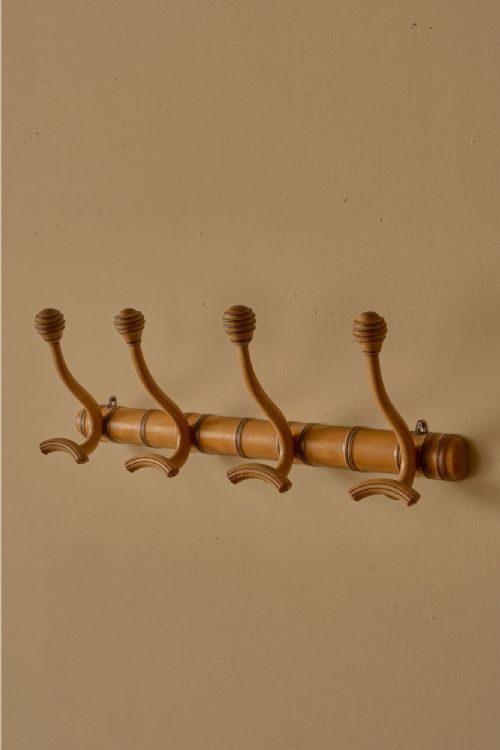
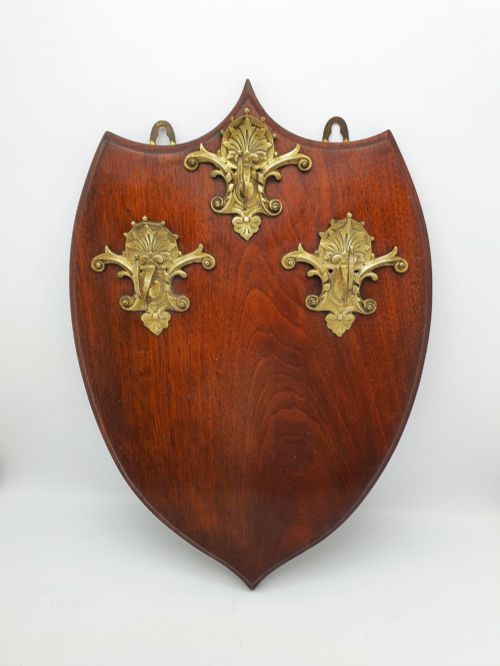
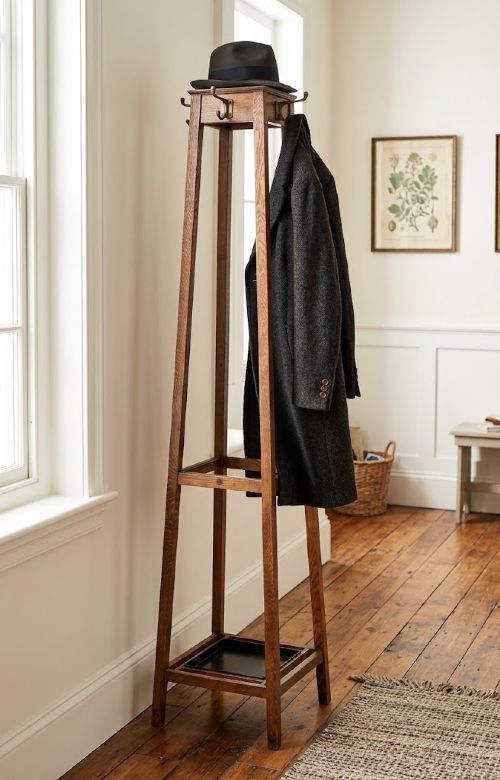
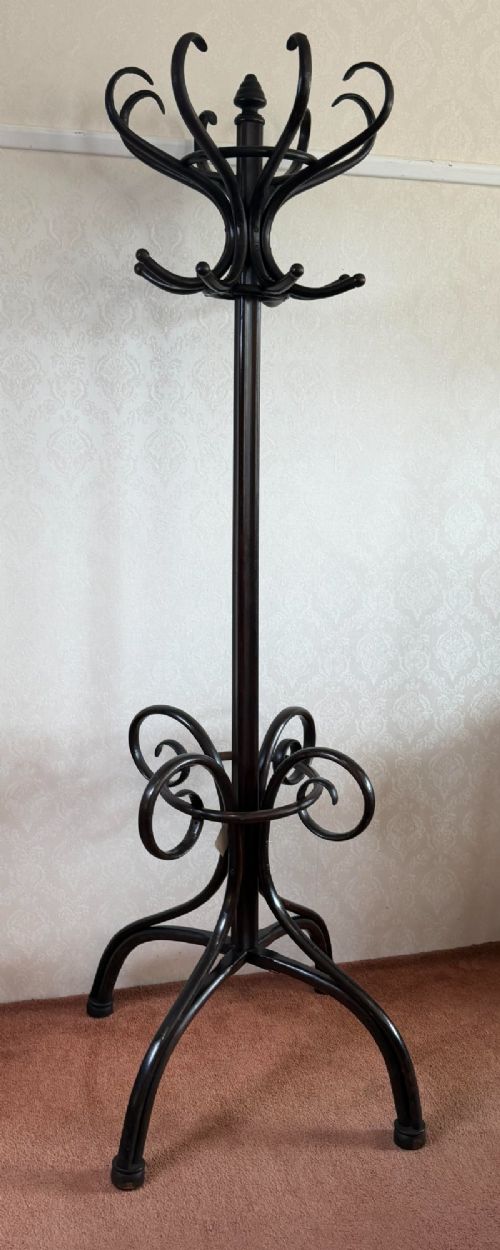
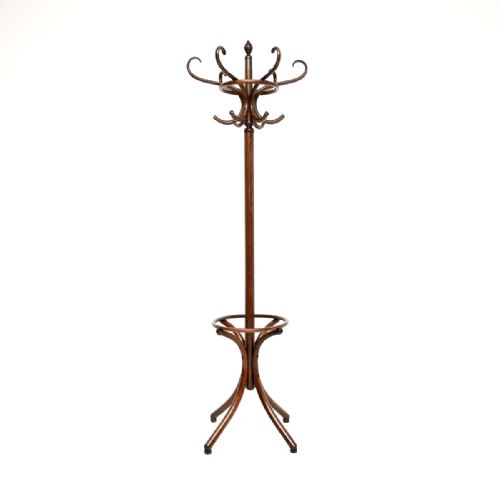
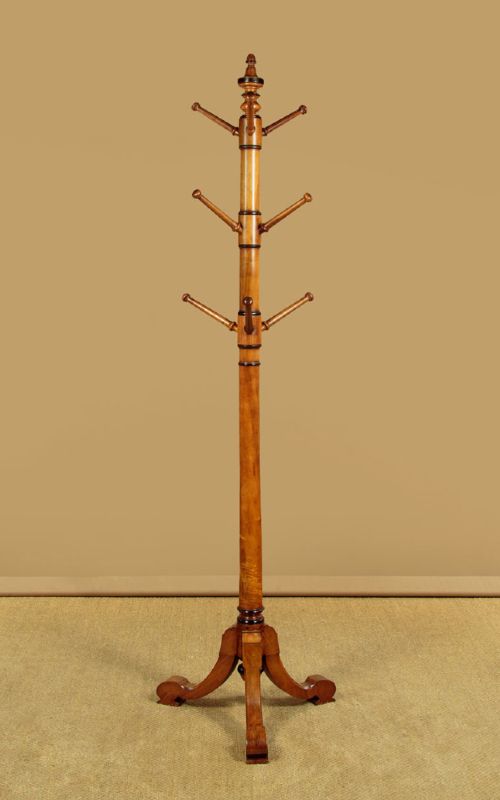
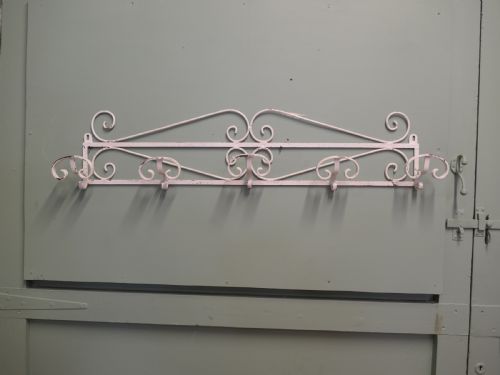
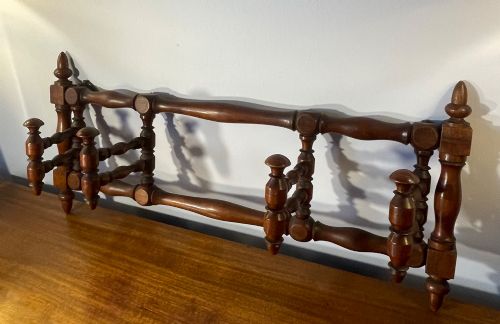
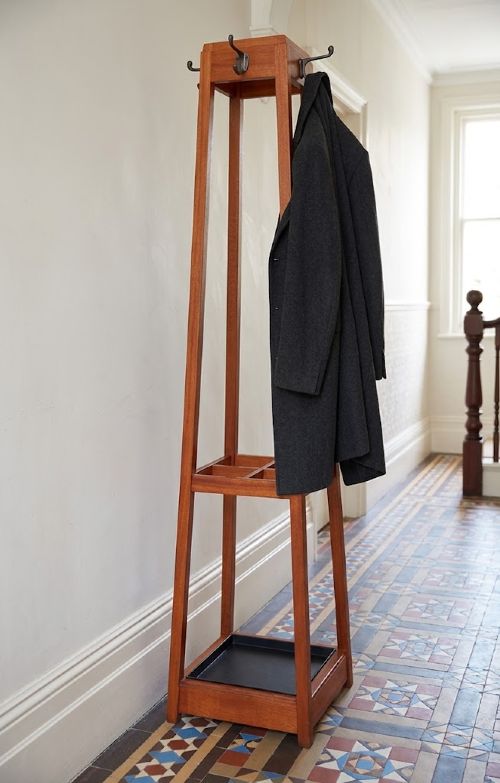
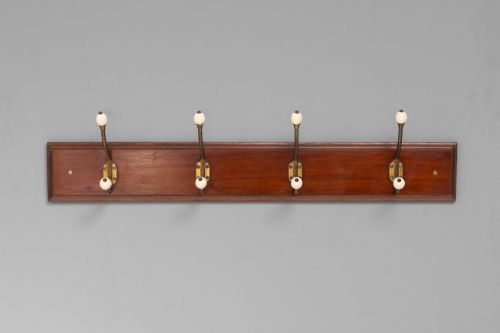
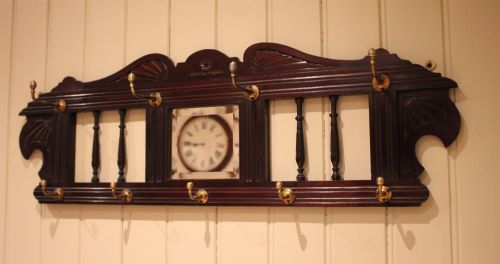
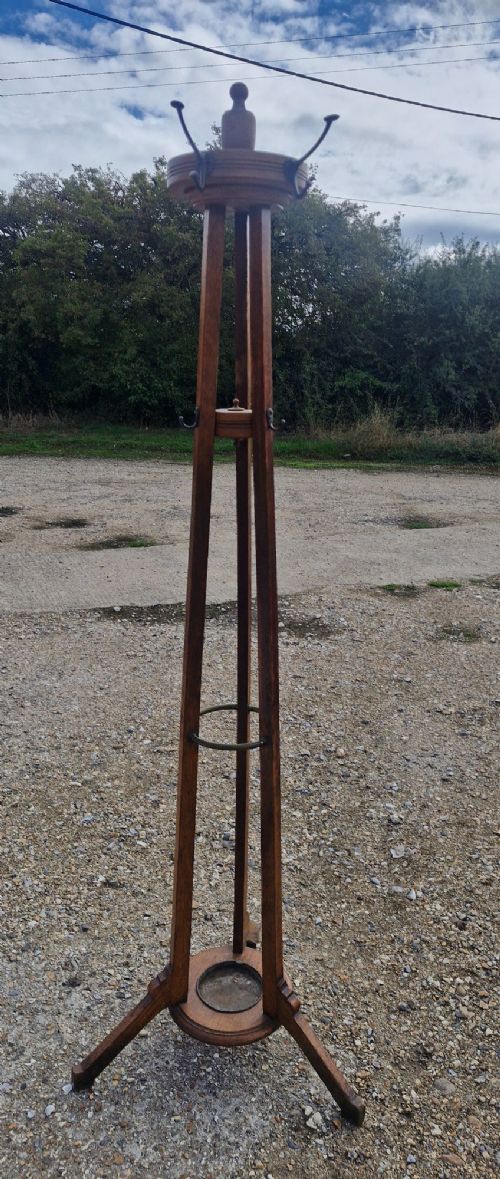
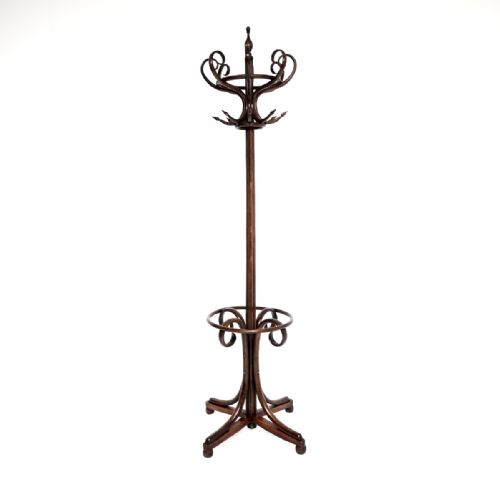
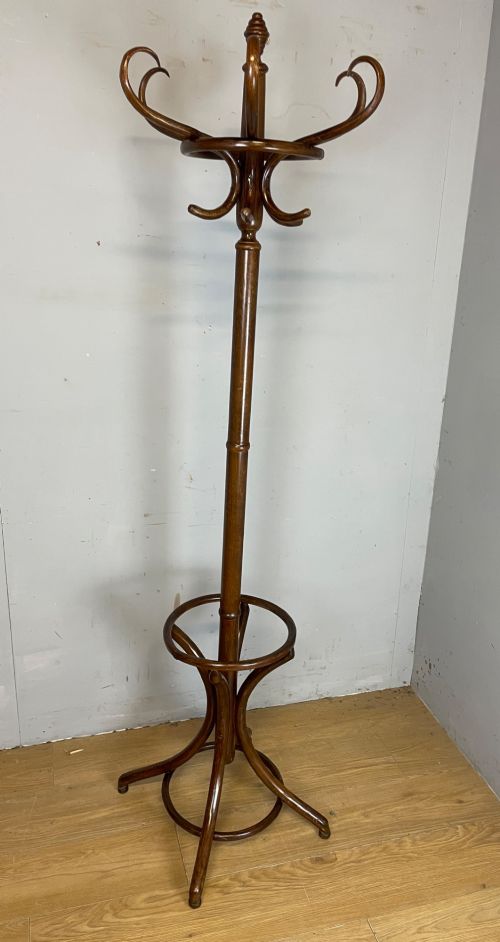
A vintage coat rack encompasses wall-mounted boards with brass or ceramic hooks, freestanding bentwood hall trees, and multi-functional hall stands with umbrella holders. These pieces originate from Victorian, Edwardian, and later twentieth-century domestic spaces.
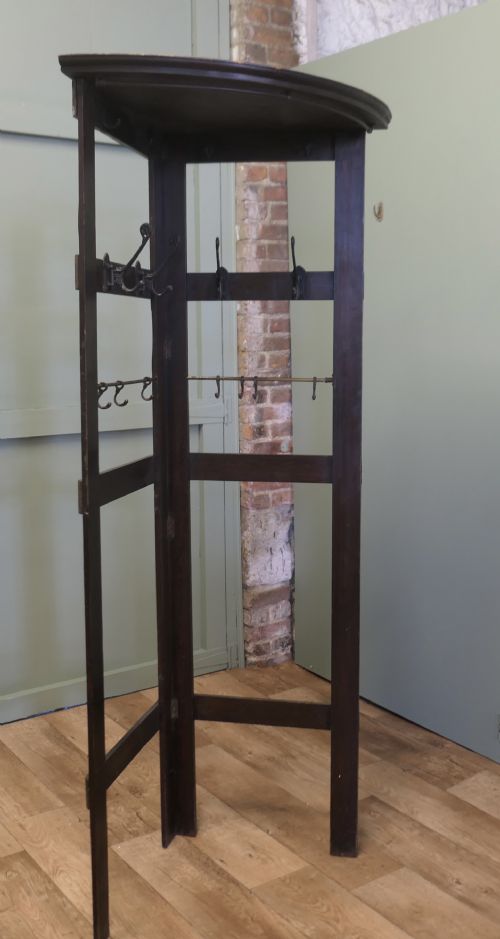
The most common formats found here are wall-mounted boards fitted with brass and ceramic hooks, alongside beech bentwood stands designed for hats and coats. Larger hall stands incorporating drip trays and mirror panels also appear regularly from the Victorian and Edwardian periods.
Materials and Construction
Cabinetmakers utilised solid oak, mahogany, pine, and beech, frequently pairing timber backboards with cast brass, iron, or ceramic hooks. Bentwood pieces rely on steam-bent beech construction to create curved profiles for hat and coat stands.
Freestanding hall stands often integrate functional elements such as metal drip trays, umbrella rings, and mounted horse bust or stags horn details. Wall-mounted variants combine polished hardwoods with durable metal fixtures designed to bear heavy garments.
Listings span from the early eighteenth century through the mid-twentieth century, featuring oak, mahogany, brass, and cast iron.
Evaluating Construction and Materials
Quality rests in the integrity of the timber joints, the weight of the cast brass or iron hooks, and the preservation of original surfaces. Solid oak and mahogany backboards show superior joinery compared to lighter pine alternatives.
Bentwood examples distinguish themselves through the smoothness of the steam-bent curves and the stability of the central column. Original components, including ceramic hook inserts and metal drip trays, elevate the integrity of a piece.
Thonet·J. Parker of Woodstock
The Vintage Coat Rack Glossary
- Bentwood
- Wood shaped by exposure to steam, allowing manufacturers to create curved structural forms for coat stands. This technique gained widespread popularity in the nineteenth century.
- Hall Stand
- A large freestanding piece of entrance furniture incorporating coat hooks, a mirror, and umbrella storage with a drip tray. These items often feature integrated seats.
- Valet
- A specialised stand designed for hanging a suit, jacket, and accessories. These pieces typically appear in beech or chrome from the early twentieth century.
- Faux Bamboo
- A decorative finish carved or moulded into timber or cast iron to imitate natural bamboo stalks. This style frequently appears on French hall pieces.
Vintage Coat Rack: Frequently Asked Questions
What is a bentwood coat stand?
A bentwood coat stand is a freestanding piece created using steam-heated beech wood bent into graceful, curved shapes.
These lightweight yet sturdy structures usually feature branching arms at the top for hats and coats.
How do I install a wall-mounted rack?
Wall-mounted racks fix directly to a wall through pre-drilled screw holes or heavy-duty brackets on the timber backboard.
Ensure the fixings anchor securely into wall studs to support heavy winter garments.
Where were hall stands used?
Hall stands stood in the entranceways and hallways of period homes to receive outerwear upon entering the house.
They kept coats, hats, and umbrellas organised while offering a place to check appearance in an integrated mirror.
What materials are common in these pieces?
Common materials include solid hardwoods like oak, mahogany, and beech, alongside cast iron, brass, and ceramic.
Some examples also incorporate unusual elements such as stags horn or faux bamboo finishes.