




Vintage Coastal View Art
Vintage coastal view art brings the salt air, harbours and open horizons of the nineteenth and twentieth centuries directly onto the wall.
Vintage Coastal View Art
Vintage coastal view art encompasses paintings, watercolours, engravings and fine art prints depicting shores, docks, cliffs and marine landscapes. When searching this phrase, a buyer encounters works spanning the Edwardian era, the Victorian period, and the mid-twentieth century.
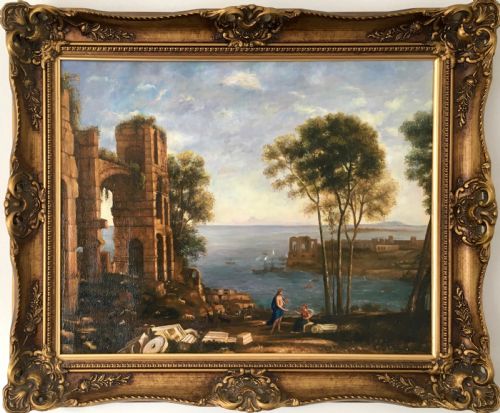
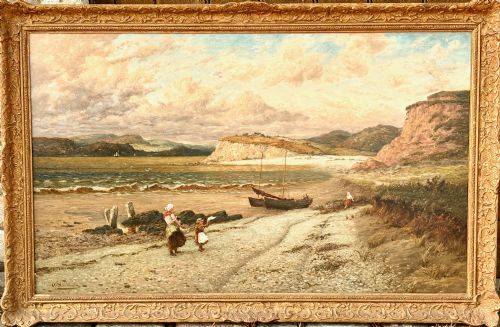
The selections available here lean heavily toward British and European coastal subjects, including scenes from Yorkshire fishing ports, Scottish harbours, and Mediterranean shores. These range from intimate watercolours on paper to large oil paintings on canvas framed in wood.
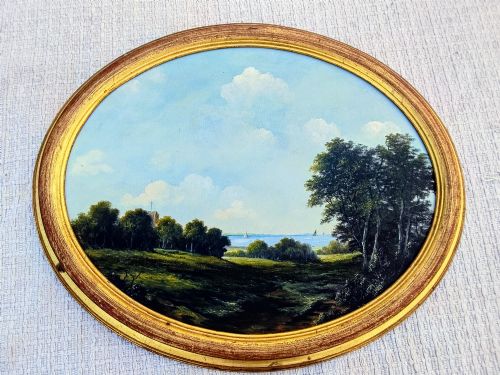
Works originate from various stylistic movements, incorporating impressionist treatments of light alongside traditional topographical views. Buyers find both oval formats and standard rectangular presentations among these maritime scenes.
Materials and Techniques
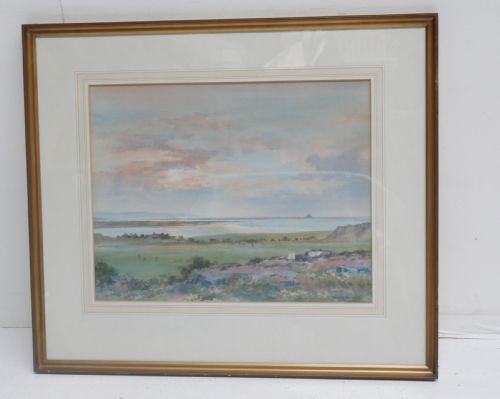
Artists producing these marine scenes relied primarily on oil paint applied to canvas or wood board, and watercolour pigments worked onto paper. Oil paint allowed rich layering to capture the shifting tones of sea and sky, whilst watercolour offered swift, translucent washes suited to shifting light.
Supports varied from stretched canvas and heavy watercolour paper to panel boards and occasional glass elements in framed pieces. Traditional wooden framing preserved these works, frequently accompanied by protective glazing on watercolours and paper works.
Listings feature works in oil paint, watercolour, gouache, and woodblock print across canvas, paper, and wood.
Assessing Artistic Merit
Quality in these coastal works rests upon the artist's handling of atmospheric light, shadow, and spatial depth rather than the mere subject matter. Stronger pieces demonstrate confident brushwork and a convincing sense of place, whether capturing a bustling dockyard or a quiet cove.
Condition plays a role in overall distinction, particularly the preservation of pigment vibrancy in watercolours and the stability of the paint layer on older canvases. Works that retain their original character without heavy restoration tend to command greater attention from collectors.
Clifford Hanney·George F Pennington·Alfred George Morgan·Gyrth Russell·William J B Jenkins·William Tuck·William Raymond Dommersen·Frank Wood·Frederick William Booty·Harry Pennell·Alfred Henry Vickers·Albert Robert Quinton·James Torrington Bell·Owen Bowen·S J Lamorna Birch·Daniel Sherrin·Johan Jens Neumann·Augustus William Enness·Alastair Flatterly·Rowland Henry Hill·R J S Bertram
The Vintage Coastal View Art Glossary
- Topographical
- Depicting a specific, recognisable place accurately. Such works serve as historical records of coastal towns and harbours.
- Gouache
- An opaque watercolour paint that dries to a matte finish. Artists used it to add solid highlights and rich areas of colour to paper works.
- Impressionism
- A style focusing on the visual impression of the moment, particularly shifting light and colour. Many mid-century coastal works adopt this loose approach.
- Woodblock print
- A technique where an image is carved into wood, inked, and transferred to paper. These prints often accompany early twentieth-century watercolours.
Vintage Coastal View Art: Frequently Asked Questions
What periods do these coastal paintings cover?
The works span from the nineteenth century through the Edwardian era and into the mid-twentieth century. This includes pieces created during the 1920s, 1930s, and 1950s.
Later works often reflect mid-century impressionist styles, whilst earlier examples lean towards traditional marine and topographical recording.
Where were most of these scenes painted?
Subjects focus heavily on British locations such as Whitby, Scarborough, and various Cornish harbours. European destinations including France, Italy, and the Mediterranean also feature prominently.
Artists frequently recorded working fishing ports, golf courses near the sea, and quiet coastal bays.
How should I hang and protect watercolour coastal art?
Watercolours on paper require protection from direct sunlight to prevent fading of the pigments. Framing behind glass with acid-free mounts keeps the paper stable and safe from atmospheric moisture.
Positioning them away from direct heat sources ensures the paper and wooden frames remain in good condition over time.
How do oil paintings on board differ from canvas works?
Oil paint applied to wood board offers a rigid support that resists the sagging sometimes seen in old canvases. These board paintings often have a direct, robust quality well suited to spirited coastal studies.
Canvases provide a traditional textured surface that absorbs paint flexibly, allowing for layered atmospheric effects in marine scenes.