
Vintage Cluster Setting
A vintage cluster setting brings together a central stone encircled by smaller gems, offering a striking concentration of sparkle on the finger.
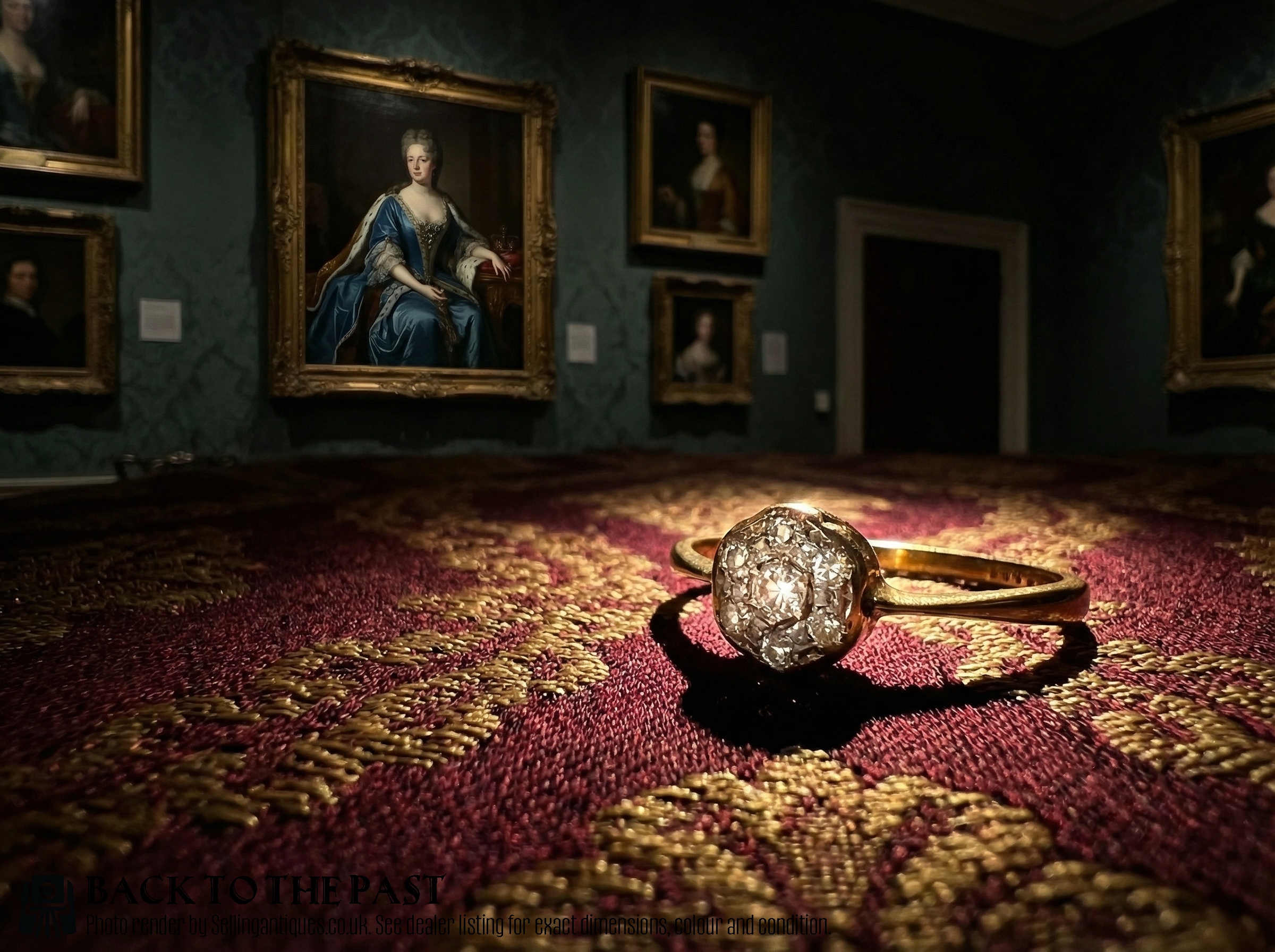
Vintage Cluster Setting
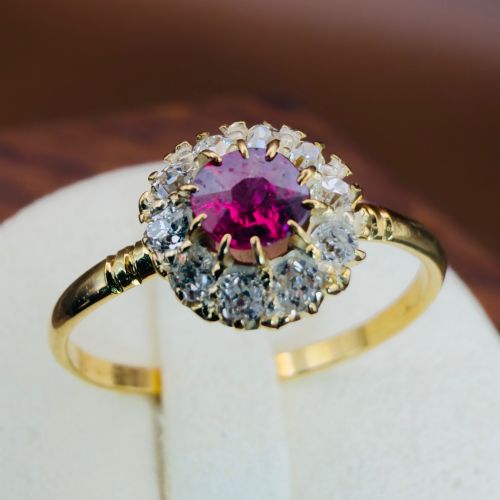
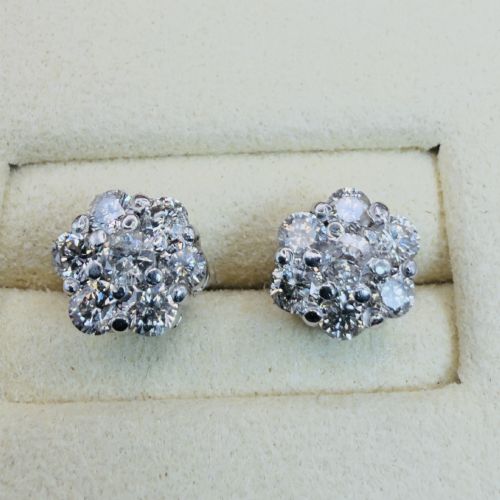
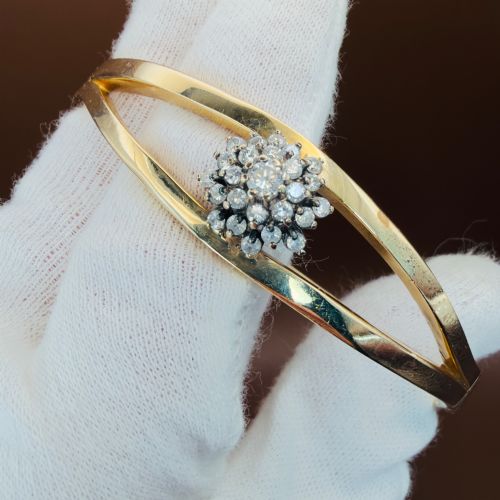
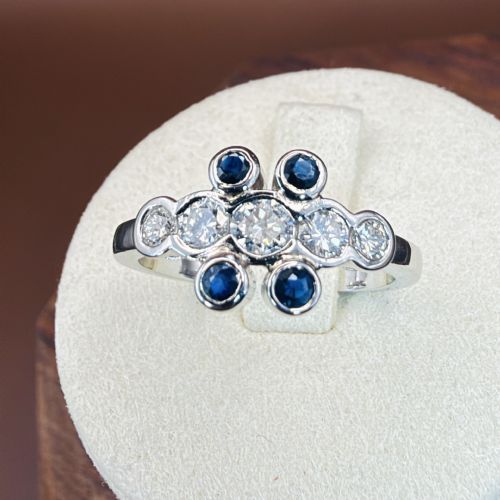
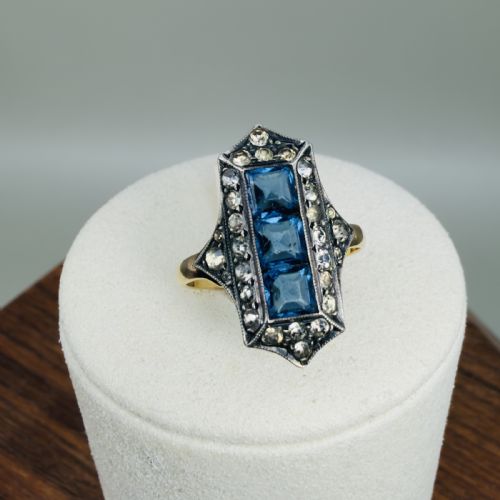
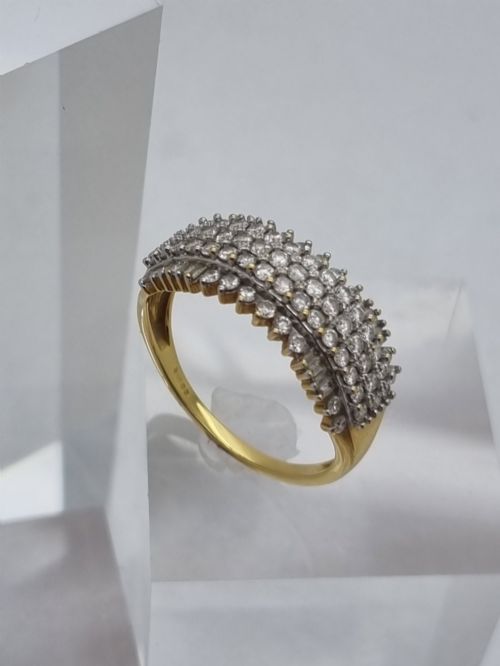
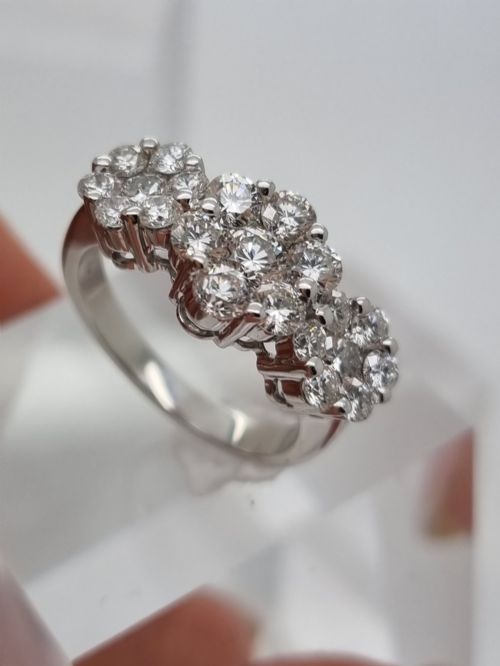
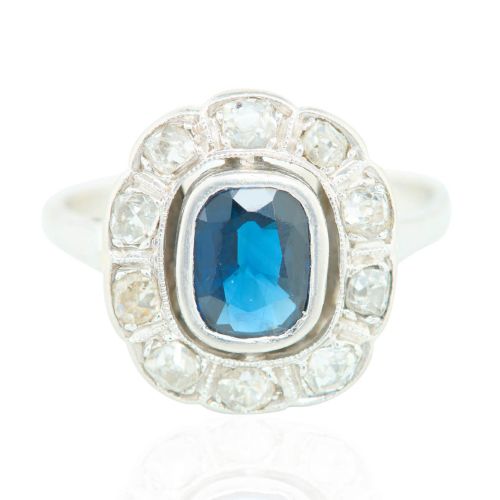
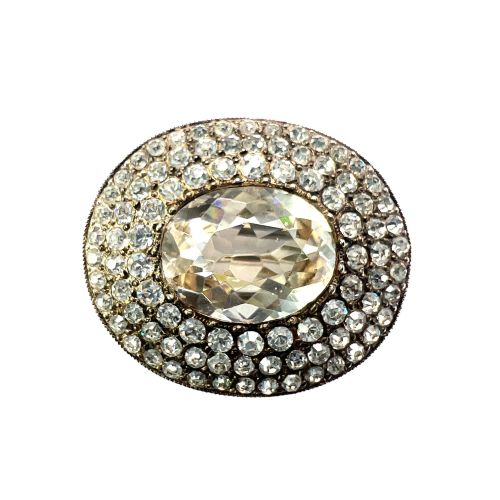
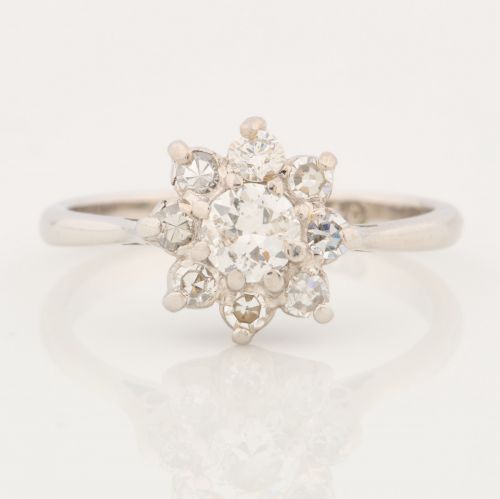
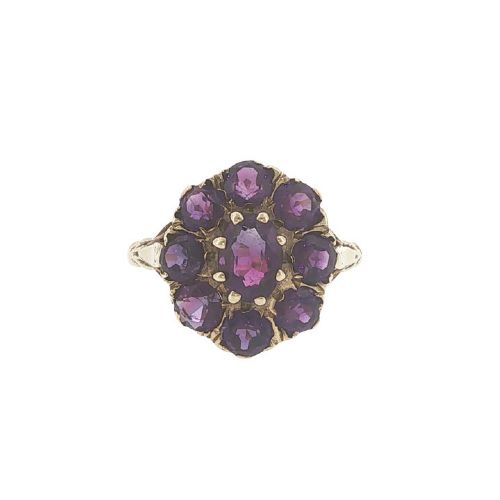
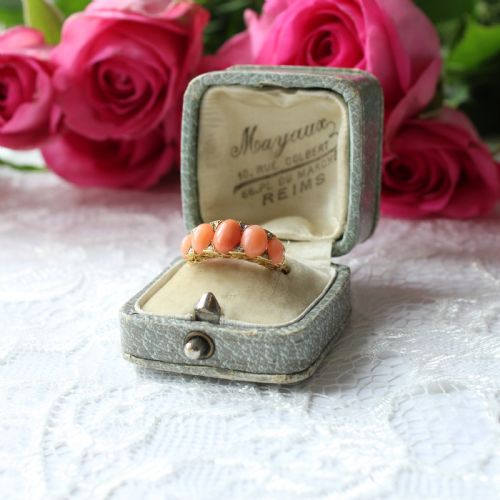
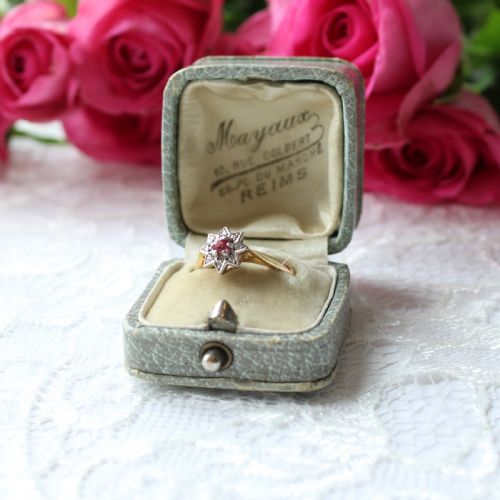
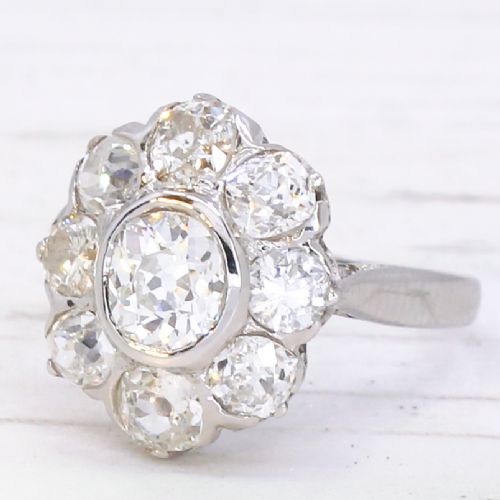
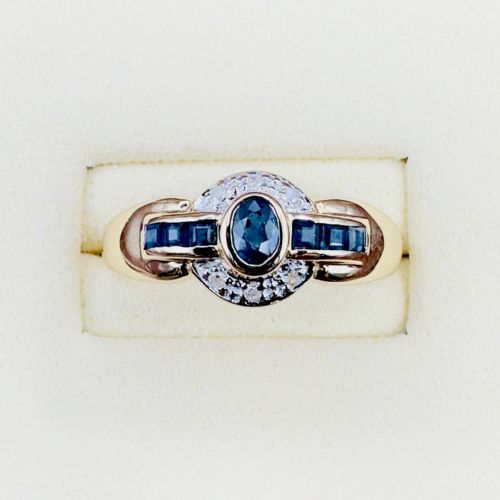
A vintage cluster setting groups multiple stones together to create a prominent floral or geometric face, which is the defining characteristic of these pieces. Rings dominate the selection, appearing alongside earrings, brooches, and bangles from periods spanning the Victorian era through the mid-twentieth century.
The layout typically places a diamond, sapphire, ruby, emerald, or pearl at the focal point, surrounded by a border of smaller diamonds or contrasting gems. Pieces originating from the Art Deco period and the 1950s frequently showcase these arrangements in varied geometric and daisy formations.
How they were made
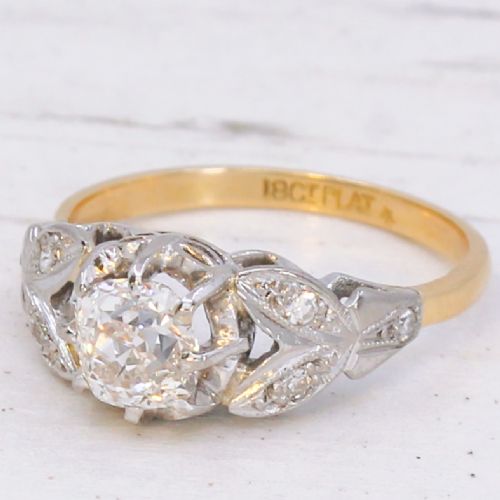
Craftsmen utilised yellow gold, white gold, and platinum as foundational metals, frequently combining 18ct gold with platinum settings to secure precious stones safely. Early twentieth-century workshops employed durable claw settings and detailed millegrain edging to define the perimeters of individual stones within the cluster.
Stones are cut in traditional Old European or brilliant styles alongside princess, oval, and rose cuts, depending on the manufacturing period. Silver and paste stones also appear in selected brooches and dress rings, reflecting period alternatives to precious gems.
The inventory spans the Victorian period, Edwardian era, 1920s, 1930s, 1940s, and 1950s.
What varies in quality
The fineness of the stone matching and the precision of the cluster geometry separate standard examples from exceptional items. Balance in the surrounding border stones and the proportional relationship between the central gem and the outer frame dictate the visual harmony of the piece.
The weight and gauge of the metal shank or mount also differ across periods, with heavier gold and platinum constructions offering greater structural substance. Setting techniques that maintain tight, even spacing without excess metal contribute significantly to the overall refinement.
Christian Dior·Mikimoto
The Vintage Cluster Setting Glossary
- Cluster setting
- An arrangement where a central gemstone is surrounded by a closely spaced border of smaller stones. This design maximises the visual impact and perceived size of the jewellery.
- Millegrain
- A decorative technique featuring a row of tiny raised metal beads along the edges of a setting. It was particularly popular during the Edwardian and Art Deco periods to soften metal outlines.
- Old cut
- A vintage diamond cutting style characterised by a small table, high crown, and large culet facet. These stones produce a distinctive pattern of light return compared to modern brilliant cuts.
- Parure
- A matched set of jewellery designed to be worn together, typically including a necklace, earrings, and a brooch. Pieces share identical decorative motifs and gemstone combinations.
- Paste
- Hand-cut glass used as a gemstone substitute in historical jewellery. High-quality paste stones are foil-backed and securely set in silver or gold mounts.
Vintage Cluster Setting: Frequently Asked Questions
How do I date a vintage cluster?
Dating relies on metal combinations, stone cuts, and manufacturing techniques visible in the mount. Platinum tops on yellow gold backs often point to the Edwardian era.
Geometric lines and calibré-cut stones suggest the 1920s and 1930s, while heavier cast gold mounts frequently indicate mid-century production.
Are these rings suitable for daily wear?
Many cluster pieces are robust enough for everyday use, particularly those set in platinum or 18ct gold. Consideration should be given to lower-set profiles for active daily routines.
Regular checks on the claws holding the outer stones help maintain the security of the cluster.
What stones are used in clusters?
Diamonds are the most frequent primary stone, paired often with sapphires, rubies, and emeralds. Pearls and amethyst also appear in specific Victorian and mid-century examples.
Surrounding stones are typically smaller diamonds or contrasting coloured gems that accentuate the central focus.