
Vintage Cluster Engagement Ring
A vintage cluster engagement ring groups central gemstones within a border of smaller stones, offering distinct character and notable finger coverage.
Vintage Cluster Engagement Ring
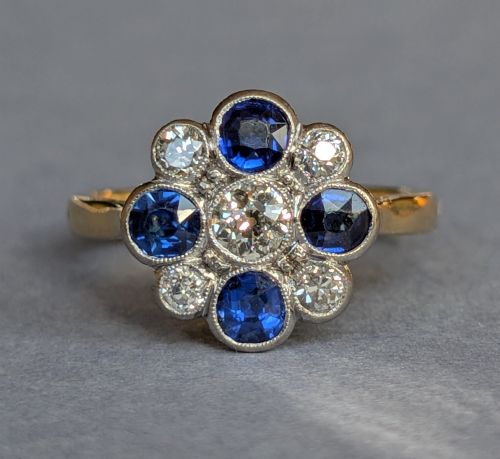
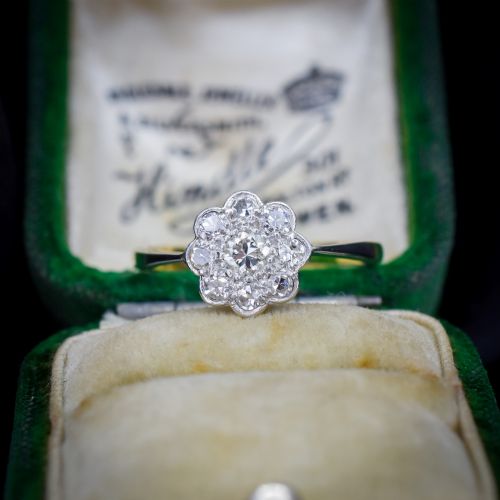
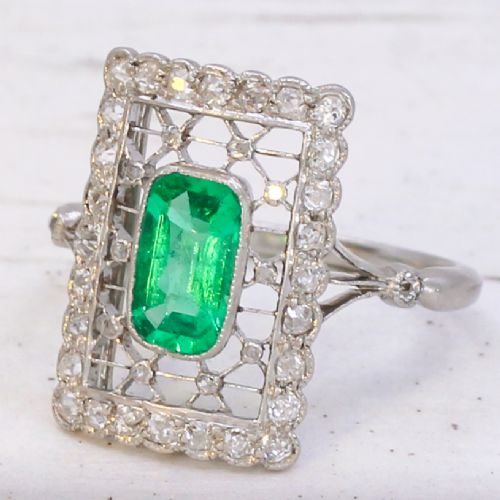
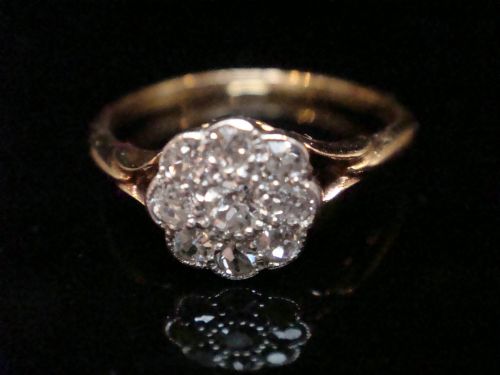
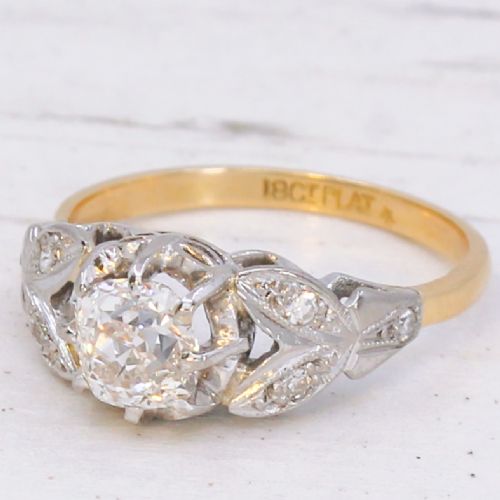
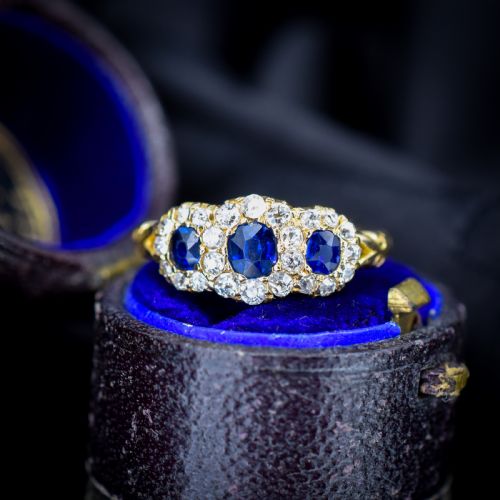
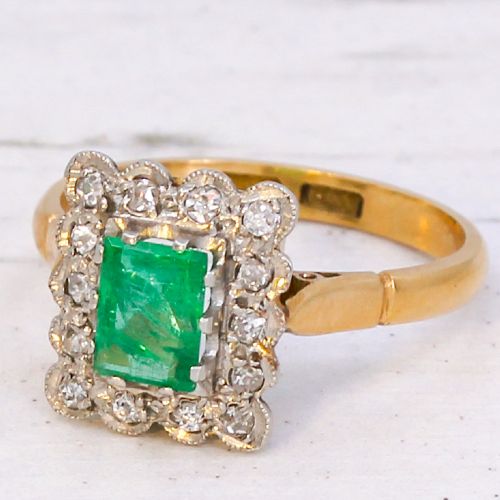
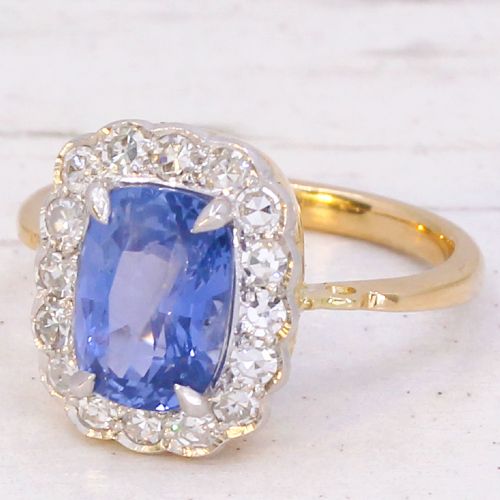
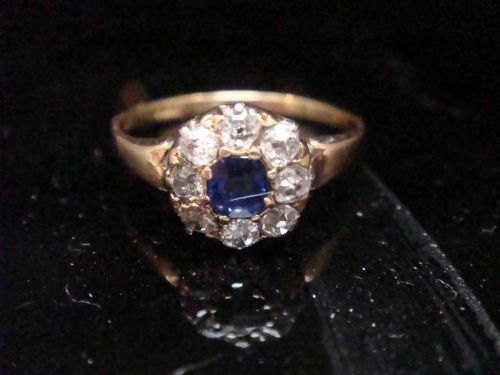
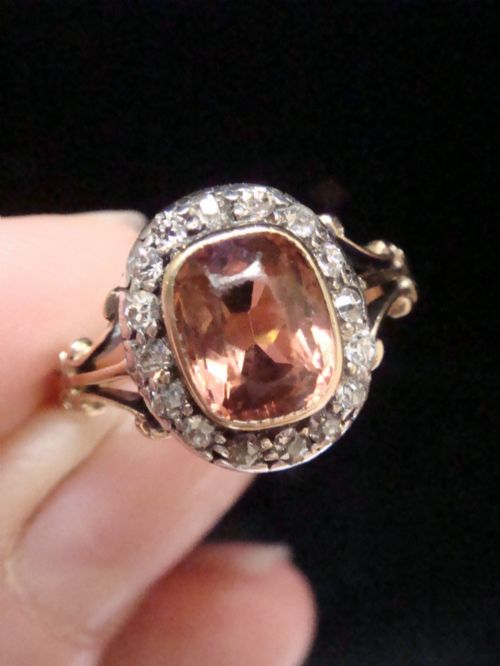
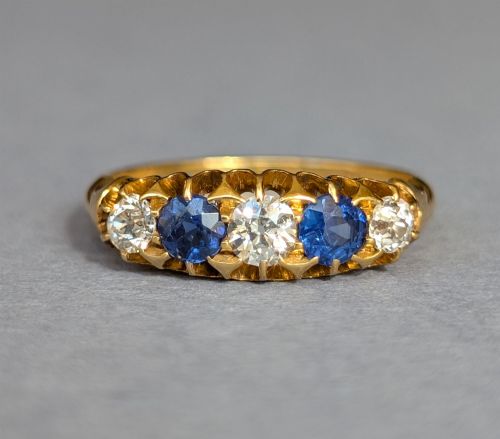
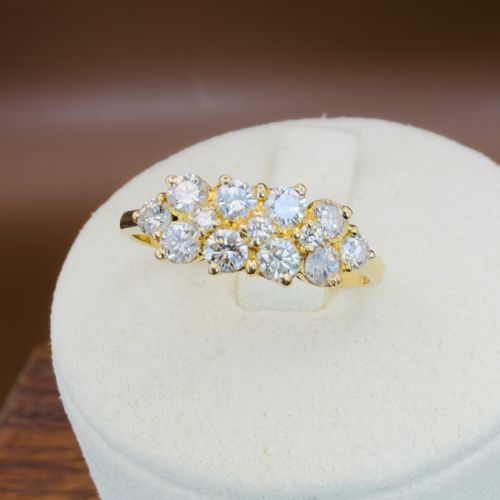
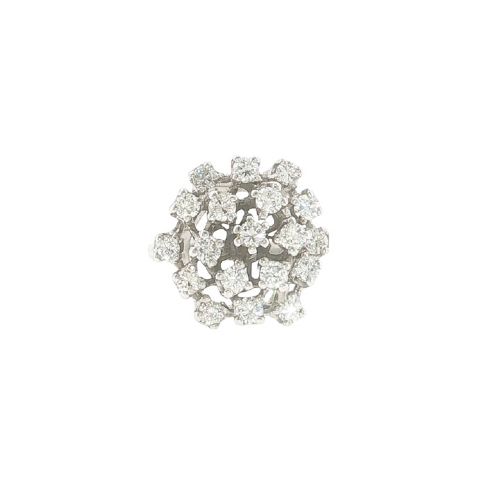
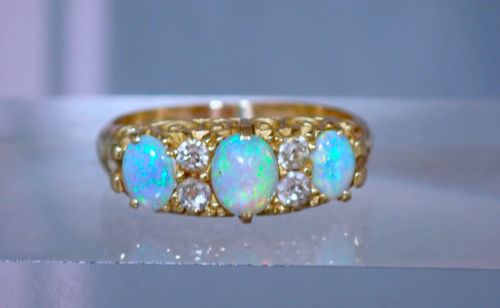
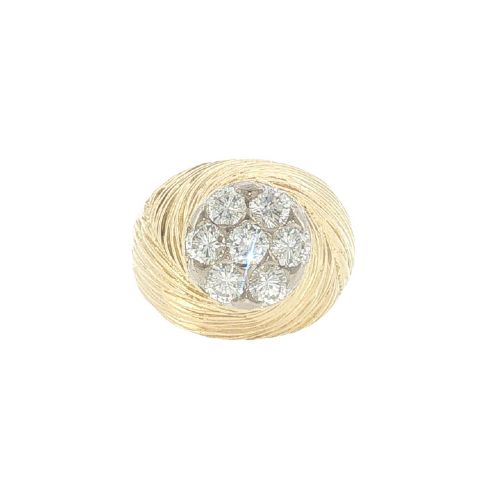
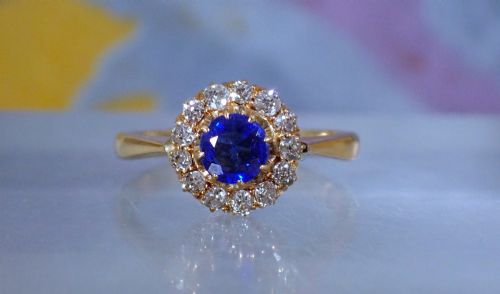
A vintage cluster engagement ring centres on a principal diamond, sapphire, emerald, ruby, opal, tourmaline, aquamarine or pearl surrounded by a tight halo of smaller stones. These pieces span periods from the Victorian era and Edwardian times through Art Deco and Mid-Century decades up to the 1970s and later. Buyers encounter floral daisy formations, navette silhouettes, and geometric double oval configurations.
The aesthetic relies heavily on historical character, drawing on traditional fine jewellery styles such as Art Deco Revival and Victorian cluster motifs. Rings utilise configurations where central coloured stones contrast sharply against bright borders of white diamonds. Forms range from compact circular clusters to elongated navette designs that sit flat along the finger.
How they were made
Goldsmiths constructed these rings primarily using 18ct yellow gold, 18ct white gold, and platinum, frequently combining yellow gold shanks with platinum settings to enhance the brilliance of white stones. Stones were secured using traditional claw settings, millegrain borders, and precise flush mounting techniques typical of early twentieth-century workshops.
Gemstones such as old cut diamonds, cushion cut sapphires, and step cut emeralds were hand-selected to fit symmetrical cluster arrangements. Metalwork often integrated delicate openwork galleries and pierced under-bezels to allow light to pass through the stones.
Vintage Cluster Engagement Ring Retail Price Guide 2026
Typical asking prices for vintage cluster engagement ring among the pieces listed under this phrase on Sellingantiques today, from the lower quarter to the upper quarter. They describe what is for sale here now, not the wider market.
What varies in quality
Quality rests upon the natural origin and saturation of central gemstones, particularly unheated sapphires, untreated emeralds, and old cut diamonds with high clarity grades. Superior examples maintain original claw integrity and crisp millegrain work without thinning from past resizing.
The harmony of proportion between the central stone and the surrounding halo dictates overall refinement. Master craftsmanship shows in the balanced distribution of smaller melee stones and sturdy, well-balanced ring shanks that securely hold complex multi-stone layouts.
The Vintage Cluster Engagement Ring Glossary
- Cluster ring
- A ring design featuring a central gemstone encircled by a group of smaller accent stones. This arrangement maximises visual impact and perceived stone size.
- Old cut diamond
- A diamond cut by hand before modern machinery, characterised by a high crown, small table, and deep pavilion. These stones exhibit distinctive broad facets under candlelight.
- Navette
- A boat-shaped gemstone or ring silhouette that tapers to points at both ends. This elongated form creates substantial finger coverage.
- Millegrain
- A decorative jewellery technique featuring a row of tiny raised metal beads along the edge of a setting. It adds a refined texture typical of Edwardian and Art Deco pieces.
- Halo
- An arrangement of smaller pavé-set or bezel-set stones surrounding a larger central gemstone. The border frames the main stone to enhance its presence.
Vintage Cluster Engagement Ring: Frequently Asked Questions
What is a cluster ring?
A cluster ring brings together a central gemstone surrounded by a border of smaller stones, typically diamonds. This multi-stone layout creates a substantial look on the hand.
Craftsmen often arrange these stones in floral daisy patterns or geometric shapes to maximise light reflection.
How do I care for vintage rings?
Vintage cluster rings require gentle handling due to their age and delicate settings like millegrain work or claw mounts. Regular inspection by a specialist ensures the stones remain secure in their original mountings.
Owners should remove these rings during physical activities and clean them using mild soapy water rather than harsh ultrasonic devices.
What periods do these rings date from?
The pieces span the Victorian era, Edwardian period, Art Deco years, and Mid-Century decades up to the 1970s. Each era brings distinct metal choices and gemstone cuts.
Early pieces often feature platinum-topped yellow gold and old cut diamonds, while later decades favour white gold and modern brilliant cuts.
Are sapphires and emeralds common?
Coloured gemstones frequently serve as the focal point in these rings, paired with diamond halos. Sapphires, emeralds, rubies, opals, and aquamarines appear regularly across Edwardian and Art Deco designs.
Natural unheated stones and pieces with origin certificates command particular attention from collectors.