




Vintage Clothes Drying Rack
These vintage clothes drying rack pieces are functional wooden rails and stands designed for domestic utility, offering practical charm and period character.
Vintage Clothes Drying Rack
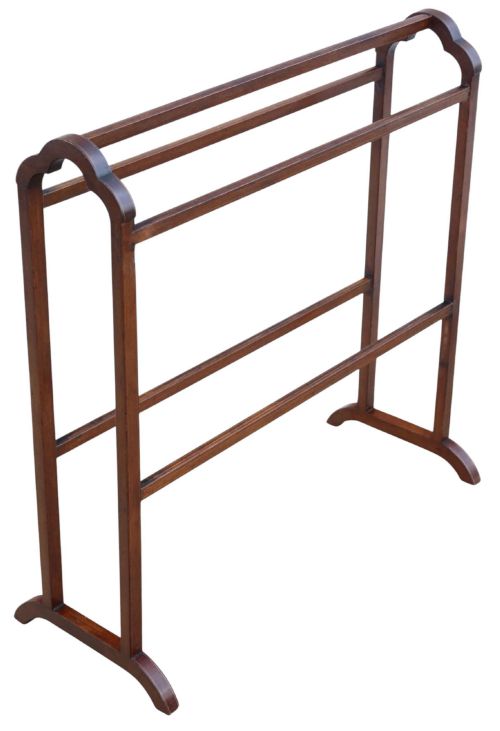
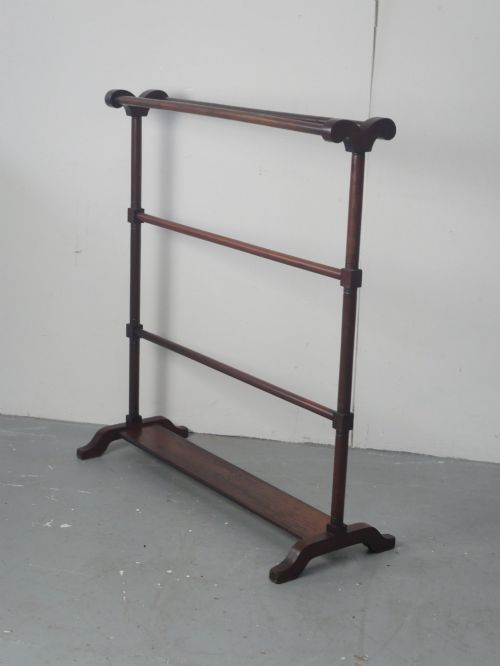
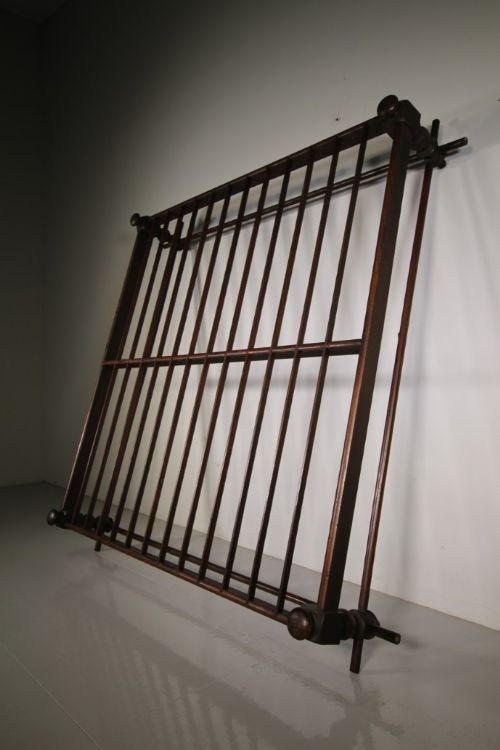
A vintage clothes drying rack serves primarily as a practical laundry aid or towel rail, encompassing items such as folding cheval towel rails, wall-mounted airers, and hanging kitchen racks. The selection spans periods from the Regency era through the Victorian and Edwardian decades, alongside Arts & Crafts interpretations and rustic farmhouse examples.
Most items encountered on this page take the form of freestanding mahogany towel rail stands, often with multi-fold designs. Buyers frequently discover Edwardian and Victorian iterations, constructed for domestic utility in bedrooms, bathrooms, and kitchens alike.
Materials and construction
Construction relies heavily on timbers such as mahogany and oak, chosen for structural stability and durability in daily domestic use. Cabinet makers utilised traditional joinery techniques to create folding hinges and robust floor-standing frames.
Surface treatments range from simple polished hardwood and decorated pine to satinwood inlay work and lacquered finishes on specialised pieces. These methods reflect the functional purpose of the objects alongside the aesthetic tastes of their respective periods.
The listings on this page span the 19th century, Victorian, Edwardian, and Regency periods, featuring mahogany, oak, pine, and brass.
Assessing quality
Quality in a vintage clothes drying rack rests on the selection of timber, the crispness of any inlay work, and the structural integrity of the folding mechanism. Finer pieces demonstrate careful selection of grained mahogany or figured oak, combined with solid joinery that withstands regular movement.
Simpler utilitarian items, such as pine rails or kitchen hanging racks, derive their appeal from honest wear and straightforward construction rather than decorative flourishes. The distinction lies in whether the piece was built as a refined household accessory or a purely functional utility item.
The Vintage Clothes Drying Rack Glossary
- Cheval rail
- A freestanding floor rack mounted on pivots or folding frames that allows the rails to swing or adjust. This design provides stability and multiple hanging arms for laundry or linens.
- Clothes airer
- A wall-mounted or ceiling-hung framework designed for drying garments indoors. These fixtures utilise pulleys or hinged brackets to save floor space in domestic quarters.
- Satinwood inlay
- A decorative technique where contrasting light-coloured timber is inserted into recesses of a darker base wood. This detail appears on select Edwardian and Victorian mahogany stands.
- Robe stand
- A substantial floor-standing frame designed for hanging garments rather than smaller linens. Examples from disparate origins demonstrate grand scale and specialised lacquering.
Vintage Clothes Drying Rack: Frequently Asked Questions
How were these racks used originally?
These items functioned primarily for airing laundry, drying damp garments, and holding towels in bedrooms and kitchens. Families relied on them indoors before the widespread adoption of mechanical tumble dryers.
Larger folding stands and wall-mounted airers made efficient use of household heat near fireplaces or stoves. They were moved easily around domestic spaces as daily chores required.
Where should I place a rack at home?
Freestanding towel rails and folding stands fit well in bathrooms, utility rooms, or bedrooms as functional storage for linens and garments. Wall-mounted airers suit compact spaces where floor area remains at a premium.
Allow sufficient clearance around folding models so the hinged sections operate without obstruction. Their natural timber tones blend easily with traditional and contemporary interiors alike.
How do I identify a Victorian piece?
Victorian examples often feature solid mahogany construction, turned wooden uprights, and deeper reddish timber tones. Their weight and sturdy joinery reflect the manufacturing standards of the nineteenth century.
Design details such as shaped feet and simple turned finials help distinguish these items from later Edwardian or twentieth-century productions. Examining the underside and joint construction provides further clues to the period.
What is an Arts and Crafts rail?
An Arts and Crafts rack typically emphasises honest construction, solid oak timber, and minimal applied decoration. These pieces showcase the natural grain of the wood and the visible joinery valued by the movement.
Such items often feel heavier and more robust than delicate Regency or Edwardian alternatives. Their aesthetic prioritises utilitarian function and sturdy craftsmanship over ornate surface detail.