


Vintage Clear Glass Lamps
These vintage clear glass lamps bring clarity and refracted light to a room, ranging from grand chandeliers to intimate table lights.
Vintage Clear Glass Lamps
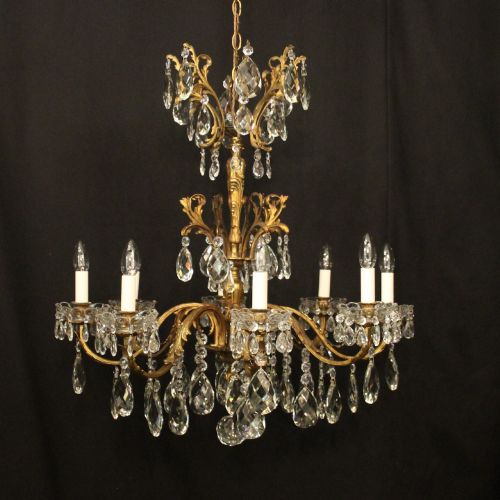
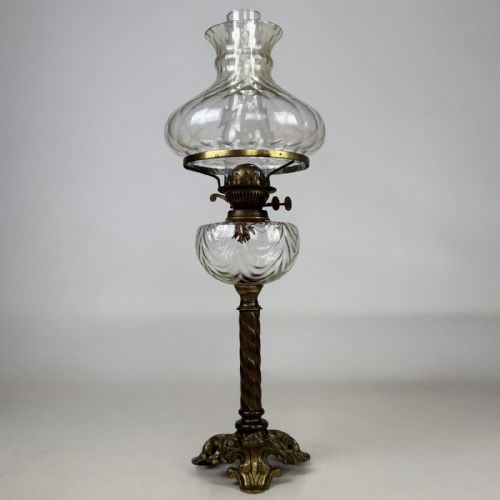
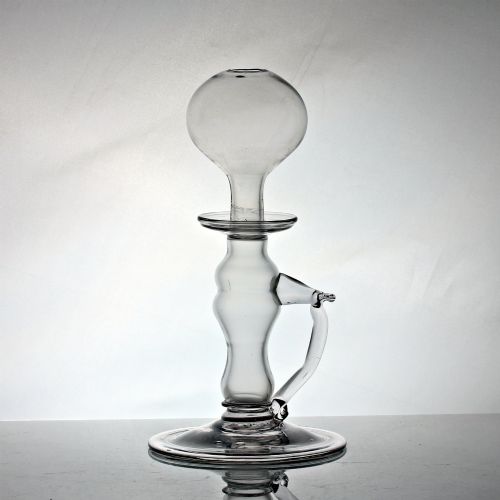
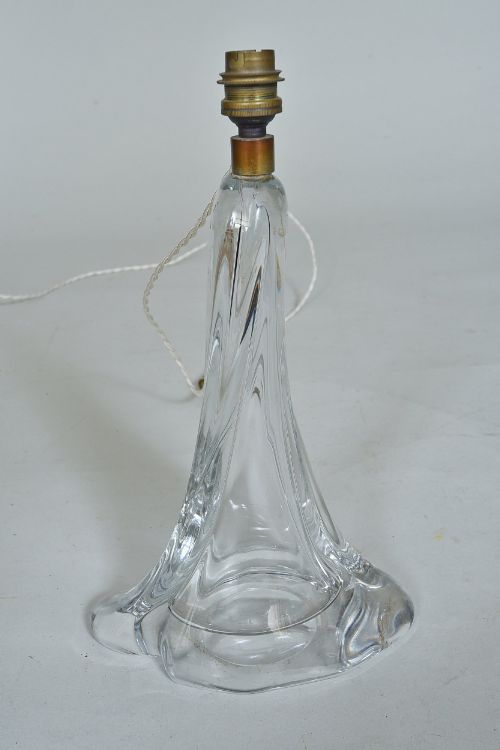
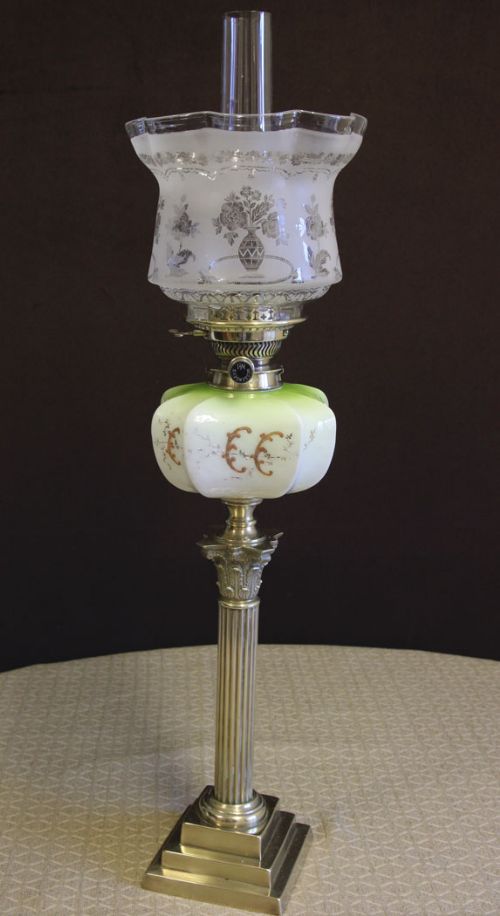
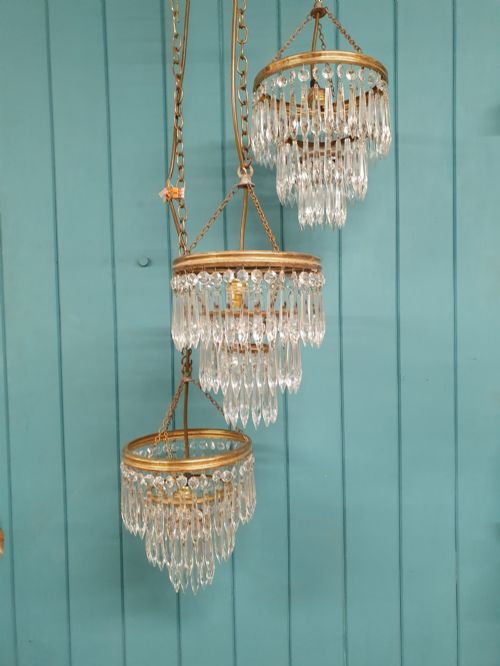
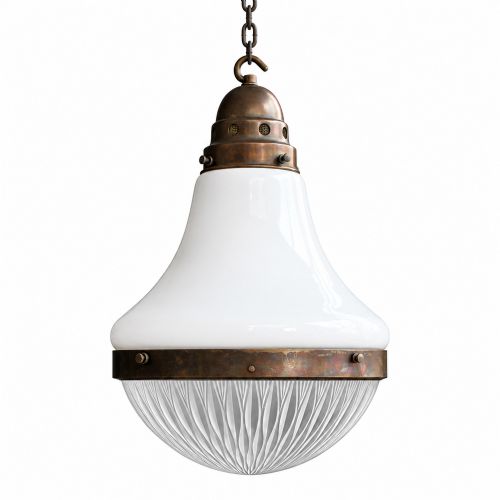
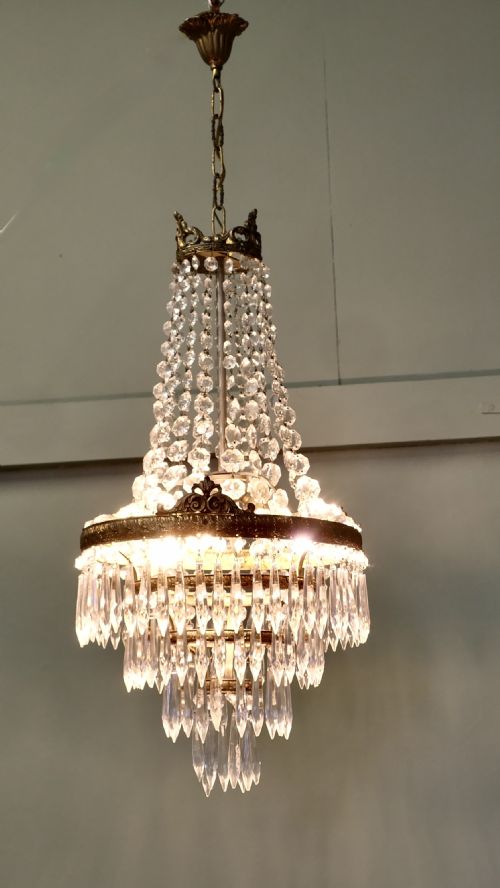
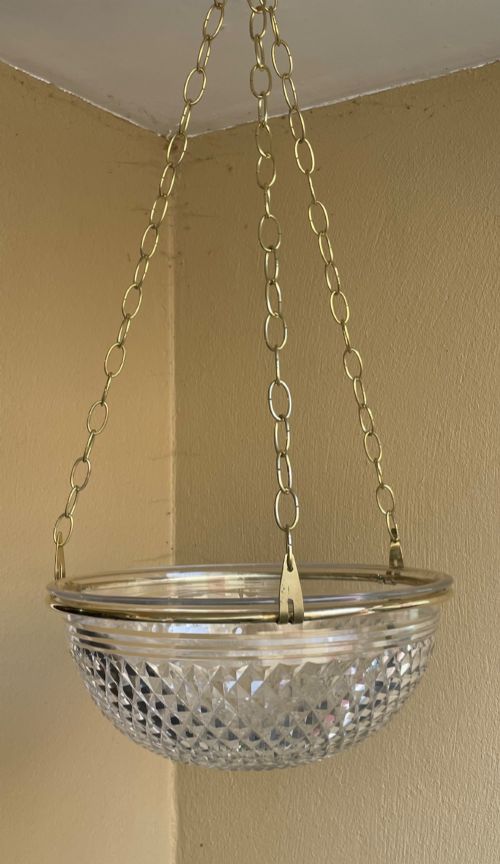
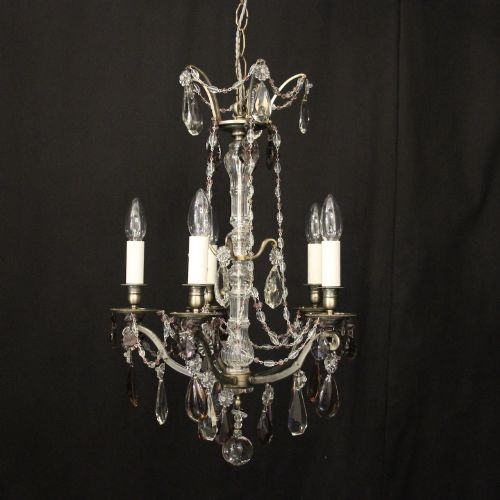
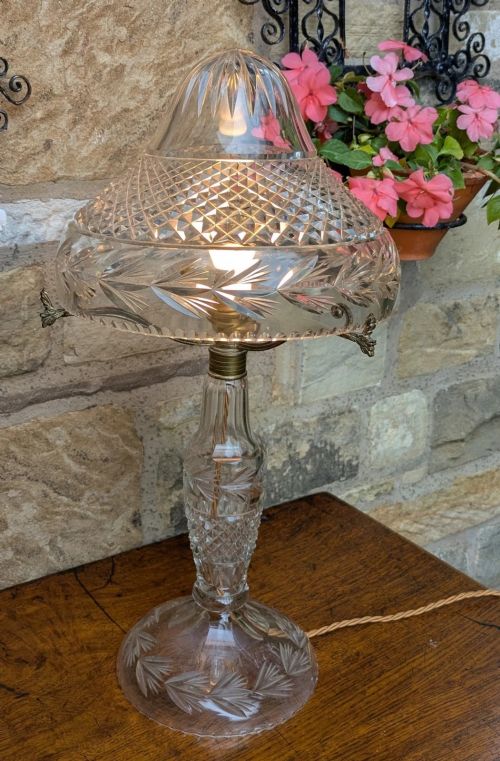
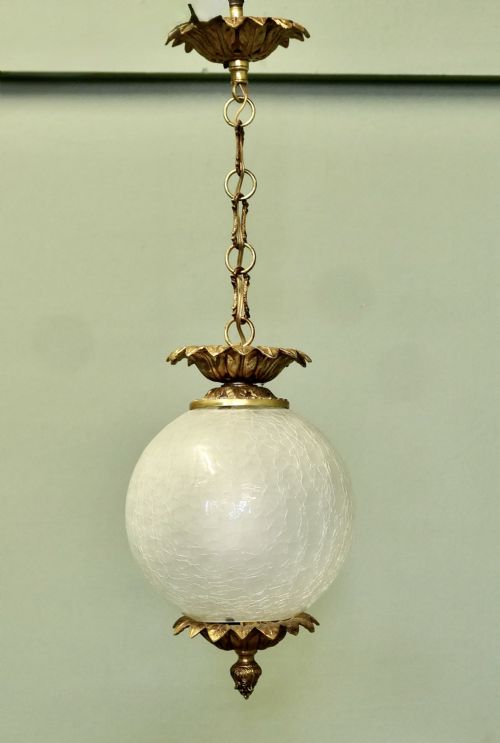
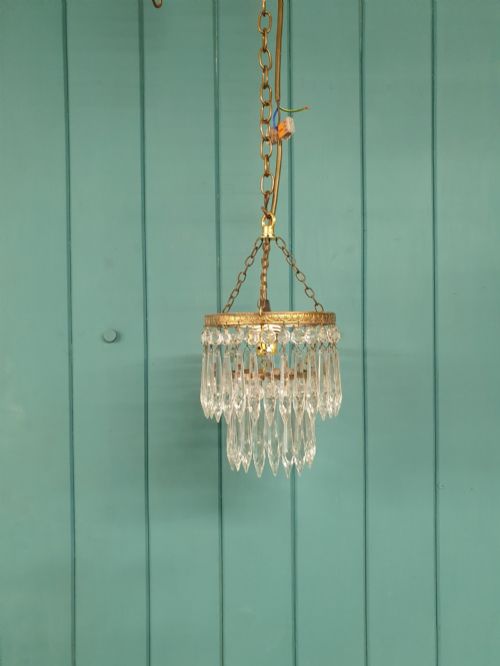
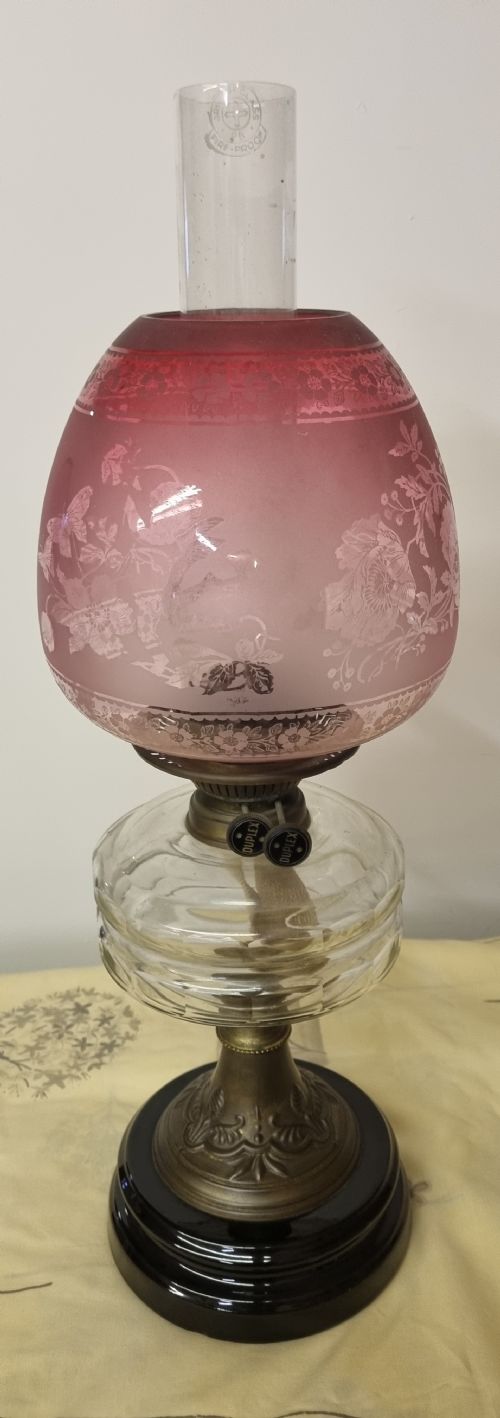
When you search for vintage clear glass lamps, you encounter a diverse range of lighting fixtures spanning the Victorian era through the 1930s. The selection includes everything from elaborate French Empire crystal chandeliers and Edwardian plafonniers to heavy brass-columned oil lamps and Art Deco mushroom table lamps. Most pieces combine transparent glass or crystal reservoirs and shades with structural metal mounts.
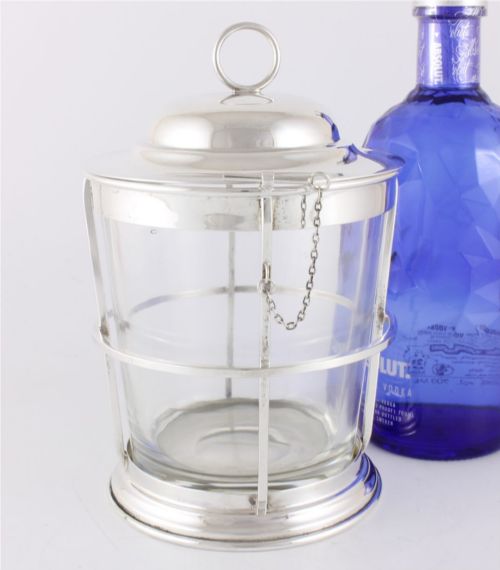
The most common versions on this page are early twentieth-century pendants, ceiling lights, and table lamps featuring cut crystal or pressed glass elements. These domestic fixtures reflect the changing interior tastes from nineteenth-century oil lighting to electrified domestic spaces of the 1920s and 1930s. Alongside standard lamps, the inventory incorporates specialised forms such as wall lights, spirit dispensing barrels, and oil lamps adapted over time.
How they were made
The construction of these lamps relies on the pairing of heavy cast brass or silver-plated metal frames with blown, pressed, or hand-cut glass components. Glass elements include lead crystal, crackle glass, and moulded shades that were shaped while hot or wheel-cut once cooled to create multifaceted surfaces. Metal mounts, collars, and burners provide structural integrity and secure the glass bodies, frequently utilising screw threads or brass pins.
Makers employed specialised techniques such as acid etching for tulip shades, hand-cutting for crystal prisms, and silver gilding for metal frames. Oil lamps incorporate ceramic reservoirs and brass columns, while chandeliers suspend multiple crystal drops from brass baskets or tent frameworks using wire loops.
Vintage Clear Glass Lamps Retail Price Guide 2026
Typical asking prices for vintage clear glass lamps among the pieces listed under this phrase on Sellingantiques today, from the lower quarter to the upper quarter. They describe what is for sale here now, not the wider market.
The listings span the Victorian era through the 1930s, featuring materials such as brass, lead crystal, crackle glass, and silver plate.
What varies in quality
Quality in these lamps rests on the weight and purity of the glass, the depth and precision of the cutting, and the substantial nature of the metal mounts. Superior pieces feature heavy lead crystal with sharp, clean facets that catch the light effectively, whereas simpler items utilise thinner pressed glass with softer edges. The integration between metal and glass components also dictates the standard of the piece.
Heavier brass castings, original burners by noted makers, and intricate hand-finished crystal drops distinguish finer examples from standard production pieces. Furthermore, the retention of original matching components, such as burners, shades, and prisms, elevates the integrity of an antique lamp.
Hinks of Birmingham·Stuart Crystal·PH Vogel
The Vintage Clear Glass Lamps Glossary
- Plafonnier
- A ceiling-mounted light fixture that sits flush or very close to the ceiling surface, often featuring a glass bowl or dome held by metal mounts.
- Duplex
- A type of oil lamp burner utilising two parallel flat wicks to produce a brighter flame and increased light output. This mechanism is frequently paired with a brass column and etched glass shade.
- Prism
- A cut glass pendant, typically triangular or spear-shaped, hung from chandeliers and wall lights to refract light into the room. They are attached via small wire loops.
- Tent and waterfall
- A chandelier style characterised by an upper conical section of strung glass beads above a cascading arrangement of crystals falling outwards. This design originated in the French Empire period.
Vintage Clear Glass Lamps: Frequently Asked Questions
How do I clean a crystal chandelier?
Cleaning requires removing dust with a soft brush and wiping glass components individually with a mild glass-cleaning solution applied to a cloth rather than sprayed directly onto the metal. Care must be taken around antique brass mounts and wiring.
For complex fixtures, dismantling the hanging crystals is sometimes necessary, though many owners clean them in situ to preserve the original wire ties and structural alignment.
Can old oil lamps be electrified?
Many Victorian and Edwardian oil lamps are converted for modern electricity by running a cord through the central burner or reservoir without damaging the structural metalwork. This allows the retention of the original brass column and glass reservoir.
Reversible conversions are preferred by collectors to maintain the original integrity of the piece should the burner components need to be restored to their original function.
How do I date a glass lamp?
Dating involves examining the manufacturing techniques, the style of the metal mounts, and the fastening methods used on the frame. Victorian pieces often feature heavy brass columns and duplex burners, while 1930s pieces lean towards streamlined Art Deco glass forms.
Maker marks stamped on metal collars or burners provide definitive chronological markers, alongside characteristic glass colours and cutting patterns associated with specific decades.