


Vintage Circular Tea Table
A vintage circular tea table brings proportion and sociability to a room, offering round tops in mahogany, walnut, oak and rosewood from various periods.
Vintage Circular Tea Table
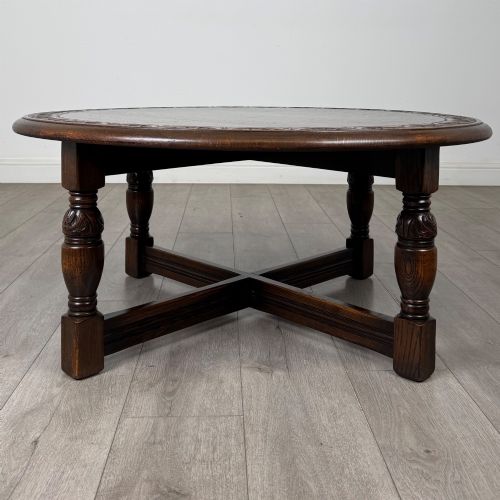
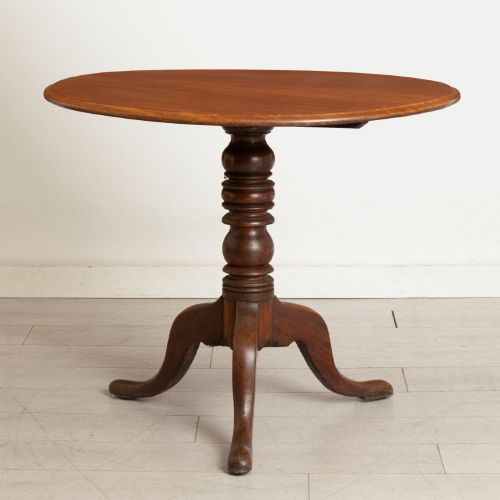
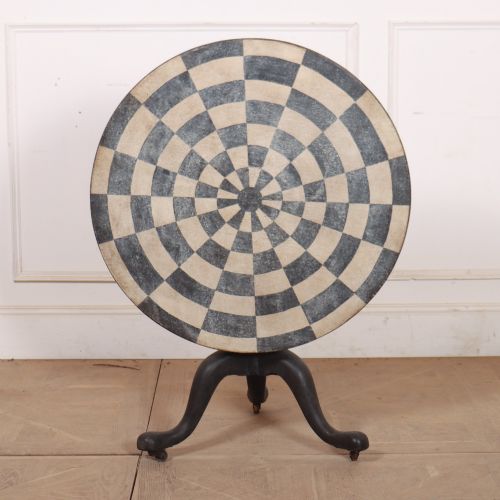
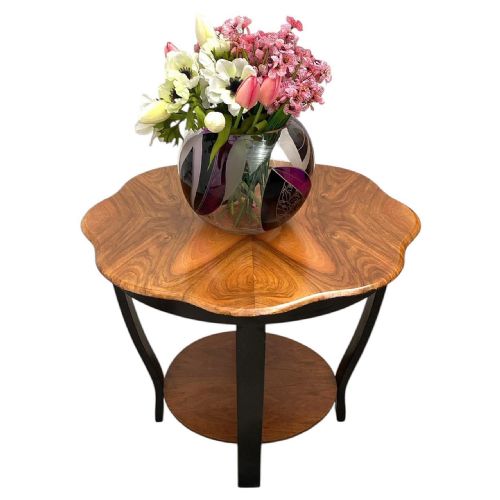
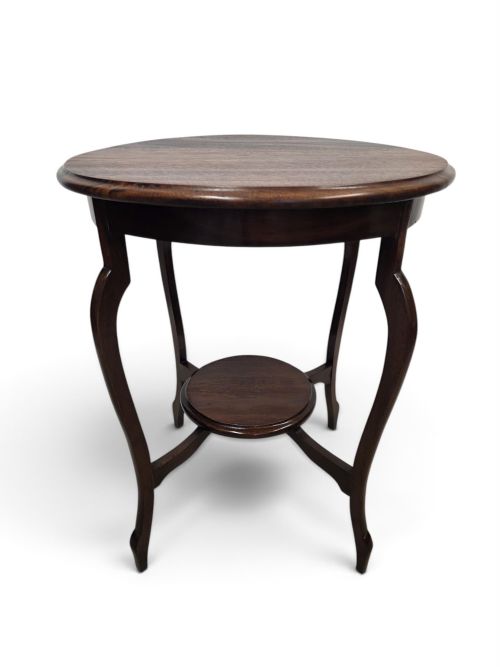
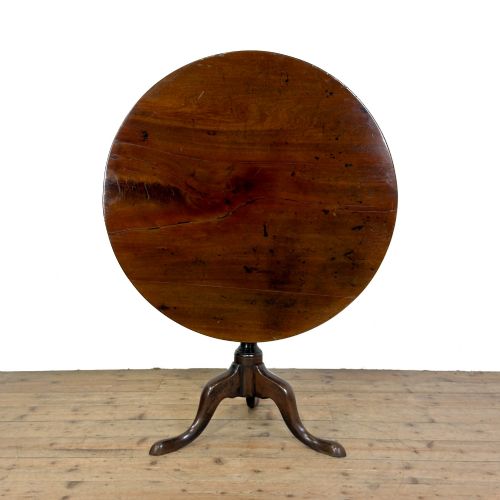
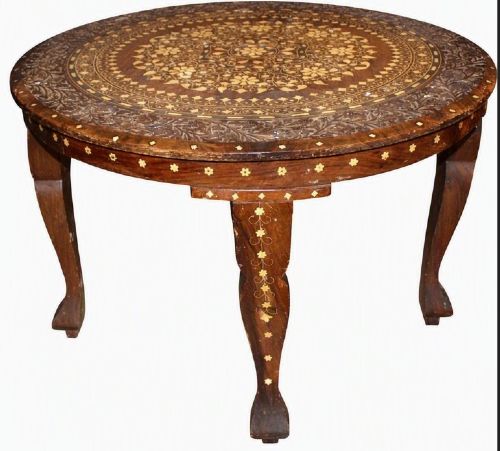
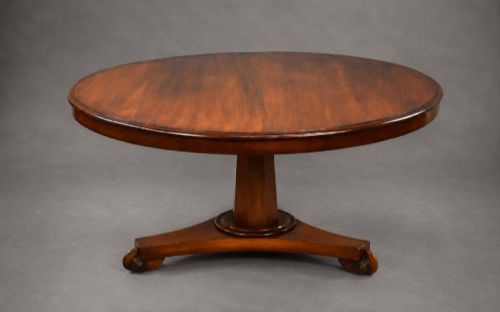
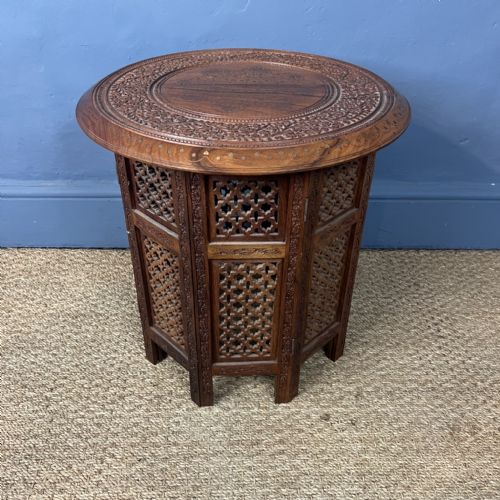
A vintage circular tea table represents a broad span of history, taking forms that range from Georgian tripod bases and tilt-top designs to Edwardian nests, Art Deco walnut coffee tables and Anglo-Indian inlaid pieces. Buyers exploring this selection encounter diverse expressions of a round surface intended for social gatherings, resting drinks or displaying ornaments.
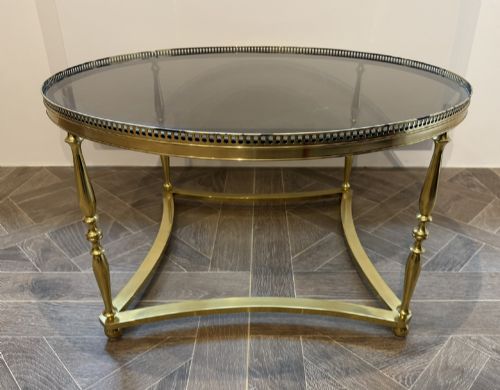
The pieces appearing on this page stretch from the eighteenth century through the Victorian era into the early twentieth century and the 1930s. Mahogany and burr walnut dominate the selection, accompanied by oak, rosewood, brass and painted finishes, bridging formal period dining and relaxed twentieth-century domestic living.
Materials and construction methods
Cabinetmakers utilised solid timbers such as mahogany and oak alongside decorative veneers like burr walnut and figured walnut to create durable circular tops and sturdy central pillars. Tripod bases, tilt-top mechanisms and pedestal supports required precise joinery to ensure stability despite the round footprint.
Surface decoration involved various specialised techniques, including bone inlay on Anglo-Indian examples, brass detailing, hand-painted floral motifs and Chinoiserie lacquer work on Edwardian and oriental pieces. These methods combined structural integrity with intricate surface ornament.
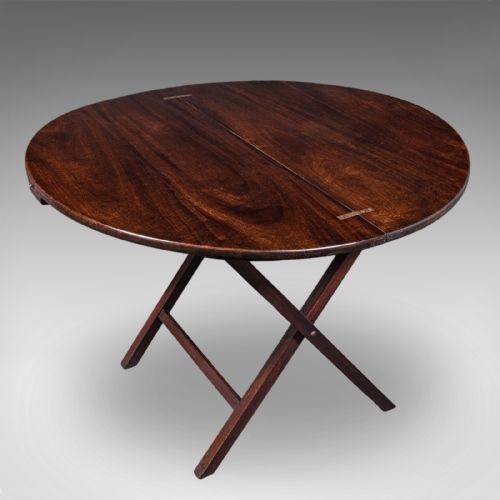
An eighteenth-century kitchen garden table managed to be folding, coaching, occasional and Edwardian all at once.
Factors determining quality
Quality rests upon the selection of timber, visible in the rich figuring of burr walnut or the deep grain of solid mahogany, as well as the crispness of carved details on tripod legs and pillar bases. Superior examples demonstrate expert veneering, tight joinery and well-fitted tilt-top mechanisms that lock securely into place.
Provenance and craftsmanship separate standard production from exceptional work, seen in stamped makers like Liberty & Co, or refined execution in Art Deco Swedish birch and elm. The harmony of proportions and the retention of original surface finishes dictate the standing of each piece.
Liberty & Co
The Vintage Circular Tea Table Glossary
- Tripod table
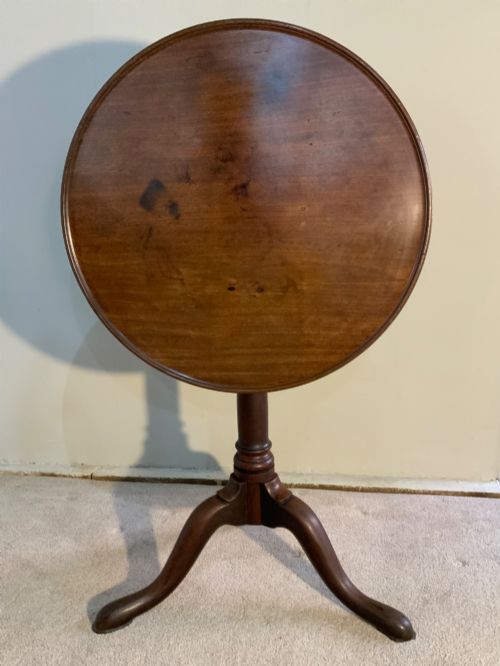
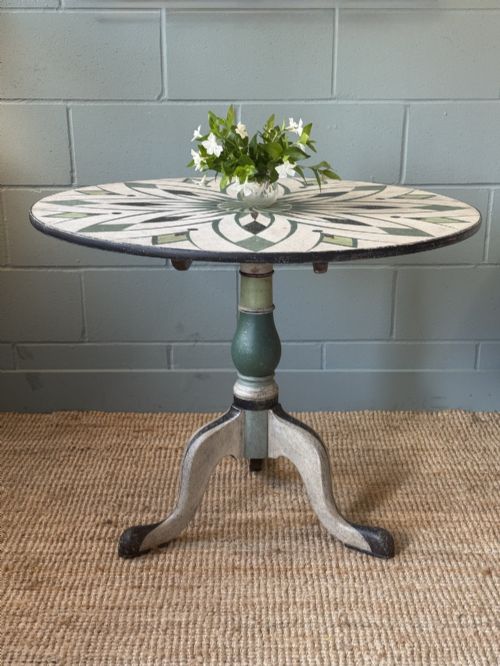
- A small round table supported by a central pillar resting on three legs. This construction became popular during the Georgian period for flexibility and easy movement.
- Tilt-top
- A table mechanism allowing the circular top to pivot vertically when not in use. This design saved space in smaller rooms.
- Pie crust
- A carved, raised, undulating rim around the edge of a circular table top. The shaping resembles pastry work on traditional pies.
- Nest of tables
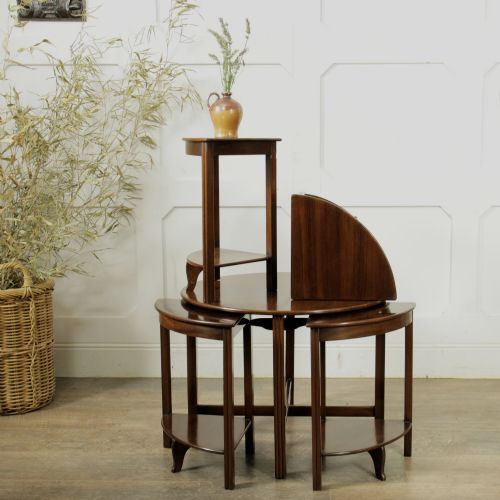
- A set of graduated tables designed to fit neatly beneath one another. Edwardian makers produced these in circular mahogany variations.
- Occasional table
- A small, versatile table used for general purposes around a room. They appear frequently in twentieth-century walnut and oak.
- Demi-lune
- Half-moon shaped furniture designed to sit flat against a wall. These often function as tea tables with folding tops.
Vintage Circular Tea Table: Frequently Asked Questions
What is a vintage circular tea table used for today?
These tables function primarily as coffee tables, low occasional tables or display surfaces in modern living spaces. Their round profiles soften rigid room layouts and provide convenient placement next to seating.
Historically designed for serving tea or playing games, their compact dimensions allow them to fit comfortably beside sofas and armchairs while retaining period character.
How do I identify the period of a round wooden table?
Dating relies on examining the timber, secondary woods, construction joints and decorative styles present on the piece. Georgian and eighteenth-century examples often feature solid mahogany with tripod bases, while 1930s pieces utilise figured walnut veneers and cleaner Art Deco lines.
Hardware, turning styles and interior framing offer further clues to distinguish Victorian production from Edwardian or earlier craftsmanship.
Are tilt-top tables stable for daily use?
Tilt-top tables remain steady when the catch and block mechanism beneath the top engages correctly with the central pillar. They were engineered to remain rigid during normal placement of items on the surface.
While the pivot allows the top to fold flat for storage, a well-maintained mechanism holds the table firmly horizontal during everyday domestic use.
How do I care for a polished walnut or mahogany surface?
Maintenance involves dusting regularly with a soft, dry cloth and avoiding placement near direct heat sources or strong sunlight that can dry out timber. Applying a quality beeswax periodically helps nourish the wood and preserve the lustre of the polish.
Using coasters and mats prevents moisture rings from hot drinks or condensation from marking antique and vintage finishes.