

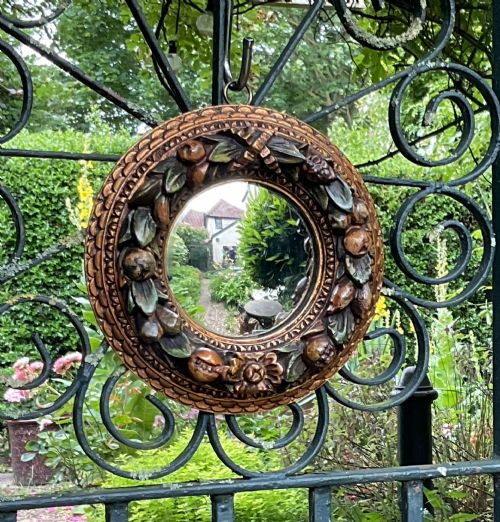


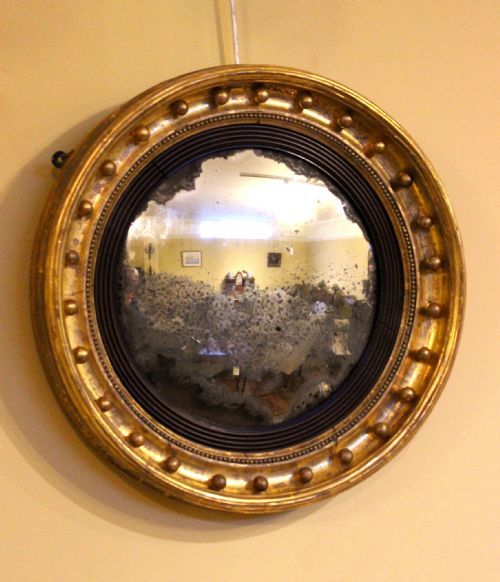


Vintage Circular Gold Mirror
A vintage circular gold mirror brings immediate depth and light to a room through curved glass and gilt framing.
Vintage Circular Gold Mirror
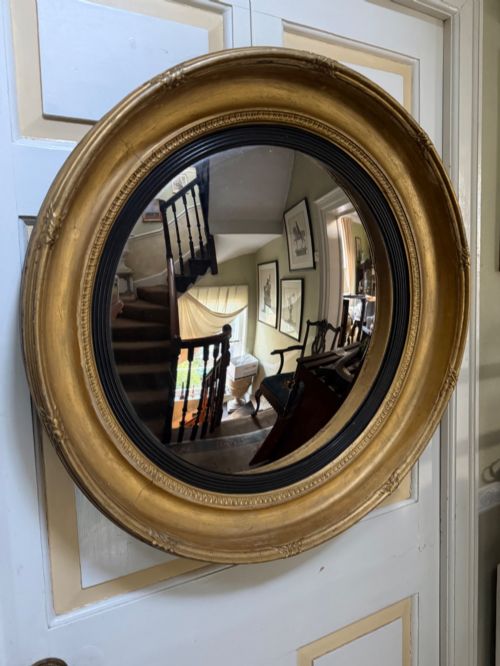
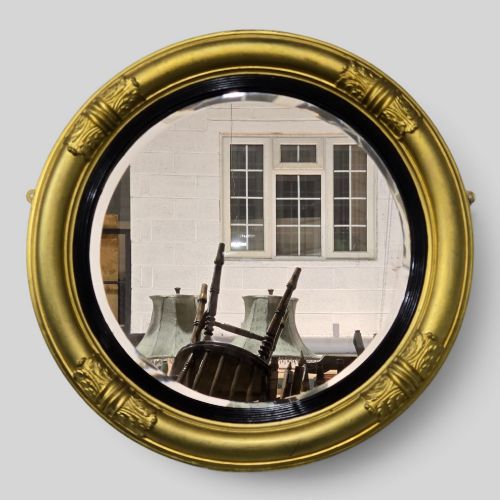
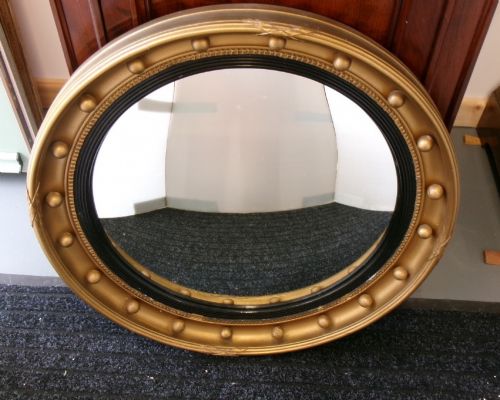
A vintage circular gold mirror forms a distinct focal point in any interior, primarily manifesting as convex wall mirrors from the Regency and Victorian eras alongside later 20th-century iterations. These pieces bounce light across a space while offering a wide, distorted reflection through their curved plates.
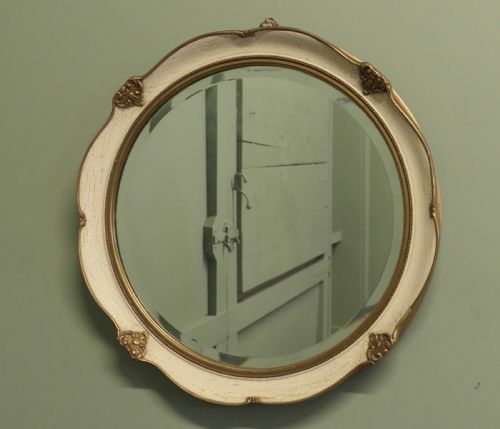
The selections span from bold 19th-century giltwood frames with eagle surmounts down to smaller Edwardian and Art Deco wall pieces. Buyers searching for a vintage circular gold mirror encounter a heavy representation of convex porthole designs and Florentine giltwood carvings.
Materials and Construction
Makers shaped these frames from carved wood, gesso, and composition applied over a wooden base, then coated them in gold leaf or gilt paint to achieve a brilliant metallic sheen. Several examples incorporate cast iron or brass, particularly amongst 19th-century industrial and domestic metalwork.
Convex glass plates are set within deep bezels, sometimes accompanied by ebonised wood reeded slips that provide a dark contrast to the surrounding gilt surfaces. The weight of these objects often demands robust wall fixings due to the dense woods and heavy plaster compositions utilised in their construction.
Vintage Circular Gold Mirror Retail Price Guide 2026
Typical asking prices for vintage circular gold mirror among the pieces listed under this phrase on Sellingantiques today, from the lower quarter to the upper quarter. They describe what is for sale here now, not the wider market.
Listings feature periods spanning from the Georgian and Regency eras through to Victorian, Edwardian, and 1930s Art Deco designs.
Assessing Quality and Craftsmanship
The sophistication of the carved wooden ornament and the crispness of the gesso mouldings dictate the visual impact of the frame. Higher-tier examples display deeply undercut foliage, sharp detailing on crests such as eagles, and hand-applied gold leaf that ages with a warm patina rather than flat metallic paint.
The optical clarity and historical integrity of the glass plate also separate standard pieces from finer specimens. Original convex mirror plates with minor foxing show true period character, whereas clumsy restorations to the gilt surface diminish both visual harmony and historical standing.
The Vintage Circular Gold Mirror Glossary
- Convex mirror
- A round mirror with an outward-curving glass plate that reflects a wide, fish-eye view of the surrounding room. These pieces were historically placed in parlours and dining rooms to monitor gatherings.
- Giltwood
- Timber, typically pine or gesso-coated wood, covered with thin sheets of gold leaf. It provides a durable and reflective metallic finish across antique frames.
- Gesso
- A plaster-like mixture applied to wooden frames as a smooth base for gilding or deep moulding. Artisans carved intricate patterns into this layer before applying gold leaf.
- Ebonised wood
- Timber stained or treated to resemble heavy, black ebony. It frequently appears on interior slip rings within gilt mirror frames to create contrast.
- Composition
- A moulded mixture of whiting, resin, oil, and glue pressed into decorative ornaments. It offered a faster alternative to hand-carving complex Regency frame details.
Vintage Circular Gold Mirror: Frequently Asked Questions
How do I hang a heavy convex mirror safely?
These mirrors carry substantial weight due to dense wooden frames and thick plaster compositions. Secure them directly into structural wall studs using appropriate steel fixings.
Avoid relying solely on standard wall plaster or lightweight picture hooks. Professional mirror hangers utilise heavy-duty brackets rated well beyond the item's actual mass.
What rooms suit a round gold mirror best?
Halls, dining rooms, and mantlepieces benefit greatly from the reflective quality and compact footprint of circular wall pieces. They catch natural light from windows and distribute it into darker corners.
Smaller examples fit neatly into narrow entryways, while grand scale Regency frames anchor larger living spaces as central decorative statements.
How do I tell a Regency mirror from a Victorian copy?
Early 19th-century pieces typically feature hand-carved wooden frames, heavier construction, and distinct signs of age within the gilt layers. Look closely at the depth of the rebate and the construction joints.
Victorian and later interpretations often employ composition mouldings uniformly across the entire surround. The backboards and fixings also offer clear clues regarding the actual period of manufacture.
Should I clean the original gold leaf surface?
Dust the frame gently with a soft, dry brush to prevent accumulation without disturbing fragile gilt layers. Moisture and modern chemical cleaners strip historical gold leaf and composition instantly.
Leave deeper cleaning and gilt stabilisation to experienced conservators. Preserving the natural patina maintains both the visual depth and historical integrity of the object.