



Vintage Children Rocking Chair
A vintage children rocking chair brings miniature craftsmanship and centuries of domestic history straight into a modern room.
Vintage Children Rocking Chair
A vintage children rocking chair spans a broad sweep of history, drawing on centuries of vernacular and formal design traditions. When searching for a vintage children rocking chair, buyers encounter everything from early elm windsor models to later bentwood examples.
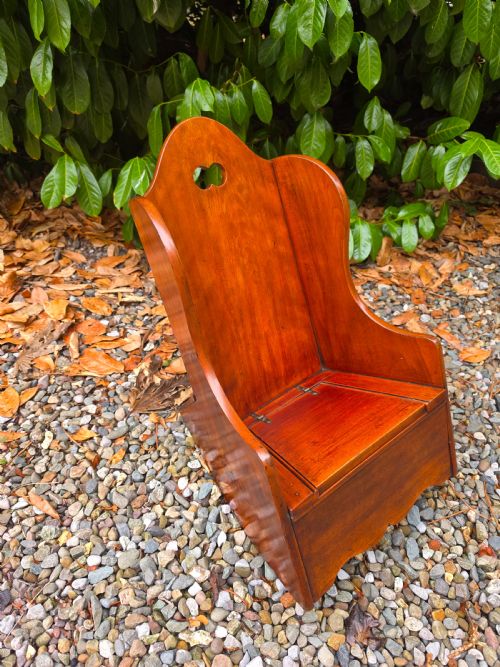
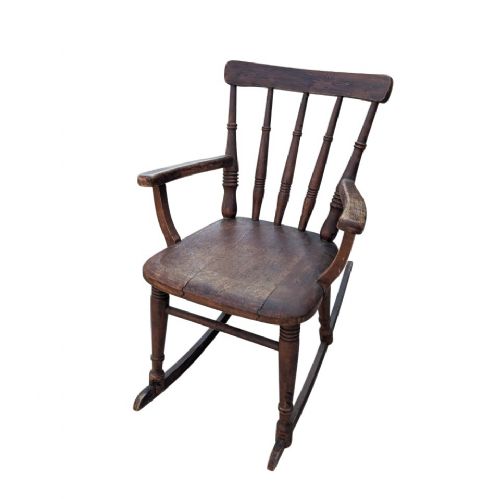
The selection here encompasses periods from the seventeenth century through to the twentieth century, with Victorian and nineteenth-century pieces appearing frequently. Forms range from simple country ladder backs and spindle backs to specialised potty rockers and miniature lambing chairs.
Geographic origins vary across the inventory, including English country pieces alongside Scandinavian country and American imports. These smaller seats served practical nursery or parlour functions for young children and dolls alike.
Materials and construction methods
Construction relies heavily on traditional timber selection, utilising durable hardwoods such as oak, elm, fruitwood, beech, and mahogany. These timbers provided the structural integrity required to withstand regular use by children.
Craftsmen employed time-honoured techniques like spindle turning, Windsor framing, and bentwood steam shaping. Additional texture and support often came from woven rush seats, cane panels, or solid wood squabs.
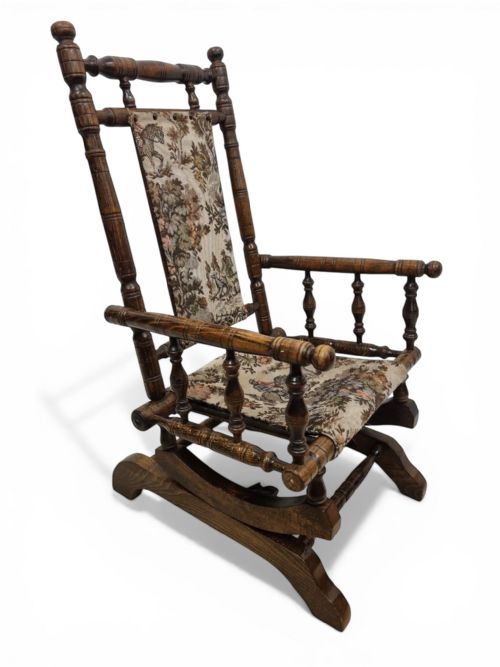
Metal components remained minimal, though occasional brass details or upholstery fastenings appear on specific stylistic variants like tapestry-covered examples.
Vintage Children Rocking Chair Retail Price Guide 2026
Typical asking prices for vintage children rocking chair among the pieces listed under this phrase on Sellingantiques today, from the lower quarter to the upper quarter. They describe what is for sale here now, not the wider market.
The inventory bridges formal Georgian mahogany designs and rustic Welsh lambing chairs mounted on rockers.
Factors of construction and design quality
Quality rests upon the integrity of the timber framing and the harmony of the miniature proportions. Superior examples maintain original rockers and joints without excessive replacement timber.
Refinement in turning and joinery distinguishes finer formal pieces from simpler vernacular makes. The tactile quality of the wood finish, whether aged fruitwood or polished mahogany, defines the visual presence of the object.
Thonet
The Vintage Children Rocking Chair Glossary
- Potty rocker
- A specialised child's rocking chair featuring a cut-out seat designed to accommodate a chamber pot underneath. These functional nursery pieces date predominantly to the Georgian and Victorian eras.
- Lambing chair
- An enclosed wooden seat designed to keep drafts away from the occupant, occasionally adapted onto rockers for young children. They frequently appear in Welsh and English country vernacular styles.
- Windsor chair
- A chair built with a heavy wooden seat into which the legs and back spindles are separately bored and wedged. Child-sized versions scale down this robust construction method for younger occupants.
- Bentwood
- Wood softened through steam heating and bent into curved structural forms without traditional joinery. Thonet famously utilised this technique for lightweight children's rockers.
- Vernacular
- Everyday domestic furniture made by local regional joiners rather than urban cabinetmakers. These pieces rely on traditional local materials like elm and fruitwood rather than imported hardwoods.
Vintage Children Rocking Chair: Frequently Asked Questions
How were child rocking chairs used?
These miniature seats served practical daily functions in nurseries, parlours, and farmhouses to keep young children settled and occupied. Parents utilised them for soothing infants or for quiet play near the hearth.
Over generations, many transitioned from functional nursery furniture into decorative display items or doll seating within domestic interiors.
How do I date an old rocking chair?
Dating relies on examining the timber species, construction joinery, and the stylistic vocabulary of the period. Earlier pieces often display vernacular hand-turned spindles in elm or fruitwood, whereas later examples show industrial bentwood techniques.
Cross-referencing the turning details and seat construction against known historical periods helps narrow down the decade of manufacture.
Are these small chairs sturdy enough for children?
Many of these pieces were built using solid hardwoods like oak, elm, and beech, engineered to withstand robust domestic use. Their structural survival over centuries demonstrates considerable initial durability.
However, collectors often treat older examples with care due to their age and historical significance rather than subjecting them to modern rough play.
What is the difference between country and formal styles?
Country vernacular pieces utilise locally available timbers like elm and fruitwood with rustic charm, built by regional wheelwrights or joiners. Formal styles draw on mainstream cabinetmaking trends, employing polished mahogany and refined decorative turning.
Formal examples reflect high-style interior fashions of periods like the Georgian or Victorian eras, while country pieces reflect utilitarian rural traditions.