



Vintage Chicken Artwork
These vintage chicken artwork pieces capture rural farmyard scenes and livestock with a charm that brings character to any interior.
Vintage Chicken Artwork
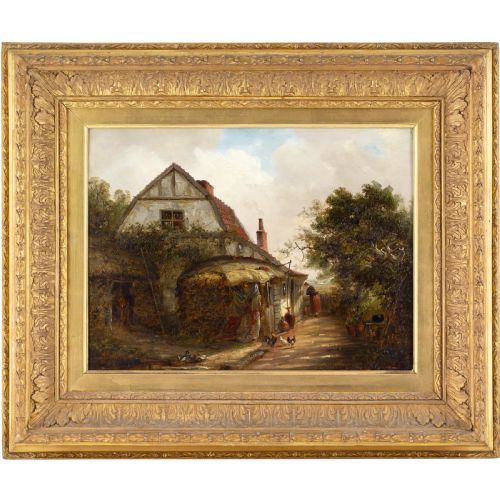
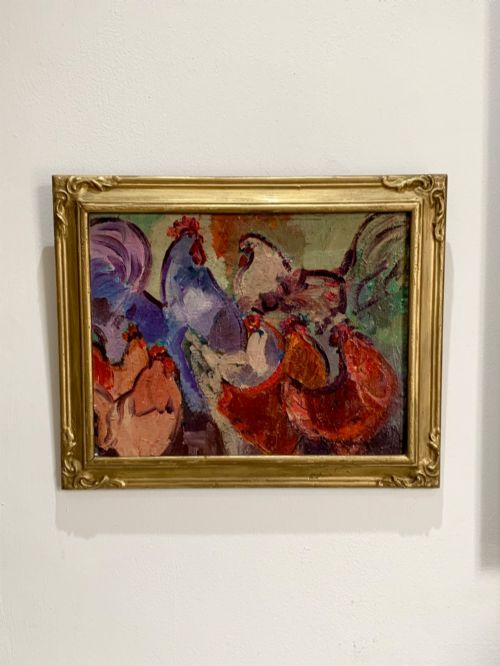
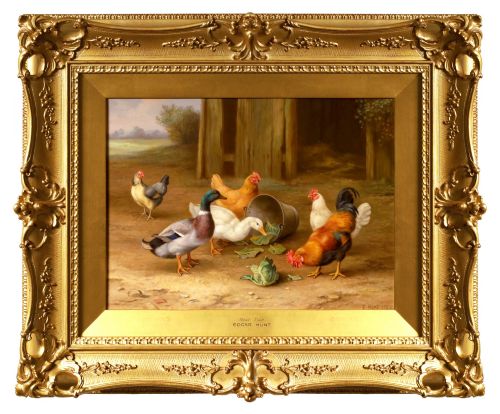
When searching for vintage chicken artwork, buyers find traditional representations of farmyard life spanning the nineteenth century up to the nineteen thirties. These works record domestic fowl, cockerels, hens, and chicks within pastoral or cottage settings.
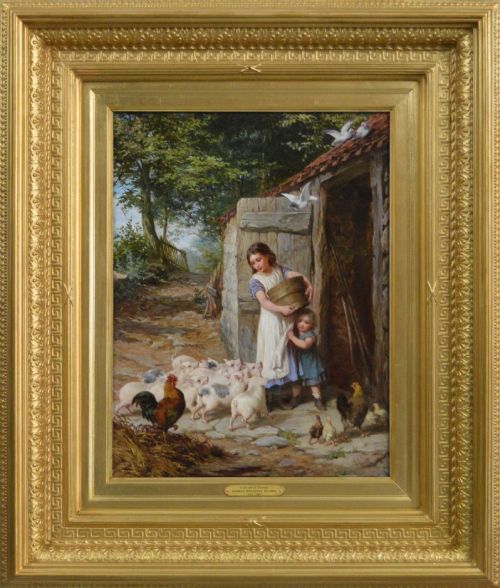
The most common examples on this page are oil paintings on canvas and watercolour paintings created during the Victorian and Edwardian periods. Many pieces place the birds alongside other farm animals and figures engaged in rural daily routines.
Originating largely from British and European artistic traditions, these works encompass styles ranging from strict realism to impressionistic interpretations of the countryside. Each piece offers a distinct window into historical agricultural life through skilled brushwork.
Materials and methods
The physical construction of these works relies predominantly on oil paint applied to stretched canvas or watercolour pigments on paper. Supporting structures typically involve wooden frames, frequently enhanced with gesso and gold leaf or giltwood mouldings.
Artists achieved detailed depictions of feathers and textures through careful layering of oil colours and precise watercolour washes. Hand-carved and gilded wooden frames completed the presentation, protecting the painted surfaces while adding decorative weight.
Vintage Chicken Artwork Retail Price Guide 2026
Typical asking prices for vintage chicken artwork among the pieces listed under this phrase on Sellingantiques today, from the lower quarter to the upper quarter. They describe what is for sale here now, not the wider market.
Represented styles include Victorian realism, Edwardian pastoral, and Scottish impressionism depicting farmyard scenes.
Assessing quality and execution
Quality in these rural scenes rests upon the artist's ability to render the anatomy, plumage, and natural postures of the birds with convincing realism. Superior pieces demonstrate a nuanced handling of light across the farmyard and a balanced composition involving human figures or livestock.
The sophistication of the supporting frame also influences the overall standard, particularly where original gesso and gold leaf mouldings remain intact. Works by established animalier painters show greater precision in capturing the distinct character and textures of farmyard animals.
George Augustus Holmes·Edgar Hunt·John Frederick Herring Jnr·Claude Cardon·Robert Russell MacNee·B. Kaufmann·J L VAN Leemputten·John Abernethy Lynas-Gray
The Vintage Chicken Artwork Glossary
- Animalier
- A nineteenth-century artistic classification dedicated to the realistic portrayal of animals. This style prioritises accurate anatomical study and lifelike behaviour.
- Gesso
- A traditional chalk or gypsum plaster mixture applied to wooden frames as a smooth base for gilding. It allows for intricate moulded decorative details.
- Giltwood
- Timber that has been coated with a thin layer of gold leaf or metallic powder. This finish adds brightness and historical authenticity to antique frames.
- Watercolour
- A painting method where fine pigment is suspended in a water-based solution on paper. It creates transparent washes and delicate tonal gradations.
Vintage Chicken Artwork: Frequently Asked Questions
What subjects appear in vintage chicken artwork?
These works primarily depict hens, cockerels, and chicks within traditional farmyards, often alongside horses, pigs, or figures feeding livestock.
Settings frequently include rustic cottages, barns, and pastoral landscapes typical of nineteenth and early twentieth-century rural life.
How do I care for an oil painting?
Keep the canvas away from direct sunlight and steady humidity levels to prevent the paint layers from cracking over time.
Dust the surface gently with a soft, dry brush and avoid applying liquid cleaners directly to the painted canvas.
How do I identify an Edwardian painting?
Edwardian pieces generally date from the early twentieth century and reflect a bright, pastoral aesthetic influenced by contemporary realism.
Signatures, framing materials, and artist records often help confirm the precise period of creation.
Where should I display these watercolours?
Watercolour paintings require placement away from strong direct light to prevent the paper and pigments from fading.
Mounting them behind protective glass within stable indoor environments preserves the delicate paper supports.