



Vintage Chesterfield Seating
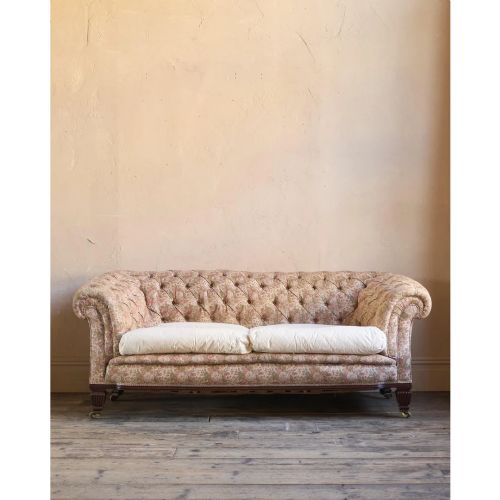
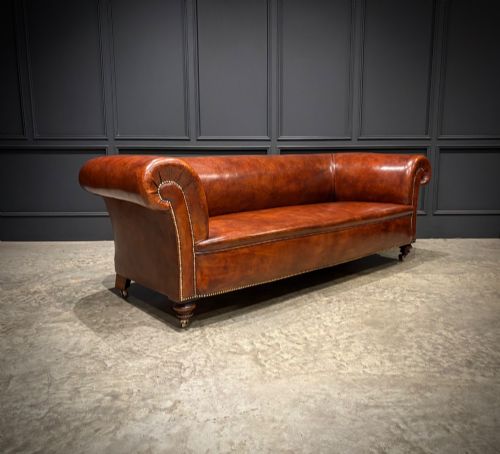
Vintage chesterfield seating brings deep buttoned leather and rolled arms into a room, offering both history and solid comfort.
Vintage Chesterfield Seating
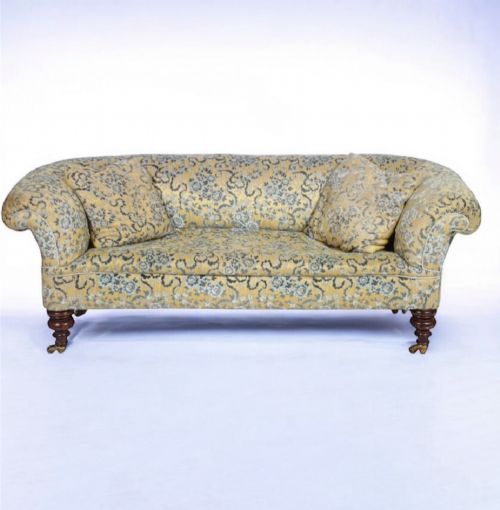
Vintage chesterfield seating comprises sofas, armchairs, and library chairs built across several centuries, with nineteenth-century Victorian examples appearing most frequently on this page. Pieces range from large scale armchairs and two-seat button back sofas to dining chairs and porters armchairs.
Makers such as Howard and Sons, Robert Strahan and Co, Gillows, and Thomas Chippendale are represented among the listings alongside traditional English workshop pieces. Styles span Victorian, Edwardian, Regency, George III, and Rococo Revival, showing how the form adapted over generations.
How they were made
Frames rely on hardwood, timber, and mahogany to provide structural integrity, supporting the heavy forms of large scale armchairs and sofas. Brass often appears in hardware details, while claw and ball feet finish certain chair legs.
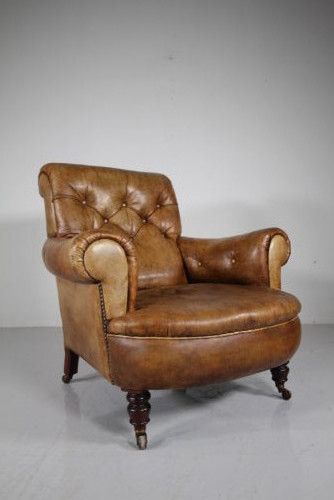
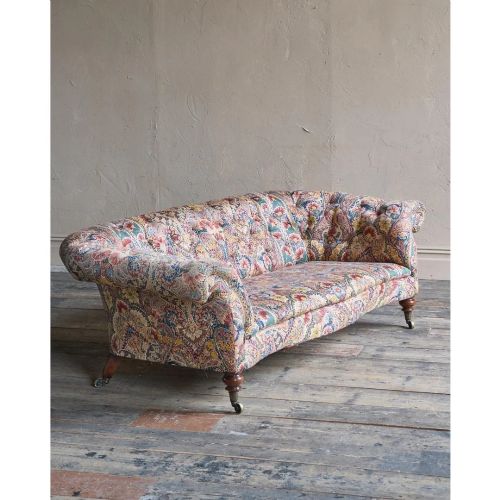
Upholstery centres on leather and fabric, with hand dyed brown leather and faded green leather seen across armchairs and settees. Deep buttoning defines the upholstery technique, securing the hide or fabric tightly to the internal padding.
Vintage Chesterfield Seating Retail Price Guide 2026
Typical asking prices for vintage chesterfield seating among the pieces listed under this phrase on Sellingantiques today, from the lower quarter to the upper quarter. They describe what is for sale here now, not the wider market.
Materials utilised across the inventory include mahogany, hardwood, brass hardware, and both leather and fabric upholstery.
What varies in quality
The integrity of the hardwood frame and the depth of the timber construction dictate the lasting stability of a piece. Original un-restored condition differs from fully restored examples, changing how the structure ages over time.
The quality of the leather upholstery, from standard hide to hand dyed variants, affects the tactile feel and visual richness of the surface. Maker attribution, such as work originating from Gillows or Howard and Sons, elevates the standing of an individual piece.
Howard and Sons·Robert Strahan and Co·Gillows·Thomas Chippendale
The Vintage Chesterfield Seating Glossary
- Chesterfield
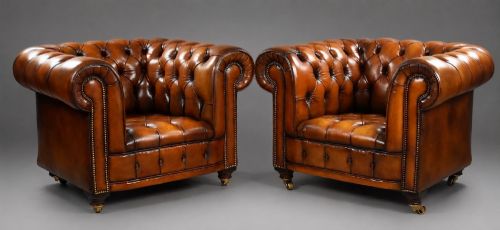
- A style of upholstered sofa or armchair characterised by low seats and rolled arms of the same height, traditionally featuring deep buttoning. This form anchors many traditional English interiors.
- Button back
- An upholstery method where buttons are pulled deep into the padding at regular intervals to create a diamond pattern. This technique secures the leather and adds firm support.
- Porters armchair
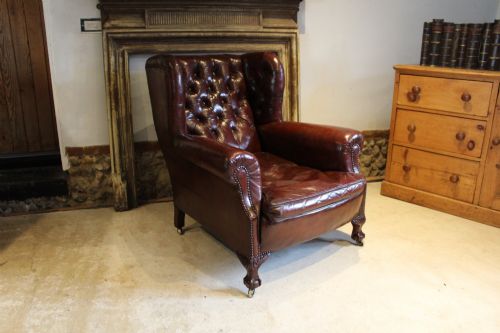
- A high backed enclosed chair designed to keep out drafts in large hallways, often executed in leather. The hood provides a distinct architectural silhouette.
- Claw and ball feet
- A furniture foot carved to resemble a bird's talon gripping a ball, commonly found on eighteenth and nineteenth-century seating. It signals fine craftsmanship on mahogany frames.
Vintage Chesterfield Seating: Frequently Asked Questions
What defines a chesterfield sofa?
A chesterfield is traditionally distinguished by arms that match the height of the back, creating a continuous enclosed line. Deep buttoning across the backrest and inner arms further identifies the classic form.
Most examples utilise leather upholstery over a sturdy hardwood or timber frame, offering a low slung profile designed for formal reception rooms or libraries.
Where were library armchairs used?
Library armchairs were placed in private studies, grand libraries, and smoking rooms for extended reading and writing. Their generous proportions and upholstered wings were designed to block drafts in large, high ceilinged rooms.
These chairs often employ hand dyed leather and robust timber frames to withstand daily use in domestic and institutional settings.
Can I mix styles in a room?
Combining different eras, such as placing a George III wingback armchair near a Victorian chesterfield sofa, adds historical depth to an interior. The shared use of leather and dark wood unites varied pieces.
Focusing on complementary tones, like hand dyed brown leather and mahogany timber, ensures a cohesive arrangement without requiring a matched suite.