


Vintage Ceramic Tureen Dish
These vintage ceramic tureen dish pieces bring practical nineteenth-century serving forms and patterned earthenware to the table.
Vintage Ceramic Tureen Dish
A vintage ceramic tureen dish serves soups, vegetables, and sauces, taking the form of lidded vessels alongside egg crocks and game pie dishes. Most pieces appearing here belong to the nineteenth century, encompassing Victorian, Regency, and Georgian periods.
Makers shaped these utilitarian serving pieces in earthenware, ironstone, and porcelain, often paired with matching covers and ladles. Traditional European and Chinese Export styles sit alongside English blue and white transfer-printed designs.
Buyers meet soup tureens, sauce tureens with ladles, and lidded vegetable vessels. These dining table staples reflect domestic service habits across the nineteenth century.
Materials and Techniques
Potters utilised earthenware, ironstone, and porcelain to form the body of each dish, applying fluid glazes over the clay base. Ironstone provided a durable ceramic body suitable for heavy domestic service.
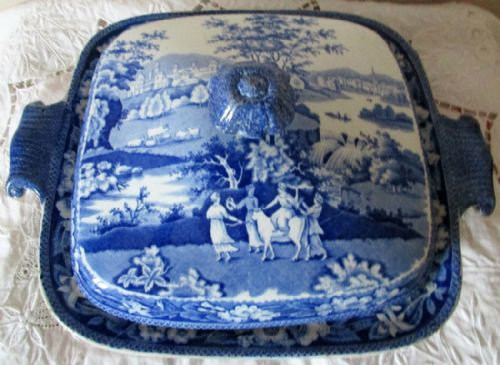
Transfer printing transferred complex blue and white patterns onto the ceramic surface before glazing and firing. Painters also applied gold leaf and gilding by hand to highlight handles, rims, and finials.
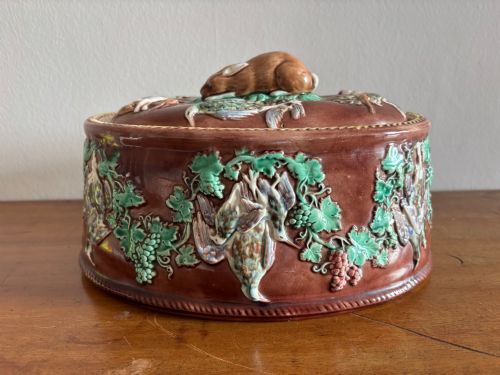
Makers shaped animal forms such as hens and chicks for specialised egg crocks and game pie dishes using mould-pressed earthenware. Enamel colours decorated certain porcelain and pottery bodies after the initial firing.
Listings for this phrase feature nineteenth-century ironstone, earthenware, and porcelain serving vessels decorated with blue and white transfer printing.
Quality Variations
The distinction between ordinary utility wares and top-tier pieces rests on the crispness of the transfer print and the delicacy of hand-painted gilding. Makers like Mason's and Wedgwood achieved finer body definition and registration in their prints.
Complete sets featuring original matching covers, stands, and ladles command greater interest than solitary bowls. The presence of gold leaf and intricate hand-enamelling elevates certain serving vessels above standard blue and white domestic pottery.
John and Richard Riley·Müller Volkstedt MV Co.·Copeland and Garrett
The Vintage Ceramic Tureen Dish Glossary
- Tureen
- A deep serving dish with a lid, used for soups, sauces, or vegetables. These lidded vessels often include matching ladles and underplates.
- Ironstone
- A heavy, durable type of earthenware patented in the nineteenth century. This dense ceramic body resisted chipping better than standard pottery.
- Transfer Print
- A decorative technique where an engraved copper plate transfers a design onto tissue paper, which is then pressed onto the ceramic. This method allowed intricate blue and white patterns to be repeated consistently.
- Egg Crock
- A lidded vessel shaped like a nesting hen or bird, used for storing eggs on the table or in the pantry. Staffordshire potteries produced these novelty containers in quantity during the Victorian era.
- Game Pie Dish
- A lidded ceramic container designed for baking and serving meat pies. These dishes frequently featured moulded animal motifs on the cover.
Vintage Ceramic Tureen Dish: Frequently Asked Questions
What was a tureen used for?
These lidded vessels held soups, sauces, or boiled vegetables at the dining table, keeping contents warm beneath a matching cover.
Servants brought the dish directly to the table where hosts served portions into individual plates using a ladle.
How do I date a ceramic tureen?
Examine the ceramic body, glaze characteristics, and any transfer-printed patterns or maker marks stamped underneath the base.
Ironstone bodies and blue and white transfer prints point toward nineteenth-century production, while porcelain pieces often align with Regency or earlier periods.
Can I use these for serving food?
Most antique ceramic tureens remain structurally sound for serving dry foods or room-temperature items at the table.
Crazing in the historic glaze means holding hot liquids or greasy foods for long periods can stain the porous earthenware beneath.
What is an egg crock?
An egg crock is a lidded container shaped like a sitting hen or bird, designed to hold fresh eggs on a kitchen counter or dining table.
Staffordshire potteries popularised these figural baskets during the Victorian period, combining storage with decorative pottery.