





Vintage Ceramic Tankard
These vintage ceramic tankard examples combine robust utility and decorative charm, offering sturdy vessels for ale and commemorative display.
Vintage Ceramic Tankard
A vintage ceramic tankard encompasses drinking vessels shaped for ale and beer, ranging from utilitarian earthenware to finely painted porcelain. When searching for a vintage ceramic tankard, buyers encounter pieces spanning the eighteenth century through the twentieth century, with nineteenth-century examples forming a substantial part of the selection.
The styles recorded on this page stretch from English Country Pottery and Victorian designs to German Historicism and Art Deco. Forms vary from single-handled mugs and large harvest cups to two-handled loving cups and lidded beer steins.
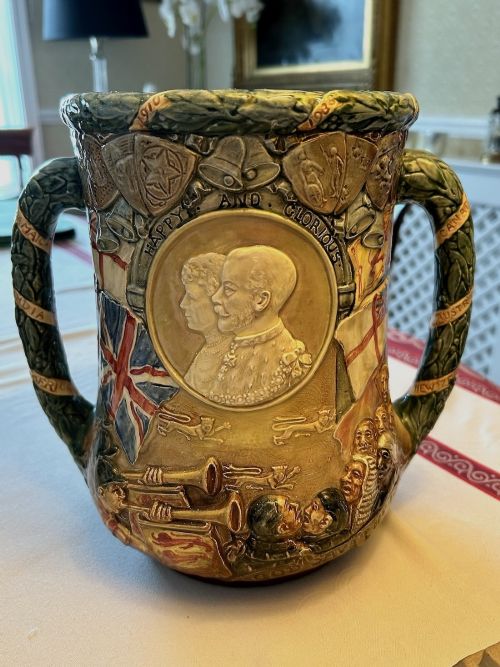
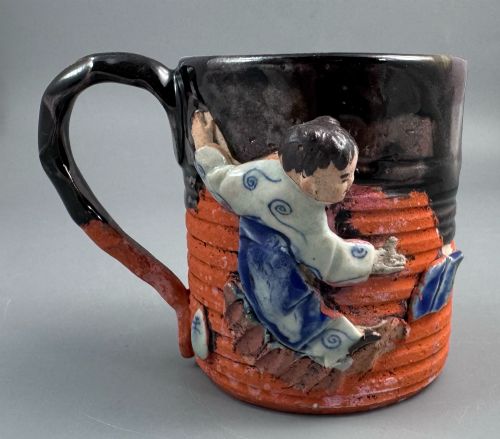
Makers and origins span English potteries like Worcester and Doulton Lambeth, alongside continental European tin-glazed faience and Japanese Sumida Gawa wares. Collectors find both commemorative presentation pieces bearing royal jubilees and school crests, and eccentric folk items featuring surprise frogs inside.
Materials and construction
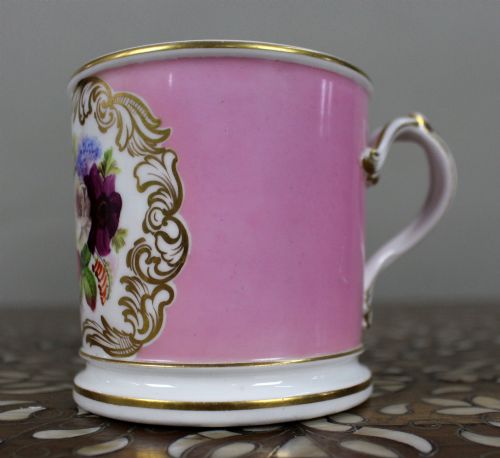
Potters built these vessels using stoneware, earthenware, pearlware, and porcelain, applying reactive glazes and polychrome enamel decoration to the finished body. Some pieces incorporate precious metals like gold leaf alongside moulded relief work and hand-painted motifs.
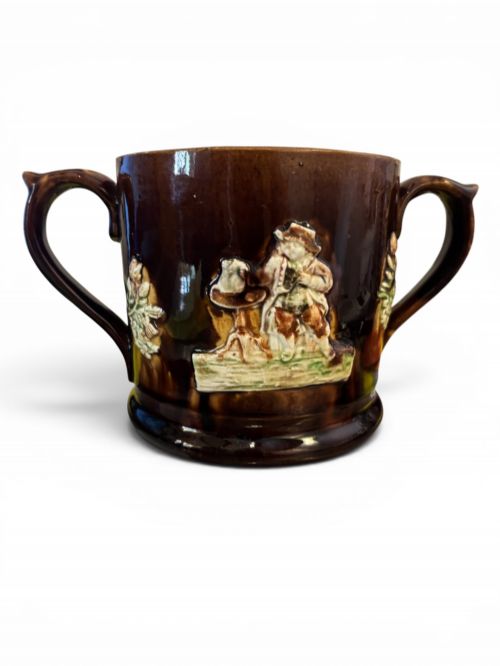
Sturdier bodies utilised durable stoneware and heavy earthenware suited for daily tavern use, while finer porcelain and pearlware accommodated delicate hand-painted floral panels or commemorative portraits. Metal mounts, including pewter rims and silver bands, frequently reinforced the lips and bases of larger drinking vessels.
Vintage Ceramic Tankard Retail Price Guide 2026
Typical asking prices for vintage ceramic tankard among the pieces listed under this phrase on Sellingantiques today, from the lower quarter to the upper quarter. They describe what is for sale here now, not the wider market.
Judging quality and character
Quality in these drinking vessels rests upon the crispness of the moulding, the control of the glaze, and the precision of the hand-painted or transfer-printed decoration. Finer examples display balanced proportions, clean relief modeling, and carefully executed polychrome palettes that remain crisp across the surface.
Historical association and provenance elevate certain pieces, such as those marked for specific institutions or royal commemorations, distinguishing standard production items from distinguished presentation pieces.
Grainger Worcester·Royal Doulton·Copeland·Doulton Lambeth·Hadley Worcester·Mettlach
The Vintage Ceramic Tankard Glossary
- Pearlware
- A refined earthenware developed by Josiah Wedgwood in the late eighteenth century, featuring a thin glaze with a bluish tint that pooled in crevices. It served as a popular canvas for bright underglaze hand-painted decoration.
- Stoneware
- A dense, vitreous ceramic fired at high temperatures until non-porous and impermeable to liquids. This material provided the durable body necessary for heavy-duty ale tankards and German steins.
- Loving cup
- A large drinking vessel featuring two or three handles, designed to be passed among guests at communal gatherings and celebrations. They frequently appear in pearlware and earthenware with commemorative inscriptions.
- Faience
- Tin-glazed earthenware decorated with opaque metallic glazes before a second firing. This technique allowed makers to achieve vibrant polychrome surfaces on large jugs and beer steins.
- Frog mug
- A satirical drinking vessel featuring a small ceramic frog or other creature moulded inside the base to surprise the drinker as the liquid drained. They are also known as surprise mugs.
Vintage Ceramic Tankard: Frequently Asked Questions
What is a frog tankard?
A frog tankard incorporates a small ceramic figure concealed inside the base that startles the drinker as the beverage empties. These novelty drinking vessels were popular in English taverns for drinking games and practical jokes.
Potters modeled frogs, newts, or other creatures in clay before attaching them to the interior floor of the mug beneath the liquid line.
How do I date an antique tankard?
Dating relies on examining the ceramic body, glaze characteristics, stylistic markers, and any maker marks or registration numbers stamped into the base. Changes in manufacturing techniques from earthenware bodies to refined pearlware and porcelain help narrow the period.
Historical inscriptions, royal jubilees, and institutional crests also provide firm chronological markers for commemorative pieces.
What is a loving cup?
A loving cup is a communal drinking vessel constructed with multiple handles to allow several people to hold it safely while sharing its contents. They were traditionally used at weddings, banquets, and civic celebrations.
Examples on this page feature two handles and often incorporate hand-painted floral motifs or commemorative event details.
Are German steins different from English tankards?
German steins typically feature heavy stoneware bodies decorated with moulded historicist reliefs, salt-glazed surfaces, or polychrome faience pigments. Many historical examples include attached pewter hinge lids designed to keep contents covered.
English tankards more commonly take the form of open-topped earthenware, pearlware, or porcelain mugs without lids, focusing instead on painted motifs or institutional commissions.