




Vintage Censer
A vintage censer brings ancient ritual forms into the home, offering bronze and cloisonne vessels designed to burn fragrant resins and woods.
Vintage Censer
When you search for a vintage censer, you encounter tripod bowls, lidded vessels, and koro forms originating from Chinese, Japanese, and Tibetan traditions. These pieces span from the seventeenth century through to the early twentieth century, reflecting varied cultural aesthetic movements.
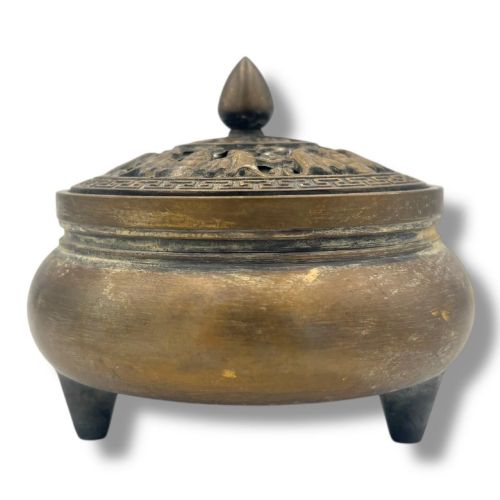
The most common examples on this page are tripod burners cast in bronze or brass, often featuring pierced lids and ritual motifs. Alongside these metal vessels, you find ceramic pieces with celadon glaze, Imari porcelain bowls, and hardstone carvings.
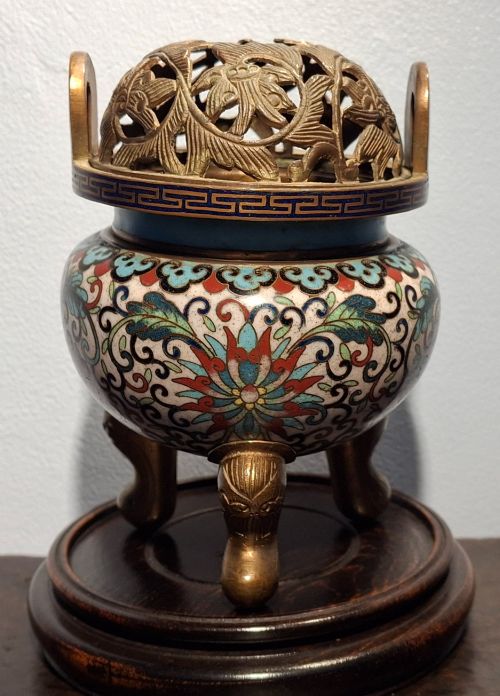
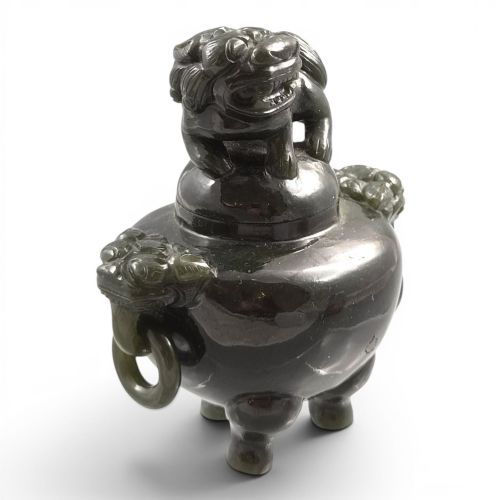
Scholarly pieces sit alongside decorative items, ranging from heavy bronze scholar's vessels to delicate cloisonne enamel and dark green jade tripod censers bearing foo dog handles.
How they were made
Makers utilised lost-wax casting for bronze and brass vessels, achieving heavy walls and stable tripod feet designed to withstand heat. Metal surfaces were occasionally accented with silver inlay or patinated to achieve deep, dark tones.
Ceramic examples were shaped from clay and finished with celadon glazes or painted in Imari porcelain palettes before high-temperature firing. Cloisonne enamel pieces required soldering thin bronze wires to form cells which artisans filled with coloured paste prior to firing and polishing.
Vintage Censer Retail Price Guide 2026
Typical asking prices for vintage censer among the pieces listed under this phrase on Sellingantiques today, from the lower quarter to the upper quarter. They describe what is for sale here now, not the wider market.
What varies in quality
Weight and wall thickness distinguish substantial scholarly metalwork from lighter decorative pieces, as seen in heavy seventeenth-century scholar's censers. The crispness of chased details, such as lotus floral patterns on pierced lids, indicates the maker's level of skill.
In cloisonne and enamel work, the uniformity of the wire cells and the smoothness of the polished surface dictate the standard of execution. For ceramic and hardstone items, the purity of the jade stone or the depth of the celadon glaze separates standard production from finer examples.
The Vintage Censer Glossary
- Tripod
- A vessel supported by three feet, commonly found beneath bronze and brass incense burners. This configuration ensures stability on uneven surfaces.
- Koro
- A Japanese term for an incense burner, typically featuring a body, a pierced lid for releasing smoke, and often three legs or a small stand.
- Cloisonne
- A decorative metalwork technique where fine wires are soldered to a metal body to create compartments, which are then filled with enamel paste and fired.
- Celadon
- A term for ceramics denoting both European-developed green glazes and their jade-like green predecessors. The subtle colour results from iron oxide in the glaze reacting during reduction firing.
- Xuande Mark
- An inscription referencing the Ming Dynasty Emperor Xuande, often cast into the base of later bronze censers as a mark of respect rather than an indicator of true period manufacture.
Vintage Censer: Frequently Asked Questions
What is a vintage censer used for?
These vessels were originally designed to burn incense during meditation, scholarly contemplation, or ritual ceremonies in Chinese, Japanese, and Tibetan traditions.
Today, collectors use them as decorative objects, mantel centrepieces, or functional burners for aromatic resins and woods.
How do I clean a bronze censer?
Bronze vessels benefit from gentle dusting with a soft, dry brush to preserve their aged patina and prevent the accumulation of debris in recessed patterns.
Avoid using water, chemical polishes, or abrasive cloths, as these treatments strip away historical surface oxidation and diminish the piece's character.
Are these censers waterproof?
Many older metal and stone censers were constructed for dry incense burning or ritual use rather than holding standing water for cut flowers.
Pouring water directly into unglazed ceramic or older metal vessels can cause internal corrosion or seep through hairline fractures in the material.
How do I tell Japanese and Chinese censers apart?
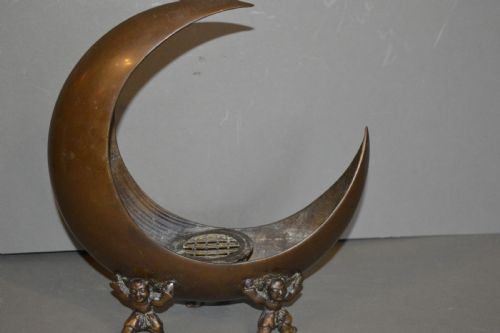
Japanese metalwork often incorporates distinct regional signatures, alternative vessel shapes like the crescent moon, or specific terms such as koro alongside silver and bronze alloys.
Chinese examples frequently draw upon archaistic tripod forms, imperial reign marks, or specific motifs like foo dogs and scholar's lotus patterns.