




Vintage Cattle Artwork
Vintage cattle artwork captures the quiet rural charm of pastoral life through oils and watercolours spanning the eighteenth to the early twentieth centuries.
Vintage Cattle Artwork
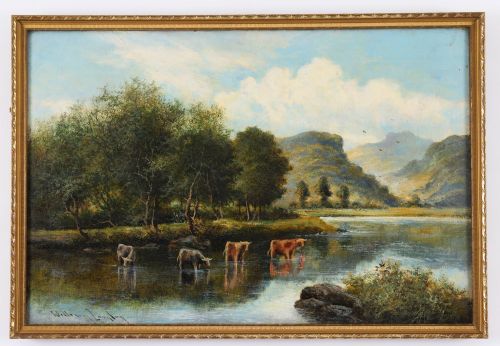
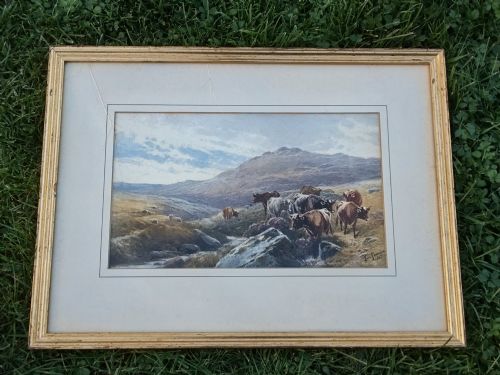
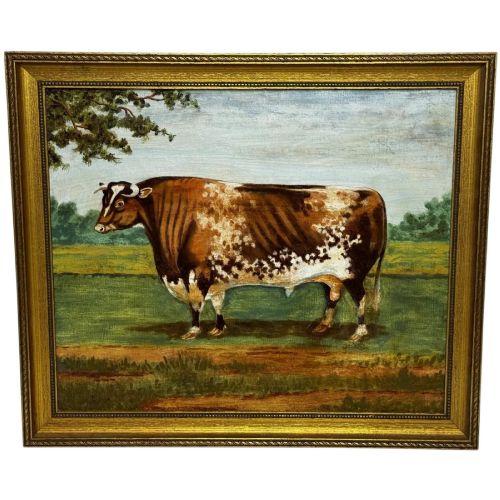
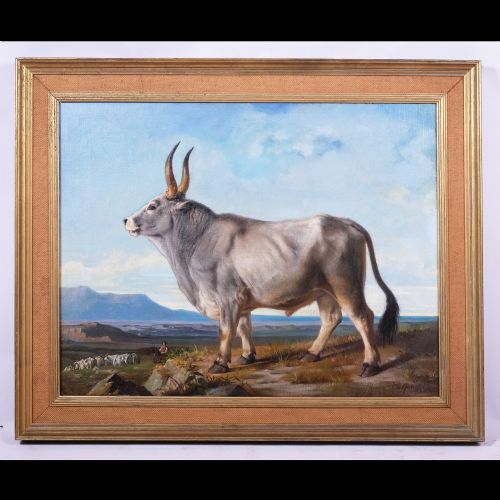
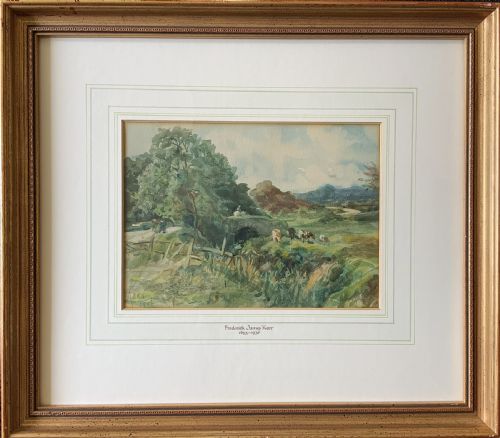
Vintage cattle artwork comprises framed paintings and watercolours depicting rural landscapes, pastoral scenes, and farm animals across various periods. These works frequently record prized shorthorn bulls, highland cattle by lochs, and drovers crossing rivers in British and European settings.
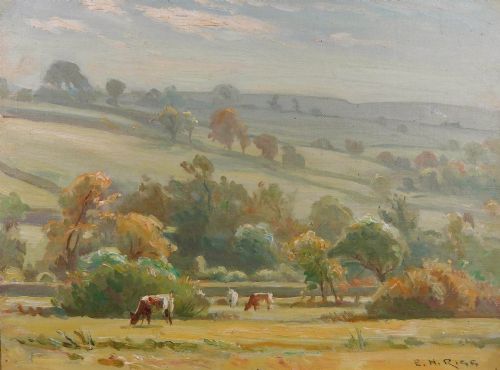
Buyers encounter oil paintings on canvas alongside delicate watercolours and gouache works on paper. The selection spans the Georgian and Victorian eras into Edwardian impressionism and the early twentieth century.
The subjects range from tranquil countryside pastures and riverbanks to mountainous Scottish landscapes. Each piece reflects the enduring artistic fascination with agricultural life and rural scenery.
How they were made
Artists utilised oil paint on stretched canvas and gouache or watercolour on paper to capture these rural subjects. Many works are housed in their original wooden or giltwood frames, occasionally featuring burr wood details.
Techniques vary from the detailed precision of nineteenth-century realism to the looser brushwork of British impressionism. Painters layered pigments to create texture in landscapes, animal coats, and skies.
Vintage Cattle Artwork Retail Price Guide 2026
Typical asking prices for vintage cattle artwork among the pieces listed under this phrase on Sellingantiques today, from the lower quarter to the upper quarter. They describe what is for sale here now, not the wider market.
Listings feature works across the eighteenth, nineteenth, and early twentieth centuries in oil paint, watercolour, and gouache.
What varies in quality
Quality rests in the handling of light, anatomical precision of the animals, and depth within the landscape composition. Masterful works integrate the cattle naturally into their surroundings rather than placing them as static figures.
The preservation of the original canvas, pigment vibrancy, and the condition of the period framing contribute significantly to the standing of each piece.
William Langley·Thomas Rowden·William H Myers·Ernest Higgins Rigg·Frederick James Kerr·A M Gauci·Henry Robinson Hall·Frederick Septimus Lewis·Ernest Pile Bucknall·Frederick James Knowles·Eugene Verboeckhoven·William Greaves·John Inigo Richards·Claude Cardon·George Turner·William Traies·John R K Duff·John Percy Cooke·Frederick William Jackson·William Sidney Cooper·Walter J Watson·Alfred de Breanski Sr·Owen Bowen·W A Clark·Milton Drinkwater
The Vintage Cattle Artwork Glossary
- Oil on canvas
- Pigments bound in a drying oil applied to a woven fabric surface stretched across a wooden frame. This medium allowed artists to build rich textures and deep colour tones.
- Watercolour
- Painting method where fine pigment powders are suspended in a water-based solution and applied to paper. It yields luminous, translucent washes of colour.
- Gouache
- An opaque water-based paint that includes a binding agent and white pigment fillers. It produces solid, matte areas of colour with greater coverage than standard watercolour.
- Giltwood
- Timber carved and coated with a thin layer of gold leaf or metallic gilt. It provides an ornate, reflective border popular for framing traditional paintings.
- Pastoral realism
- An artistic approach focusing on accurate, lifelike depictions of rural country life and agriculture. It avoids idealisation to show genuine farming scenes.
Vintage Cattle Artwork: Frequently Asked Questions
What periods do these paintings cover?
The works span from the eighteenth century through the Victorian and Edwardian eras up to the early twentieth century. This timeline showcases shifting artistic styles from classical pastoral views to impressionistic farm scenes.
Buyers will find pieces dated across the nineteenth century, including specific decades like the eighteen-nineties and nineteen-twenties.
Are the frames original?
Many listings feature works housed in their original wooden or giltwood frames, sometimes noted with burr finishes. These period frames complement the age and style of the artwork.
Framing styles vary from ornate gilt designs to simpler wooden borders appropriate to each specific painting's era.
How do I care for antique watercolours?
Works on paper require protection from direct sunlight to prevent the watercolour pigments from fading over time. Maintaining stable indoor humidity helps preserve the paper and backing.
Glazing with appropriate conservation glass guards the delicate painted surface against moisture and atmospheric dust.
What subjects feature in the landscapes?
Common subjects include shorthorn bulls, highland cattle by lochs, calves near rivers, and sheep grazing in pastures. Artists frequently depicted drovers navigating rural bridges and farmers tending livestock.
Settings range from Welsh rivers and Kentish streams to mountainous Scottish terrain and Yorkshire dales.