


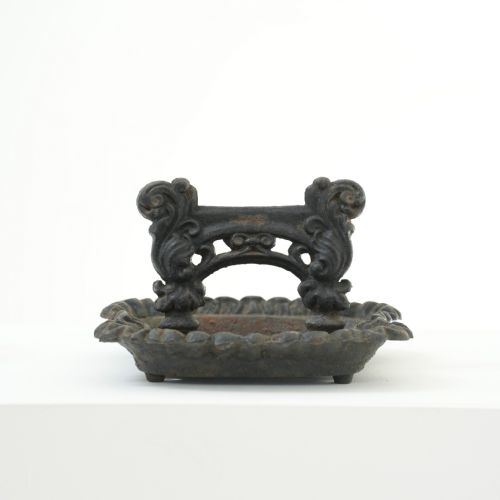


Vintage Cast Iron Scraper
These vintage cast iron scrapers are rugged entrance guardians that keep mud outside, offering enduring utilitarian character for any doorway.
Vintage Cast Iron Scraper
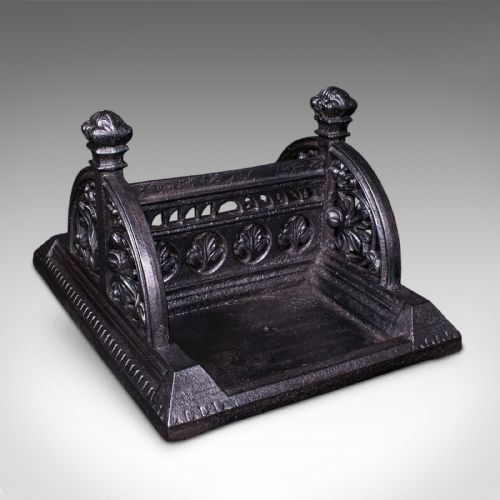
When you search for a vintage cast iron scraper, you are looking at heavy domestic hardware designed to clean muddy footwear before entering a building. These robust pieces range from simple utilitarian designs to decorative Gothic Revival examples fitted to stone blocks.
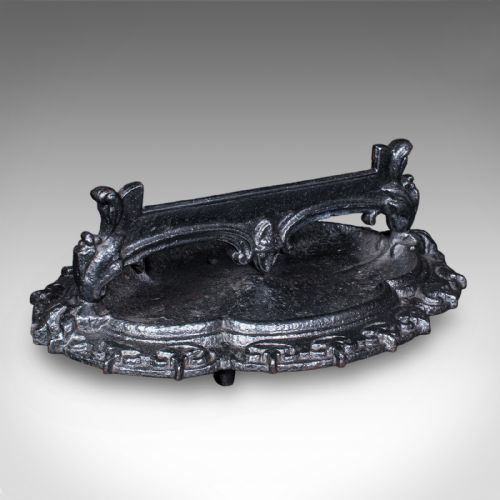
The versions you are most likely to meet on this page span the Georgian, Victorian, and Regency periods, originating from English country houses and townhouses. Many feature integrated shoe pulls alongside the metal blade, combining practical functionality with period style.
How they were made
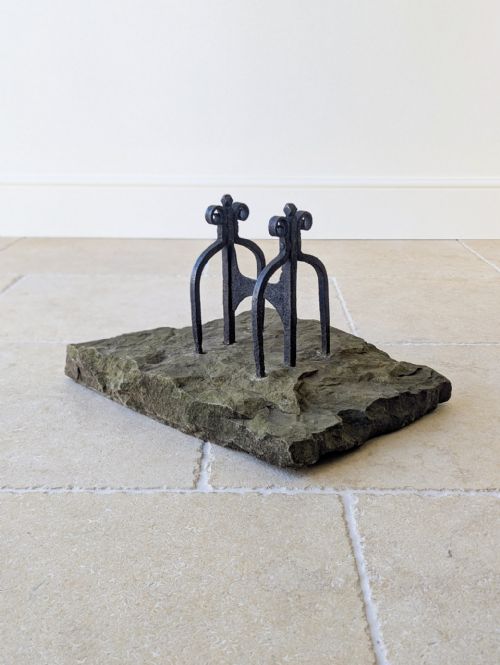
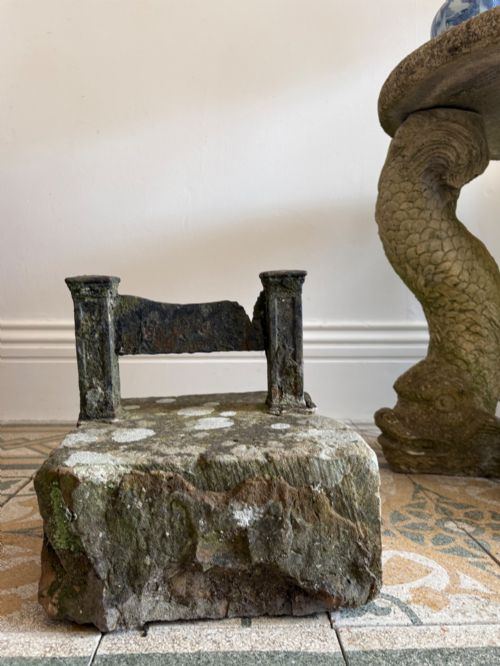
These items rely on durable cast iron and wrought iron blades, which provide the rigidity needed to scrape heavy mud from soles. The metalwork is frequently set firmly into hewn stone or Yorkstone blocks to anchor the piece securely at a doorway.
Foundries utilised traditional casting techniques to shape the iron into structural forms, sometimes incorporating Gothic Revival architectural motifs or simple oval designs into the finished metal.
Listings span the Georgian and Victorian eras, combining cast iron with heavy Yorkstone and natural stone bases.
What varies in quality
Quality in these pieces depends on the substance of the mounting and the ambition of the ironwork design. Heavy Yorkstone blocks and substantial country house proportions distinguish finer examples from standard townhouse numbers.
The presence of integrated shoe pulls and sophisticated Gothic Revival detailing elevates a piece beyond plain utility, reflecting the architectural standards of its original entrance.
Coalbrookdale
The Vintage Cast Iron Scraper Glossary
- Boot scraper
- An outdoor iron blade fixed near a doorway for scraping mud off footwear. These fixtures were essential outside historical townhouses and country houses.
- Shoe pull
- A side hook or handle on a boot scraper used to steady the foot while scraping. This addition assists with removing tall boots.
- Yorkstone
- A tough British sandstone frequently used as a base block for mounting scrapers. It provides the heavy foundation required to keep the iron stable.
- Gothic Revival
- An architectural and decorative style drawing on medieval forms, popular during the Victorian period. Scrapers in this style often feature pointed arches and decorative iron tracery.
- Cast iron
- Molten iron poured into a mould to create strong, rigid shapes. This material forms the primary blade structure for nearly all the pieces on this page.
Vintage Cast Iron Scraper: Frequently Asked Questions
Where were boot scrapers placed?
These pieces were positioned directly outside entrance doorways, often embedded in the paving or mounted near the threshold of country houses and townhouses.
Their location ensured visitors and residents could clean their footwear before stepping onto interior floors.
How do I date a scraper?
Dating relies on stylistic clues such as Gothic Revival architectural motifs, simple oval shapes, or the transition from Georgian to Victorian forms.
The integration of hewn stone blocks and wrought iron components also points towards specific nineteenth-century manufacturing periods.
What is a shoe pull?
A shoe pull is an attached metal hook or loop designed to help leverage footwear off the foot while using the scraper blade.
This feature is commonly found on larger townhouse and country house examples.
Can I use mine outside?
These cast iron and stone pieces are built entirely for outdoor placement and tolerate weathering well.
They function today just as they did in the nineteenth century outside a doorway.