



Vintage Cased Fish
Vintage cased fish bring the drama of the riverbank indoors through preserved specimens and fitted silver sets.
Vintage Cased Fish
Vintage cased fish encompass both taxidermy specimens mounted within glass display environments and cased silver or horn cutlery sets designed specifically for dining. These pieces capture a distinct Victorian and Edwardian fascination with natural history and formal hospitality.
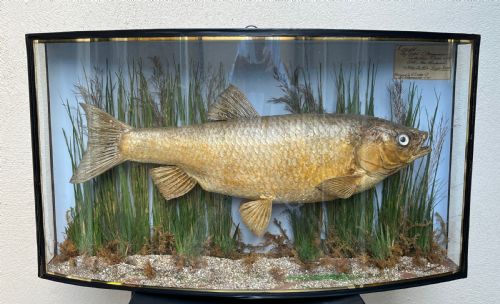
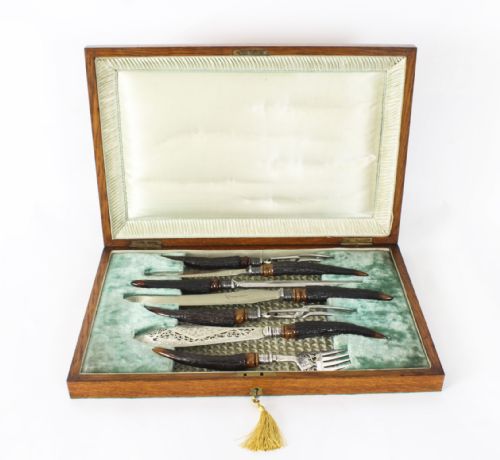
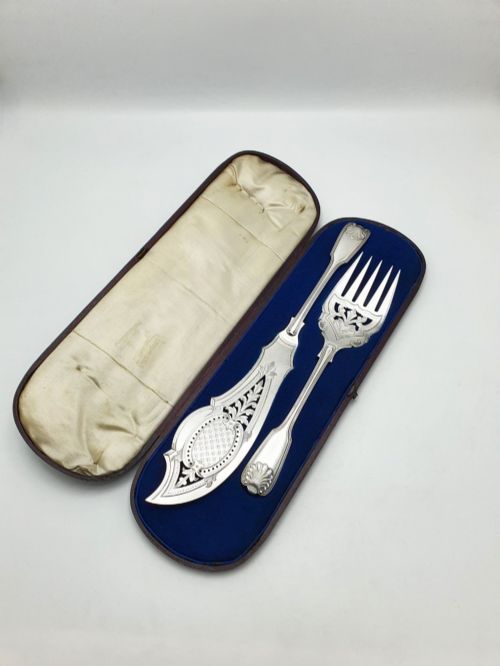
The taxidermy examples on this page typically feature river species such as roach, tench, pike, rudd, and golden carp presented inside glazed wooden enclosures. Alongside these mounted specimens, buyers encounter fitted oak canteens and boxed silver-plated sets housing fish servers and seafood picks.
Originating largely from the nineteenth and early twentieth centuries, these objects reflect period domestic interiors where sporting achievements and elaborate dining customs held central importance. The variety ranges from single preserved specimens bearing historical taxidermist signatures to complete boxed carving sets.
Materials and construction
Taxidermy specimens rely on preserved fish mounted against painted backgrounds, surrounded by dried reeds and grasses, and sealed within glass-fronted wooden cases. Ebonised wood often forms the outer framing of these display boxes, creating a dark border that focuses attention on the specimen within.
Cutlery and serving sets utilise silver plate or solid sterling silver for blades and picks, paired with handles fashioned from antler horn or conventional horn. These dining implements sit within lined compartments inside wooden canteens or presentation boxes.
Vintage Cased Fish Retail Price Guide 2026
Typical asking prices for vintage cased fish among the pieces listed under this phrase on Sellingantiques today, from the lower quarter to the upper quarter. They describe what is for sale here now, not the wider market.
Listings feature periods spanning from the Victorian era through the Art Deco epoch, utilising glass, ebonised wood, silver plate, and preserved specimens.
Factors of quality
Quality in taxidermy cases rests upon the realism of the preserved specimen and the artistry of the internal habitat setting, including the arrangement of dried reeds and the preservation of paper trade labels. Signed work from notable practitioners carries greater historical weight.
For cutlery and serving sets, the grade of silver plating, the depth of the engraved decoration on blades, and the condition of the horn handles determine the overall standard. Complete sets retaining their original fitted presentation boxes demonstrate superior survival.
Little & Co·James Jones of London·J. Cooper & Sons·Suckling Ltd.·Waring & Gillows
The Vintage Cased Fish Glossary
- Taxidermy
- The art of preparing, stuffing, and mounting the skins of animals for display. In this context, it refers to preserved fish mounted in glass cases.
- Ebonised wood
- Timber treated to resemble ebony, providing a dark, uniform finish. This material frequently frames nineteenth-century display cases.
- Silver plate
- A layer of silver applied to a base metal object. Many period dining and serving sets utilise this technique.
- Seafood picks
- Small utensils designed for extracting meat from shellfish. They appear in fitted sets alongside dedicated fish servers.
- Preserved specimen
- An animal body treated to prevent decay for exhibition. These form the central visual element of taxidermy displays.
Vintage Cased Fish: Frequently Asked Questions
What is vintage cased fish?
Vintage cased fish refers to taxidermy specimens preserved and displayed in glass-fronted wooden boxes, alongside cased silver-plated dining sets meant for seafood.
These pieces originate mainly from the Victorian and Edwardian eras, combining natural history preservation with formal dining traditions.
How were taxidermy fish displayed?
Taxidermy fish were mounted inside glazed wooden cases against painted backdrops that simulated riverbeds. Makers added dried reeds and preserved plants to complete the aquatic environment.
Ebonised wood frames were standard, protecting the delicate specimens from dust while allowing clear viewing from the front.
How do I identify maker signatures?
Maker names often appear on paper labels pasted inside the taxidermy cases or stamped onto the metal of cutlery sets. Historical taxidermists and silversmiths frequently marked their finished pieces.
Checking the interior woodwork and the base of blades reveals these identifying details.