
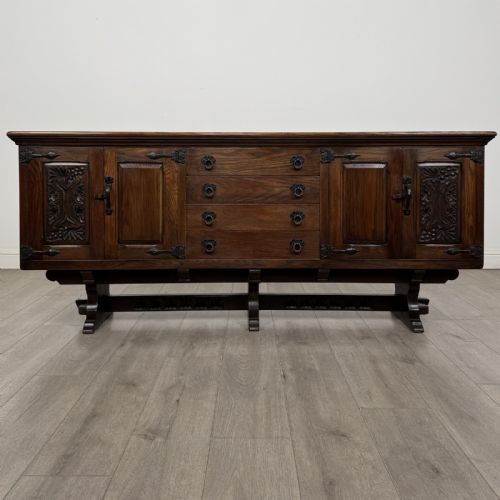
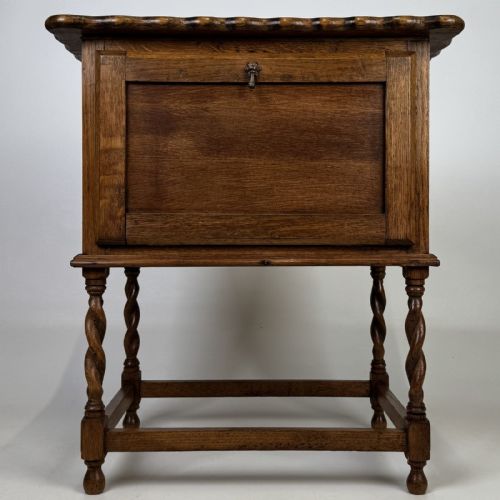
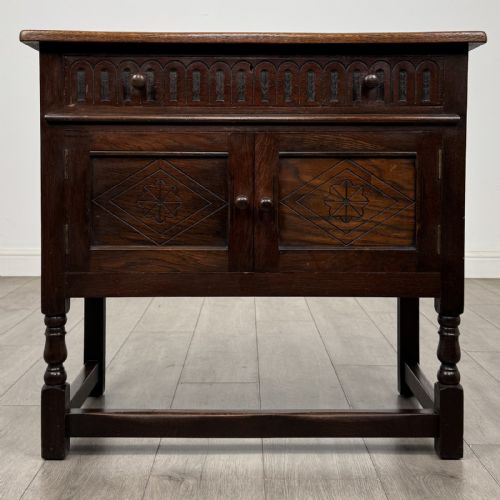
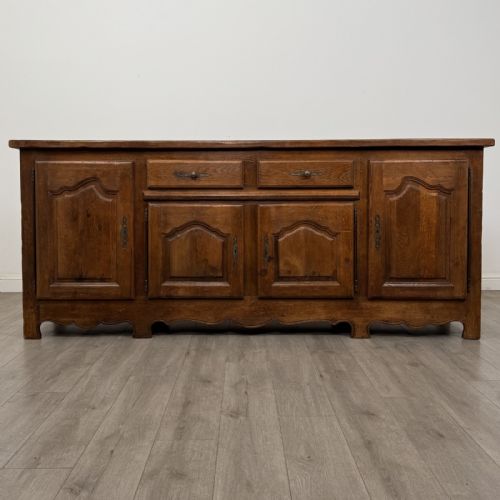
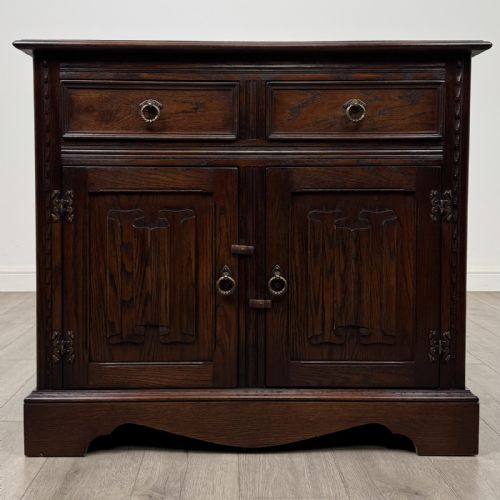
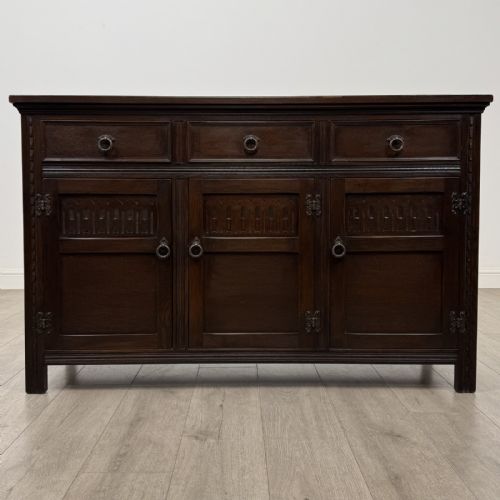
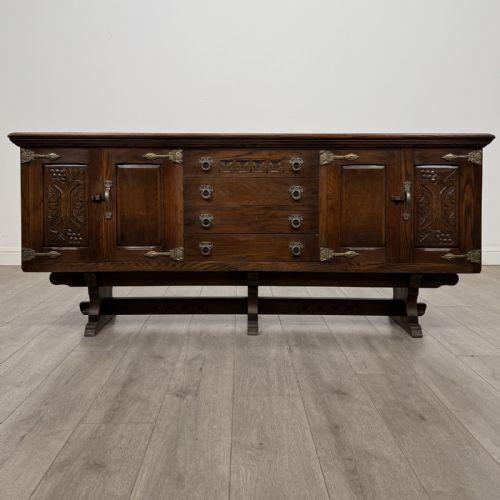
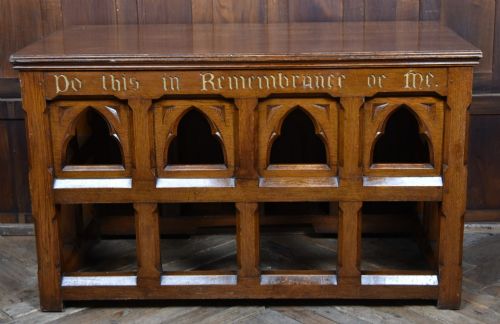
Vintage Carved Oak Sideboard
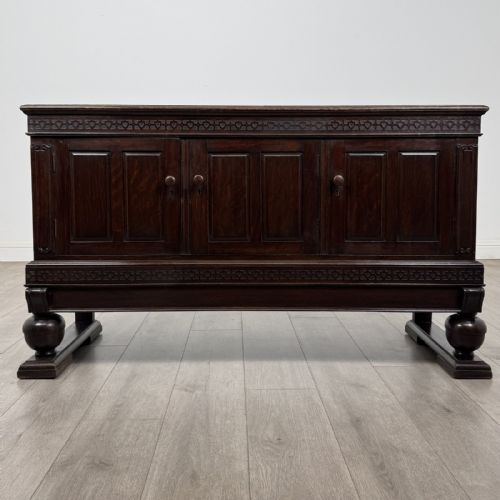
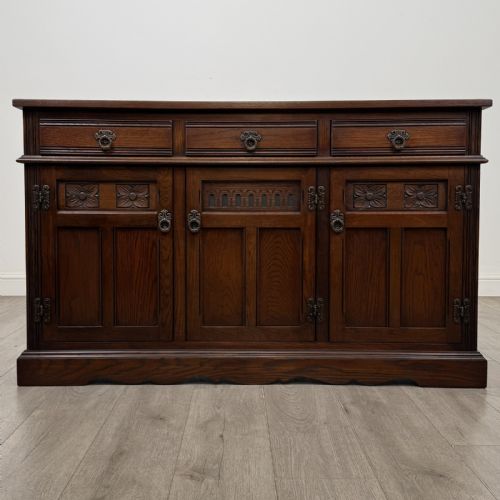
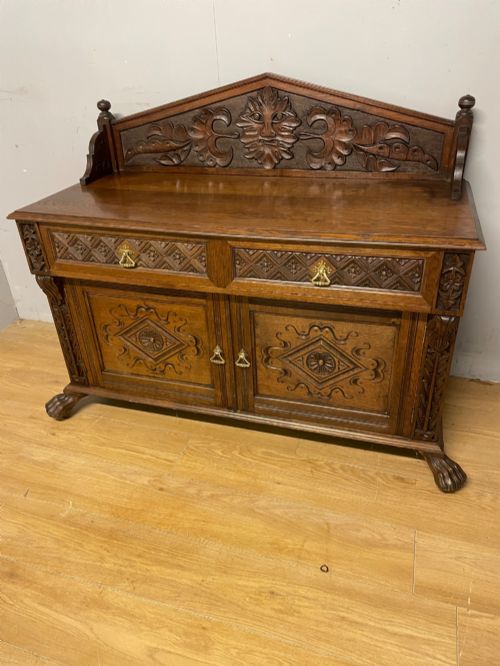
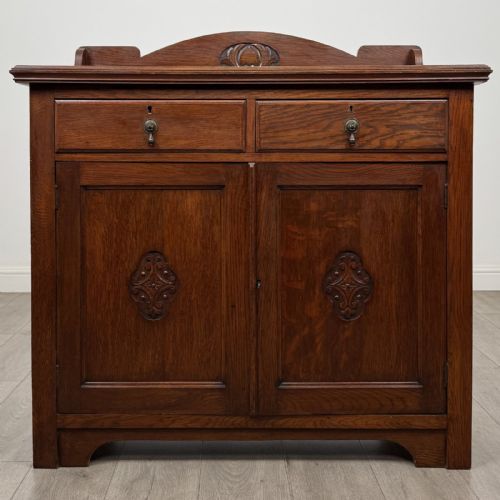
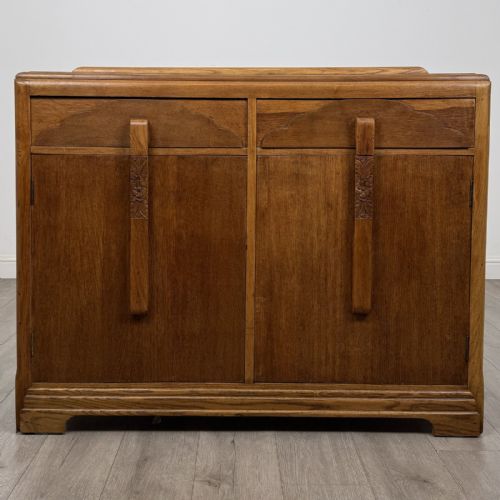
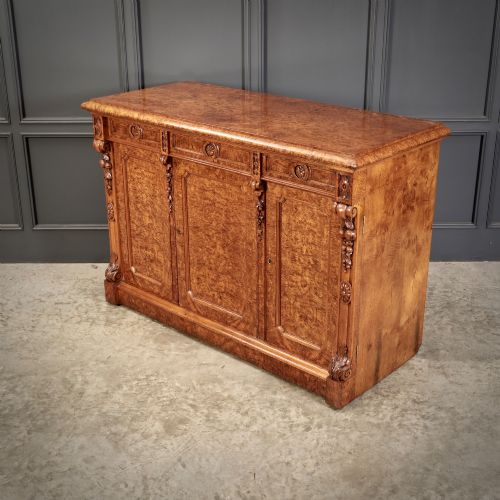
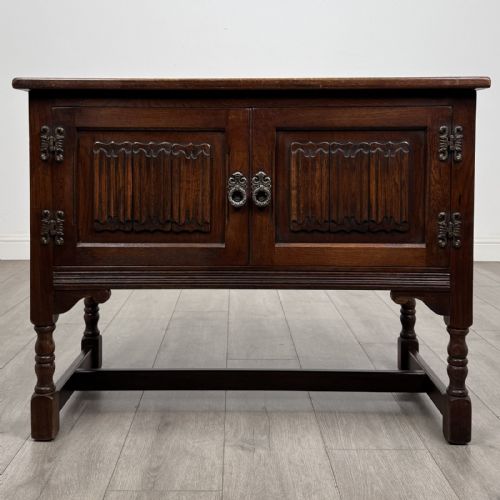
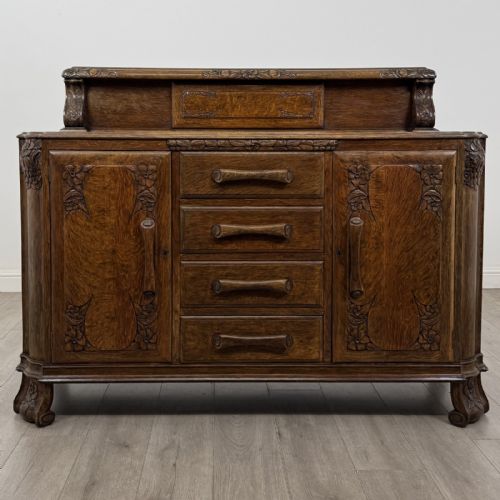
A vintage carved oak sideboard brings substantial timber storage and robust historic character directly into a modern dining room.
Vintage Carved Oak Sideboard
When you search for a vintage carved oak sideboard, you encounter substantial dining room storage spanning multiple historic revivals and centuries. The selection on this page leans heavily towards Edwardian and nineteenth-century examples alongside earlier regional dressers and cabinet pieces.
Makers utilised durable hardwoods to construct these heavy serving surfaces, cupboards, and dresser bases. You will find forms ranging from simple panelled cupboards to elaborately carved Jacobean revival servers fitted with drawers and display space.
The objects serve as practical room anchors that combine display surfaces with enclosed storage for tableware and linens. Their presence grounds a dining space through deep wood grains and traditional joinery.
How they were made
Carpenters built these heavy items primarily using solid oak timbers, often incorporating brass handles, iron hinges, and glass panelling for display doors. Selected pieces integrate marble tops, mirrored backs, or contrasting mahogany elements to vary the surface texture.
Construction relied on traditional joinery methods combined with deep relief carving applied to drawer fronts and cabinet doors. Turning lathes shaped structural supports such as barley-twist legs, while specialist panels featured linenfold motifs or Gothic tracery.
Materials paired with oak across these items include brass, marble, mirror glass, and iron.
What varies in quality
The depth and crispness of the hand-carved ornamentation separate standard cabinetwork from superior examples. Finely articulated foliage, geometric panels, and deeply turned supports demand considerable skill from the carpenter.
Selection of the timber itself dictates much of the visual weight, with golden oak, tiger oak, and burr walnut veneers offering striking grain patterns. The integration of secondary woods and original hardware further distinguishes the tier of craftsmanship.
Charles Dudouyt
The Vintage Carved Oak Sideboard Glossary
- Linenfold
- A style of wood carving used on panels to imitate folded fabric. Craftsmen carved this relief design extensively on sixteenth-century panels and later revival cabinet doors.
- Dresser Base
- A low rectangular cabinet fitted with drawers and frequently a lower potboard shelf. These pieces served historically for food preparation and serving in large kitchens.
- Barley-Twist
- A cylindrical furniture leg or support carved in a helical spiral twist. This decorative turning technique appears frequently on revival sideboards and tables.
- Potboard
- An open slatted lower shelf fitted beneath a dresser base. Historically, households used this platform to store heavy pots and ceramic serving dishes.
Vintage Carved Oak Sideboard: Frequently Asked Questions
What is a vintage carved oak sideboard used for?
These large cabinets provide functional surface space for serving food and drinks during meals. Beneath the top board, enclosed cupboards and drawers offer generous storage for heavy tableware, cutlery, and linens.
Placed in a dining room or hallway, the piece acts as a central focal point. It organises household items while displaying decorative objects on the upper surface.
How do I identify the period of an oak sideboard?
Examine the hardware, construction marks, and the specific style of carving present on the doors and drawers. Edwardian and Victorian revival pieces often display heavy machine-planed timber alongside deeply applied decorative mouldings.
Earlier eighteenth-century or seventeenth-century pieces show hand-chamfered panels and pegged joints rather than modern screws. Regional variations also point towards specific eras, such as Gothic tracery or Jacobean strapwork.
Will an oak sideboard fit in a modern dining room?
These cabinets possess a strong visual presence and considerable physical weight due to their solid wood construction. Measure your floor space carefully to ensure the heavy frame and swinging cabinet doors clear surrounding furniture.
Golden oak and dark tones complement both contemporary minimalist spaces and traditional interiors. The neutral wood grain allows the sideboard to anchor a room without overwhelming surrounding decor.
What is the difference between a sideboard and a dresser base?
A sideboard typically functions as a dedicated dining room serving console with a flat top and enclosed storage beneath. It focuses on surface utility and cabinet space for hosting meals.
A dresser base often originates from a kitchen setting and may feature an open potboard shelf underneath for displaying heavy crockery. Some versions include plate racks or upper shelving units attached to the top.