
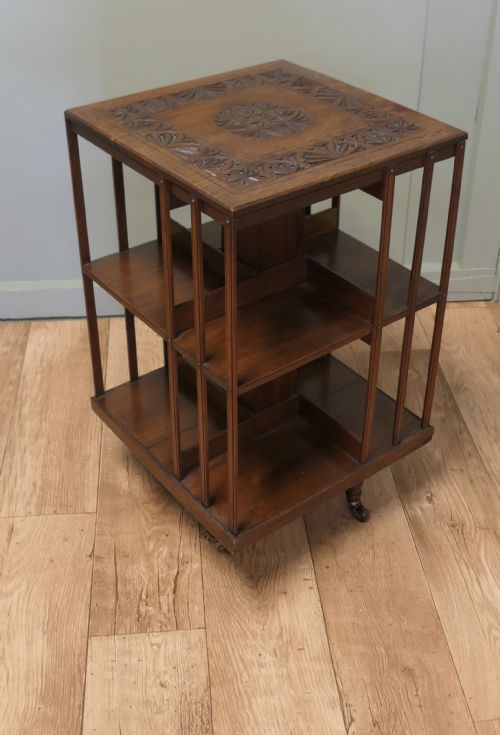
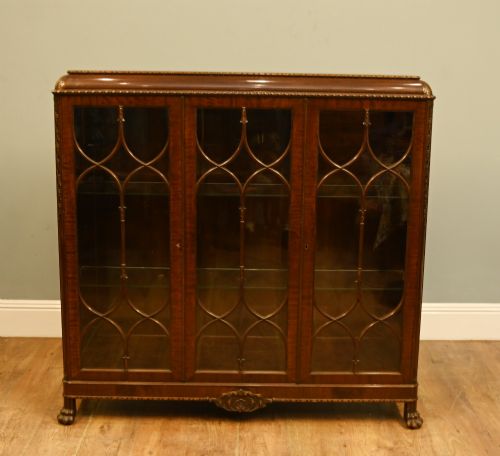
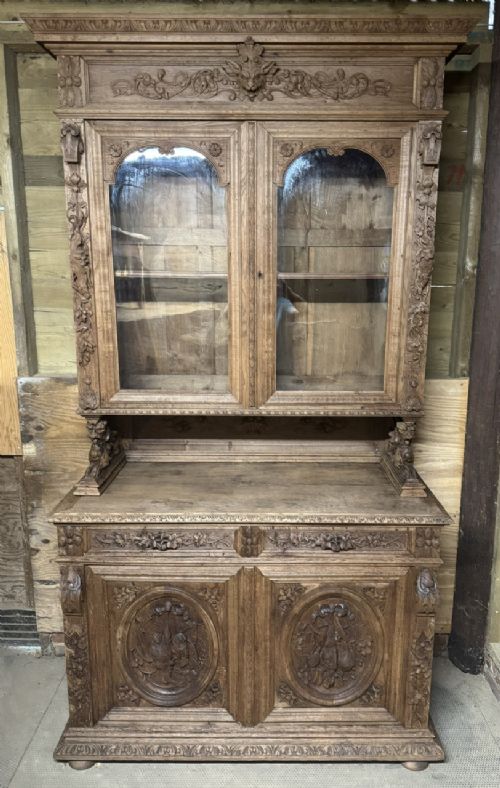
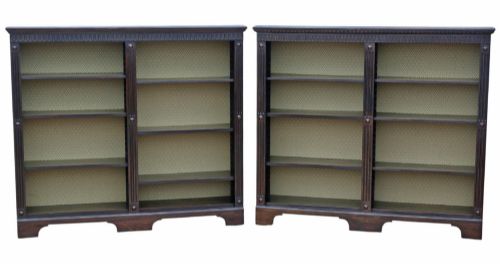

Vintage Carved Bookcase
A vintage carved bookcase brings warmth and structure to a room, offering practical shelving paired with the rich texture of traditional woodwork.
Vintage Carved Bookcase
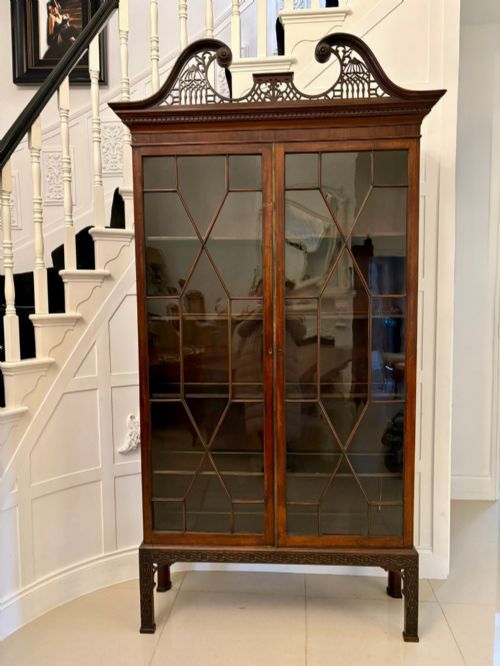
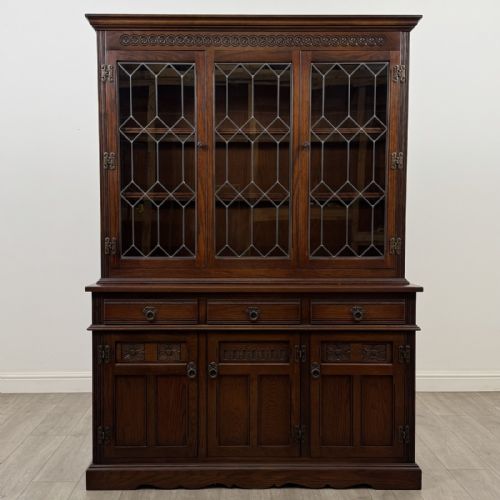
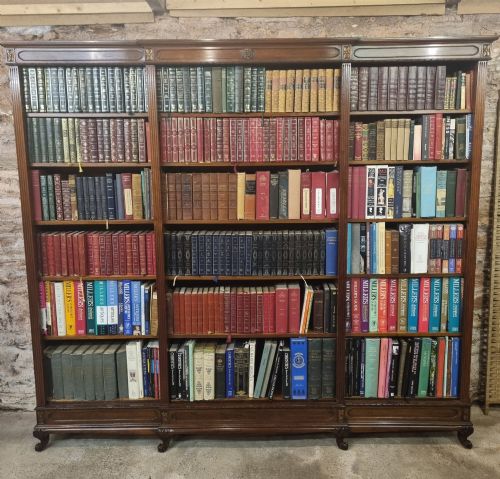
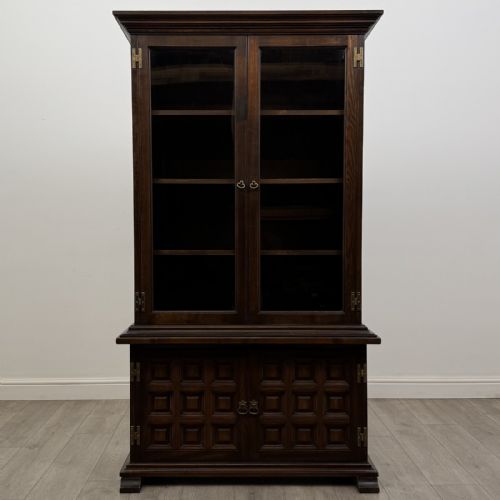
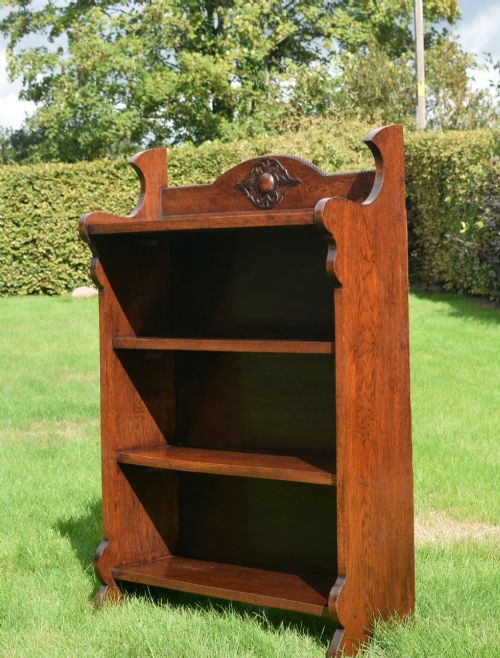
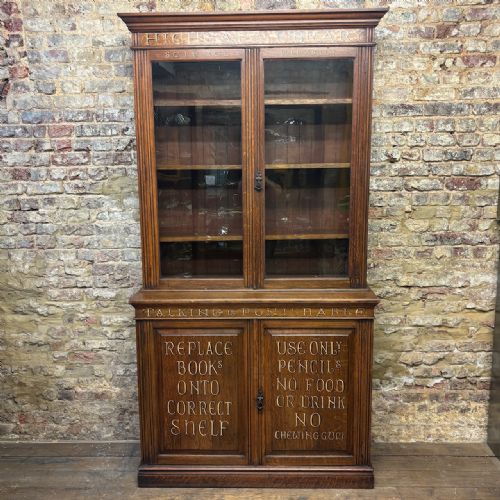
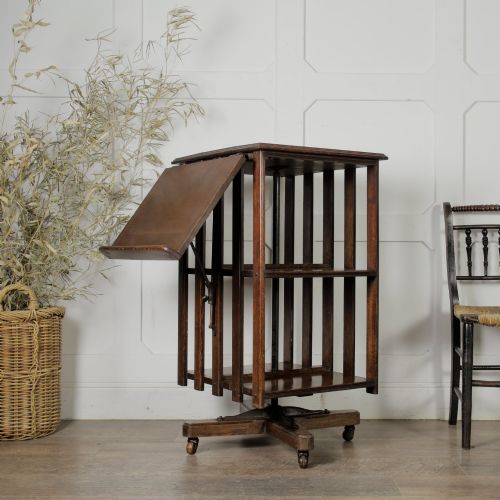
When you search for a vintage carved bookcase, you encounter sturdy timber storage units designed to house libraries and display prized volumes. These items stem from periods spanning the nineteenth century through the early twentieth century, taking forms such as open front shelves, glazed cabinets, and bureau combinations.
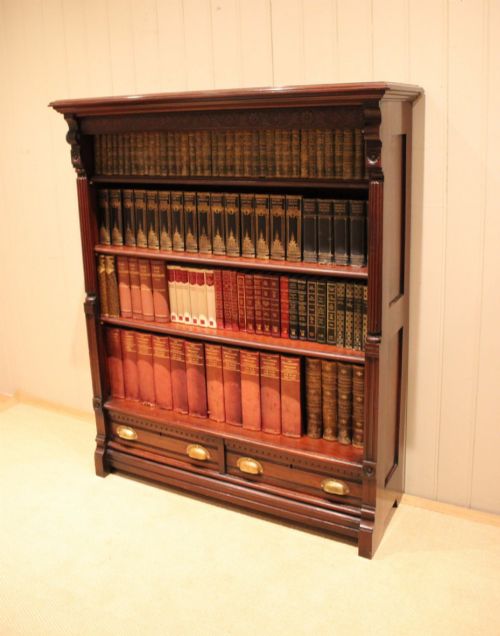
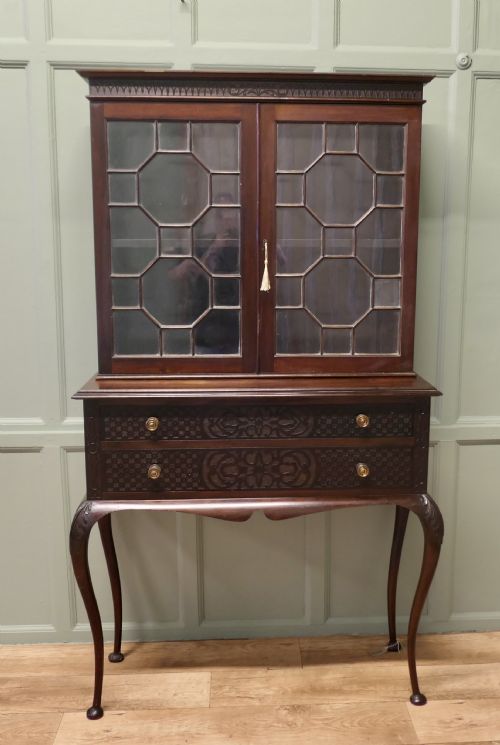
The most common pieces on this page are Edwardian and Victorian oak or mahogany designs. You will frequently find glazed double door cabinets, open library shelves with adjustable tiers, and compact pieces suited to smaller domestic spaces.
How they were made
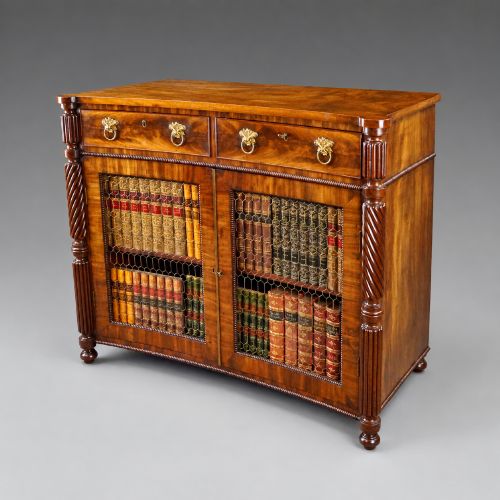
Cabinet makers relied primarily on solid oak, mahogany, and walnut to build these frames, often pairing the dense timber with brass hardware and glass door panels. Construction methods involved sturdy joinery designed to support heavy rows of books over decades of domestic use.
Carving was applied by hand to cornices, panels, and friezes, drawing on Revival styles such as Jacobean, Chippendale, and Arts and Crafts. Glazing bars were meticulously fitted to glass doors, while secondary timbers such as pine were frequently utilised for internal carcases and drawer linings.
Some school library bookcases carry decades of ink stains and marginalia inside their shelves, offering a quiet nod to past studious readers.
What varies in quality
The calibre of a piece rests upon the selection of timber and the crispness of the hand-carved detailing. Superior examples exhibit figured grain, well-matched veneers where applicable, and robust construction that keeps doors swinging true and shelves level.
Internal refinements also divide standard utilitarian cupboards from finer drawing room furniture. Adjustable shelving mechanisms, quality brass hinges, and well-executed astragal glazing bars separate the work of skilled cabinet workshops from more mass-produced items.
Maple & Co.
The Vintage Carved Bookcase Glossary
- Astragal glazed
- Glass doors divided into smaller panes by narrow wooden bars called muntins or astragals. This technique creates a lighter visual appearance on large bookcase fronts.
- Bureau bookcase
- A dual-purpose form featuring a sloping fall-front desk compartment below upper bookshelf storage. It provides a compact writing surface alongside a library.
- Vitrine
- A glass-fronted display cabinet originally intended for porcelain or curiosities rather than heavy reading volumes. They often feature glazed side panels to maximise light entry.
- Linenfold
- A style of carved wooden panelling designed to resemble folded vertical lengths of cloth. It is frequently seen on early twentieth century oak furniture referencing Tudor motifs.
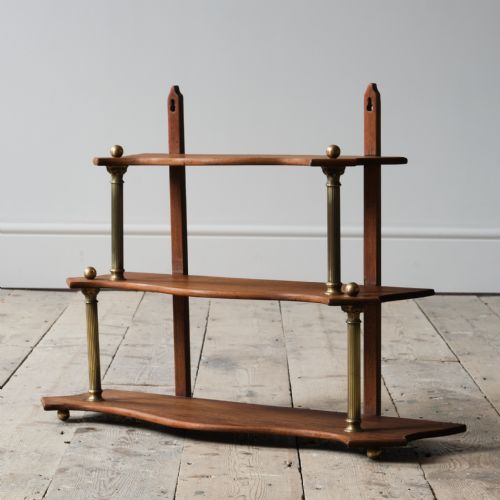
- Etagere
- An open piece of furniture consisting of multiple tiers or shelves for displaying small objects. These frames are supported on turned or slender upright legs.
Vintage Carved Bookcase: Frequently Asked Questions
How do I adjust wooden shelves?
Many nineteenth and twentieth century bookcases feature traditional wooden tooth racks or brass stub strips inset into the interior sides. You simply lift the shelf slightly, reposition the supporting brackets or wooden pegs into the desired slots, and lower the board back into place.
Take care when moving older timber shelves, as dry wood can bind tightly within the vertical tracks. Ensure the board is level before loading books back onto the surface to prevent the frame from warping under uneven pressure.
Are the glass panels original?
Original antique glass often displays subtle surface waviness, tiny air bubbles, and slight thickness variations caused by early cylinder or crown manufacturing methods. Examining the glass under an angled light reflection helps reveal these charming irregularities.
Replacement glass tends to be perfectly flat and uniform in clarity. While modern replacement glass offers greater structural safety, original panes contribute significantly to the authentic character of a period cabinet.
Can I use these for heavy books?
Most solid oak and mahogany library pieces were engineered specifically to hold substantial collections of heavy volumes. Check that the shelves are well-supported on sturdy wooden bearers or metal pins before loading large folios.
Open front bookcases from the Victorian and Edwardian eras handle significant weight well if the timber remains sound. Period bureau bookcases and smaller wall-hanging shelves should be loaded more cautiously according to their scale.