





Vintage Cannon
These vintage cannon pieces combine martial history and desk ornaments, offering a tangible link to centuries of artillery design for collectors and display.
Vintage Cannon
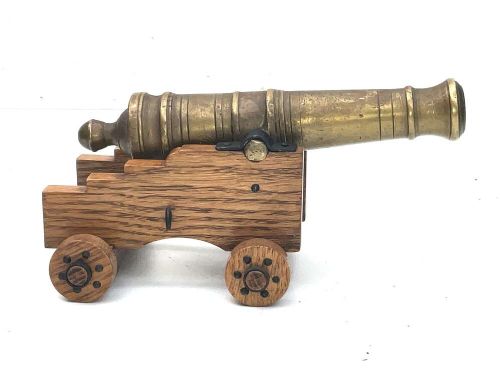
When you search for vintage cannon, you encounter a diverse range of items including scale models, signal cannons, desk ornaments, and maritime artillery pieces. These objects span periods from the pre-16th century up through the Victorian and Edwardian eras, reflecting both functional ordnance and decorative tributes.
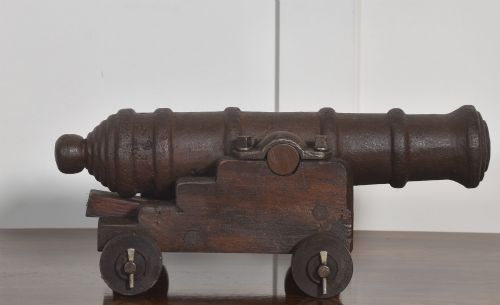
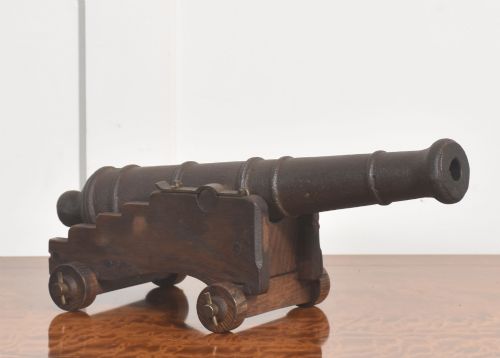
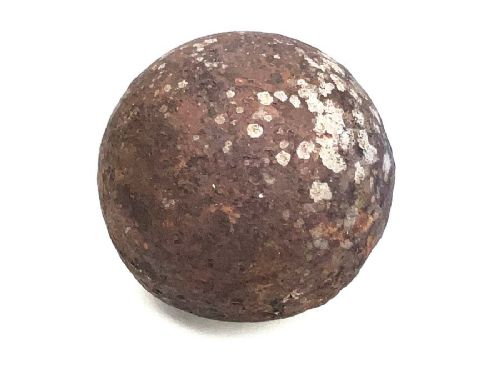
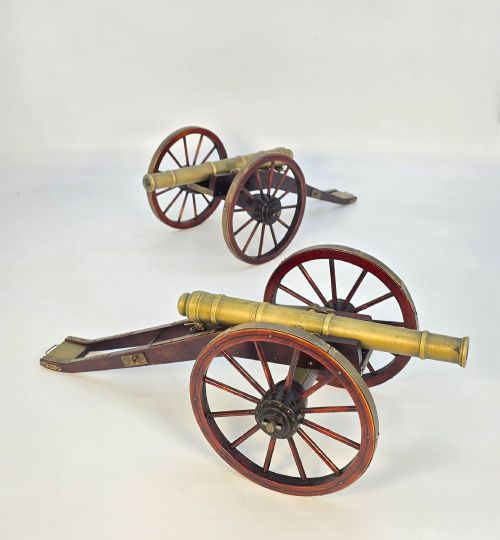
You are most likely to meet cast iron and brass signal cannons mounted on wooden carriages among these listings. Such pieces frequently date from the nineteenth century or the early twentieth century, designed either for maritime signalling or domestic display.
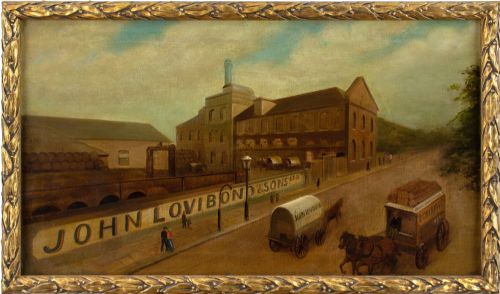
The selection also extends into unexpected forms like oil paintings, brooches, and fire screens that incorporate artillery themes or related imagery. This variety means buyers find everything from precise brass scale models to heavy garden cannon pairs.
How they were made
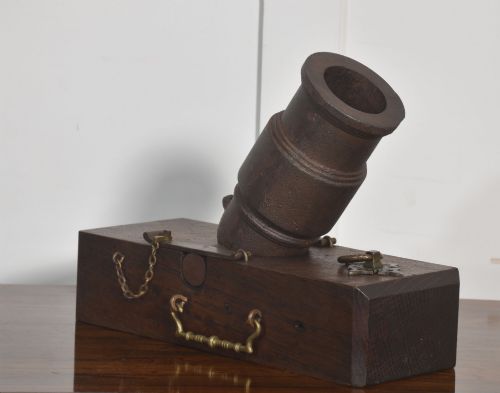
Makers utilised durable metals such as brass, bronze, cast iron, and polished steel to form the barrels and mortars of these artillery pieces. These metals provided the necessary weight and rigidity, whether the item was a functioning signal piece or a decorative desk ornament.
Carriages and undercarriages were typically fashioned from hardwoods including oak and mahogany, complementing the metallic barrels with traditional joinery. Artisans balanced structural integrity with aesthetic proportion to ensure each scale model or signal cannon resembled full-sized ordnance accurately.
Vintage Cannon Retail Price Guide 2026
Typical asking prices for vintage cannon among the pieces listed under this phrase on Sellingantiques today, from the lower quarter to the upper quarter. They describe what is for sale here now, not the wider market.
Listings feature items spanning from pre-16th century pieces to the 1930s, utilising brass, cast iron, oak, and bronze.
What varies in quality
The precision of the metal casting and the fidelity of the scale model dictate the upper tiers of quality. Finer examples display crisp barrel markings, balanced proportions, and clean finishing on both the metalwork and the wooden carriages.
Material choice and carriage construction also establish differences across the range. Hand-built models utilising heavy polished bronze and seasoned oak or mahogany sit distinctly apart from simpler decorative iron castings.
The Vintage Cannon Glossary
- Signal cannon
- A small piece used primarily for firing blank charges to signal events, start races, or salute at sea. These are frequently mounted on timber carriages.
- Signal mortar
- A short, wide muzzle-loading tube designed to project pyrotechnics or noise rather than solid shot. They appear paired with wooden bases in nineteenth-century examples.
- Gribeauval system
- A standardised artillery design developed in France that modernised field gun construction. Models reproducing this system feature specific proportions and carriage details.
- Colubrina
- An early type of long-range cannon utilised from the fifteenth century onwards. Scale models of these historic pieces replicate their distinct tapered barrels.
- Militaria
- Artefacts and collectables relating to warfare and military history. This category encompasses model cannons, ordnance pieces, and related historic objects.
Vintage Cannon: Frequently Asked Questions
What is a signal cannon?
A signal cannon is a small-scale artillery piece built to create a loud report rather than fire a projectile. People utilised them historically for maritime communication, starting yacht races, or celebrating occasions.
Today, collectors acquire these pieces as desktop ornaments or display items. They combine mechanical historical interest with compact proportions suitable for home interiors.
How do I identify the period?
Dating relies heavily on material composition, manufacturing methods, and stylistic cues from the Victorian, Edwardian, or earlier eras. Cast iron and heavy brass models often carry specific Victorian or nineteenth-century characteristics.
Examining the wood of the carriage and the finish of the metal provides further clues. Comparing these elements with documented designs helps place the object in its correct historical decade.
How do I care for brass and iron?
Maintaining these metals involves keeping them in stable indoor environments away from excessive moisture. Gentle dusting preserves the surface without stripping patinas built up over decades.
Polished brass and steel benefit from occasional soft cloth wiping to remove fingerprints. Unfinished cast iron requires minimal intervention beyond dry cleaning to prevent rust.