



Vintage Canine Canvas
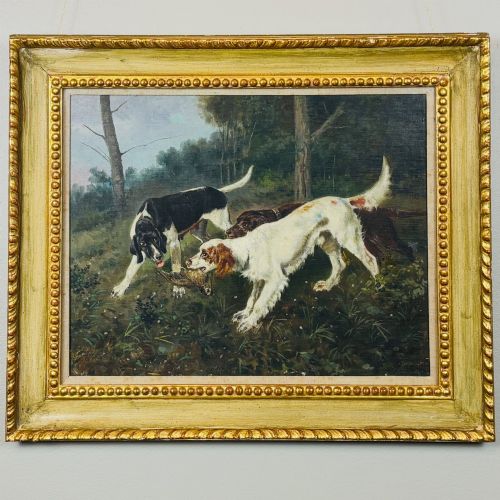
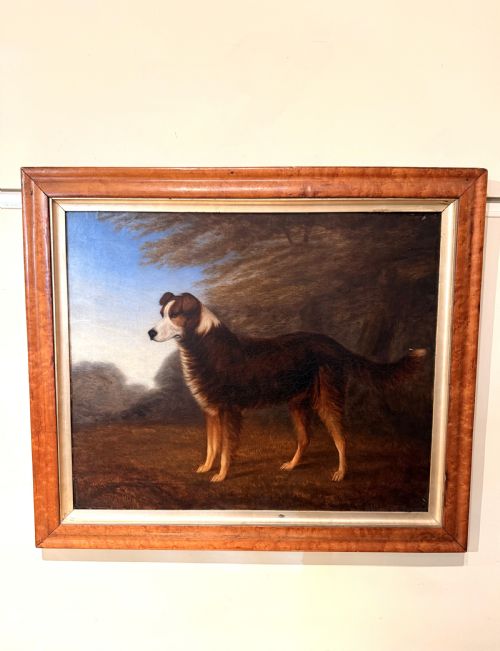
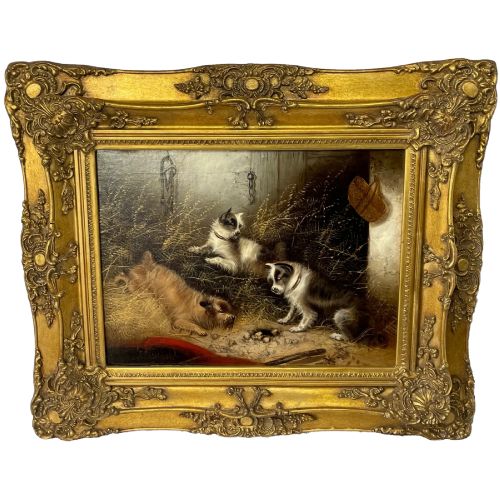
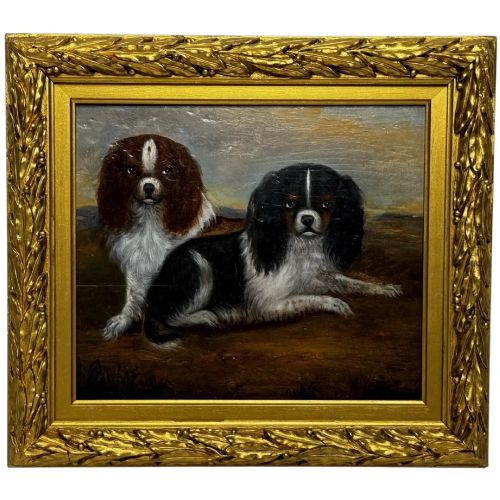
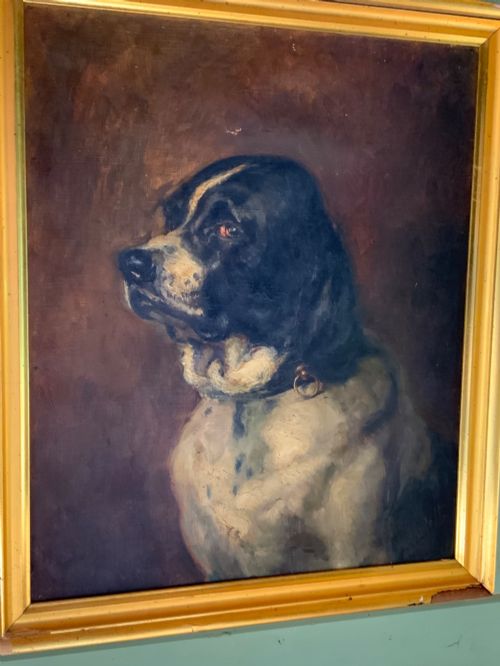
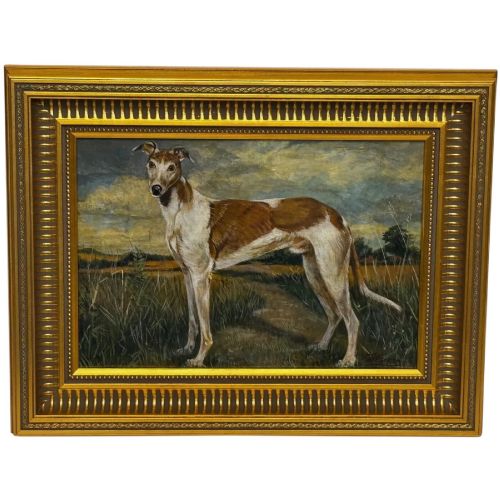
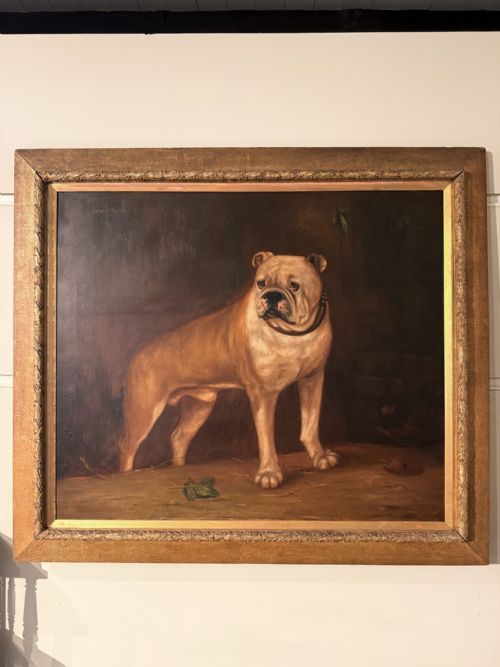
Vintage canine canvas works bring character to a room through painted studies of spaniels, terriers, and hounds.
Vintage Canine Canvas
A vintage canine canvas search uncovers oil paintings depicting dogs, spaniels, terriers, and sporting hounds across the nineteenth and twentieth centuries. These artworks range from intimate domestic animal portraits to larger Victorian sporting scenes set within landscapes and interiors.
Most pieces encountered on this page originate from the Victorian era and the interwar period, capturing breeds from working terriers to St Bernards. Artists from both British and French schools dominate these works, employing realistic portraiture techniques to record individual dogs.
Materials and Technique
These works are executed in oil paint on woven canvas stretched over wooden frames, often housed within gilt or giltwood surrounds. Artists applied pigments in layers to render the texture of fur, expression in the eyes, and naturalistic backgrounds.
The physical support consists of canvas secured to timber stretchers, sometimes showing age-related craquelure in the oil paint surface. Frames combine carved wood with gilded finishes appropriate to the period of creation.
Vintage Canine Canvas Retail Price Guide 2026
Typical asking prices for vintage canine canvas among the pieces listed under this phrase on Sellingantiques today, from the lower quarter to the upper quarter. They describe what is for sale here now, not the wider market.
Listings feature oil paintings on canvas spanning the nineteenth century through the mid-twentieth century, including Victorian works.
Evaluating Quality and Execution
Superior examples demonstrate anatomical precision, careful rendering of light in the animal coat, and a convincing sense of character in the subject. Lesser pieces rely on formulaic repetition without capturing the specific personality of the dog.
The skill of the brushwork in handling difficult textures like curly or wire-haired coats separates accomplished works from ordinary decorative copies. Background execution, whether a detailed landscape or a simple interior, also dictates the standard of the piece.
Edward Armfield·John Emms·LM Webb·William Barraud·Sir Edwin Landseer·M.E.Hankinson·Valentine Thomas Garland·Florence Mabel Hollams·Henry Frederick Lucas-Lucas·Samuel John Carter·Robert Cleminson
The Vintage Canine Canvas Glossary
- Canvas
- A heavy woven fabric used as a surface for oil painting. It is typically stretched tightly across a wooden frame before application of the ground and paint.
- Giltwood
- Wood that has been treated with a thin layer of gold leaf or gilt powder. This finish appears frequently on the antique frames enclosing these dog portraits.
- Sporting Art
- A genre of painting dedicated to hunting, shooting, and working animals. Many canine works fall into this category due to their focus on hounds and terriers.
- Craquelure
- A fine network of microscopic cracks appearing across the surface of old oil paint. It results from the natural drying and ageing process of the pigments.
Vintage Canine Canvas: Frequently Asked Questions
How do I date a dog painting?
Examine the canvas preparation, the style of the wooden stretcher frame, and the clothing or hairstyle of any human figures included in the composition. Breed types and painting techniques also offer strong chronological clues.
Compare the signature and framing methods with documented examples from known artists working in the nineteenth and twentieth centuries.
Where were these dog portraits hung?
Victorian and Edwardian owners placed animal portraits in libraries, country house reception rooms, and hallways. Sporting paintings often decorated estate rooms associated with field sports and hunting.
Today, these works suit studies, living rooms, and hallways where traditional oil paintings add warmth and character to interior spaces.
How do I care for an oil painting on canvas?
Keep the canvas away from direct sunlight, damp environments, and sudden temperature fluctuations that can cause the paint to crack. Dust the surface gently with a soft, dry brush without applying pressure.
Avoid using water, chemical cleaners, or cloths on the painted surface, and consult a professional conservator if cleaning is required.
What is the difference between British and French school dog art?
British canine painting often emphasises working dogs, terriers, and sporting hounds in realistic outdoor or kennel settings. Artists focused heavily on the specific traits of recognised breeds.
French school works from the same periods frequently incorporate distinct interior settings, courtyards, or stylistic touches that separate them from British sporting traditions.