

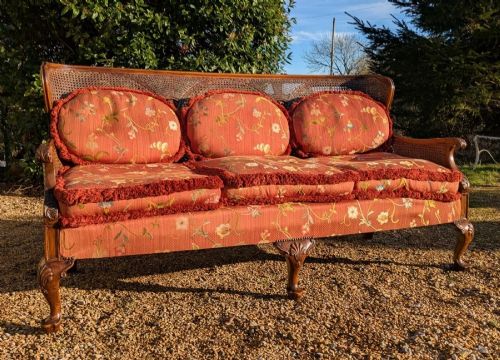


Vintage Cane Sofa
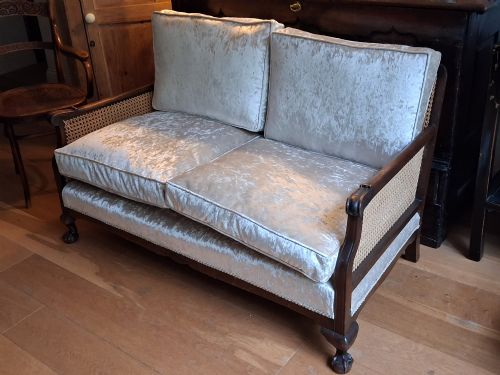
A vintage cane sofa brings textural warmth to a room, pairing open woven panels with carved wood frames from the nineteenth and early twentieth centuries.
Vintage Cane Sofa
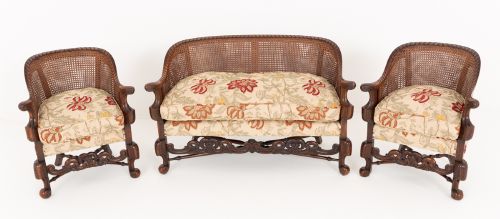
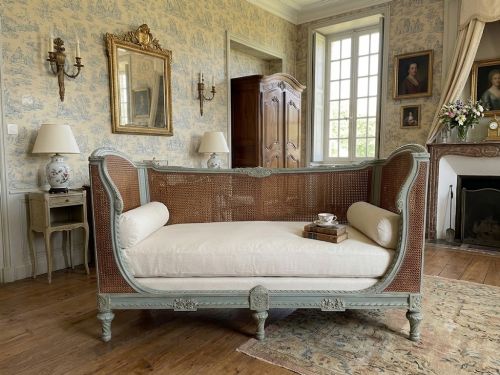
When you search for a vintage cane sofa, you encounter seating built across the nineteenth and early twentieth centuries, drawing heavily on French styles and revival aesthetics. The forms span two-seater settees, daybeds, and matching suites, often upholstered with loose feather cushions or padded seats.
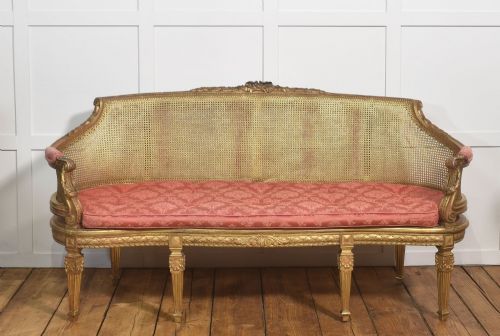
You are most likely to meet French Louis XVI style pieces and nineteenth-century bergères on this page. These designs use woven cane panels for the backrests and sides, supported by walnut, beech, or painted hardwood frames.
The selection also includes Anglo-Indian hardwood pieces alongside industrial bentwood loveseats and revival models. Each version balances rigid wooden structures with the flexible give of woven plant fibres.
How they were made
The frames rely on hardwoods such as walnut, beech, and painted or gilded wood, shaped by hand or turned to follow period revival styles. Carved details define the crest rails and arm terminals on French and Anglo-Indian models.
Cane panels use split rattan woven through holes drilled into the wooden framework or locked into channels. This traditional technique creates a breathable, resilient surface that flexes under weight.
Vintage Cane Sofa Retail Price Guide 2026
Typical asking prices for vintage cane sofa among the pieces listed under this phrase on Sellingantiques today, from the lower quarter to the upper quarter. They describe what is for sale here now, not the wider market.
Current listings feature pieces spanning the nineteenth century up to nineteen-thirty, utilising cane, beech, walnut, paint, and velvet.
What varies in quality
The tightness and regularity of the cane weave set the baseline for craftsmanship, alongside the depth and crispness of the wood carving on the frame. Denser weaving patterns distribute weight evenly and resist sagging over decades of use.
The choice of secondary materials elevates certain examples, from original paint finishes and gilding to solid walnut construction and feather-filled cushions. Finer proportions and cohesive revival styling separate standard seating from exceptional conversation pieces.
The Vintage Cane Sofa Glossary
- Bergère
- An enclosed upholstered armchair or sofa with wooden sides filled with cane work. These seats usually feature loose squab cushions filled with feathers.
- Canapé
- A French term for an ornamental sofa or settee, often built in revival styles with exposed wooden frames. Canapés frequently match the design of companion armchairs in a larger seating suite.
- Daybed
- A long seating unit designed for reclining, combining the backrest of a sofa with the extended length of a bed. Many historical examples use cane panels along the headboard and back.
- Giltwood
- Timber treated with gold leaf or gold paint to create a metallic sheen across the carved surface. This finish appears frequently on formal French revival furniture.
- Bentwood
- Wood softened by steam and bent into curved shapes under pressure, notably utilised by makers like Thonet for lightweight seating frames.
Vintage Cane Sofa: Frequently Asked Questions
How do I clean cane furniture?
Dust the woven panels regularly using a soft brush to prevent grit from lodging between the strands.
Occasionally wipe the cane with a damp cloth and allow it to dry completely to keep the material supple.
Are these sofas comfortable to sit on?
Most examples include loose feather cushions placed over the cane base to provide softness while maintaining structural support.
The flexible woven panels themselves contour slightly to the body during use.
How do I identify a Louis XVI style sofa?
Look for straight fluted legs, carved rosette motifs, and geometric rectangular or oval back frames.
These pieces typically reject the curving asymmetry of earlier rococo designs in favour of neoclassical symmetry.
Can broken cane panels be repaired?
Skilled restorers can re-weave damaged sections by threading new rattan strands through the existing holes in the wooden frame.
Matching the colour of vintage cane often requires toning the new material to blend with the aged surround.