






Vintage Cameo Glass
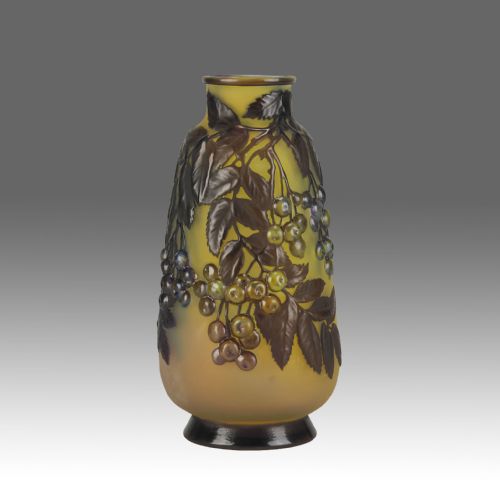
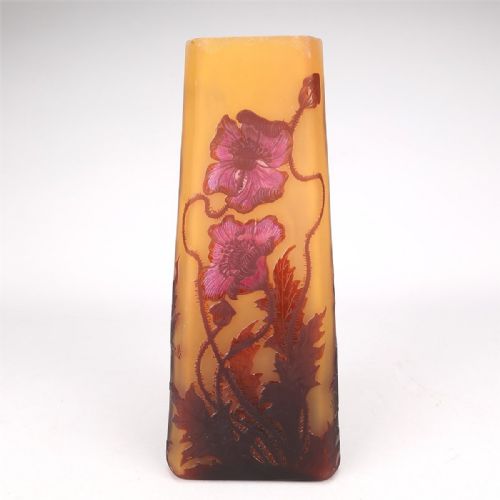
Vintage cameo glass brings layered colour and carved botanical motifs into a room, offering the tactile depth of acid-etched and blown vessels.
Vintage Cameo Glass
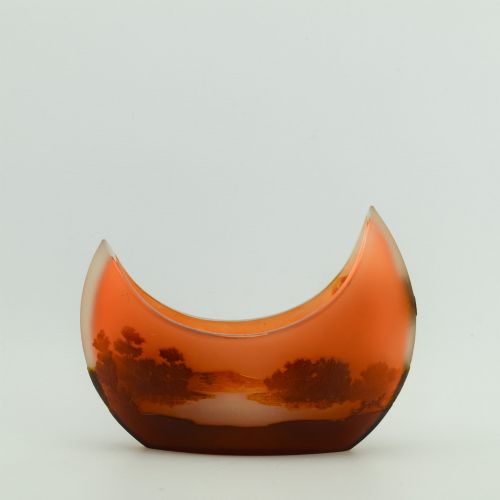
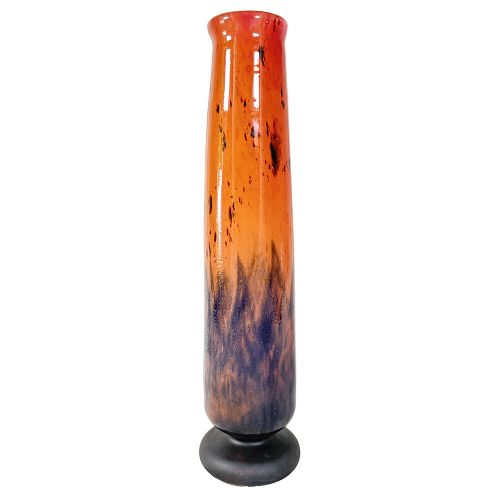
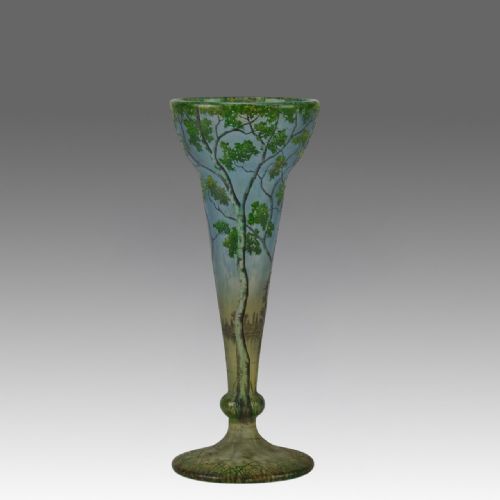
Vintage cameo glass pieces are primarily vessels formed by fusing contrasting layers of coloured glass before carving or acid-etching the surface to reveal a raised design. When you search for vintage cameo glass, you encounter vases, wine glasses, decorative bowls, mirrors and tazzas dating from the Victorian era through the Art Nouveau and Art Deco periods.
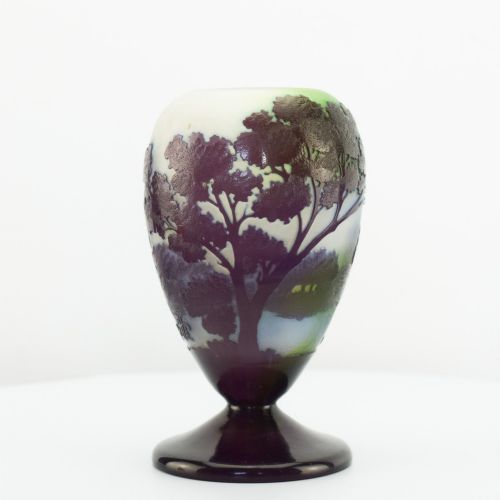
The objects most frequently met on this page are vases bearing landscape, floral and botanical motifs from French and English makers. These works span the turn of the twentieth century, capturing the organic curves of Art Nouveau alongside the geometric restraint of later designs.
How they were made
Makers built these pieces using layered blown glass, applying contrasting outer coatings of coloured glass over a base layer. Craftsmen then used acid-etching techniques or hand-carving tools to cut through the exterior layers, exposing the different shades beneath to create a relief effect.
Some works incorporate powdered glass or enamel details to enrich the surface texture. Metal mounts in gilded pewter occasionally frame the glass, particularly in tazzas and decorative vessels from the early twentieth century.
Oak leaves, cornflowers, and acorns make frequent appearances, proving that turn-of-the-century glassmakers spent plenty of time gazing at the garden.
What varies in quality
Quality rests upon the crispness of the carved relief and the deliberate control of glass thickness across the layers. Superior examples display precise depth in the acid-etching, allowing light to pass through the thinner sections of the design while retaining dense colour in the background.
The harmony of the colour combinations and the fluidity of the botanical or landscape motifs dictate the distinction of a piece. Finer works achieve a balanced interplay between the outer hue and the contrasting ground, whereas lesser examples show flat transitions and indistinct outlines.
Gallé·Daum·Daum Frères·Thomas Webb & Sons·Legras·Stevens & Williams·Schneider·Orivit
The Vintage Cameo Glass Glossary
- Cameo glass
- Glass formed with multiple contrasting layers where the exterior is carved or acid-etched to create a raised design. This technique produces a two-tone relief effect reminiscent of carved stone cameos.
- Acid-etched glass
- Glass treated with hydrofluoric acid to eat away exposed surfaces and form patterns. This method allows makers to achieve intricate floral and landscape details without manual carving.
- Blown glass
- Glass shaped by inflating molten metal on the end of a blowpipe. This foundational technique creates the hollow vessel bodies required before layering and carving take place.
- Frosted glass
- Glass given a textured, matte surface finish through acid treatment or sandblasting. It diffuses light and often provides a contrasting background for polished cameo motifs.
- Tazza
- A shallow ornamental bowl raised on a stem and foot. These display vessels often combine cameo glass inserts with metal mounts.
- Enamel
- Opaque vitreous composition fused to the glass surface through firing. Makers utilised enamel to add supplementary colour details to botanical designs.
Vintage Cameo Glass: Frequently Asked Questions
What periods do these pieces date from?
The pieces span the Victorian era through the early twentieth century, taking in the height of the Arts and Crafts movement, Art Nouveau and Art Deco.
Most examples originate from the decades around nineteen hundred, reflecting the technical innovations of French and English glasshouses.
How do I display a cameo glass vase?
Position vases near natural light sources such as windowsills or display cabinets with backlighting. This allows light to travel through the layered glass and illuminate the carved motifs.
Keep pieces away from direct heat and unstable surfaces to protect the delicate blown structures.
How do I distinguish French and English pieces?
French works from this era frequently embrace organic Art Nouveau plant forms and landscape scenes signed by prominent studios. English examples often favour structured floral motifs combined with heavy cut crystal foundations.
Signatures or acid-stamps on the base or body generally indicate the originating workshop.
What is the difference between etched and carved glass?
Carved glass relies on mechanical wheel-engraving to cut away the outer layers of coloured glass by hand. Acid-etched glass achieves similar depth by submerging masked vessels in acid baths to dissolve the unwanted material.
Both methods produce cameo reliefs, though hand-carved surfaces often reveal subtle tool marks under magnification.