

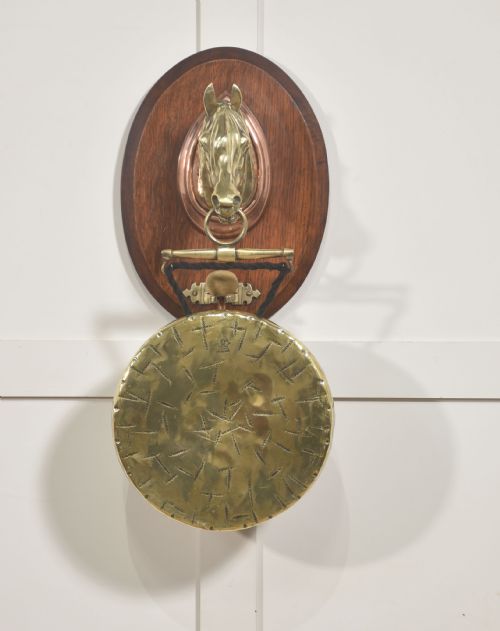


Vintage Calling Gong
Vintage calling gong pieces bring resonant domestic theatre into a home, offering tactile brass and bronze sounds designed to summon household company.
Vintage Calling Gong
A vintage calling gong serves as a striking device for gathering household members, most commonly encountered here as table gongs, dinner gongs, or wall-hanging chimes. These pieces span from the Victorian and Edwardian eras into the Art Deco and Arts & Crafts periods, showing a distinct domestic utility.
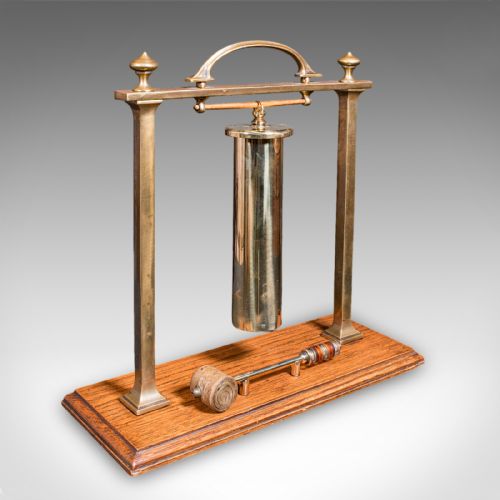
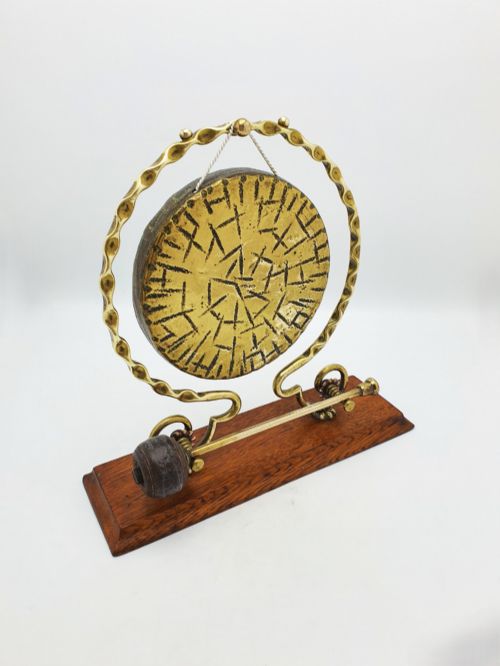
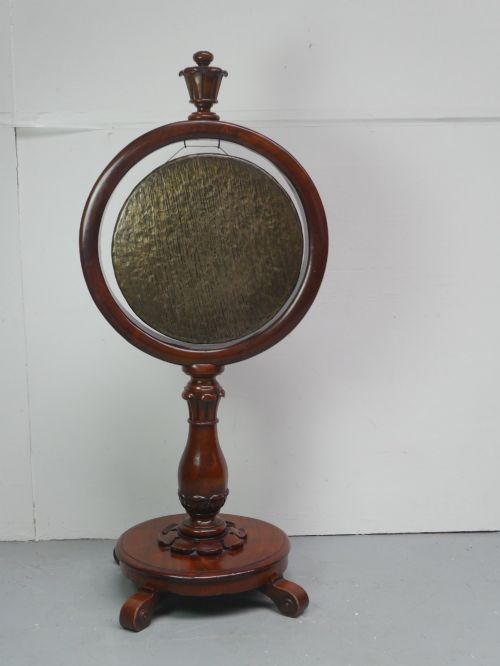
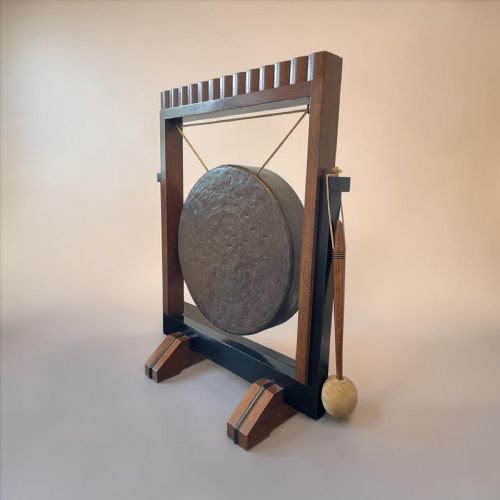
The dominant forms on this page include tabletop brass discs mounted on oak bases, wall-mounted oak frames with horse head mounts, and floor-standing arrangements. Materials range from traditional brass and bronze to wrought iron, mahogany, and occasional cow horn.
Origins stretch from British country houses to Italian palazzos and Anglo-Indian workshops, reflecting diverse stylistic interpretations from Gothic Revival to Art Nouveau. Buyers typically find sturdy timber frames paired with suspended metal bells or discs ready for a handheld striker.
How they were made
Makers constructed the suspension frames from seasoned hardwoods like oak and mahogany, often shaping the timber into arches or wall plaques to support the weight of the metal. Wrought iron and cast iron also served as structural framing materials, particularly in industrial or Gothic Revival designs.
The gongs and bells themselves utilise cast brass, bronze, and copper, shaped to produce a sustained resonant tone when struck. Cord and textile elements frequently suspend the metal components from their wooden or iron mounts, dampening unwanted vibrations.
Listings feature brass, bronze, copper, and wrought iron combined with oak and mahogany across nineteenth and twentieth-century periods.
What varies in quality
Quality rests in the acoustic resonance of the metal and the structural integrity of the timber frame. Superior examples combine heavy, well-cast bronze or brass with dense, figured oak and secure joinery.
Artistic execution also separates standard utility items from finer examples, visible in decorative mounts such as cast horse heads, elephant figures, or intricate Art Nouveau ironwork. The harmony between the hanging cord, the striking mallet, and the resonant bell dictates the overall coherence of the piece.
The Vintage Calling Gong Glossary
- Dinner gong
- A percussion instrument mounted on a stand or wall bracket, historically used in large houses to announce meals. They are typically struck with a mallet.
- Striker
- The handheld mallet or hammer used to hit the gong. These are often wooden or metal with padded or plain ends.
- Wall chime
- A gong assembly fixed directly to a wall rather than resting on a table or floor. They often feature multiple metal tubes or plates.
- Table gong
- A smaller version designed to sit on a sideboard or dining table. These usually feature a brass or bronze plate suspended from a compact wooden arch.
- Gothic Revival
- An architectural and decorative style popular in the nineteenth century, characterised by pointed arches and medieval motifs. It heavily influences several iron and oak pieces here.
Vintage Calling Gong: Frequently Asked Questions
How do you clean a brass gong?
Dust the metal gently with a soft cloth to preserve any existing aged patina. Avoid harsh chemical polishes that strip historical surface character.
Treat the wooden frames with mild furniture wax if the timber appears dry. Keep moisture away from any cord or textile suspension elements.
What periods do these gongs come from?
The pieces span the nineteenth and twentieth centuries, covering Victorian, Edwardian, Arts and Crafts, and Art Deco movements. Victorian examples often lean towards Gothic Revival or equestrian themes.
Later Edwardian and 1920s versions introduce simpler oak frames and occasional exotic details like elephant bases or cow horn.
Are the strikers original?
Many listings include handheld strikers that match the age and material of the main gong assembly. Match verification relies on matching wood types and wear patterns between the mallet and the frame.
Replacements remain common given the portable nature of handheld strikers over a century of domestic use.
Where were dinner gongs placed?
Households positioned them in hallways, entrance porches, or dining rooms so the sound carried effectively across multiple floors. Wall-hanging versions suited narrow corridors, while tabletop variants sat on sideboards.
Their placement ensured servants or family members heard the signal clearly from adjoining reception rooms.