

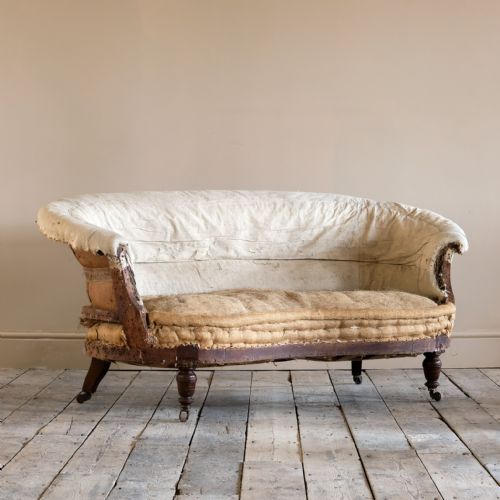


Vintage Calico Sofa
These vintage calico sofa pieces bring relaxed English country house character and deep, sprung comfort to a room.
Vintage Calico Sofa
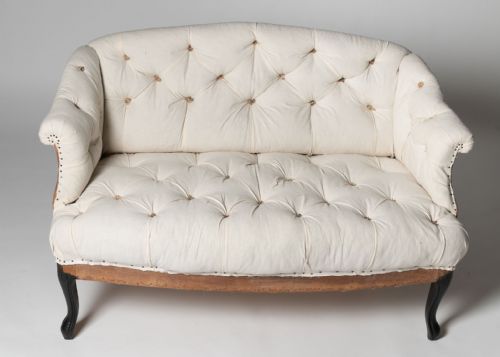
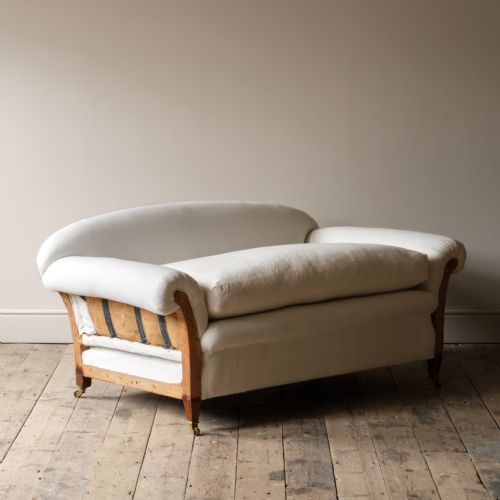
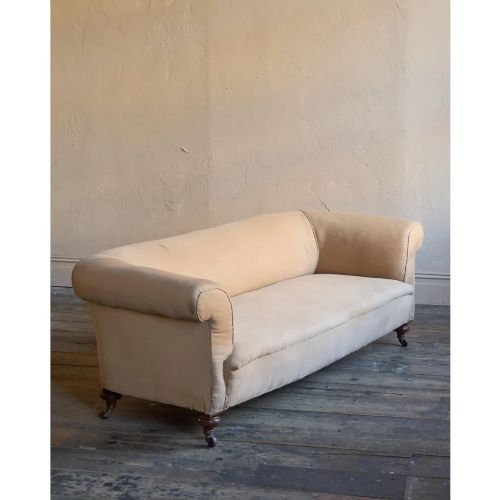
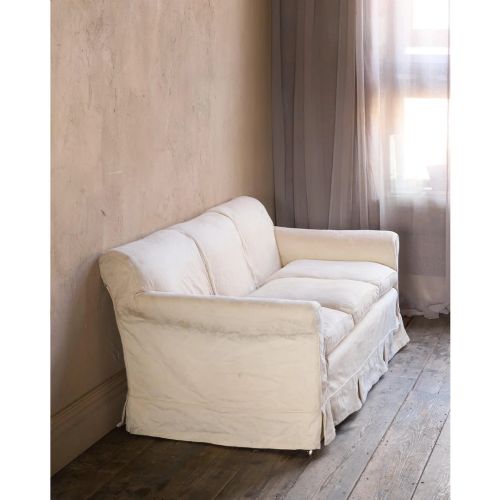
A vintage calico sofa spans nineteenth-century Chesterfield designs, early twentieth-century country house two-seaters, and French chateau daybeds. These forms range from traditional buttoned chesterfields to deep-seated upholstered settees designed for lounging.
Most examples found here date from the nineteenth century through to the nineteen-thirties, reflecting Victorian and Edwardian domestic comfort. They typically arrive upholstered in plain calico or linen ready for top covers, or retained in their original heavy cotton calico and hessian foundations.
How they were made
Frames are constructed from sturdy timber, frequently utilising mahogany or other solid woods to support substantial sprung interiors. These structural wooden skeletons are then webbed, stuffed, and tightly covered in durable cotton calico and hessian.
Detailing often incorporates brass castors on the feet alongside traditional hand-tacked upholstery methods. Reclining daybeds and deep-seated sofas employ complex internal springing systems beneath their calico layers to achieve lasting resilience.
Vintage Calico Sofa Retail Price Guide 2026
Typical asking prices for vintage calico sofa among the pieces listed under this phrase on Sellingantiques today, from the lower quarter to the upper quarter. They describe what is for sale here now, not the wider market.
Several pieces arrive ready in their working underwear of calico and hessian, patiently waiting for someone to dress them.
What varies in quality
The distinction between standard examples and top-tier workshop productions lies in the integrity of the internal frame and the depth of the springing. Pieces bearing maker stamps from established firms demonstrate superior joinery and more refined proportions.
The grade of the underlying calico cover and the weight of the timber frame dictate the longevity and structural heft of the sofa. Finer pieces maintain a more substantial silhouette and superior tension across the upholstered surfaces.
Howard and Sons·Hampton and Sons
The Vintage Calico Sofa Glossary
- Calico
- A plain-woven unbleached cotton textile used traditionally as the foundational tight cover over upholstery stuffing before decorative fabric is applied. It provides a durable, neutral skin for the piece.
- Chesterfield
- A traditional nineteenth-century sofa style characterised by arms and back of the same height, often featuring deep button tufting. This form remains a staple of formal and country house interiors.
- Hessian
- A coarse woven fabric, usually made from jute fibres, utilised within traditional upholstery construction for webbing and containing internal stuffing. It gives structural support beneath the outer calico layer.
- Daybed
- An elongated piece of furniture combining the functions of a chair and a bed, suitable for reclining. The listings include French and English variations from the early twentieth century.
- Mahogany
- A durable tropical hardwood selected for high-quality furniture framing due to its strength and resistance to warping. It frequently forms the visible legs and structural elements of finer nineteenth-century seating.
Vintage Calico Sofa: Frequently Asked Questions
What is a vintage calico sofa?
A vintage calico sofa is a traditional upholstered seating piece, typically dating from the nineteenth or early twentieth century, covered in plain cotton calico. These pieces often serve as the foundation for loose covers or display their plain fabric upholstery.
They encompass styles from Victorian Chesterfields to Edwardian country house settees, prized for their deep seating and robust wooden frames.
How do I care for a calico cover?
Calico is a sturdy cotton fabric that responds well to gentle surface cleaning and regular vacuuming with a soft brush attachment. Because it is unbleached and often used as an interim or loose cover, avoiding harsh chemical treatments is essential.
Many owners choose to leave the calico as a minimalist statement or use it as a clean base for fitted loose covers in patterned linens.
Are these sofas comfortable for daily use?
These pieces were built for deep-seated relaxation, featuring traditional coil springs and generous proportions designed for lounging. Their robust timber frames and hand-sprung interiors offer substantial support compared to modern mass-produced seating.
Settees from the Edwardian and Victorian periods prioritize ergonomic depth, making them well-suited as primary living room seating.
How do I identify an Edwardian piece?
Edwardian seating typically exhibits lighter proportions than heavy Victorian designs, often featuring relaxed country house aesthetics and deep seats. Construction from around nineteen-ten balances ornamental detail with an emphasis on domestic comfort.
Makers active during this era, such as Hampton and Sons, refined the traditional club sofa into more inviting, sprung forms.