


Vintage Button Back Armchair
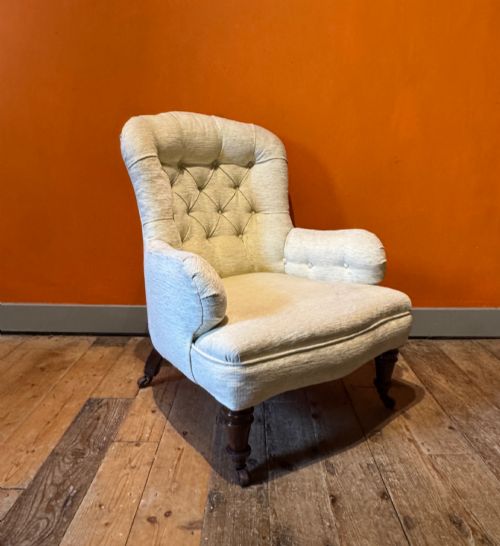
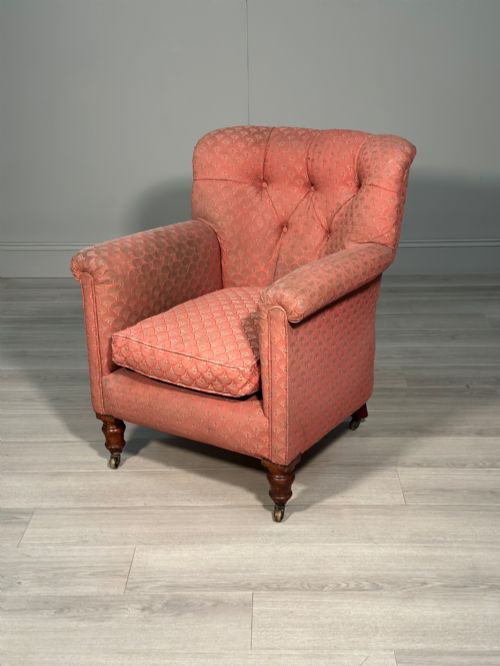
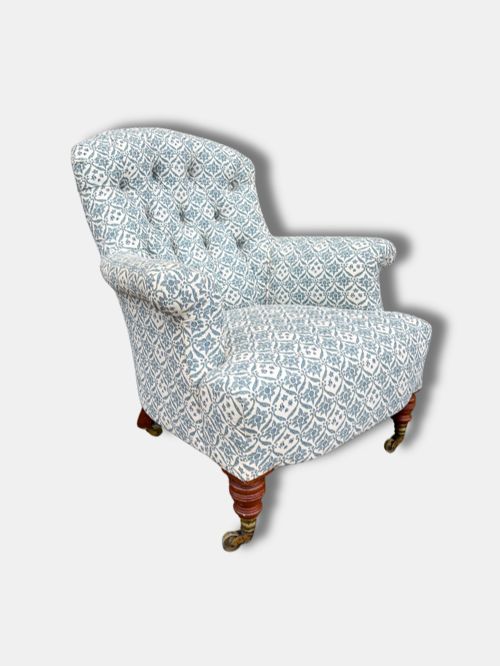
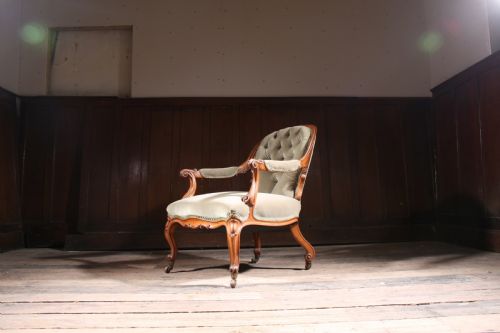
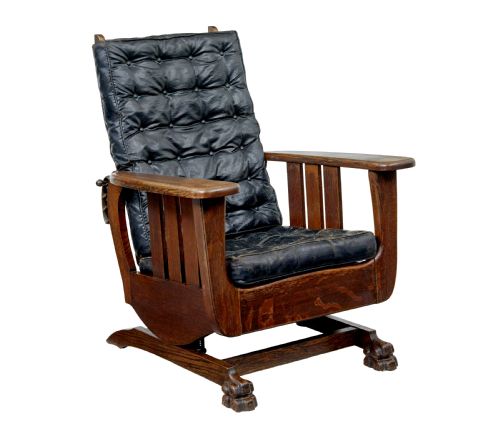
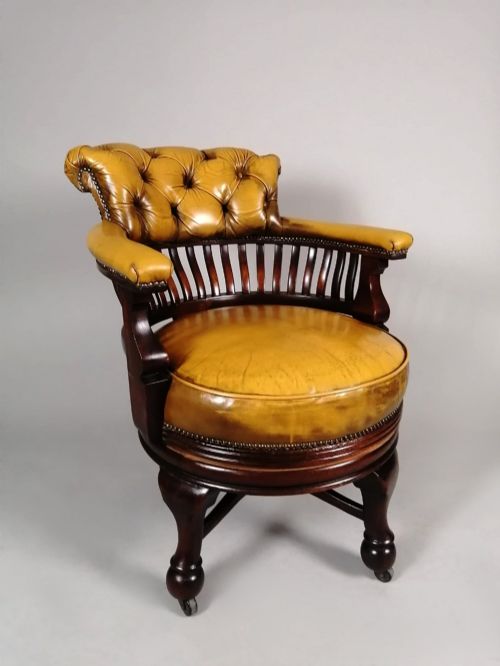
A vintage button back armchair brings deep-buttoned comfort and period character to a room, drawing the eye with classic silhouettes.
Vintage Button Back Armchair
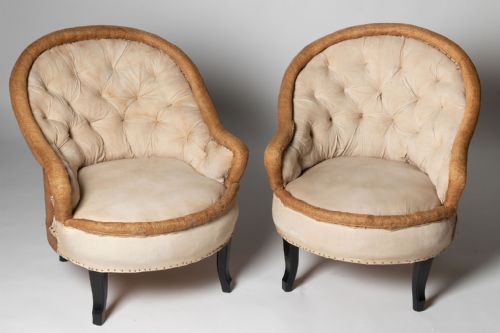
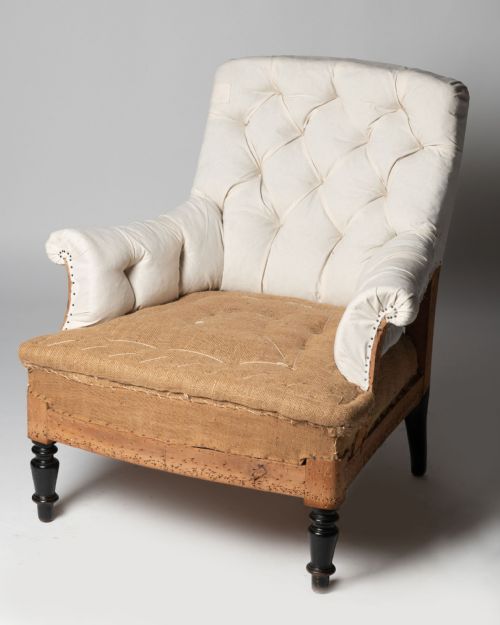
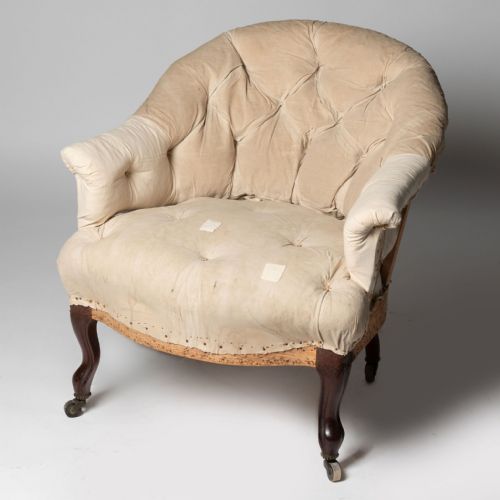
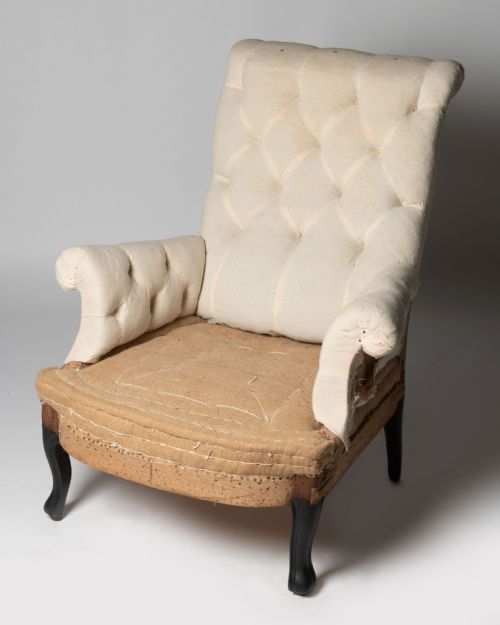
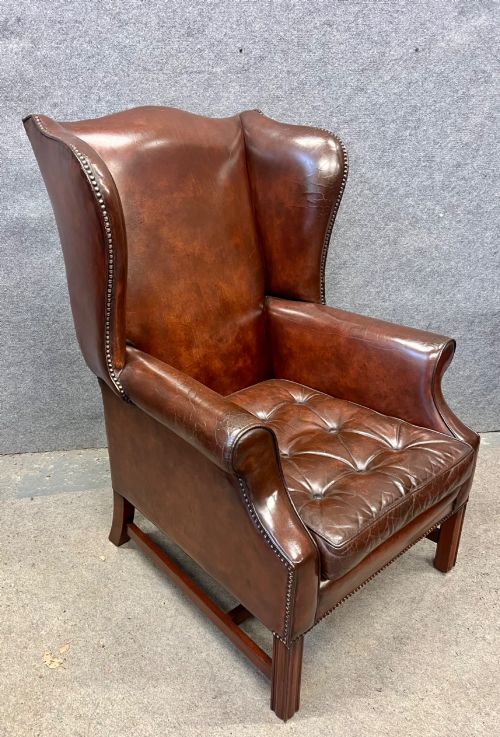
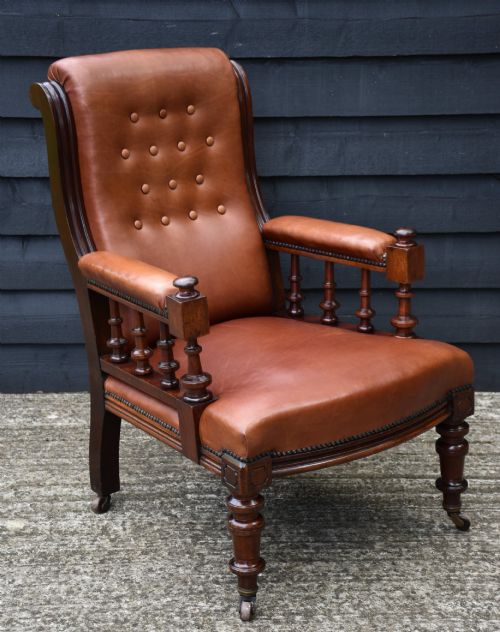
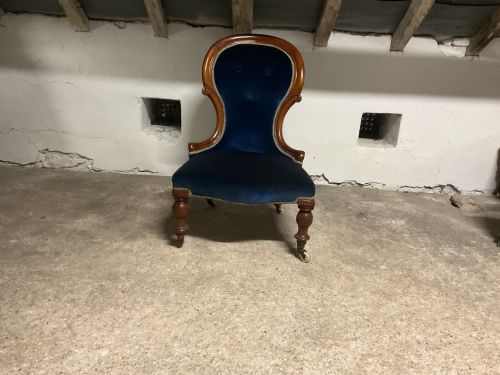
A vintage button back armchair is a cushioned seating form defined by its recessed tufting, appearing across Victorian, Edwardian, and early twentieth-century periods. These chairs encompass diverse seating types including library armchairs, low nursing chairs, wing chairs, and club chairs.
The versions most commonly met on this page span the nineteenth century and the early decades of the twentieth century. They range from robust oak and mahogany library frames to low-slung walnut salon and slipper chairs.
Originating from British and French workshops, these pieces reflect distinct regional tastes in upholstery and woodwork. Buyers encounter everything from formal Regency rosewood to relaxed leather club chairs.
How they were made
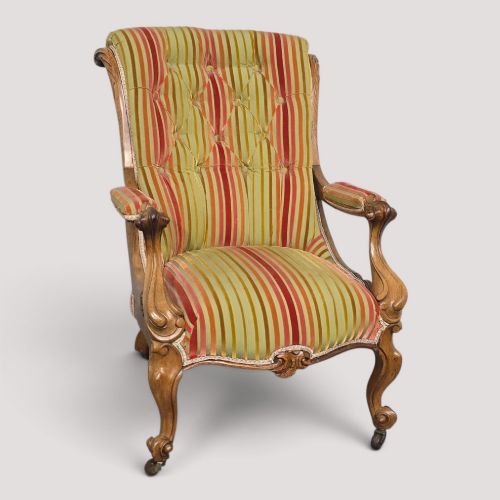
Frames rely on solid hardwoods such as mahogany, walnut, oak, and rosewood, joined with traditional carpentry methods. Many incorporate turned, carved, or barley twist supports that reveal the hand of the maker.
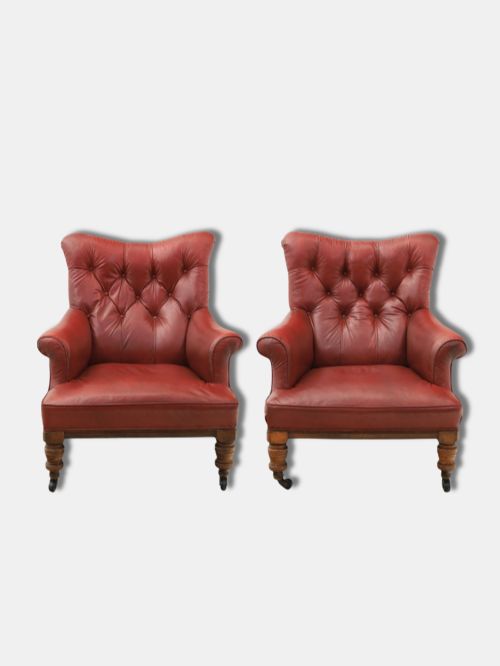
Upholstery combines durable leather, velvet, or fabric secured over deep padding with tightly pulled buttons. Brass tacks frequently edge the leather panels, adding structural reinforcement and a neat decorative border.
Vintage Button Back Armchair Retail Price Guide 2026
Typical asking prices for vintage button back armchair among the pieces listed under this phrase on Sellingantiques today, from the lower quarter to the upper quarter. They describe what is for sale here now, not the wider market.
Listings feature hardwood frames in mahogany, walnut, and oak, paired with leather, velvet, and brass materials across Victorian and Edwardian periods.
What varies in quality
The integrity of the underlying hardwood frame dictates the longevity and stability of the seating. Timbers that remain rigid without movement distinguish superior construction from lesser examples.
The precision of the button tufting and the resilience of the upholstery materials define the finesse of the piece. High-grade hides, rich velvets, and even tension across the tufted squares separate standard production from exceptional examples.
Howard & Sons·Gillows·Mellier & Co
The Vintage Button Back Armchair Glossary
- Button back
- An upholstery technique where buttons are pulled deep into the padding to create a geometric pattern of tufts. This method secures the internal filling while providing a tailored surface.
- Bergère
- A closed-arm armchair featuring an exposed wooden frame and cane or upholstered panels on the sides and back. Originating in France, it remains a staple of refined drawing rooms.
- Library armchair
- A sturdy, capacious seat designed for prolonged reading, usually constructed from heavy mahogany or oak and often finished in leather. These chairs prioritize ergonomic support and durability.
- Wing chair
- An armchair featuring side panels attached to the back to deflect draughts and retain heat from a fireplace. Early variants often stand on carved cabriole or straight wooden legs.
- Slipper chair
- A low-seated bedroom chair originally designed to assist ladies with putting on footwear. The low profile makes them adaptable for compact spaces.
Vintage Button Back Armchair: Frequently Asked Questions
How were these armchairs used historically?
They served as functional seating in libraries, drawing rooms, and bedrooms, offering comfort for reading and relaxation.
Sturdier leather versions were placed in studies, while smaller walnut and mahogany styles suited intimate salons and chambers.
How do I identify the period of a chair?
Period identification relies on observing the woodwork styles, frame materials, and specific upholstery details recorded in the construction.
Victorian and Edwardian examples show distinct turning, carving, and wood choices like walnut and oak, whereas later twentieth-century pieces shift toward simpler club profiles.
How do I live with a leather club chair?
Leather club chairs fit easily into both traditional and contemporary interiors, offering a tactile focal point for a living space.
Regular conditioning keeps the hide supple, allowing the natural patina to mature gracefully over decades of daily use.